Whether a Collie Owner Needs a High Velocity Dryer
Anyone who has ever given a beautiful Collie a bath knows the true meaning of "waterlogged." You scrub, you rinse, and then you begin the endless pat-down with towels, only to find hours later that your dog's luxurious coat is still damp, especially deep down near the skin. This dampness isn't just annoying; it can lead to frustrating matting, unpleasant odors, and even serious skin issues. This guide will delve into whether a high-velocity dryer is truly a necessity for Collie owners, examining its benefits, the investment required, and what alternatives exist.
Why a Collie's Coat Demands Specific Drying Methods
Let's be real: a Collie's coat is a magnificent, double-layered marvel of nature, but it's also a serious commitment when it comes to grooming. It's not just "long hair"; it's a finely tuned system designed for insulation, shedding water, and protection. But when you introduce soap and a good soak, that system works a little too well at holding onto moisture, making conventional drying methods feel like trying to dry a wool blanket with a paper towel.
The Challenge of the Collie's Double Coat
Understanding the Collie's coat is the first step to understanding why drying it is such an ordeal. You have the outer coat, which consists of long, coarse, straight guard hairs. These are meant to shed water and protect against elements. Then, underneath, there's the incredibly dense, soft, and woolly undercoat. This undercoat is what provides insulation, keeping your Collie warm in winter and surprisingly cool in summer by trapping air. Imagine trying to dry two different textures of fabric, one slick and the other like thick felt, simultaneously. That's essentially what you're up against with a Collie's fur.
When bath time comes, the outer coat gets wet, but it's the undercoat that really soaks up and holds onto water like a sponge. It clings to every drop, making it incredibly difficult for air to penetrate and evaporate moisture naturally. If you've ever tried to air-dry a thick wool sweater, you know the feeling – it just takes forever, and often doesn't feel truly dry for a long time. This is exactly what happens with your Collie's undercoat.
Why Water Traps Deep in the Undercoat
The density of the undercoat is the primary culprit here. Think of it like a tightly woven carpet. Water seeps in, and then it's held within the fibers, unable to easily escape. Toweling helps remove surface moisture from the guard hairs, but it barely touches the deeply embedded dampness in the undercoat. You can rub and rub, and you'll still pull off moisture from deep within the coat. It's deceptive because the top layer might feel dry to the touch, but beneath, it's still a damp, warm environment.
This issue is particularly pronounced in areas with thick feathering, like behind the ears, on the chest (the "frill"), and on the rear legs (the "petticoat"). These are also areas prone to matting even when dry, so adding persistent dampness just exacerbates the problem. The sheer volume of hair means that traditional methods simply don't have the power or precision to push through the layers and get to the root of the problem – literally, the hair roots.
The Risks of Incomplete Drying
Leaving your Collie's coat damp, even just for a few hours, carries more risks than just a perpetually soggy dog smell. That warm, moist environment becomes a breeding ground for bacteria and fungi, leading to skin infections, hot spots, and general irritation. Anyone who has dealt with a dog suffering from pyoderma or yeast infections knows how miserable it is for the dog and how costly and frustrating it can be to treat. The itching, the constant licking, the vet visits – it's a spiral you want to avoid.
Beyond health concerns, incomplete drying also significantly increases the chances of matting. Damp hair clumps together much more easily than dry hair, and as it dries, those clumps can tighten into painful mats that pull on the skin. Mats aren't just cosmetic; severe matting can restrict blood flow, harbor parasites, and cause pressure sores. Removing them often requires professional help or even shaving, which can traumatize the dog and permanently alter the coat texture. It's a lose-lose situation that proactive drying can easily prevent. Keeping an eye on your Collie's overall health, perhaps with the help of a good pet insurance plan from a provider like Healthy Paws, can help manage unexpected vet bills if these issues do arise, but prevention is always best.
The Benefits of a High-Velocity Dryer for Collie Owners
Now that we've established the formidable challenge of drying a Collie, let's talk about the solution many experienced Collie owners swear by: the high-velocity dryer. This isn't just a fancy hair dryer; it's a powerful tool specifically designed for drying thick-coated breeds, and it brings a host of benefits that can dramatically improve your grooming routine and your Collie's well-being.
Dramatic Reduction in Drying Time
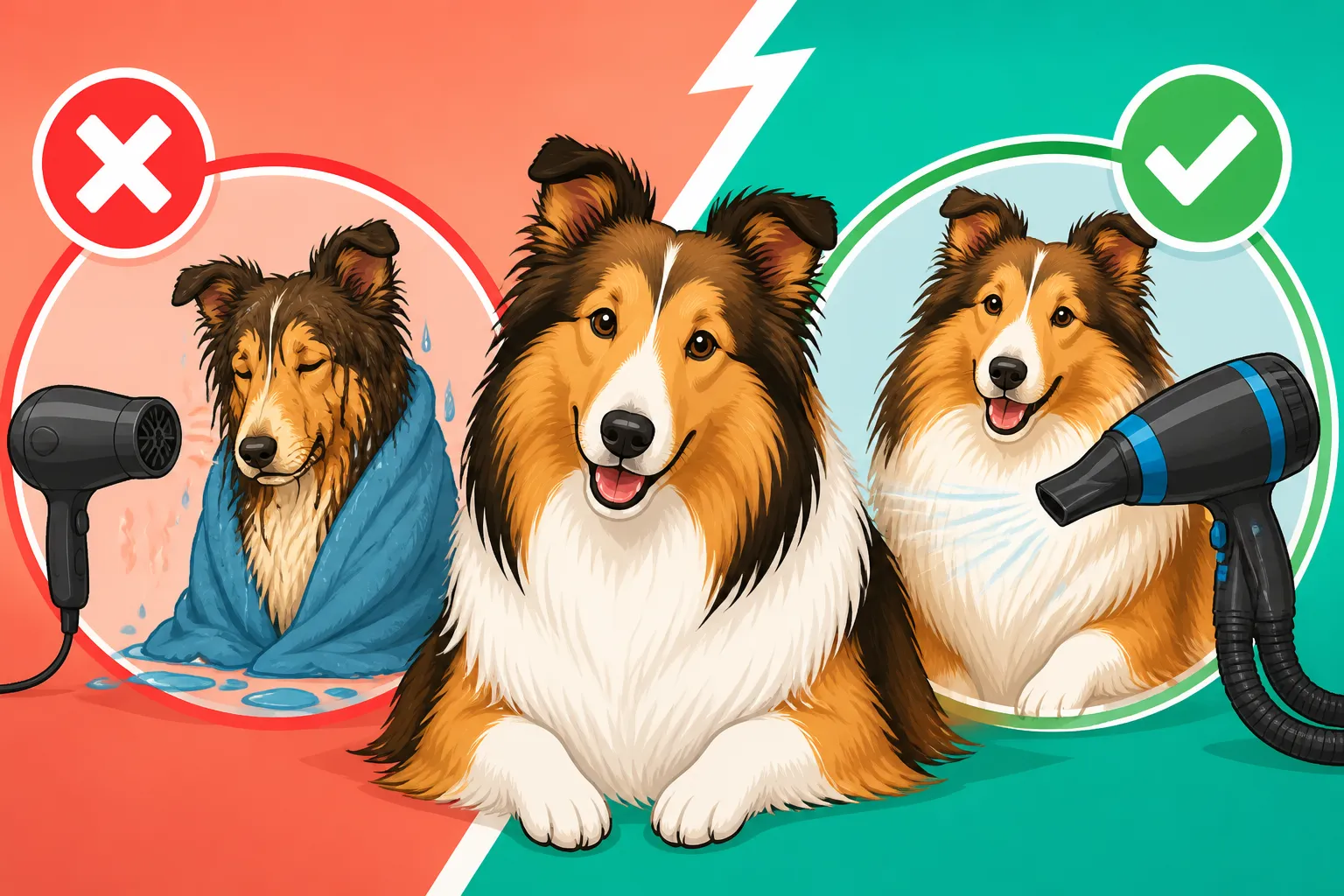
The most immediate and obvious benefit of a high-velocity dryer is its ability to slash drying time. Instead of hours of towel-patting and air-drying, which often leaves your Collie damp for far too long, you can often get your dog completely dry in a fraction of the time – think 30 minutes to an hour, depending on the coat density and the dryer's power. This is a game-changer, especially if your Collie enjoys rolling in puddles or getting into other messy situations that necessitate an impromptu bath.
The power of these dryers lies in their sheer airflow, not necessarily high heat. They push a massive volume of air at high speed, effectively "blasting" water off the coat and forcing it to evaporate rapidly. This direct, powerful airflow penetrates deep into the undercoat, targeting the moisture where it stubbornly resides. For busy owners, reclaiming hours from a grooming session is invaluable, allowing more time for walks, training, or simply cuddling with a clean, dry dog. You might even find that regular use, coupled with appropriate shampoos, can help if you're wondering Whether a Deshedding Bath Speeds a Collie's Blow.
Health Benefits for Skin and Coat
Beyond speed, a high-velocity dryer offers significant health advantages for your Collie's skin and coat. As we discussed, incomplete drying can lead to nasty skin infections and hot spots. By ensuring your Collie is thoroughly and quickly dried, you eliminate the damp, warm environment that bacteria and fungi love. This significantly reduces the risk of dermatological issues, keeping your Collie's skin healthy and itch-free.
Furthermore, the powerful airflow acts as a natural deshedding tool. As the air passes through the coat, it effectively blows out loose undercoat hairs that would otherwise shed all over your house. This means less hair on your furniture, less hair in your vacuum, and a healthier coat for your dog. Removing this dead undercoat allows for better air circulation against the skin, further preventing skin problems and allowing new, healthy hair to grow. It's a win-win for both you and your Collie.
Effective Undercoat Management and Shedding Control
For any Collie owner, managing the sheer volume of shed hair is a perennial challenge. Collies "blow coat" twice a year, but they also shed year-round, leaving a constant reminder of their presence on every surface. A high-velocity dryer is one of the most effective tools for getting ahead of this shedding. During a bath, and especially during those notorious coat-blowing seasons, using a high-velocity dryer can remove an astonishing amount of dead undercoat.
Imagine the hair that normally ends up in your vacuum cleaner or stuck to your clothes, instead being blasted away in a controlled outdoor environment (or a dedicated grooming space). This dramatically reduces the amount of hair your Collie will drop indoors over the following weeks. It's not just about cleanliness; regular removal of dead undercoat prevents matting, improves air circulation to the skin, and keeps the overall coat healthy and lustrous. When considering How Much Hair Comes Off a Collie in a Session, you'll be amazed at the difference a good dryer makes.
Factors to Consider Before Investing in a High-Velocity Dryer
While the benefits of a high-velocity dryer are compelling for Collie owners, it's not a purchase to make on a whim. There are several practical considerations that you should weigh before bringing one of these powerful grooming tools into your home. Think of it as investing in a piece of specialized equipment – you want to make sure it's the right fit for your needs and your Collie's temperament.
Initial Cost and Long-Term Value
Let's not beat around the bush: a good quality high-velocity dryer is an investment. You're not looking at a $30 human hairdryer from the drugstore. Professional-grade dryers, designed for heavy-duty use and durability, can range from a modest amount to a significant sum, sometimes comparable to a few professional grooming sessions. However, consider the long-term value. If you regularly bathe your Collie, or have multiple Collies, the cost savings on professional grooming can quickly add up.
A single trip to a groomer for a bath and full dry for a Rough Collie can be a substantial cost, and if you're doing that monthly or more, a dryer pays for itself remarkably fast. You can find options on sites like Chewy, where you can read reviews and compare models. When you think about What a Professional Groom Costs on a Rough Collie over a year or five, the initial outlay for a quality dryer often starts to look like a wise economic decision. Plus, the convenience of drying your dog at home, on your schedule, is priceless.
Noise Levels and Your Collie's Tolerance
This is perhaps the biggest hurdle for many dog owners: the noise. High-velocity dryers are powerful, and that power comes with a decibel level. While manufacturers have made strides in creating quieter models, they are still significantly louder than your average household hairdryer. For some Collies, particularly those who are noise-sensitive or have had negative grooming experiences, the sound can be quite intimidating.
It's crucial to introduce the dryer slowly and positively. Start by turning it on in another room while your Collie is occupied with a favorite treat or toy. Gradually bring it closer, always pairing the sound with positive reinforcement like treats and praise. Get them used to the sensation of the air first, without focusing on drying. Some dogs take to it quickly, while others require a lot of patience and desensitization over weeks or even months. If your Collie is particularly nervous, this might be a longer process, but it's essential for their comfort and safety. You want this to be a positive experience, not a terrifying one.
Storage and Usage Space Requirements
High-velocity dryers are generally compact, but they're not tiny. You'll need a dedicated space for storage – perhaps in a utility closet, garage, or laundry room. More importantly, you'll need a suitable area to use it. This isn't something you do in your living room unless you're prepared for a hurricane of Collie hair. Many owners opt to use them outdoors on a secure grooming table, in a garage, or a tiled bathroom that's easy to clean.
Consider the logistics: do you have an outdoor power outlet? Is there good ventilation? Where will all that shed hair go? If you're drying indoors, a small, contained space is best, and be prepared for a substantial cleanup afterward. It's truly amazing How Much Hair Comes Off a Collie in a Session when you use one of these. Having a designated grooming spot makes the process much less stressful for both you and your dog, and significantly cuts down on the post-grooming cleanup chore.
The Learning Curve for Effective Use
Operating a high-velocity dryer effectively isn't just about pointing and blasting. There's a technique to it. You need to learn how to direct the airflow to push water out of the coat rather than just blowing it around or pushing it deeper. Line drying, where you hold the hair up and dry in sections down to the skin, is key for thorough drying and preventing mats. You also need to be mindful of sensitive areas, like the face and ears, and use lower settings or your hand to shield them.
The air pressure, especially on higher settings, can be quite strong, and you need to be careful not to hold the nozzle too close to the skin for too long, as it can cause discomfort. There's a knack to moving the nozzle smoothly and efficiently to avoid tangles and ensure an even dry. It takes practice, but with a bit of patience and perhaps watching a few online tutorials, you'll get the hang of it. The investment in time to learn the technique will pay dividends in the long run for the health and appearance of your Collie's coat.
Alternatives to a High-Velocity Dryer
So, you're weighing the pros and cons, the cost, the noise, the space. Maybe a high-velocity dryer isn't for you right now, or maybe you're simply curious about other options. It's important to understand what alternatives exist and why they might not be as effective for a Collie's demanding coat.
Traditional Towel Drying and Air Drying
This is where most first-time Collie owners start, and quickly learn the limits. Towel drying is, of course, essential to remove excess surface water immediately after a bath. It gets the bulk of the wetness off the guard hairs and helps prevent your home from becoming a soggy mess. But as we've discussed, it simply can't penetrate the dense undercoat to remove deep-seated moisture. You can use multiple towels, squeeze and pat, but you'll almost always be left with a dog that is still damp deep down.
Air drying, on its own, is often insufficient and risky for a Collie. In a warm, humid climate, a thick-coated Collie left to air dry can take many, many hours – sometimes an entire day – to dry completely. During this prolonged damp period, the risk of skin infections, matting, and that dreaded "wet dog" smell skyrockets. Imagine your beautiful Collie just smelling perpetually damp, even when you think they're dry. It's a common frustration that can be easily avoided with proper drying. Plus, if you're trying to achieve that fluffy, show-ready coat, air drying simply won't cut it. You might want to consider Whether a Collie Smells When Wet and how drying methods play into that.
Human Hair Dryers and Their Limitations
Many people wonder if they can just use their own hairdryer on their Collie. The short answer is: proceed with extreme caution, or preferably, don't. Human hair dryers are designed to produce heat, and while they have some airflow, it's nowhere near the volume and force needed to penetrate a Collie's double coat. The main danger is the heat. A human hairdryer can get very hot, very quickly, and can easily burn a dog's sensitive skin, especially if held too close or directed at one spot for too long. Dogs don't dissipate heat the same way humans do, and a burn might not be immediately obvious through thick fur.
Furthermore, the heat can damage the coat itself, leading to dry, brittle hair over time. The noise level of a human hairdryer can also be just as startling, if not more so, than a high-velocity dryer. Ultimately, human hairdryers are not built for a dog's coat and body temperature regulation, making them a less-than-ideal and potentially dangerous alternative for thorough and safe drying.
The Professional Groomer Option
If purchasing your own high-velocity dryer isn't feasible, or if you prefer to leave grooming to the experts, a professional groomer is always an excellent alternative. Professional groomers are equipped with high-velocity dryers, specialized bathing tubs, and the expertise to handle even the most challenging Collie coats. They know the techniques for thorough drying, effective deshedding, and can often spot potential skin or coat issues that you might miss.
The downside, of course, is the cost and convenience. Regular professional grooming for a Rough Collie can become a significant line item in your budget, especially if you want your dog bathed and dried frequently. It also requires scheduling appointments and transportation. However, if your Collie hates the dryer, or if your living situation makes at-home grooming difficult, a professional groomer is a fantastic resource. They can keep your Collie looking and feeling their best without you having to wrestle with a wet, shedding fluffball. When considering your overall pet budget, you might be thinking about What a Collie Owner Should Set Aside Monthly, and professional grooming is a cost to factor in.
| Drying Method | Pros | Cons | Best for Collie Owners |
|---|---|---|---|
| High-Velocity Dryer | Fastest drying, deep penetration, powerful deshedding, prevents skin issues. | Initial cost, can be noisy, requires training/desensitization, needs dedicated space. | Frequent at-home bathing, managing shedding, optimal coat/skin health. |
| Traditional Towels | Inexpensive, readily available, quiet, good for initial water removal. | Ineffective for deep undercoat, very slow for complete drying, high risk of mats/skin issues if relied on solely. | Initial step for any bath, not a standalone solution. |
| Human Hair Dryer | Readily available. | Too hot, can burn skin, inadequate airflow, can damage coat, not designed for pets. | Not recommended for Collies due to heat and lack of power. |
| Air Drying | No cost, no equipment, quiet. | Extremely slow for Collies, high risk of skin infections, matting, and odor, impractical in many climates. | Only for very light dampness on an outdoor adventure, never after a full bath. |
| Professional Groomer | Expert care, full equipment, no effort for owner, can address other grooming needs. | Higher ongoing cost, requires scheduling and travel, less control over timing. | Owners who prefer outsourcing grooming, have noise-sensitive Collies, or lack space/time. |
Ultimately, for most Collie owners who plan to bathe their dog at home, a high-velocity dryer moves beyond being a luxury and becomes a genuine necessity. It transforms a lengthy, often frustrating process into an efficient routine that promotes your Collie's health and comfort while saving you time and effort. While there's an initial investment and a slight learning curve, the benefits of a thoroughly dry, healthy, and less-shedding Collie often make it an invaluable addition to your grooming toolkit.
Disclaimer
This article is for general informational purposes only and does not constitute professional advice. Laws, prices and regulations vary by location and change over time. Consult a qualified professional for guidance on your specific situation.