Whether the FCI Recognizes Both Collie Varieties
It's quite common for new Collie owners, and even some seasoned enthusiasts, to get a little tangled up in the distinctions between Rough and Smooth Collies. You might wonder if they're considered entirely different breeds, especially when you see them in the show ring or read various breed standards. This guide aims to clear up that confusion by diving into how the Fédération Cynologique Internationale (FCI), a major international canine organization, views these two beautiful varieties.
Understanding the Collie's Two Coats: Rough and Smooth
When we talk about Collies, most people immediately picture the magnificent, long-coated "Lassie" type. That's our Rough Collie! But then there's the Smooth Collie, a dog with the exact same build, temperament, and intelligence, but sporting a short, dense coat. It can be a little perplexing to understand if these are two distinct breeds or merely variations of the same one, and different kennel clubs around the world approach this question in subtly different ways.
The Visual Difference and Shared Heritage
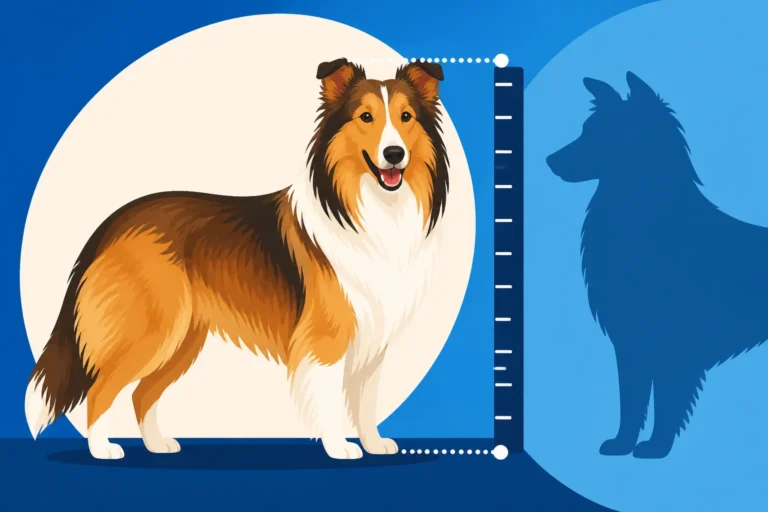
The most obvious difference between a Rough Collie and a Smooth Collie is, of course, their coat. The Rough Collie boasts a profuse outer coat that is long and harsh to the touch, with a soft, furry undercoat. This creates that iconic mane, frill, and abundant feathering on their legs and tail that we all admire. It's a coat designed for protection against the elements, a true working dog's attire. Many people fall in love with the sheer majesty of this coat, but it does come with its own set of grooming demands, as anyone who’s navigated A Collie's Coat Is the Bill That Arrives Every Eight Weeks can tell you.
On the other hand, the Smooth Collie possesses a short, dense, and close-lying coat, with a thick undercoat that provides insulation. They look incredibly sleek and athletic, their muscles more defined without the camouflaging effect of long hair. Despite this striking visual difference, underneath those coats, they are genetically and structurally the same dog. They share the same historical roots as Scottish droving dogs, and a litter can even produce both coat types if the parents carry the necessary genes. It’s truly fascinating how a single breed can express itself in such distinct ways.
Why the Distinction Matters to Owners
For prospective owners, understanding the difference isn't just a matter of aesthetics; it has practical implications. A Rough Collie's coat requires significant grooming time to prevent mats and keep it healthy, often demanding several hours a week, particularly during shedding seasons. This can be a commitment that some people underestimate, leading to frustration and neglected coats. Think about all that brushing, the special tools, and the professional grooming visits.
A Smooth Collie, while still shedding and requiring regular care, has a far less demanding grooming routine. Their shorter coat is easier to brush, quicker to dry, and generally less prone to tangles. This can be a huge draw for individuals who adore the Collie temperament but are intimidated by the maintenance of the rough coat. Beyond grooming, the perception of these two can sometimes differ. Some people mistakenly believe the Smooth Collie is a "different" or even "lesser" Collie, which couldn't be further from the truth. They are equally intelligent, devoted, and capable companions. This is why knowing how major organizations classify them is so important; it validates their shared identity.
The Role of International Kennel Clubs in Breed Standards
When you dive into the world of purebred dogs, you quickly realize that different countries and organizations have their own ways of classifying, registering, and judging breeds. It’s not a universally standardized system, which can certainly lead to a bit of head-scratching. Understanding these organizational structures, particularly the role of international bodies like the FCI, helps clarify why certain breeds or varieties are recognized in specific ways.
What is the FCI and Why Does it Matter?
The FCI, or Fédération Cynologique Internationale, is the largest canine organization in the world. It’s a global federation of national kennel clubs, meaning it doesn't directly register dogs or issue pedigrees itself. Instead, it recognizes and approves national breed standards submitted by its member countries. Currently, it has 90 member and contract partner countries, each with its own national kennel club that adheres to the FCI's framework. This means that if a dog is registered with a kennel club that is a member of the FCI, its pedigree is generally recognized by all other FCI member countries.
Why does this matter to a Collie owner or enthusiast? Well, the FCI's recognition carries significant weight internationally. For breeders, it means their dogs' pedigrees are accepted globally, facilitating international breeding and showing. For owners, it offers a consistent standard for the breed, regardless of which member country they are in. When the FCI says something about a breed, it sets a global precedent for its members, influencing everything from show rings to how national clubs structure their breed categories.
How Breed Recognition Works
The process of a breed or a variety gaining recognition with an organization like the FCI is a detailed and often lengthy one. Typically, a national kennel club within an FCI member country will propose a breed or a distinct variety to the FCI. This involves presenting detailed historical records, consistent breed types, and often a significant population of dogs that meet the proposed standard. It's a scientific and historical undertaking, ensuring that the breed has a stable genetic base and a well-defined set of characteristics.
For an existing breed with varieties, like the Collie, the process is more about formalizing the relationship between those varieties under a single standard. The FCI examines whether the core characteristics – temperament, function, overall structure – are consistent across the coat types, concluding if the coat is merely a superficial difference rather than a fundamental one that would warrant separate breed status. This careful consideration ensures that breeds maintain their integrity and that the classification reflects their true genetic heritage and purpose.
The FCI's Stance: Both Varieties Under One Umbrella
When it comes to the Collie, the FCI has a very clear and sensible approach that often simplifies things for international exhibitors and breeders. They recognize the essential unity of the breed, regardless of coat length, which is a testament to their shared history and genetics. This unified approach makes navigating the world of Collie breeding and showing much more straightforward on a global scale.
One Breed, Two Coat Types
Here’s the straight answer: the Fédération Cynologique Internationale (FCI) does recognize both the Rough Collie and the Smooth Collie. However, and this is the crucial part, they recognize them as two varieties of the same breed. They are not considered separate breeds. In the FCI system, the breed is simply called "Collie (Rough and Smooth)," or sometimes "Collie Rough" and "Collie Smooth" within the same breed number (FCI Group 1, Section 1, number 156). This classification reflects the fact that despite their differing coats, they are fundamentally the same dog, sharing identical standards for everything except their coat texture and length.
This unified recognition is a point of clarity for many. It reinforces that a Smooth Collie isn't a "shorthaired version" of the Rough Collie in the sense of being a different breed entirely, but rather a naturally occurring variation within the same genetic lineage. It’s like having different hair colors in humans – same species, different presentation. This classification helps prevent the breed from fracturing into two separate entities based solely on a coat characteristic that developed due to environmental and historical working needs, rather than fundamental genetic divergence.
Implications for Showing and Breeding
For those involved in showing Collies under FCI rules, this means that while Rough and Smooth Collies are judged against the same overall breed standard (minus the coat specifics), they typically compete in separate categories for Best of Variety, and then those variety winners might compete for Best of Breed. This ensures fair competition, as you wouldn’t want a short-coated dog competing directly against a long-coated one if coat is a significant part of the breed's aesthetic standard. However, the ultimate Best of Breed winner is still recognized as a "Collie," encompassing both types.
From a breeding perspective, the FCI's stance permits breeding between Rough and Smooth Collies. This is vital for maintaining genetic diversity and health within the overall Collie population. Breeders often strategically cross Roughs and Smooths to bring in desired traits, improve conformation, or address specific genetic concerns, without being penalized by the registry for "mixing breeds." This ability to interbreed freely within the defined varieties is a cornerstone of responsible breeding practices and ensures the long-term vitality of the Collie as a whole. It's a recognition of the fact that Whether the Rough and Smooth Collie Are One Breed is not just a semantic debate, but has real-world implications for the dogs.
Contrasting with Other Kennel Club Approaches
While the FCI's approach offers a unified vision for the Collie breed, it's not the only way kennel clubs globally classify these dogs. The varying methodologies used by other prominent organizations like the American Kennel Club (AKC) and The Kennel Club (UK) can sometimes add layers of complexity, making it seem like the Rough and Smooth Collies are treated quite differently depending on where you are in the world. It’s worth exploring these differences to fully appreciate the FCI's particular stance.
The American Kennel Club's Perspective
In the United States, the American Kennel Club (AKC) also recognizes both Rough and Smooth Collies, and like the FCI, they consider them two varieties of the same breed, simply named "Collie." This is codified in their breed standard, which applies to both types, with specific sections addressing the coat differences. So, in the AKC system, a Rough Collie and a Smooth Collie are both just "Collies."
However, in the show ring, the AKC treats them as separate varieties for judging purposes. They don't typically compete directly against each other until the very end of the Best of Breed competition. You'll see a Best of Variety Rough and a Best of Variety Smooth awarded, and then these two dogs will compete for the overall Best of Breed. This system allows each variety to be judged on its merits according to the standard for its coat type, ensuring that the best example of each is recognized before a single overall breed winner is chosen. This is a subtle but important distinction that reflects a similar philosophy to the FCI, maintaining the breed's unity while acknowledging practical show ring needs. If you’re ever curious about the differences in care, you might explore Whether a Smooth Collie Sheds Less or Whether a Smooth Collie Costs Less to Groom, as these aspects might influence someone's choice between the varieties in an AKC context.
The UK Kennel Club's Approach
The situation with The Kennel Club (KC) in the United Kingdom offers a slightly different perspective, which can be the source of some confusion. Historically, The Kennel Club recognized them as separate breeds: the "Collie (Rough)" and the "Collie (Smooth)." This means that until relatively recently, they had separate breed numbers, separate championship points, and were generally treated as distinct entities for registration and showing purposes. This had significant implications for breeding, as interbreeding between the two was not recognized in the same way it would be under the FCI or AKC models.
However, The Kennel Club has revised its approach, now classifying them as "varieties" of the same breed for exhibition purposes, aligning more closely with the FCI and AKC. Despite this, the legacy of separate registration categories can still be felt, and some perceive them as truly distinct breeds. This evolution in classification highlights the ongoing dialogue within the canine world about how best to categorize breeds and their variations, balancing historical practice with genetic reality. Whether you’re looking for a dog from Chewy or a local breeder, understanding these distinctions is key to getting the right companion.
Here’s a quick overview of how some major kennel clubs classify the Rough and Smooth Collie:
| Kennel Club | Classification of Rough and Smooth Collies | Notes |
|---|---|---|
| Fédération Cynologique Internationale (FCI) | Varieties of the same breed | Recognized as "Collie (Rough and Smooth)" under a single breed number (156). Judged separately by variety, but ultimately part of the same breed. Interbreeding permitted. |
| American Kennel Club (AKC) | Varieties of the same breed | Recognized as "Collie." Judged separately by variety in the show ring (Best of Variety Rough, Best of Variety Smooth) before competing for Best of Breed. Interbreeding permitted. |
| The Kennel Club (UK) | Varieties of the same breed (recently) | Historically recognized as separate breeds ("Collie (Rough)" and "Collie (Smooth)"). Recent revisions classify them as varieties for exhibition, but some legacy implications might remain regarding registration and perception. Interbreeding increasingly recognized. |
| Canadian Kennel Club (CKC) | Varieties of the same breed | Similar to AKC, recognized as "Collie" with separate variety judging for Rough and Smooth in the show ring. Interbreeding permitted. |
| Australian National Kennel Council (ANKC) | Varieties of the same breed | Recognized as "Collie (Rough)" and "Collie (Smooth)" as varieties of the same breed. Compete separately within breed classes. Interbreeding permitted. |
So, while you might hear different terminology depending on who you're talking to and where they're located, the overwhelming consensus among major international canine organizations, including the FCI, is that the Rough and Smooth Collie are indeed two beautiful facets of the same wonderful breed. It's a testament to their shared history, their enduring spirit, and their unique place in our hearts. They both embody the elegance and intelligence we've come to adore in the Collie, whether they're sporting a flowing mane or a sleek, protective coat.
Disclaimer
This article is for general informational purposes only and does not constitute professional advice. Laws, prices and regulations vary by location and change over time. Consult a qualified professional for guidance on your specific situation.