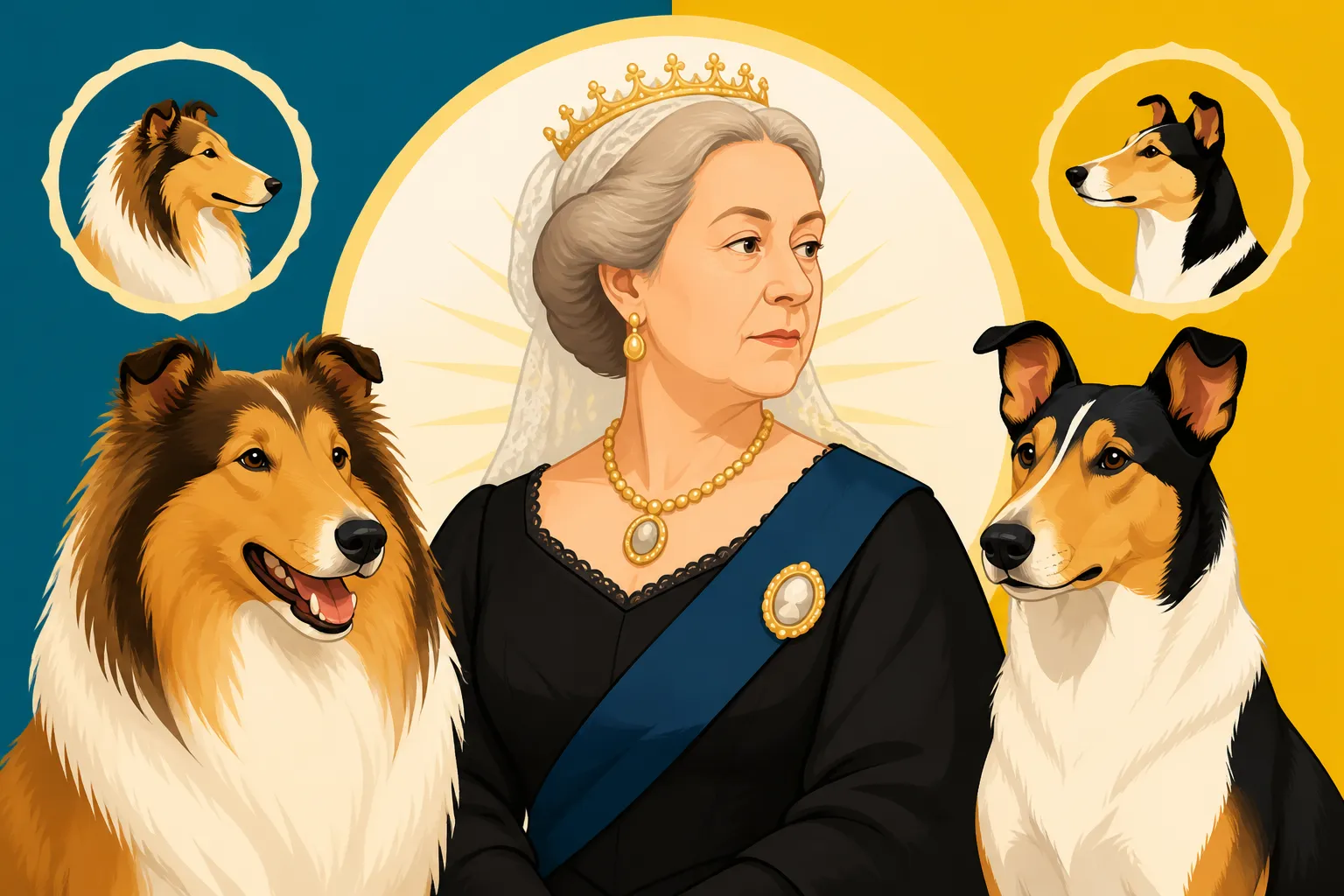
Whether Queen Victoria Owned Both Collie Varieties
Many prospective Collie owners wonder about the breed's origins and its rise to prominence, often hearing tales of royal admirers. It's a common thought to wonder just how deeply figures like Queen Victoria were involved with the breed, and specifically, if she differentiated between or owned both the iconic Rough Collie and its lesser-known Smooth counterpart. This guide will delve into Queen Victoria's connection with Collies and explore the historical evidence to answer just that.
Queen Victoria's Enduring Fascination with Collies
It's truly remarkable how one individual can elevate a regional working dog to international stardom, and for the Collie, that individual was Queen Victoria. Before her time, the Collie was a hardy, intelligent dog primarily found in the Scottish Highlands, adept at droving sheep and cattle. They were practical dogs, valued for their brains and brawn, not necessarily their refined appearance. The idea of a "show dog" as we know it today was still in its infancy, and certainly, the Collie hadn't yet been primped and preened for such a role.
The story goes that Queen Victoria first encountered the breed during one of her visits to Balmoral Castle in the mid-19th century. The rugged beauty of the Scottish landscape, and the dogs that worked within it, captivated her. She was known to be an avid dog lover, and it wasn't long before several Collies joined her royal kennels. Her public admiration for these intelligent, loyal dogs sparked a craze among the aristocracy and the wider public. Suddenly, everyone wanted a Collie, not just as a working companion but as a symbol of status and companionship. This royal endorsement transformed the Collie's destiny, launching it from the misty glens into the drawing rooms and eventually, the show rings of the world. Her personal preference, and the visibility her dogs received, played a significant role in shaping public perception and the breed's development. When Queen Victoria First Saw a Collie delves deeper into that initial spark.
Distinguishing Between Rough and Smooth Collies
To understand whether Queen Victoria owned both Collie varieties, it's important to first clarify what defines a Rough and a Smooth Collie. Fundamentally, they are the same breed, sharing the same lineage, temperament, and general body structure. The crucial difference, as their names suggest, lies entirely in their coats. The Rough Collie boasts that magnificent, flowing double coat that immediately brings to mind Lassie – long, dense, and luxuriant, with a profuse mane and frill. This coat requires dedicated grooming to keep it free from mats and looking its best, a task that often involves specialized brushes and a good amount of time, contrasting sharply with the minimal grooming needs of its smooth cousin.
The Smooth Collie, on the other hand, possesses a short, dense, and hard outer coat with a soft undercoat. It's sleek, practical, and remarkably easy to care for. Imagine the same elegant head, the expressive eyes, and the athletic build, but without all the hair. While the Rough Collie was often preferred for show due to its dramatic appearance, the Smooth Collie historically remained the more popular choice among shepherds for its ease of maintenance in tough working conditions. It's quite a dichotomy; one became a global icon, the other a well-kept secret for those who understood its practical advantages. It's a testament to the breed's versatility that both types exist and thrive, offering different levels of commitment in terms of grooming. Whether the Rough and Smooth Collie Are One Breed further explores their shared heritage.
| Feature | Rough Collie | Smooth Collie |
|---|---|---|
| Coat Length | Long, flowing, abundant double coat | Short, dense, hard outer coat with soft undercoat |
| Grooming Needs | High (daily brushing, significant seasonal shedding) | Low (weekly brushing, moderate seasonal shedding) |
| Appearance | Iconic "Lassie" look, dramatic mane and frill | Sleek, athletic, more utilitarian appearance |
| Historical Role | Both working and show; increasingly preferred for show | Predominantly working; valued for practicality |
| Temperament | Identical (intelligent, loyal, gentle) | Identical (intelligent, loyal, gentle) |
The Royal Kennels and the Varieties Present
Queen Victoria's initial Collies were almost certainly working dogs, acquired directly from Scottish farms. At that time, while the distinction in coat length existed, it wasn't the rigid classification we see in modern breed standards. Breeders weren't yet striving to exaggerate one coat type over another for the show ring. The focus was on working ability and the overall health of the animal. Therefore, it's highly probable that among her many beloved canines, Queen Victoria owned Collies that exhibited a range of coat lengths, including those we would recognize today as Smooth Collies.
Historical records and paintings from the era often depict Collies with varying coat lengths within royal collections. While the long-coated variety quickly became the favored "show" type and gained immense popularity thanks to royal patronage, the practical advantages of the smooth coat were certainly appreciated by those who had large kennels to manage, even royal ones. It’s reasonable to assume that some of her Collies were of the shorter-coated type, either intentionally chosen for their utility or simply present as part of a litter. The specific pedigree and detailed descriptions that modern breeders document with organizations like the American Kennel Club or The Kennel Club (UK) simply weren't commonplace then. The emphasis was on the dog itself, its character, and its loyalty. For more about their original purpose, check out The Collie Was a Scottish Droving Dog Before It Was a Show Dog.
Furthermore, as the breed began to be standardized and shown, the long-coated "Rough" variety quickly captured the public's imagination, partly due to its striking appearance and partly because it became synonymous with the "Lassie" image many years later. However, the Smooth Collie has always been quietly admired by those who appreciate a less high-maintenance coat without sacrificing any of the breed's wonderful characteristics. While her specific "favorite" Collies that achieved fame were often Roughs, the presence of Smooths in her wider collection of dogs is historically plausible and aligns with how Collies were bred and managed during her reign.
How Victoria's Patronage Shaped the Collie's Future
Queen Victoria's profound influence on the Collie breed cannot be overstated. Her endorsement catapulted the Collie into the public eye, creating a demand that saw the breed's numbers soar. This newfound popularity, while certainly beneficial in many ways, also led to changes in breeding practices. Where once function reigned supreme, aesthetics began to take center stage, especially in the burgeoning dog shows of the Victorian era. Breeders started to focus on refining the Collie's appearance, often emphasizing traits like the long, narrow head and the abundant coat of the Rough Collie.
This shift in focus meant that the Rough Collie, with its more dramatic and eye-catching coat, became the dominant variety in the public consciousness and the show ring. While the Smooth Collie continued to exist and was cherished by many, it often took a backseat in terms of public recognition and demand. The breed standard, which began to solidify during this period, reflected the emerging preferences, further entrenching the Rough Collie as the quintessential representation of the breed. Even today, when people hear "Collie," they almost invariably picture the long-haired version, a direct legacy of the Victorian era's emphasis on visual grandeur. What Royal Approval Did to Collie Demand provides more insights into this phenomenon.
The passion for Collies that Victoria ignited endures to this day. Modern Collie owners, whether their companion is a Rough or a Smooth, benefit from the rich history and dedicated efforts of breeders and enthusiasts throughout the years. Caring for these wonderful dogs often involves ensuring they have the right nutrition, proper grooming tools, and veterinary care. Fortunately, resources are abundant for today's owners. Whether you need specific brushes for a Rough Collie's luxuriant coat or premium food for any Collie, finding high-quality products from reputable retailers like Chewy makes managing their care much simpler than it might have been in Victoria's time. The enduring appeal of the Collie means there’s a thriving community of owners who still seek out the best for their beloved companions, whether for daily enrichment or for managing specific health concerns like those discussed in What the MDR1 Mutation Actually Does to a Collie.
While Queen Victoria might not have explicitly differentiated between "Rough" and "Smooth" Collies in the precise way we do today, her royal kennels likely housed dogs that fit both descriptions. Her love for the breed, regardless of coat length, undeniably set the stage for the Collie's transformation from a humble sheepdog to a beloved family companion worldwide. For those considering bringing a Collie into their home, understanding this history is part of appreciating the breed's unique charm and legacy. Modern Collies, with their elegant lines and devoted personalities, represent a living connection to that royal past. And for their continued well-being, many owners rely on convenient access to a wide array of supplies, from specialized diets to training aids, often sourced from online platforms like Chewy, making responsible ownership more accessible than ever. Ultimately, the long and rich history of the Collie, influenced significantly by royal patronage, has gifted us with a truly special dog.
Disclaimer
This article is for general informational purposes only and does not constitute professional advice. Laws, prices and regulations vary by location and change over time. Consult a qualified professional for guidance on your specific situation.