Whether a Collie’s Expression Is Judged
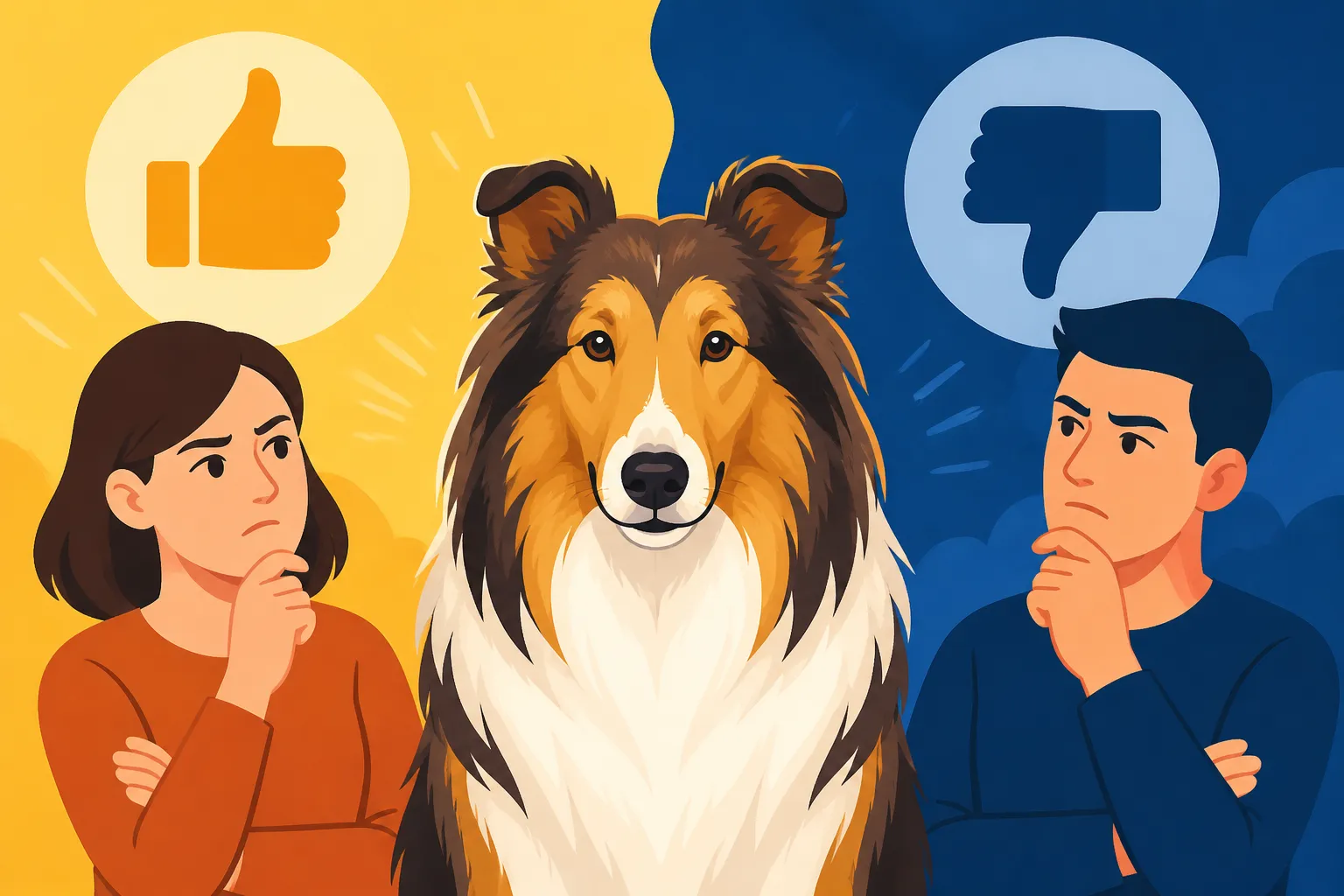
When a Collie enters the show ring, people often notice the coat first—but judges also pay close attention to the dog’s expression. That can feel frustratingly subjective: what does a “sweet” or “intelligent” expression actually look like? This guide explains the features behind it, how judges assess them, and why one detail rarely decides the whole picture.
What a Collie’s expression means in the show ring
Expression is the impression made by the whole head
A Collie’s expression is not a single feature that a judge can measure on its own. It is the overall impression created by the eyes, their shape and placement, the head’s proportions, the ears, and the dog’s alertness. In the ring, a judge may describe an expression as sweet, intelligent, alert, or full of interest. Those words are subjective, but they point toward a recognizable combination of features rather than a particular “look” that every Collie must copy exactly.
That distinction matters if you are watching a show and trying to work out why one dog’s head seems especially appealing. It may not be because the dog has unusually large eyes or dramatic markings. Instead, the eyes may sit at the right angle in a well-proportioned head, while the ears and the dog’s attentive manner complete the impression. A good expression should look like it belongs to that dog—not like a pose assembled from separate parts.
Owners sometimes worry that their Collie’s face is not expressive enough because it looks different in a photograph, at home, or when the dog is tired. But expression is assessed in context. A still image can flatten the angle of the eyes, catch the ears in an unhelpful position, or show the dog looking away. In the ring, the judge sees the dog moving, responding, and standing naturally, which offers a fuller picture.
Expression is one part of conformation judging, not a measure of how affectionate, clever, or suitable a dog is as a companion. A pet Collie does not need to meet a show judge’s ideal to be a wonderful family dog. If you are learning the breed’s overall outline as well as its head, What a Collie Weighs and How Tall It Stands offers useful context.
How the eyes contribute to expression
The eyes are central to the Collie’s expression. Breed standards generally describe them in terms of shape, size, set, and color. In the American Collie standard, the ideal eye is medium-sized, almond-shaped, and set somewhat obliquely. The intended effect is not a round, startled look or a hard, fixed stare; it is an alert, gentle expression that fits the rest of the head.
Color is considered in relation to coat color. Dark eyes are generally preferred, while blue merles may have blue or merled eyes. This does not mean that any eye color automatically creates a pleasing expression. Judges consider whether the eyes suit the dog’s coloring and head, and whether the overall impression remains balanced. For a closer look at the eye description, see Whether a Collie's Almond Eyes Are in the Standard.
It is also easy to confuse a striking eye with a correct eye. A very pale eye may catch attention, and a photograph with strong contrast may make the eyes appear larger or more prominent than they are in person. The judge is assessing the dog in front of them, not the most dramatic detail in a portrait. The goal is harmony: eyes that are appropriate in shape, placement, and color for the individual Collie.
Eye appearance should not be used as a shortcut for judging a dog’s health. A show-ring assessment of expression is not an eye-health examination, and a dog can have a beautiful expression while still needing routine veterinary care. If you are choosing a puppy, ask about health checks and records separately from the breeder’s description of the puppy’s head or expression.
The ears and head shape complete the picture
A Collie’s ears help communicate attention. When the dog is alert, the ears are expected to be carried erect with the tips folding forward. When relaxed, they may sit differently. That change is one reason an ear position in a single photo should not be treated as the whole story. The ears contribute to expression, but judges look at how they fit the head and how the dog carries itself, too.
The Collie’s head proportions matter because they frame the eyes and influence the overall impression. A balanced head can make the dog look refined and attentive without appearing weak, exaggerated, or severe. The muzzle, skull, stop, and underjaw all have a role in that balance. These features are not judged as isolated decorations; the judge evaluates whether they come together in a way that is characteristic of the breed.
People sometimes focus on whether the ears are perfectly positioned at every moment. In practice, the dog may turn its head, listen to a sound, or relax between movements. The judge may encourage attention, but a naturally alert expression is different from a handler constantly trying to manufacture one. To understand the ear detail more closely, read Whether a Collie's Ears Should Tip and Whether Prick Ears Disqualify a Collie.
Which features judges look at together
A practical guide to expression-related features
It can help to separate the visible details from the impression they create. The table below is a learning aid, not a scoring formula: judging is not a matter of adding up points for individual facial features.
| Feature | What judges generally consider | How it contributes to expression |
|---|---|---|
| Eyes | Shape, size, placement, color, and fit with coat color | Helps create an alert, gentle, intelligent look |
| Ears | How they are carried when alert and how they fit the head | Adds attentiveness and breed character |
| Head proportions | Balance among skull, muzzle, stop, and underjaw | Frames the eyes and helps the face look harmonious |
| Overall demeanor | Natural alertness and interest in the surroundings | Gives the expression life rather than a fixed, posed look |
| Coat color | Whether eye color is appropriate for the dog’s color | Helps the face appear balanced as a whole |
The table is useful when learning what to observe, but it should not encourage you to inspect a dog as if every feature were independent. A Collie with correct individual details can still look less harmonious if those details do not work together. Conversely, an expression that feels especially appealing may come from the balance of several features rather than one conspicuous trait.
The dog’s condition and presentation can affect what you notice, too. A tired dog may look less alert. A nervous dog may hold its ears differently or avoid eye contact. A handler’s movement can draw the dog’s attention away at the wrong moment. Judges account for the dog in the ring, but the scene still reminds us that expression is dynamic, not a mask permanently fixed on the face.
Expression is judged alongside the whole dog
A judge does not assess expression in a vacuum. The dog is evaluated against the relevant breed standard, and expression sits within a broader assessment that may include structure, movement, coat, condition, and overall type. A beautiful face cannot make up for every other concern, just as a dog that does not win is not necessarily lacking a good expression.
The weight a judge gives to particular qualities can vary with the standard and the individual dog. Standards also differ between kennel organizations and countries, so a description written for one registry should not be assumed to apply word-for-word everywhere. When comparing show results or reading online discussions, check which standard is being used before drawing conclusions about a particular feature.
This is one reason people new to dog shows can find judging confusing. A dog may look striking to a spectator, while a judge prefers another dog whose outline, movement, and head fit the standard more consistently. Spectators often notice color, coat, or a memorable face first. Judges are asked to evaluate the complete dog, not simply choose the one that looks most photogenic.
If you are learning to compare Collie varieties, remember that Rough and Smooth Collies are varieties of the same breed in some registries, with coat being the visible difference most people notice first. Their expression is not supposed to become a different breed type simply because one dog has a long coat and the other does not. Rough and Smooth Are Two Varieties of One Collie explains that relationship, while The Four Colors a Collie Comes In helps make sense of how coat color can influence the look of the face.
Expression is not the same as temperament
A Collie’s show expression may suggest attentiveness or gentleness, but it does not prove that the dog has a particular personality. A dog that looks soft in the ring may still be shy in a busy setting. A dog with a bold, alert look may be affectionate and easygoing at home. Temperament is learned through observation across situations, not inferred from a single facial impression.
This matters especially for prospective owners. If you are meeting a litter, look beyond the face and ask how each puppy responds to people, sounds, handling, and new surroundings. A puppy may be sleepy during your visit, or may appear unusually lively because the litter has just been playing. The breeder can describe what they have observed over time, but no single moment should be treated as a complete temperament assessment.
The same caution applies to adult dogs. A rescue Collie may look worried because the setting is unfamiliar, while a show dog may appear especially animated because it has learned the rhythm of the ring. Neither first impression tells the whole story. For a broader discussion of family fit and expectations, see Whether a Collie Suits a First Time Owner.
What can change how a Collie’s expression appears
Lighting, photographs, and grooming can mislead
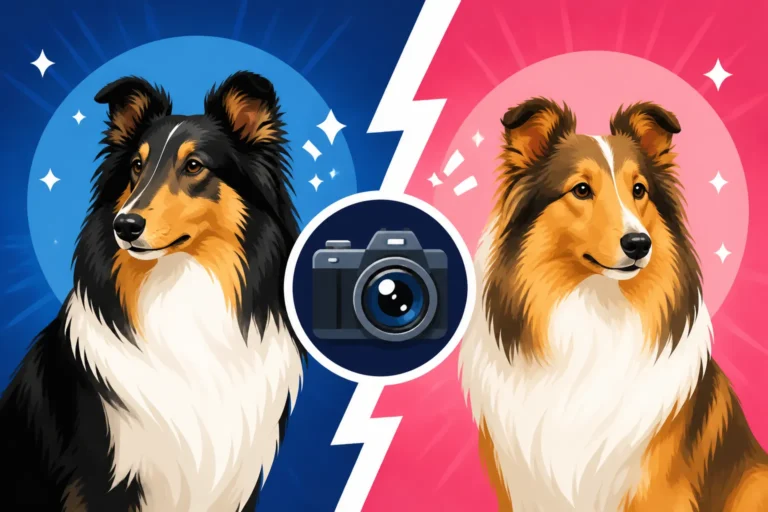
Photographs are useful for seeing a dog’s general appearance, but they can exaggerate or soften features. Lighting can make dark eyes appear bright or obscure their shape. A camera held too high, too low, or too close can change the apparent proportions of the head. A dog looking directly into the lens may seem more intense than one shown in profile, even though the difference is mostly angle and timing.
Coat can also affect what you notice. The Rough Collie’s furnishings may frame the head differently from the Smooth Collie’s short coat, while markings can draw attention toward or away from the eyes. That does not mean coat or color should be used to explain away every difference. It simply helps to remember that the expression is part of the whole dog, and the whole dog can appear different depending on presentation.
If you are evaluating a dog from photos, try to look at more than one image. A natural standing photo, a side view, and a relaxed candid image can each show something different. When possible, see the dog in person and watch how its face changes as it responds to people and its surroundings. A posed image can be attractive, but it should not be the only basis for judging expression or choosing a puppy.
Age and alertness affect the look
A puppy’s face changes as it grows. Its head, coat, and proportions develop, and the way it carries its ears may change with maturity. Puppy photographs can be charming, but they are not a guarantee of exactly how the adult dog will look in the show ring. Experienced breeders may have a better sense of likely development, yet individual growth still unfolds over time.
Adult dogs also vary from moment to moment. One may look especially alert when following a toy or listening to its handler; another may appear softer when resting. Judges assess the dog in the ring as it is presented, but they also consider breed type and structure rather than treating one expression captured in a split second as definitive.
For owners, this is a useful reminder not to overinterpret ordinary variation. A dog that looks tired after a long walk does not suddenly have a poor expression. Likewise, a puppy that does not hold its ears in the classic alert position during a quiet visit is not automatically unsuitable for the breed. Breed standards describe an ideal, while real dogs are living individuals with changing moods and stages of development.
How to use the breed standard without overthinking it
Learn the description, then look for balance
If you want to understand Collie judging, start by reading the breed standard used by the registry whose shows you are watching. Pay attention to the description of the head, eyes, ears, and expression, but try not to turn each sentence into a rigid checklist. The standard describes a complete breed type. The most useful question is often not “Is this one feature perfect?” but “Do the features fit together in a characteristic, balanced way?”
Watching several dogs can make the language easier to understand. Notice how the expression changes when a dog is alert, relaxed, or moving. Compare dogs without assuming that the most dramatic face is the most correct one. If you attend a local show, you can also observe how handlers present their dogs and how judges examine them, while remembering that the result reflects a comparison among the dogs entered that day.
Different judges may place different emphasis on details within the standard, and the dogs in each class will vary. That does not mean judging is arbitrary, but it does mean that a result should not be reduced to a simple verdict that one dog has a “good” face and another does not. It is a decision made in a specific class, under a particular standard, with the dogs present.
Keep show judging separate from choosing a companion
If you are looking for a pet, use the standard as a way to understand the breed—not as the only measure of a puppy’s value. Ask about health testing, early socialization, the parents’ temperaments, and the breeder’s support. Spend time watching the puppies interact rather than choosing solely from a still photograph or a brief first impression.
A breeder’s description of a puppy as “beautifully expressive” can be meaningful as an observation, but it is not a substitute for health information or a thoughtful match. Ask what the breeder has seen in the puppy’s behavior, how the puppy responds to handling, and what they think its needs may be. A compatible temperament and a responsible placement matter more to everyday life than winning a comparison of head details.
For more background on how modern expectations took shape, see Whether the Victorian Show Ring Changed the Collie's Head. And if your interest is the dog’s appearance more generally, Whether a Collie Must Have a White Collar explains another feature people often treat as more decisive than it is.
A Collie’s expression is best understood as a combined impression: eyes, ears, head proportions, and alertness working together. Judges consider that impression as part of the whole dog, while owners can appreciate it without turning every facial detail into a pass-or-fail test. The show-ring ideal is useful context, but it is not a measure of a Collie’s worth as a companion.
Disclaimer
This article is for general informational purposes only and does not constitute professional advice. Laws, prices and regulations vary by location and change over time. Consult a qualified professional for guidance on your specific situation.