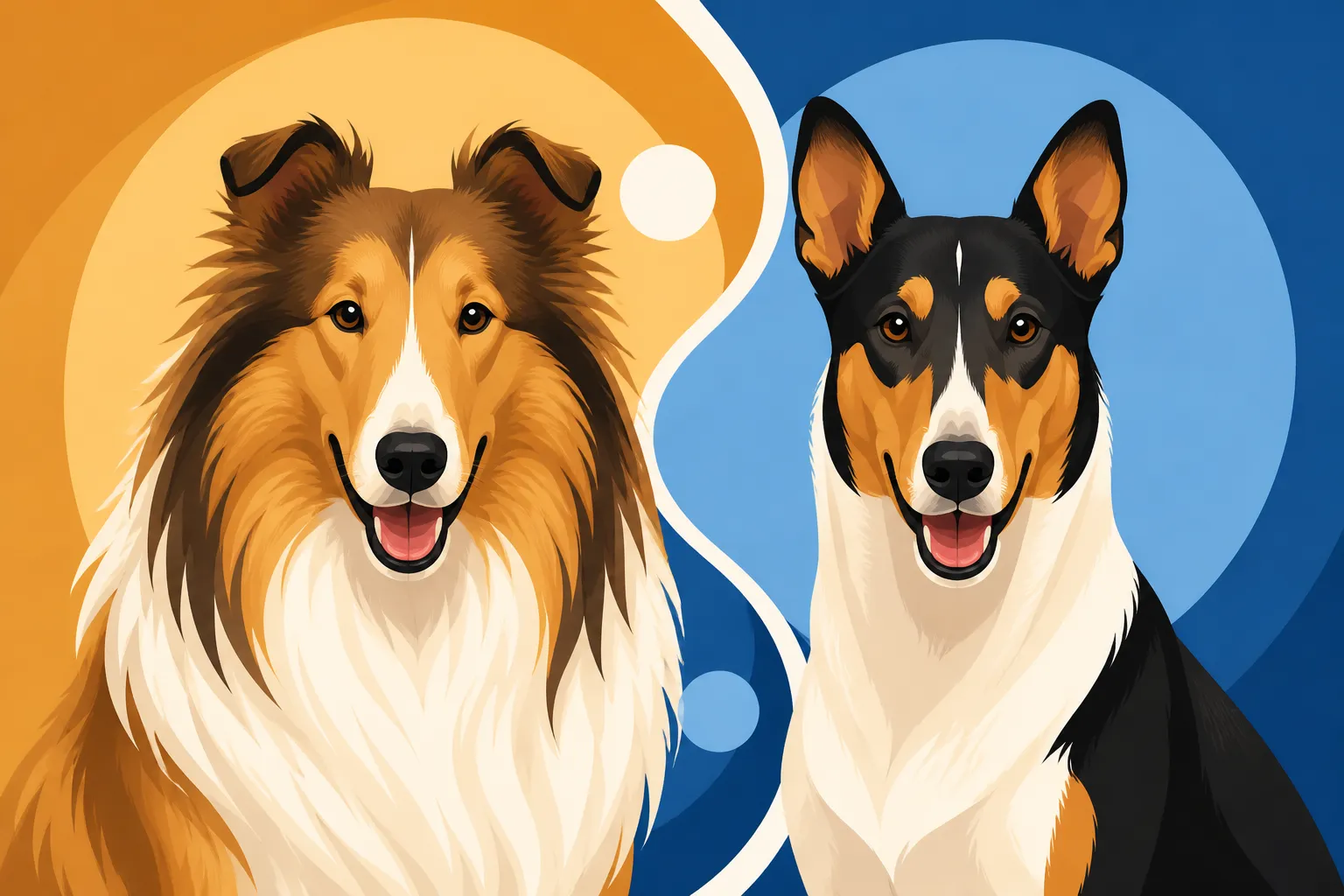
Rough and Smooth Are Two Varieties of One Collie
It’s a common moment of confusion for many prospective Collie owners: you see the iconic, flowing locks of a Rough Collie, often associated with the legendary Lassie, and then you encounter a sleek, short-coated dog that also goes by the name “Collie.” Are they different breeds? Do they have different personalities or care needs? This guide will clear up that mystery, revealing why these two distinct looks belong to a single, wonderful breed, and exploring everything that makes them unique, yet fundamentally the same.
Understanding the Shared Heritage of Rough and Smooth Collies
When people first learn about the existence of both Rough and Smooth Collies, their immediate assumption is often that they are two entirely separate breeds, perhaps like a German Shepherd and a Belgian Malinois. However, this isn't the case at all. They are, in fact, two coat varieties of the very same breed, recognized universally by major kennel clubs and breeders alike. This shared identity is rooted deeply in their history as working dogs in Scotland, long before they became the beloved family companions and show ring stars we know today.
A Look Back at Their Ancestry and Original Purpose
Imagine the vast, often harsh landscapes of Scotland centuries ago. Farmers and shepherds needed intelligent, hardy dogs to manage their flocks across challenging terrain and unpredictable weather. These dogs weren't bred for their glamorous looks or for winning ribbons; they were bred for their working ability, their stamina, and their keen herding instinct. The Collie, in its earliest forms, was a robust and versatile working dog, capable of both gathering and driving sheep. There was no distinction made then for coat length in terms of breed status; practicality ruled. Dogs with slightly longer coats might have been better suited to colder, wetter conditions, while shorter-coated dogs might have been preferred in areas with more brush or where a quicker drying coat was an advantage. Both were simply "Collies," doing the demanding work they were bred for.
This shared ancestry means that Rough and Smooth Collies carry the exact same genetic blueprint for temperament, intelligence, and overall build. The divergence in coat length was a natural variation within the working population, not a deliberate creation of two different breeds. Their ability to work livestock, their keen senses, and their devotion to their human partners were the traits that mattered, and these characteristics remain firmly ingrained in both varieties to this day. It's a testament to their enduring practicality that these fundamental traits have been preserved.
The Genetics Behind Coat Length
The difference between a Rough Collie's luxuriant mane and a Smooth Collie's trim jacket comes down to a simple genetic trait. It’s not a complex mosaic of genes, but primarily the result of one specific gene that determines coat length. Essentially, both parents carry genes for coat length, and depending on the combination they pass down to their puppies, you can end up with either rough or smooth coated offspring. This is why it's entirely possible, and indeed common, for a litter of puppies from two Rough Collies to include a Smooth Collie or two, if both parents carry the recessive gene for short hair. Conversely, two Smooth Collies can also produce Rough Collies, though this is less common and depends on their genetic makeup.
This genetic interplay is fascinating and helps solidify their shared identity. It highlights that the coat is merely a superficial difference, like eye color in humans. The core of the dog, its very Collie-ness, is unaffected. Breeders who are experienced with the breed understand this genetic lottery well and often plan breedings with an eye toward both coat types, appreciating the value and beauty of each. They prioritize health, temperament, and adherence to the breed standard, knowing that the coat length is a variable they can anticipate. You can often find detailed information on this, and other health genetics, by exploring resources like The Three Genetic Tests a Collie Breeder Owes You.
How Breed Clubs Recognize Both Varieties
Globally, major kennel clubs unequivocally recognize Rough and Smooth Collies as two varieties of the same breed. In the United States, for example, the American Kennel Club (AKC) treats them as one breed, competing under the same breed standard, but often judged separately within the show ring based on their coat type. This means they are evaluated against the same ideal for structure, movement, and temperament, but their coats are assessed according to the specific requirements for either a rough or a smooth coat. In some other countries, they might even compete together, with the coat difference being just one characteristic among many.
This unified recognition underscores the fact that the two varieties are intrinsically linked. They share the same breed standard, which describes the ideal Collie in terms of head type, ear set, eye shape, body proportions, and gait. The only divergence in the standard comes down to the description of the coat itself. This approach helps preserve the integrity of the Collie breed as a whole, ensuring that breeders focus on the holistic health and characteristics of the dog, rather than fragmenting the breed based solely on outward appearance. It’s a testament to the fact that what truly defines a Collie goes far beyond the length of its hair.
The Rough Collie: A Deep Dive into the Iconic Coat
When most people think of a Collie, the image that springs to mind is almost invariably that of a Rough Collie. This is the dog popularized by "Lassie," with its majestic, flowing mane and abundant coat. It’s undeniably beautiful, a vision of canine elegance and grace. But beneath that stunning exterior lies a coat that requires understanding and dedicated care, a commitment that many new owners might underestimate without proper guidance.
Describing the Rough Collie's Coat in Detail
The Rough Collie's coat is a double coat, meaning it consists of two distinct layers: a soft, dense undercoat for insulation, and a long, harsh outer coat that protects against the elements. This outer coat is abundant, forming a beautiful frill around the neck, feathering on the legs, and a magnificent "petticoat" on the hindquarters. The texture of the outer coat should feel somewhat coarse to the touch, designed to shed water and dirt, while the undercoat is soft and woolly, providing warmth in winter and protection from heat in summer. It’s a marvel of natural engineering, perfectly adapted for working in varied climates.
The sheer volume of this coat is what gives the Rough Collie its regal and glamorous appearance. The hair is longest on the frill, chest, and breeches, tapering shorter on the face and lower legs. This distribution creates a balanced, elegant silhouette. The colors range from sable and white, tricolor (black, tan, and white), blue merle, and the less common white with colored markings. Each color pattern is enhanced by the dramatic contrast of the coat's length and texture. For those considering this variety, it’s important to appreciate that this beauty is not maintenance-free.
The Maintenance Demands of the Long Coat
Let's be realistic: a Rough Collie's coat is gorgeous, but it's also a commitment. This isn't a wash-and-wear kind of dog. To keep that beautiful coat free of mats, tangles, and excessive shedding, regular grooming is absolutely essential. We're talking about a minimum of a good, thorough brushing session once or twice a week, and often more frequently during "coat blowing" seasons. During these times, typically spring and fall, a Rough Collie will shed its dense undercoat in earnest, and if not brushed out, this dead hair can quickly form painful mats that pull on the skin. You'll need a variety of tools: a good pin brush, a slicker brush for smaller tangles, and a sturdy metal comb to check for mats in those hidden areas like behind the ears or in the "armpits."
For many owners, investing in high-quality grooming tools from a pet supply retailer like Chewy is a must. You'll want durable brushes that can penetrate the thick coat without scratching the skin, and powerful dog-specific blow dryers can dramatically cut down drying time after baths. The key is consistency. Skipping a week can quickly turn into a monumental task, leaving you battling stubborn mats that require hours of careful work to remove, or even professional intervention. This grooming routine also serves as a wonderful bonding opportunity, but it’s crucial to start early when they are puppies to get them accustomed to the process. For more on this, you might find How Often a Rough Collie Should Be Brushed particularly insightful.
Misconceptions About Shaving or Trimming
One of the most persistent misconceptions about the Rough Collie's coat, especially in warmer climates, is that shaving it will help the dog stay cool or reduce shedding. This couldn't be further from the truth, and in fact, shaving a Rough Collie can do more harm than good. Their double coat is designed by nature to insulate them from both cold and heat. The dense undercoat traps air, creating a thermal barrier that keeps them warm in winter and actually helps keep them cool by preventing direct sunlight from reaching their skin in summer. When you shave this coat, you disrupt this natural protection.
What often happens after shaving is that the undercoat grows back faster and thicker than the coarser outer coat, leading to a woolly, often matted texture that is much harder to maintain than the original coat. The outer guard hairs may never fully grow back correctly, leaving the coat permanently damaged, coarser, and more prone to matting. Furthermore, removing the protective outer coat exposes their delicate skin to sunburn and increases their risk of skin conditions. Trimming is generally limited to tidying up the feet and hocks for a neat appearance, but never for overall coat reduction. If you're struggling with shedding, a deshedding bath and thorough blow-out by a professional groomer is a far better solution than reaching for the clippers. You can read more about this in Why a Collie Should Never Be Shaved.
The Smooth Collie: Unpacking the Sleek Alternative
While the Rough Collie captures most of the public's attention, the Smooth Collie is a magnificent variety that deserves just as much admiration. It offers all the intelligence, loyalty, and beauty of its long-coated counterpart, but in a package that many find more practical for their lifestyle. Often described as the "wash and wear" version of the breed, the Smooth Collie is a testament to the original working dog's versatility and athleticism.
Describing the Smooth Collie's Shorter Coat
The Smooth Collie possesses a dense, short, and hard outer coat, lying flat to the body, with a softer, very dense undercoat. Unlike the Rough Collie's flowing locks, the hair on a Smooth Collie is short all over, giving it a sleek, clean-cut silhouette. While it doesn't have the dramatic frill or feathering of the Rough, it still has a discernible mane around the neck, though much less pronounced, and some slight feathering on the backs of the legs. The coat's texture should feel somewhat coarse to the touch, providing excellent protection against weather, similar to its rough-coated kin, just in a shorter form.
This short, protective coat highlights the Collie's elegant structure and muscular build, making it appear more athletic and streamlined. All the same beautiful colors are present: sable and white, tricolor, blue merle, and white. The intensity and clarity of these colors are often striking on the shorter coat, allowing the patterns to truly stand out. The Smooth Collie's appearance often makes people do a double-take, as they're not accustomed to seeing a Collie without the long, flowing hair. Yet, once you look past the coat length, the quintessential Collie expression and structure are immediately recognizable.
Grooming Advantages and Considerations
One of the biggest draws for many owners considering a Smooth Collie is the significantly reduced grooming time. While no dog is entirely maintenance-free, the Smooth Collie certainly requires less intensive coat care than a Rough Collie. Regular brushing once a week with a slicker brush or a rubber curry comb is usually sufficient to remove loose hair, stimulate the skin, and keep the coat healthy and shiny. During shedding seasons, you might want to increase this to two or three times a week, but the sheer volume of hair to manage will be considerably less.
This easier grooming routine means less time spent battling mats and more time enjoying your dog. For busy families or individuals who love the Collie temperament but are intimidated by the grooming demands of the rough variety, the smooth offers an ideal alternative. You'll still want to keep grooming tools on hand, and a good quality brush from a brand like Chewy will be useful. Despite the shorter coat, Smooth Collies still have an undercoat and will shed, so don't expect a completely hair-free home. However, the hair they do shed tends to be less noticeable and easier to clean up than the fluffy tumbleweeds produced by their rough-coated relatives. It's truly a "wash and wear" option that allows the Collie's personality to shine without excessive grooming demands. Whether a Smooth Collie Sheds Less offers further comparison.
Its Working Heritage and Modern Role
Just like their Rough counterparts, Smooth Collies trace their roots directly back to the working dogs of Scotland. In fact, many believe that the shorter-coated varieties were particularly prized for their practical utility in certain environments. A shorter coat could be less prone to picking up burrs, snow, or mud, and might dry more quickly after a day out in the damp Scottish weather. This made them ideal for driving livestock through varied terrains, highlighting their hardiness and resilience. They were, and still are, highly intelligent, biddable, and eager to please, making them excellent partners in a variety of activities.
Today, Smooth Collies excel in the same dog sports and activities as Rough Collies, including obedience, rally, agility, and, of course, herding. Their streamlined coat can even be an advantage in some high-speed sports, allowing for greater freedom of movement and less risk of overheating. They make exceptional therapy dogs, loyal family companions, and competitive performance dogs. Despite being rarer in numbers than the Rough Collie, Smooth Collies are gaining recognition for their inherent qualities, proving that the heart and soul of a Collie are far more important than the length of its fur.
Beyond the Coat: Shared Temperament and Characteristics
It cannot be stressed enough: the only significant difference between a Rough and a Smooth Collie is the length of their coat. Everything else, from their foundational temperament to their intelligence and general health considerations, is shared between the two varieties. This continuity is a core aspect of what makes a Collie a Collie, regardless of whether they sport a long, flowing mane or a sleek, practical jacket.
The Classic Collie Personality
At their core, both Rough and Smooth Collies share the same gentle, intelligent, and devoted temperament that has charmed generations of dog lovers. They are renowned for being exceptionally good-natured, making them wonderful family pets. Collies are typically very patient with children, often forming strong bonds and taking on a protective, albeit gentle, guardianship role. Their herding instincts might manifest as a tendency to gently nudge or "gather" family members, especially children, but this is usually done with a soft mouth and an innate understanding of boundaries. They are rarely aggressive and tend to be quite sensitive, responding best to positive reinforcement and gentle handling.
This inherent kindness extends to other animals as well. With proper socialization, Collies generally get along well with other dogs, cats, and even smaller pets, often treating them as part of their "flock." They are known for their strong desire to be close to their human families, often following them from room to room – earning them the nickname "Velcro dogs." This deep attachment means they thrive on companionship and can suffer from separation anxiety if left alone for extended periods without adequate mental and physical stimulation. Their quiet, watchful nature also makes them surprisingly good watchdogs, quick to alert their families to strangers or unusual occurrences with their characteristic bark. For an in-depth understanding of their behavior, you can explore The Bark Is the Trait Collie Owners Underestimate.
Intelligence and Trainability in Both Varieties
Collies are highly intelligent dogs, a trait that was essential for their original role as independent herding animals. This intelligence, combined with their eager-to-please nature, makes them highly trainable. They pick up new commands quickly and enjoy mental challenges, making them excel in various dog sports and activities. Whether it's complex obedience routines, agile courses, or scent work, a Collie's sharp mind thrives on having a "job" to do, even if that job is simply learning new tricks or solving puzzle toys. They are sensitive to their owner's moods and intentions, often seeming to anticipate commands before they are even given.
However, their intelligence also means they can become bored or mischievous if not adequately stimulated. A bored Collie can invent its own entertainment, which might include excessive barking, digging, or rearranging your household items. Consistent, positive training from puppyhood is key to harnessing their intellect. They respond poorly to harsh corrections or yelling, which can make them shut down or become withdrawn. Instead, positive reinforcement, praise, and tasty treats work wonders with these clever dogs. They genuinely want to please, and a well-trained Collie is a joy to live with, capable of understanding a vast array of commands and social cues. You might also want to read Forty Five Minutes a Day, and Half of It in Its Head for insight into their mental exercise needs.
Health Considerations Common to Both
Because Rough and Smooth Collies are genetically the same breed, they share the same predispositions to certain health conditions. Responsible breeders screen their breeding stock for these conditions to minimize their occurrence in future generations. One of the most critical genetic health concerns in Collies is the MDR1 mutation, which affects how certain drugs are processed. Dogs with this mutation can have severe, even fatal, reactions to common medications like ivermectin (often found in heartworm preventives) and some anesthetic agents. This is why genetic testing for MDR1 is absolutely vital for all Collies, regardless of coat length. Assume Your Collie Has the MDR1 Mutation provides crucial information on this.
Other health considerations include Collie Eye Anomaly (CEA), a congenital eye disease that can range from mild to severe, potentially affecting vision. Bloat (Gastric Dilatation-Volvulus), a life-threatening condition common in deep-chested breeds, is also a concern for both varieties. Epilepsy and certain autoimmune diseases like Dermatomyositis are also seen in the breed. This shared health profile further solidifies their identity as one breed. Prospective owners should always seek out breeders who perform comprehensive health screenings and are transparent about the health history of their breeding dogs. Understanding these shared health aspects is crucial for providing optimal care for any Collie.
Living with Both: Practical Differences and Similarities
When you decide to bring a Collie into your home, whether rough or smooth, you're welcoming a wonderful, intelligent, and devoted companion. While their core personalities and needs are identical, there are some practical day-to-day differences, predominantly related to their coats, that owners should be aware of. These differences can subtly influence your lifestyle choices, from cleaning routines to managing outdoor activities.
Impact on Household Shedding and Cleaning
Let's address the elephant in the room – or rather, the hair on the couch. Both Rough and Smooth Collies shed, but the type and volume of shed hair differ significantly. A Rough Collie's long, abundant undercoat sheds in fluffy clumps, especially during their twice-yearly "coat blows." During these periods, you might find yourself battling tumbleweeds of fur and feeling like you could knit a new dog every week. This shed hair can weave its way into carpets, furniture, and clothing, requiring consistent vacuuming and lint rolling. Many Rough Collie owners invest in high-powered vacuums and washable furniture covers to manage the influx of fur.
A Smooth Collie also sheds, but their shorter, stiffer hairs tend to be less conspicuous. While you'll still find hair around the house, it's usually less voluminous and perhaps easier to manage with regular sweeping or a lint roller. The smooth variety sheds its undercoat too, but it doesn't create the same dramatic visual impact as the rough. For those who are meticulous about a hair-free home, the smooth might offer a slightly less demanding cleaning routine. However, neither coat type is hypoallergenic, and neither is truly "non-shedding." Expect to have some level of dog hair in your life with either variety.
Climate Considerations for Both Coats
It might seem intuitive to think that a Rough Collie, with its dense coat, would be less tolerant of hot weather than a Smooth Collie. While there's some truth to this, it's not as straightforward as it seems. The double coat of a Rough Collie actually provides excellent insulation against both cold and heat, acting as a natural barrier. In summer, the outer coat protects against sunburn, and the undercoat helps regulate body temperature by trapping cooler air close to the skin. However, in extreme heat, especially with high humidity, a Rough Collie can certainly overheat more easily if not managed carefully. Activities should be moved to cooler parts of the day, and plenty of shade and water are essential.
Smooth Collies, with their shorter coats, might appear better suited for warmer climates. They can certainly handle heat well, but they are not immune to overheating, especially during strenuous activity. Their shorter coat still has an insulating undercoat, and they can also be susceptible to sunburn if exposed for too long. Regardless of coat type, any Collie in warm weather needs constant access to water, shade, and common sense moderation of exercise. Neither variety is built for prolonged exposure to intense heat, and both appreciate a cool, air-conditioned spot indoors during the hottest parts of the day. A cooling mat can be a great accessory, easily found on sites like Chewy.
Exercise Needs Remain the Same
Here's where the two varieties are absolutely indistinguishable: their exercise requirements. Both Rough and Smooth Collies are active, intelligent dogs that need a good amount of physical and mental stimulation every single day. We're not talking about marathon running, but consistent, engaging exercise. A minimum of 45-60 minutes of varied activity, split into a couple of sessions, is generally recommended. This isn't just about a quick walk around the block; it's about engaging their minds as well as their bodies.
This can include brisk walks, supervised playtime in a securely fenced yard, games of fetch, or structured training sessions. Mental exercise is just as crucial as physical exercise for a Collie. Puzzle toys, training new commands, or even just engaging in interactive games will help keep their intelligent minds sharp and prevent boredom-induced behaviors. Whether rough or smooth, a bored Collie is often a mischievous Collie. Owners should be prepared to dedicate time daily to their Collie's activity needs, regardless of coat length. You can delve deeper into their exercise requirements with How Much Exercise a Collie Needs Daily.
Breeding Considerations: Producing Both Coats
Understanding that Rough and Smooth Collies are varieties of the same breed naturally leads to questions about breeding. Can a Rough Collie produce Smooth puppies, and vice versa? What does this mean for ethical breeding practices? The genetics involved are relatively straightforward and play a significant role in how breeders approach their pairings.
Genetic Possibilities in a Litter
As we touched on earlier, the gene for coat length is a simple recessive trait. This means that a dog needs two copies of the "smooth" gene (ss) to have a short coat. A Rough Collie will have at least one copy of the "rough" gene (RS or RR).
- Two Rough Collies: If both Rough Collie parents carry the recessive gene for a smooth coat (meaning they are Rr, where R is rough and r is smooth), they can produce both Rough and Smooth puppies in the same litter. Each puppy has a 25% chance of being RR (rough, not carrying smooth), a 50% chance of being Rr (rough, carrying smooth), and a 25% chance of being rr (smooth).
- Two Smooth Collies: If two Smooth Collies (rr) are bred together, all of their puppies will be Smooth (rr), because they can only pass on the "smooth" gene.
- Rough x Smooth: Breeding a Rough Collie (Rr) with a Smooth Collie (rr) can produce both Rough and Smooth puppies. If the Rough Collie is RR, all puppies will be rough.
This genetic reality is why it’s not unusual to see a smooth puppy pop up in a litter from two rough-coated parents, much to the surprise of those unfamiliar with the breed's genetics. It’s a completely natural occurrence and part of the breed's heritage. This topic is explored further in Whether a Litter Can Hold Both Collie Coats.
Breeding Two Roughs Versus Two Smooths
Breeders make decisions based on their goals for a litter, whether that's to produce more roughs, more smooths, or to improve specific traits.
When breeding two Rough Collies, particularly if both are known to carry the smooth gene, a breeder can expect a mix of coat types. This allows them to assess the quality of both rough and smooth puppies from the same genetic line. It’s a common practice for breeders who appreciate and want to preserve both varieties within their lines. This approach helps maintain a diverse gene pool and prevents the two varieties from becoming too segregated. Many dedicated Collie fanciers believe that maintaining both coat types within breeding programs is beneficial for the overall health and vigor of the breed.
Conversely, breeding two Smooth Collies will exclusively produce Smooth Collie puppies. This is a choice for breeders who specialize in the smooth variety or wish to focus solely on its unique qualities. While it simplifies coat type prediction, it also means that the genetic diversity relating to coat texture and density within the rough coat is not being directly explored or passed on. Both approaches are valid within responsible breeding, provided the primary focus remains on health, temperament, and adherence to the overall breed standard.
Ethical Breeding Practices
Regardless of whether a breeder focuses on Rough or Smooth Collies, ethical breeding practices are paramount. This involves a commitment to health testing for all breeding stock, including tests for MDR1, CEA, and other breed-specific conditions. Breeders should be transparent about the health history of their dogs and provide documentation of genetic testing results. They should also prioritize temperament, ensuring that both parent dogs are sound, stable, and representative of the gentle Collie nature.
Ethical breeders also contribute to the long-term health and preservation of the breed by understanding genetics, making informed pairing decisions, and placing puppies in suitable, loving homes. They provide ongoing support to puppy buyers and often have waiting lists for their well-bred puppies. For those interested in bringing a Collie into their family, finding a reputable breeder who understands and cares deeply about both varieties and the breed as a whole is crucial. These breeders are the guardians of the Collie's future, ensuring that its wonderful traits endure for generations to come. What the Collie DNA Health Panel Covers delves into the specific tests.
The Choice: Which Collie Variety Is Right for You?
So, you’ve learned that Rough and Smooth Collies are, at heart, the same wonderful dog, differing only in the length of their glorious coats. The question then becomes: which one is right for you? The decision often comes down to lifestyle, aesthetic preference, and how much time you're willing to dedicate to grooming. Both varieties offer unparalleled companionship, intelligence, and beauty, but understanding their practical implications can help you make an informed choice.
Factors to Consider for Potential Owners
When choosing between a Rough and a Smooth Collie, consider these factors:
| Feature | Rough Collie | Smooth Collie |
|---|---|---|
| Coat Appearance | Long, abundant, flowing, majestic, iconic Lassie look | Short, sleek, dense, streamlined, athletic look |
| Grooming Time | High (1-2 hours/week, more during shedding) | Moderate (30-60 minutes/week) |
| Shedding | Significant, especially during coat blows; fluffy hair | Moderate, less noticeable hair |
| Climate Adapt. | Excellent insulation, but careful management in extreme heat/humidity | Good insulation, generally perceived as better for warmer climates |
| Burr/Snow Pick-up | More prone to picking up debris, snow | Less prone to picking up debris, snow |
| Availability | More widely known and generally easier to find | Rarer, may require more searching for breeders |
| Aesthetic | Dramatic, glamorous, elegant | Practical, athletic, understated elegance |
If you dream of the classic, movie-star Collie look and are prepared for the commitment of regular, thorough grooming, a Rough Collie will be a perfect fit. You'll need to enjoy the process of brushing and maintaining their magnificent coat, and be ready to manage shedding effectively. Investing in good grooming tools and potentially professional grooming sessions during heavy shedding periods will be part of the routine. Chewy offers a wide range of grooming supplies for every coat type.
On the other hand, if you appreciate the Collie's personality and intelligence but prefer a lower-maintenance coat, the Smooth Collie is an excellent choice. It offers the same loyal companionship with less time dedicated to brushing and less hair around the house. They are often chosen by active families or those who want a practical dog for various sports and outdoor adventures without the worry of excessive coat care. The sleek appearance also appeals to those who prefer a more utilitarian aesthetic.
Availability and Finding a Reputable Breeder
Rough Collies are generally much more prevalent and easier to find than Smooth Collies, especially if you're looking for a show-quality dog. Their popularity, largely due to "Lassie," has ensured a broader breeding base. You will likely find more Rough Collie breeders and puppies available, often with shorter waiting lists.
Smooth Collies, while gaining popularity, are still considered rarer. Finding a dedicated Smooth Collie breeder might require more research and potentially a willingness to travel or wait longer for a puppy. It's not uncommon for breeders to specialize in one coat type, although many reputable Collie breeders work with both. Regardless of which variety you choose, the advice remains the same: seek out ethical breeders who prioritize health, temperament, and genetic testing. Attend local dog shows, visit breed club websites like the Collie Club of America, and ask for referrals. A good breeder will be a valuable resource throughout your dog's life. Don't be afraid to ask questions about the parents' health clearances, temperament, and the breeder's philosophy.
The Enduring Appeal of Both Varieties
Ultimately, whether you choose a Rough or a Smooth Collie, you are bringing home a truly special companion. Both varieties embody the quintessential Collie traits: intelligence, loyalty, gentleness, and a deep desire to be an integral part of their human family. They are dogs that thrive on companionship and positive interaction, offering unwavering devotion and a quiet understanding of their human partners. The difference in coat length is merely a cosmetic one, a practical variation on a beloved theme.
The enduring appeal of the Collie, in all its forms, lies in its heart. Its ability to connect deeply with people, its willingness to learn, and its gentle spirit make it an extraordinary breed. Whether you're drawn to the glamorous presence of a Rough Collie or the sleek efficiency of a Smooth, you'll find an intelligent, loving, and steadfast friend waiting to join your family. Both varieties truly represent the very best of the Collie breed, a testament to their shared heritage and a bright future. Whether Smooth Collies Have the Same Temperament reinforces this connection.
Disclaimer
This article is for general informational purposes only and does not constitute professional advice. Laws, prices and regulations vary by location and change over time. Consult a qualified professional for guidance on your specific situation.