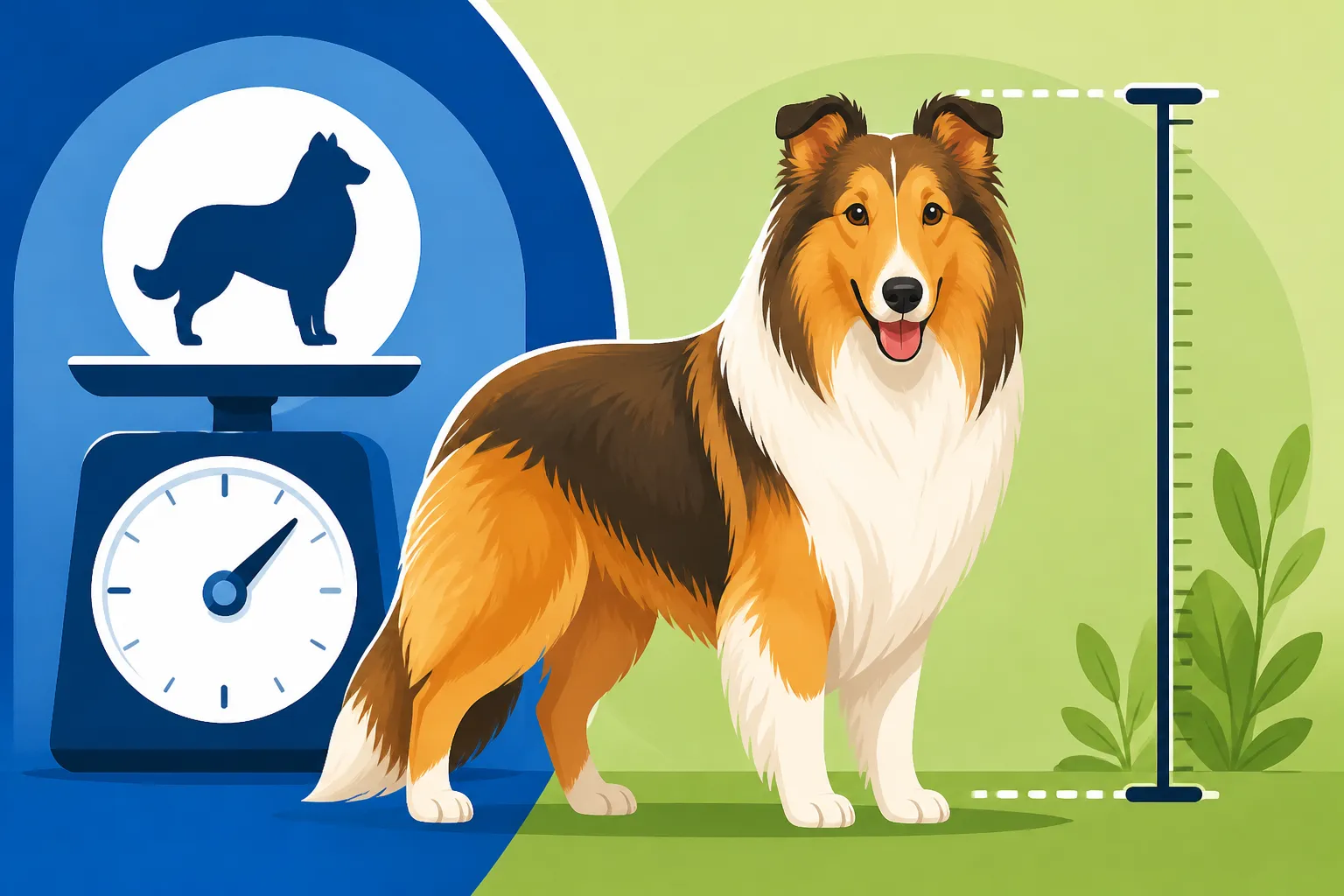
What a Collie Weighs and How Tall It Stands
Bringing a Collie into your home often sparks a lot of questions, especially when it comes to their size. You might find yourself wondering if your precious puppy is growing at the right rate, or what to expect when they reach adulthood. It's a common worry among new and seasoned owners alike, trying to picture just how much space that beautiful, flowing coat will truly fill. This guide will walk you through the typical dimensions of both Rough and Smooth Collies, offering a realistic look at their growth, how to monitor their health through their impressive fluff, and what to expect in daily life with a dog of such graceful stature.
Understanding the Collie's Stature: More Than Just Numbers
When we talk about a Collie's size, it's not just about a measurement on a tape or a number on a scale. It's about their presence, their silhouette, and how their physical dimensions contribute to their overall health, grace, and ability to move. Many people have a mental image of Lassie, but understanding the actual breed standard and typical variations is crucial for responsible ownership.
Why Your Collie's Size Matters Beyond the Tape Measure
The size of your Collie impacts so many aspects of their life, and yours. For instance, a larger dog might need a bigger crate, a more robust dog bed, or a different setup in your car for safe travel. Their height can affect how easily they can reach counters or interact with small children, while their weight plays a huge role in joint health, especially as they age. It's not just about fitting in a certain category; it's about ensuring their comfort, safety, and long-term well-being. Thinking about their future needs now can save a lot of headaches (and backaches!) down the line.
Furthermore, a Collie's build can influence the types of activities they excel at and enjoy. While some might envision them as always ready to bound through fields, their size and bone structure mean they aren't built for the same kind of extreme agility or endurance as some smaller, lighter herding breeds. Knowing their physical capabilities helps you choose appropriate exercise and ensures you're not putting undue strain on their growing bodies. You want to match their activities to their natural athleticism, which is significant but also has its limits.
The Ideal Standard: What Breeders Aim For
Breed standards, set by organizations like the American Kennel Club (AKC), lay out the desired characteristics for each breed, including ideal height and weight. For Collies, this standard emphasizes a certain balance and symmetry, describing a dog that is strong and active, without being cloddy or overly refined. Breeders strive to produce dogs that fit this description, aiming for a consistent type that embodies the breed's heritage and function. These standards aren't just arbitrary numbers; they reflect traits that traditionally made the Collie an effective herding dog—able to cover ground, possess endurance, and present an imposing yet approachable presence to livestock.
However, it's important to remember that these are ideals. Not every Collie will perfectly match the standard, and that's perfectly okay. What matters most is a dog that is healthy, well-proportioned for its individual frame, and moves freely and comfortably. The standard provides a guideline, a blueprint of sorts, but the health and happiness of your individual dog should always be the top priority. Good breeders often prioritize temperament and health over strict adherence to every last detail of the standard, knowing that a sound dog is the most important thing.
The Rough Collie: A Gentle Giant's Dimensions
The Rough Collie, with its magnificent flowing coat, is perhaps the image most people conjure when they hear "Collie." This variety is undeniably striking, and its substantial size contributes to its regal and gentle presence. Despite their ample fur, Rough Collies are built with an elegant athleticism underneath, designed for grace and endurance.
Typical Height Ranges for Rough Collies
For a Rough Collie, there's a clear distinction in size between males and females, though both are impressive animals. Typically, male Rough Collies stand taller, usually measuring between 24 to 26 inches (61 to 66 cm) at the shoulder. This height gives them an imposing, noble bearing that's characteristic of the breed. Imagine them standing sentinel, surveying their domain, and you can appreciate why this height was valuable for a herding dog needing to be seen and respected by livestock.
Female Rough Collies are generally a bit daintier, though still substantial, ranging from 22 to 24 inches (56 to 61 cm) at the shoulder. This difference isn't just about height; it also contributes to a slightly different overall impression, with females often appearing a bit more refined and less heavily boned. These ranges are what you'd typically find in a healthy, well-bred adult Collie. Keep in mind that individual dogs can fall slightly outside these ranges and still be perfectly healthy and sound.
Expected Weight for a Healthy Rough Collie
Just like height, weight varies between the sexes. A healthy adult male Rough Collie typically weighs between 60 to 75 pounds (27 to 34 kg). This weight supports their taller frame and gives them the substance needed for their original working role. It's a weight that allows for strength and stamina without being cumbersome. When you greet a well-conditioned male Collie, you feel their solid presence, not just their fluffy coat.
Female Rough Collies, aligning with their slightly shorter stature, usually weigh between 50 to 65 pounds (23 to 29.5 kg). This weight range is proportionate to their frame, allowing them to move with the same characteristic grace and agility as the males. It's important to note that a significant amount of this weight comes from their muscle and bone, not just their abundant coat, which can sometimes be deceiving. The Age a Collie Reaches Full Weight is often around 18 months, though they may continue to fill out slightly until they are two or even three years old.
Visual Cues: Knowing a Well-Proportioned Rough Collie
With all that magnificent fur, it can sometimes be tricky to tell if a Rough Collie is at a healthy weight. Their coat can hide a multitude of sins, from being too thin to carrying too much weight. A well-proportioned Rough Collie should have a deep chest, giving them plenty of lung capacity, and a body that is slightly longer than it is tall. Their overall outline should be one of flowing lines and balanced structure.
One of the best visual cues, and certainly one you can feel, is their tuck-up and waistline. Even under a dense coat, you should be able to discern a slight indentation at their waist when viewed from above. From the side, their abdomen should gently curve upwards from the ribcage. It might take a bit of practice and some strategic petting to feel their ribs without pressing too hard, but you should be able to feel them quite readily, almost like feeling the back of your own hand. If you have to press firmly to feel the ribs, or if they're invisible even with a pat, your Collie might be carrying a bit too much weight. Conversely, if their ribs are very prominent and easily seen without effort, they might be too thin. This is particularly important because The Collie's Coat Is the Bill That Arrives Every Eight Weeks and often hides their body condition.
The Smooth Collie: Same Dog, Different Coat, Similar Size
Many people are surprised to learn that the Smooth Collie is the exact same breed as the Rough Collie, simply with a different coat. While their appearance might seem dramatically different at first glance, underneath that shorter, dense fur beats the heart of the same noble herding dog, with very similar physical dimensions.
Height and Weight Parity with the Rough Collie
It's crucial to understand that the Smooth Collie isn't a smaller version of the Rough Collie, nor is it a distinct breed. They share the same breed standard, which means their ideal height and weight ranges are identical to their longer-coated counterparts.
Male Smooth Collies will also typically stand 24 to 26 inches (61 to 66 cm) at the shoulder, with a healthy weight range of 60 to 75 pounds (27 to 34 kg). Just like the Roughs, they possess that commanding presence and athletic build. The lack of long hair simply allows their muscular definition and bone structure to be more readily apparent.
Similarly, female Smooth Collies fall within the 22 to 24 inch (56 to 61 cm) height range and typically weigh 50 to 65 pounds (23 to 29.5 kg). This parity underscores the fact that apart from the coat, all other breed characteristics, including temperament and general conformation, are shared. If you're considering a Collie but are concerned about the grooming demands of a Rough, remember that The Smooth Collie Is the Same Dog With Less Work but still offers that impressive stature.
Why the Smooth Coat Can Be Deceiving
Perhaps one of the most interesting aspects of the Smooth Collie's size is how deceptive their shorter coat can be. Because they lack the voluminous mane, frill, and petticoats of a Rough Collie, they often appear smaller than they truly are. You might encounter someone who thinks a Smooth Collie is a "medium-sized" dog, only to be surprised when they stand next to one and realize just how tall and substantial these dogs actually are.
The sleek coat highlights their elegant lines and muscular build, rather than softening them with fluff. This can make them look leaner or more athletic at first glance, but a quick measure or a gentle pat confirms their true impressive size. This visual difference is why some people find Smooth Collies more approachable, as they don't have the "wall of hair" that can sometimes make a Rough Collie seem even larger than life. Don't let the short coat fool you; a Smooth Collie is every bit as robust and stately as a Rough.
Growth Milestones: Watching Your Collie Puppy Develop
Bringing home a Collie puppy is an exciting journey, and watching them grow from a small, fluffy bundle into a magnificent adult is truly a wonder. Understanding their typical growth timeline can help alleviate worries about whether they're developing normally and ensures you're providing them with the right care during this critical period.
From Wee Pup to Lanky Adolescent: A General Timeline
Collie puppies grow quite rapidly in their first few months. By around 8-12 weeks when they typically come home, they're already starting to show hints of their adult structure. During their first six months, they'll experience an incredible growth spurt, gaining height and weight steadily. It's a time of awkward lankiness, where their legs seem disproportionately long, and they haven't quite "filled out" yet. This is completely normal! They're essentially building their skeletal framework before adding significant muscle and density.
Around 6 to 12 months, the growth in height starts to slow down, though they'll still be getting taller. This adolescent phase is often characterized by uneven growth, where one part of their body seems to be growing faster than another. They might look a bit gangly, like a teenager going through a growth spurt. This is also when their adult coat starts to come in, which can add to the illusion of size.
When a Collie Reaches Its Full Height and Weight
Most Collies reach their full height by around 12 to 18 months of age. This means their bones have generally stopped lengthening, and they've achieved the majority of their adult stature. You'll notice they stop shooting up quite so dramatically during this period. However, while their height might be settled, their weight and muscle development often continue.
A Collie will typically continue to "fill out" and mature in terms of muscle mass and body density until they are two, or even sometimes three, years old. This means they'll add the finishing touches to their frame, gaining the robust and well-muscled appearance characteristic of the adult Collie. It's a gradual process, often unnoticed day-to-day, but significant over months. This is why What an Adult Male Collie Weighs and What an Adult Female Collie Weighs are averages, and your dog's journey to that point is a process. During this time, proper nutrition and appropriate exercise are key to healthy development.
Factors Influencing a Collie's Final Size
Several factors play a crucial role in determining a Collie's final adult size. The most significant is genetics. A puppy's parents and their lineage provide a strong indication of the size they are likely to achieve. If both parents are on the larger side of the standard, their offspring are more likely to be larger, and vice-versa. This is why choosing a reputable breeder who can provide information about the parents' size and conformation is so important.
Nutrition also plays a critical role. Feeding a high-quality, balanced diet appropriate for large breed puppies ensures they receive all the necessary nutrients for healthy bone and muscle development. Overfeeding, especially with high-calorie diets, can lead to excessively rapid growth, which can put undue stress on developing joints and lead to orthopedic problems later in life. Conversely, underfeeding can stunt growth. Additionally, general health and the absence of serious illnesses during growth can impact final size. Feeding a Collie Through Its Growth and Its Coat is a topic that requires careful consideration.
Navigating Weight and Health: Keeping Your Collie Just Right
Ensuring your Collie maintains a healthy weight is paramount for their overall well-being and longevity. However, with their voluminous coats, particularly the Rough Collie, it can be notoriously difficult to assess their true body condition. This section aims to equip you with the knowledge and techniques to keep your Collie in optimal shape.
The Challenges of Assessing Weight in a Full Coat
Any Collie owner will tell you, a Rough Collie's coat is a master of disguise. It can make a slightly underweight dog look perfectly robust, and a moderately overweight dog appear just right. This fluffy deception makes visual assessment incredibly tricky. You can't simply glance at your Collie and definitively say if they're too thin or too heavy, especially if you're used to breeds with shorter, sleeker coats. The layers of undercoat and coarser outer guard hairs create a plush silhouette that hides the true contours of their body. This challenge means you need to go beyond just looking.
Even seasoned owners can find themselves second-guessing their Collie's weight. During seasonal coat blows, when they shed copious amounts of undercoat, their body shape can become temporarily more apparent, but it quickly fills in again. It's not uncommon for a Collie to gain or lose a few pounds and for it to be completely hidden by the sheer volume of their fur. This is a common frustration, but with a few simple techniques, you can learn to "read" your Collie's body condition accurately.
Practical Tips for Monitoring Your Collie's Condition
Since visual assessment alone isn't enough, we rely on tactile methods to gauge a Collie's weight. The most effective technique is the rib check. Gently run your hands along your Collie's side, over their ribcage. You should be able to feel their ribs quite easily, much like feeling the knuckles on your own hand when it's flat. If you can see the ribs without touching, your Collie is likely too thin. If you have to press firmly to feel them, or can't feel them at all, they might be overweight.
Another helpful method is to check their waistline and abdominal tuck. Stand above your Collie and look down at their back. You should see a distinct waist, where their body narrows slightly behind their ribcage before flaring out again at the hips. From the side, their abdomen should subtly tuck up from their chest, not hang low or be straight across. While their coat can obscure this, feeling for the contours underneath will give you a good indication. Regular weigh-ins at your vet's office are also a good idea, especially as puppies, to track their growth, and throughout adulthood to catch any significant changes. How to Feel a Collie's Ribs Through the Coat is a skill every Collie owner should master.
The Risks of Being Under or Overweight
Maintaining an ideal weight is crucial for a Collie's long-term health. An underweight Collie might lack sufficient muscle mass, making them weaker and more susceptible to injuries. It could also indicate underlying health issues, improper nutrition, or insufficient calorie intake, especially during periods of high activity or growth. They may struggle to maintain body temperature and have a diminished immune response.
On the other hand, an overweight Collie faces a host of serious health risks. Carrying extra pounds puts immense strain on their joints, especially their hips and elbows, potentially exacerbating conditions like Hip Dysplasia in a Collie or leading to early onset arthritis. It increases their risk for conditions like diabetes, heart disease, and certain cancers. Overweight dogs often have reduced stamina, making exercise difficult, which creates a vicious cycle. Even a few extra pounds on a Collie can significantly shorten their lifespan and diminish their quality of life, making every walk and movement more uncomfortable. Regular check-ups with your vet, and discussing proper food portions and exercise, are essential. Websites like Chewy offer a wide range of nutritious food options, but always consult your vet for personalized dietary advice.
Collie Size in Everyday Life: From Car to Couch
A Collie's impressive size means they're not quite lap dogs, though they'll certainly try to be! Understanding how their dimensions impact daily living is crucial for creating a comfortable and safe environment for both you and your loyal companion.
Accommodating a Large Dog in Your Home
When you bring a Collie into your home, you're welcoming a substantial creature who needs ample space to stretch out, turn around, and simply exist comfortably. While they are known for being calm indoors and Whether a Collie Settles Indoors, they're not suited for tiny apartments where every movement is restricted. They need a designated spot where they can truly relax, whether that's a large, comfortable dog bed in a quiet corner or a spacious crate.
Consider your furniture. If your Collie is allowed on the couch, be prepared for them to take up a significant amount of real estate, and for their hair to become a permanent fixture! Investing in durable, easy-to-clean furniture or washable covers is a smart move. Also, think about hallways and doorways. A Collie, especially a Rough with its full coat, can seem to fill a narrow space. While they're generally graceful, avoiding clutter in their main pathways helps prevent bumps and scrapes. Their natural tendency to follow you from room to room means they'll need clear paths wherever you go.
Traveling with Your Stately Companion
Traveling with a Collie requires some planning due to their size. In a car, they'll need a spacious and secure area. A large, sturdy crate that fits comfortably in the back of an SUV or hatchback is ideal for safety, preventing them from becoming a projectile in case of a sudden stop. If crating isn't an option, a robust safety harness that attaches to a seatbelt is a must. Simply letting them roam free in the back seat isn't safe for them or for other passengers.
For air travel, their size usually means they'll have to fly in cargo, which can be a stressful experience for any dog, and especially for a sensitive breed like the Collie. Always research airline policies meticulously, as crate size requirements are strict, and temperatures or breed restrictions can apply. For shorter trips or if you prefer to keep your Collie close, exploring dog-friendly hotels and destinations that can accommodate their size is essential. A large water bowl and plenty of space to stretch during stops are also crucial for their comfort on long journeys.
Equipment and Supplies: Sizing Up for Your Collie
When it comes to purchasing supplies for your Collie, think big! Their collars and harnesses need to be sturdy and appropriately sized for their strong necks and chests. A narrow collar might not be comfortable or secure enough. Leashes should be robust, offering a good grip and strong hardware. Beds are another area where size truly matters. A small dog bed simply won't cut it; your Collie needs a large or extra-large bed where they can fully stretch out without parts hanging off the edge. Companies like Chewy offer great options for heavy-duty, appropriately sized bedding.
Food bowls should also be generously sized to accommodate their daily meals without spilling, and some owners opt for raised bowls to aid digestion and reduce neck strain, although opinions on this vary. Grooming tools, especially brushes and combs for a Rough Collie, need to be substantial and effective at navigating their deep coat. Don't skimp on quality; cheap tools will quickly break or be ineffective on a Collie's dense fur. Think about durable, large toys that can withstand their strong jaws and enthusiastic play. Everything from their food storage containers to their water fountains needs to scale up to match their impressive size.
Dispelling Myths and Managing Expectations
The Collie breed has been immortalized in popular culture, creating both adoration and, sometimes, unrealistic expectations about their size, intelligence, and temperament. It's important for prospective and current owners to distinguish between the fictional portrayal and the real-life dog.
The "Lassie Effect": Real Collies vs. Screen Collies
The enduring image of Lassie, the heroic and impossibly intelligent Rough Collie from film and television, has undeniably shaped public perception of the breed. Lassie was portrayed as not only beautiful and loyal but also as possessing almost human-like problem-solving skills and an ability to navigate complex situations with unwavering bravery. While real Collies are indeed intelligent, loyal, and incredibly intuitive, the "Lassie Effect" has created an idealized standard that no real dog could ever truly live up to.
Many people expect their Collie to instinctively understand complex commands, perform dramatic rescues, or have an almost telepathic connection to their owners. While Collies are highly trainable and form deep bonds, they are still dogs, with canine limitations and behaviors. They will not, for instance, typically open doors, call for help, or diagnose a sudden illness in a loved one without specific, extensive training. This disparity between expectation and reality can sometimes lead to disappointment or frustration for owners who haven't done their research. Understanding that your Collie is a wonderful, intelligent dog, but not a Hollywood superhero, is key to a happy relationship.
When Your Collie Doesn't Fit the Mold
Just like people, individual Collies can vary significantly, even within the same breed standard. Your Collie might be a bit taller or shorter than the typical range, a few pounds heavier or lighter. Perhaps they have an exceptionally dense coat that makes them appear even larger, or a sleeker frame that makes them seem smaller. It's important to embrace these individual differences. A dog that falls slightly outside the exact measurements of the breed standard can still be a perfectly healthy, happy, and magnificent companion.
Focusing too rigidly on exact numbers can distract from appreciating the unique qualities of your dog. What truly matters is that your Collie is healthy, well-fed, and proportioned for their own body. Instead of worrying if they're precisely 25 inches at the shoulder, assess their overall body condition, their energy levels, their gait, and their happiness. Some Collies might have a slightly longer or shorter muzzle than ideal, or their ear set might not be absolutely perfect. These minor variations are part of what makes each dog an individual. As long as these differences don't impact their health or quality of life, they are simply part of who your unique Collie is. Remember, a Collie with a genetic condition like MDR1 generally does not look any different (see Whether an MDR1 Collie Looks Any Different), so external appearance doesn't always tell the whole story.
| Characteristic | Male Rough/Smooth Collie | Female Rough/Smooth Collie |
|---|---|---|
| Height (at shoulder) | 24 – 26 inches (61 – 66 cm) | 22 – 24 inches (56 – 61 cm) |
| Weight | 60 – 75 pounds (27 – 34 kg) | 50 – 65 pounds (23 – 29.5 kg) |
| Full Height Reached | 12 – 18 months | 12 – 18 months |
| Full Weight/Maturity | 2 – 3 years | 2 – 3 years |
Disclaimer
This article is for general informational purposes only and does not constitute professional advice. Laws, prices and regulations vary by location and change over time. Consult a qualified professional for guidance on your specific situation.