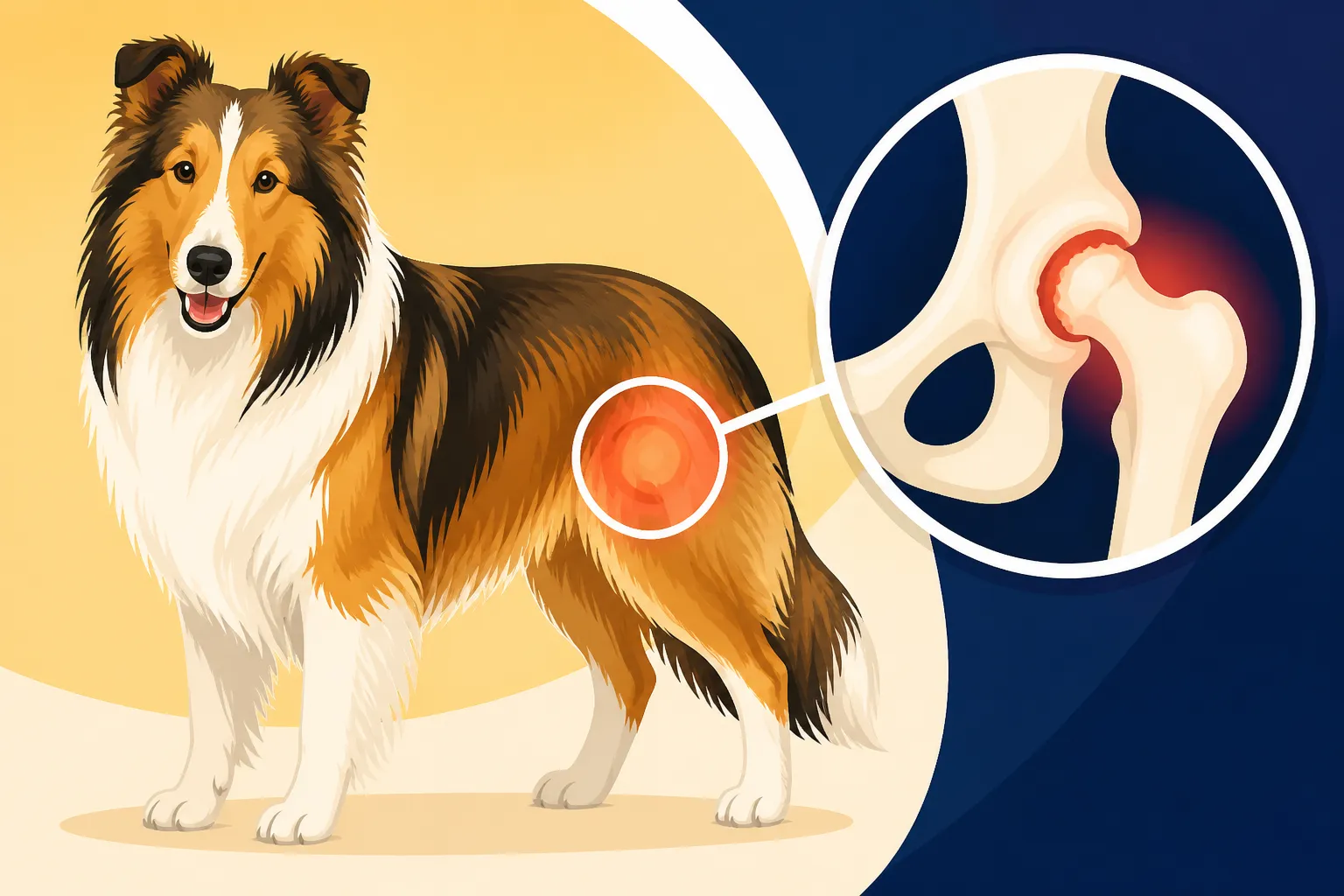
Hip Dysplasia in a Collie
It’s a heartbreaking moment for any Collie owner to see their beloved companion struggling, especially when it comes to something as fundamental as movement. We often think of big, boisterous breeds as the primary candidates for hip dysplasia, but our graceful, athletic Collies are certainly not immune to this challenging condition. Watching your Collie hesitate before jumping into the car, or noticing a subtle stiffness after a long nap, can fill you with a deep sense of worry. This comprehensive guide is here to shed light on hip dysplasia in Collies, helping you understand what it is, how to spot it, and most importantly, how to give your furry family member the best possible quality of life.
Understanding Hip Dysplasia in Collies
Hip dysplasia isn't just a simple ache; it's a complex, often painful, condition that can profoundly impact your Collie's mobility and overall well-being. It’s a term that strikes fear into the hearts of many large breed dog owners, and for good reason. Understanding its mechanics and why our beautiful Collies are predisposed is the first step in effective management and prevention.
What Exactly Is Hip Dysplasia?
At its core, hip dysplasia is a malformation of the hip joint. Think of your Collie's hip as a ball-and-socket joint – the "ball" is the head of the femur (thigh bone), and the "socket" is part of the pelvis, known as the acetabulum. In a healthy hip, this ball fits snugly and smoothly into the socket, allowing for fluid movement. With hip dysplasia, however, this perfect fit is disrupted. The socket might be too shallow, the femoral head might be flattened or misshapen, or the ligaments connecting them might be loose, leading to laxity.
This laxity means the "ball" isn't held tightly in the "socket." Over time, with every step and every jump, the joint rubs and grinds instead of gliding smoothly. This abnormal wear and tear leads to the degeneration of the cartilage, inflammation, and eventually, the painful development of osteoarthritis, or degenerative joint disease. It’s a progressive condition, meaning it tends to get worse over time, causing increasing discomfort and reduced mobility for your Collie. What starts as a subtle looseness can evolve into severe, chronic pain and crippling arthritis.
Why Collies Are Susceptible
While not as notoriously affected as some giant breeds, Collies do have a genetic predisposition to hip dysplasia. It’s primarily considered a polygenic trait, meaning it’s influenced by multiple genes working together, rather than a single gene like some other inherited conditions. This makes breeding out hip dysplasia particularly challenging, as even parents with seemingly "clear" hips can sometimes produce offspring that develop the condition. This is why a breeder looking at The Three Genetic Tests a Collie Breeder Owes You often also looks at hip scores.
Beyond genetics, environmental factors play a significant role, especially during a Collie's rapid growth phase. Things like excessive or inappropriate exercise in puppyhood (too much jumping, long runs on hard surfaces), rapid weight gain, and even diet can influence how those genetically predisposed hips develop. A Collie puppy's bones and joints are still developing, and undue stress can exacerbate any underlying genetic weakness, leading to laxity and the onset of dysplasia. It’s a complex interplay, but understanding these factors empowers us to make better choices for our Collies, from puppyhood right through their senior years.
Recognizing the Early Signs and Symptoms
One of the greatest challenges with hip dysplasia is that our stoic Collies are often very good at hiding their pain. Their gentle nature means they might try to push through discomfort, making it difficult for owners to recognize the subtle early warning signs. Being vigilant and knowing what to look for can make all the difference in getting an early diagnosis and starting supportive care.
Subtle Clues in Puppies and Young Adults
When hip dysplasia starts to manifest in younger Collies, the signs can be quite nuanced. You might notice your energetic puppy isn't quite as enthusiastic about play as their littermates, or perhaps they tire more quickly. One classic sign is a "bunny hopping" gait, where they use both hind legs simultaneously to propel themselves forward, almost like a rabbit, instead of the smooth, alternating stride you'd expect. This is their way of trying to minimize weight bearing on a painful hip.
Another common indicator is a reluctance to use stairs, jump onto furniture, or even rise from a lying position. They might seem stiff after a rest, or perhaps display a slight lameness that comes and goes, especially after a burst of activity. As an owner, you might also observe a shift in their weight distribution, where they lean more on their front limbs, trying to alleviate pressure on their hindquarters. Some Collies might even react with a yelp or a quick snap if you gently try to manipulate their hips, indicating pain. Being attuned to these small changes is key to catching the problem early. You might notice these subtle cues as early indicators of Signs a Collie Has Hip Dysplasia.
Progression of Symptoms in Older Collies
As hip dysplasia progresses and arthritis sets in, the symptoms tend to become more pronounced and persistent. What started as intermittent stiffness in a young dog often evolves into chronic, debilitating pain in an older Collie. You'll likely observe a significant increase in stiffness, particularly first thing in the morning or after prolonged periods of rest. The lameness that was once fleeting might become constant, and you may notice muscle atrophy in their hindquarters as they try to avoid using the painful leg.
Everyday activities become Herculean tasks. Jumping into the car, climbing stairs, or even just navigating uneven terrain can be a major struggle. Your Collie might start dragging their feet, or you might hear their nails clicking more frequently as their gait changes. Beyond the physical signs, pain can also manifest as changes in temperament. A previously sweet and patient Collie might become irritable, withdrawn, or even snappy if touched in a sensitive area. They might lose interest in walks or games they once loved, simply because the joy of movement has been replaced by discomfort. Recognizing these progressive changes is crucial for ensuring your Caring for a Collie Past Nine companion continues to have a good quality of life. In many cases, these dogs will develop Whether a Collie Gets Arthritis Early.
Diagnosing Hip Dysplasia in Your Collie
When you suspect your Collie might be suffering from hip dysplasia, an accurate diagnosis is paramount. It's not just about confirming the presence of the condition, but also assessing its severity, which guides the choice of treatment. There are specific diagnostic protocols that your veterinarian will follow to get a clear picture of your Collie's hip health.
The Importance of Veterinary Examination and X-rays
Your diagnostic journey will begin with a thorough physical examination by your veterinarian. They will observe your Collie's gait, posture, and general demeanor. A key part of the exam involves careful palpation of the hip joints and manipulation of the hind limbs through their range of motion. During this, your vet will be feeling for any signs of laxity, grinding (crepitus), or pain response. They might perform specific orthopedic tests, such as the Ortolani sign, which helps detect hip laxity.
However, the definitive diagnosis of hip dysplasia relies on radiographic imaging – essentially, X-rays. For the most accurate and clear images, your Collie will typically need to be sedated. This ensures they are perfectly still and their hips can be properly positioned, preventing any discomfort and ensuring muscles are relaxed. There are two primary methods for hip screening: the Orthopedic Foundation for Animals (OFA) and PennHIP. Both provide valuable information but use different techniques and scoring systems. The OFA evaluation involves a single X-ray taken when the dog is at least 24 months old, assessing for signs of degenerative joint disease. PennHIP, on the other hand, can be performed as early as 16 weeks and measures hip laxity, a direct indicator of hip dysplasia risk, offering a more predictive assessment. Deciding The Age a Collie's Hips Should Be X Rayed depends on the method chosen and the purpose (breeding vs. diagnostic).
Interpreting Hip Scores and What They Mean
Once the X-rays are taken, they are submitted for evaluation by trained specialists. Understanding these scores can feel a bit like deciphering a complex code, but they provide critical information about your Collie's hip health.
The OFA system grades hips based on their conformation and the presence or absence of degenerative changes, with seven categories: Excellent, Good, Fair (all considered "pass" for breeding), Borderline, Mild, Moderate, and Severe (these last four indicate hip dysplasia). An "Excellent" hip would show a deep socket, a tight fit, and no signs of arthritis. A "Severe" hip, conversely, would exhibit significant malformation, joint laxity, and substantial degenerative changes.
The PennHIP method focuses on quantitative measurement of hip laxity, providing a Distraction Index (DI). This numerical score ranges from 0 to 1, where 0 means no laxity and 1 means extreme laxity. A lower DI indicates tighter hips and a lower risk of developing hip dysplasia. For example, a DI of 0.30 would be considered much better than a DI of 0.70. PennHIP also provides an interpretation of how your Collie's hips compare to other dogs of the same breed. These detailed scores are invaluable, whether you’re making breeding decisions or planning a treatment strategy for your beloved companion.
| Feature | OFA Evaluation | PennHIP Evaluation |
|---|---|---|
| Primary Focus | Conformation & Secondary Osteoarthritis | Hip Laxity (quantitative measurement) |
| Minimum Age | 24 months | 16 weeks |
| Number of Views | 1 (Extended hip view) | 3 (Extended, compression, distraction views) |
| Grading System | Qualitative (Excellent, Good, Fair, Mild, etc.) | Quantitative (Distraction Index, 0-1) |
| Predictive Value | Diagnostic (evaluates existing condition) | Predictive (assesses risk of developing HD) |
| Sedation | Recommended for optimal positioning | Required for optimal positioning and relaxation |
| Cost | Generally lower than PennHIP | Generally higher than OFA |
Managing Hip Dysplasia: Treatment Options
Discovering your Collie has hip dysplasia can feel overwhelming, but the good news is that there are many effective ways to manage the condition and significantly improve your dog's comfort and quality of life. The approach usually depends on the severity of the dysplasia, your Collie's age, and your family's circumstances.
Conservative Management Strategies
For many Collies, especially those with mild to moderate hip dysplasia or those who aren't candidates for surgery, conservative management is the cornerstone of treatment. The absolute top priority here is weight management. Even a few extra pounds can put immense stress on already compromised joints, accelerating arthritis and increasing pain. Working with your vet to achieve and maintain an ideal body weight is crucial. This often means carefully monitoring How Much an Adult Collie Eats and considering their activity levels. If you've found that Whether a Neutered Collie Gains Weight, this is especially important to address.
Next, exercise modification is vital. High-impact activities like jumping, intense ball fetching, or long runs on hard pavement should be replaced with low-impact options. Swimming is a fantastic choice as it builds muscle strength without stressing the joints. Controlled, leash walks on soft surfaces are also beneficial. Physical therapy, which might include specific exercises, massage, stretching, and therapeutic modalities like cold laser therapy, can dramatically improve joint mobility and reduce pain.
Medications also play a significant role. Non-steroidal anti-inflammatory drugs (NSAIDs) such as Carprofen (marketed as Rimadyl or Novox) or Meloxicam are often prescribed to reduce inflammation and pain. Your vet might also recommend joint supplements containing glucosamine, chondroitin, and MSM, which can help support cartilage health. Omega-3 fatty acids are another popular choice for their anti-inflammatory properties. In some cases, your vet might suggest other pain relievers or injections like polysulfated glycosaminoglycans (PSGAGs) which can help protect cartilage. These can be long-term costs, so considering Insuring a Collie Against Inherited Disease early can be a smart financial move. Remember, if your Collie has Assume Your Collie Has the MDR1 Mutation, certain medications need to be used with extreme caution or avoided entirely, so always discuss this with your vet.
Surgical Interventions for Severe Cases
When conservative management isn't enough to maintain a good quality of life, or if the dysplasia is particularly severe, surgical options become a vital consideration. The choice of surgery depends heavily on your Collie's age, the severity of their condition, and the presence of any secondary arthritis.
For very young puppies (typically under 4-5 months old) with hip laxity but no significant arthritis, a Juvenile Pubic Symphysiodesis (JPS) might be recommended. This minimally invasive procedure encourages the pelvis to grow in a way that creates a deeper hip socket.
For young dogs (typically under 10 months to a year) with significant hip laxity but without degenerative joint disease, a Triple Pelvic Osteotomy (TPO) or Double Pelvic Osteotomy (DPO) can be performed. These procedures involve surgically cutting and rotating parts of the pelvis to improve the fit of the femoral head into the acetabulum, providing better stability.
If your Collie is older or has already developed significant arthritis, and the other surgeries aren't an option, a Femoral Head Ostectomy (FHO) might be considered. In this procedure, the head and neck of the femur are removed. The body then forms a "false joint" of scar tissue, and while it doesn't replicate a normal hip, it eliminates the painful bone-on-bone grinding. FHO is generally more successful in smaller, lighter, or less active dogs, as muscle strength is critical for its success.
The gold standard for treating severe, painful hip dysplasia with significant arthritis in adult Collies is a Total Hip Replacement (THR). This involves replacing both the damaged ball and socket with prosthetic implants made of metal and plastic. THR offers the best chance for a pain-free, fully functional hip, allowing dogs to return to a normal, active life. It's a complex and expensive procedure, but for the right candidate, the results can be life-changing. A good pet insurance plan from a provider like Healthy Paws can be incredibly helpful in covering a significant portion of these high-cost procedures.
Preventing Hip Dysplasia: Breeding and Care Considerations
While not every case of hip dysplasia can be prevented, especially given its complex genetic nature, there are significant steps conscientious owners and breeders can take to reduce the risk. Prevention really starts before a puppy is even born and continues throughout its most formative years.
Responsible Breeding Practices
For anyone considering bringing a Collie puppy into their home, the most impactful preventative measure is choosing a responsible breeder. A truly dedicated breeder will prioritize health testing their breeding stock. This means both parent dogs should have verifiable hip certifications from organizations like OFA or PennHIP. They will proudly share these results with you, often having them listed on the OFA website's public database or providing PennHIP reports.
It's crucial to understand that hip dysplasia is polygenic. This means that even if both parents have "Good" or "Excellent" OFA scores, there's still a small chance their offspring could inherit the genes that contribute to the condition. However, breeding only from certified parents drastically reduces that risk. Responsible breeders don't just look at the parents; they consider the hip health of the entire pedigree – grandparents, siblings, and previous offspring. They aim to improve the health of the breed with every generation. When you're looking at What a Health Tested Collie Puppy Costs, remember that a significant portion of that price goes towards the diligent health testing done by the breeder, which benefits your puppy in the long run. There is a common misconception that if a clear-tested Collie is bred with another clear-tested Collie, then there will be no risk of hip dysplasia in the offspring. This is unfortunately not always true. Whether a Clear Tested Collie Can Still Produce Affected Puppies depends on the complex genetic inheritance patterns.
Nutritional and Environmental Factors in Puppyhood
Beyond genetics, how a Collie puppy is raised significantly influences their risk of developing hip dysplasia. One of the most critical aspects is nutrition, particularly controlling their growth rate. Rapid growth, often fueled by diets that are too high in calories or calcium, can put undue stress on developing joints. This is why it’s essential to feed a large-breed puppy formula that is specifically designed to support slower, more controlled growth. Consult your veterinarian for guidance on the best food and feeding schedule for your growing Collie. You'll want to ensure they aren't eating too much, which can lead to rapid weight gain, and you'll need to know How Many Cups a Day an Adult Collie Eats eventually.
Equally important is managing exercise during puppyhood. While exercise is necessary for healthy development, too much high-impact activity can be detrimental. Avoid long, strenuous runs, excessive jumping, or repetitive activities on hard surfaces until their growth plates have closed, typically around 12-18 months of age. Instead, focus on short, frequent play sessions on soft ground and controlled walks. Things like slippery floors can also cause young puppies to splay out, placing unnatural stress on their hips. Providing non-slip rugs or runners in areas where they play and run can make a big difference. Minimizing jumping on and off furniture and taking stairs carefully can also help protect those vulnerable, developing joints. Investing in preventative measures from puppyhood offers the best chance for a healthy future, and knowing that you have pet insurance, such as from Healthy Paws, can provide peace of mind should unexpected health issues arise.
Living with a Collie with Hip Dysplasia
Receiving a diagnosis of hip dysplasia doesn't mean the end of a happy, fulfilling life for your Collie. In fact, with thoughtful adaptations and consistent care, many Collies with hip dysplasia continue to thrive. It's about adjusting your expectations and environment to support their needs.
Adapting Your Home and Lifestyle
One of the first things you can do to help a Collie with hip dysplasia is to make their living environment more joint-friendly. Think about the surfaces in your home. Slippery hardwood or tile floors can be incredibly challenging and even painful for a dog with compromised hips. Lay down non-slip rugs or carpet runners, especially in high-traffic areas or places where your Collie jumps off furniture. Speaking of furniture, consider ramps or pet stairs to help your Collie get onto sofas or beds without having to jump, reducing impact on their hips.
In the car, a ramp can be a lifesaver, not only for your dog but also for your back! Avoid having them jump in and out, as this can cause significant pain and injury. Look into orthopedic dog beds that provide superior support and cushioning, alleviating pressure points and offering maximum comfort during rest. A consistent routine is also beneficial. Regular, gentle exercise and medication schedules help maintain their comfort and mobility. Remember that consistent communication with your veterinarian is key; regular check-ups will allow you to monitor the progression of the disease and adjust treatment plans as needed.
Supporting Your Collie's Comfort and Quality of Life
Beyond physical adaptations, supporting your Collie’s emotional and mental well-being is paramount. Living with chronic pain can be stressful and emotionally taxing for dogs, just as it is for humans. Be empathetic and understand that their reduced mobility might lead to frustration or changes in behavior. Continue to engage them with mental stimulation, such as puzzle toys, scent work, or gentle training sessions, to keep their minds sharp and spirits high.
Regular, gentle massage can also be a wonderful way to connect with your Collie and provide some comfort to sore muscles. Learn to recognize the subtle signs of pain so you can intervene promptly. This might be a change in posture, a reluctance to move, excessive licking of a joint, or a slight shift in their usual happy demeanor. Quality of life means keeping them as comfortable and joyful as possible for as long as possible. There may come a point, as the disease progresses, where the decision about palliative care or even euthanasia needs to be considered. This is a deeply personal and difficult decision, and your veterinarian can help you assess your Collie’s comfort, mobility, and overall happiness to guide you through this sensitive time. Ultimately, your goal is to ensure your beloved Collie enjoys every moment with as little pain as possible.
Disclaimer
Please note that the information provided in this article is for educational and informational purposes only and does not constitute veterinary medical advice. Always consult with a qualified veterinarian for any health concerns or before making any decisions about your Collie's care.