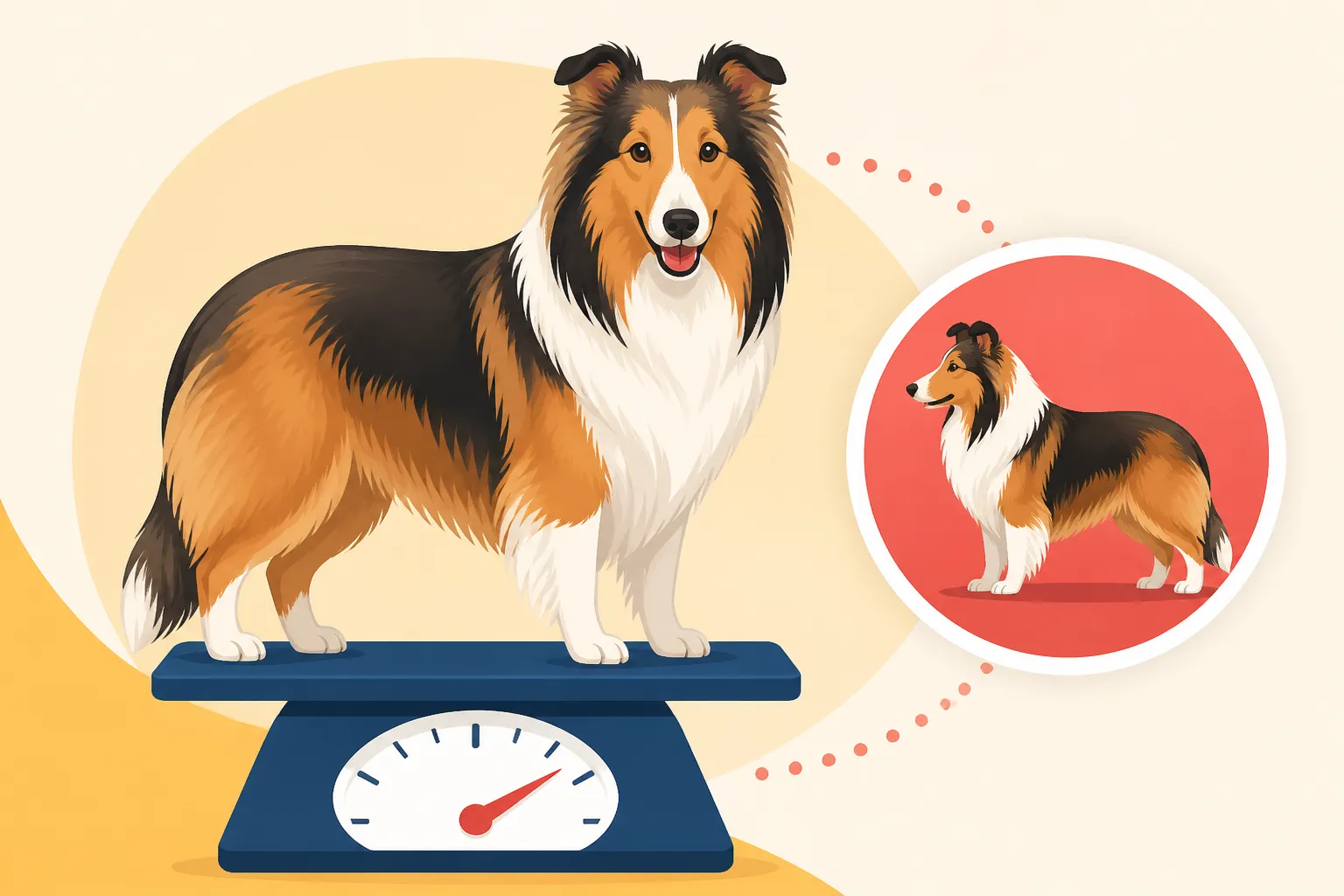
What an Adult Female Collie Weighs
One of the most common questions new Collie owners, or even those considering bringing a Collie into their lives, often grapple with is, "How much should my beautiful, fluffy girl actually weigh?" It's a completely valid question, yet the answer can feel surprisingly elusive, especially when you're looking at a dog whose magnificent coat can add an optical illusion of twenty extra pounds! This guide is here to cut through the fluff (pun intended!) and give you a realistic understanding of what to expect for an adult female Collie's weight, the factors that play a role, and how to tell if your dog is truly healthy, coat or no coat.
Understanding the Standard for Collie Weight
When we talk about a dog's weight, it's natural to look towards the breed standard. These standards are developed by kennel clubs to describe the ideal physical characteristics of a breed, aiming for health, function, and aesthetic appeal. For Collies, these guidelines offer a good starting point, but they are not the be-all and end-all.
Breed Standard Guidelines for Females
Generally, recognized breed standards for Collies provide a weight range that aims for balance and athleticism. For an adult female Rough or Smooth Collie, the typical weight range is often cited as being between 50 to 65 pounds (approximately 23 to 29.5 kg). Height-wise, these elegant ladies usually stand around 22 to 24 inches (56 to 61 cm) at the shoulder.
Now, it's crucial to understand that these are guidelines. They describe an ideal, well-balanced Collie. Imagine a graceful, athletic dog, neither too heavy nor too slight, capable of a full day's work. This means a Collie that falls outside this range isn't necessarily unhealthy or poorly bred, but it's a good benchmark to keep in mind. For comparison, you might also wonder What an Adult Male Collie Weighs, which typically falls into a slightly higher range.
Why the Breed Standard Matters (and Doesn't)
The breed standard exists to maintain the integrity and health of the Collie breed. Breeders who show their dogs or aim to produce future show champions will strive for their Collies to fall within these parameters. It suggests a certain bone structure, muscle mass, and overall proportion that is considered characteristic of the breed.
However, for the average pet Collie owner, these numbers serve more as a suggestion than a strict mandate. Your beloved companion isn't going to be judged in a show ring, and what truly matters is their individual health and well-being. A pet Collie might be a little larger or smaller than the standard and still be perfectly healthy and happy. Factors like their specific lineage, diet, and activity level will have a much bigger impact than a strict adherence to a numerical range. What we're really looking for is a healthy body condition, which isn't always about hitting a specific number on the scale.
The Difference Between Rough and Smooth Collies in Weight
Visually, many people assume a Rough Collie would be significantly heavier than a Smooth Collie. After all, all that glorious fur must add some bulk, right? In reality, the breed standards for both varieties often list the exact same weight and height ranges for males and females.
The difference in perceived size is almost entirely due to the coat. A Rough Collie's dense double coat, with its abundant mane, frill, and furnishings, creates an impressive silhouette that makes them look more substantial. A Smooth Collie, with its sleek, short coat, reveals the underlying bone structure and musculature much more readily. So, while a Smooth Collie might look more lithe and less weighty, a well-conditioned Rough Collie of the same height and build should ideally weigh about the same. It's fascinating how much an illusion the coat can create! The Smooth Collie Is the Same Dog With Less Work in terms of grooming, but not necessarily in terms of size.
Factors Influencing a Female Collie's Adult Weight
It's tempting to think that once a Collie is an adult, her weight is just a fixed number. But just like with people, many factors come into play, and a healthy adult weight can fluctuate. Understanding these elements helps you manage your Collie's health throughout her life.
Genetics and Lineage
The biggest predictor of your female Collie's adult size and weight will often be found in her family tree. Think about it: puppies inherit traits from both parents. If both parents are on the larger side of the Collie spectrum, your female puppy is likely to mature into a larger adult. Conversely, if her parents are smaller and more delicate, she'll probably follow suit.
Breeders often have different lines—some may produce Collies that are consistently at the upper end of the weight standard, known for their substantial bone and presence. Others might focus on more refined, lighter-boned dogs. There can also be differences between American-bred Collies and those from British lines, with the latter sometimes being described as slightly less substantial in overall mass. When you acquire a puppy, asking about the parents' sizes and weights can give you a very good idea of what to expect. This genetic blueprint sets the stage for her mature size, and while nutrition and exercise play their part, they can't fundamentally change her genetic potential.
Diet and Nutrition During Growth
The food your Collie eats, particularly during her crucial growth phases, has a profound impact on her eventual adult weight and overall skeletal development. Overfeeding a puppy, especially with a high-calorie diet designed for rapid growth in giant breeds, can lead to orthopedic problems and excess fat that persists into adulthood. On the other hand, underfeeding can stunt growth, leaving a dog underweight and potentially lacking in vital nutrients.
A balanced, high-quality large breed puppy food, appropriate for her age and activity level, is essential. This ensures she gets the right balance of protein, fats, vitamins, and minerals to support steady, healthy growth without putting undue stress on her developing joints. As she transitions to adulthood, typically around 12-18 months, her caloric needs will change. What a Collie Puppy Eats at Four Months gives you an idea of the early stages, but keeping up with appropriate nutrition throughout her development is key. Monitoring her body condition, rather than just the number on the scale, is paramount during these months. You can find excellent quality large breed puppy and adult formulas from reputable retailers like Chewy, which often provide detailed nutritional information.
Activity Level and Muscle Mass
A Collie that gets consistent, appropriate exercise will naturally have a different body composition than one who spends most of her day on the couch. Regular physical activity builds lean muscle mass, which weighs more than fat. So, a well-muscled, active female Collie might weigh more than a sedentary one of the same size, but she would be significantly healthier and in better condition.
Collies are active dogs, and while they don't always need an intense "job" like some other herding breeds, they do thrive on mental and physical engagement. Daily walks, playtime in a securely fenced yard, or even participating in dog sports like obedience or rally all contribute to maintaining a healthy weight and strong musculature. A Collie with a robust exercise routine will carry her weight efficiently, looking athletic and capable, which is what the breed standard truly aims for.
Spaying and Its Potential Impact
Many owners worry about weight gain after spaying their female Collies, and this concern isn't entirely unfounded. Spaying involves the removal of the ovaries, which are responsible for producing hormones like estrogen. These hormonal shifts can lead to a decrease in metabolism and an increase in appetite for some dogs.
It's not that spaying itself causes obesity, but it can make a dog more prone to gaining weight if their diet and exercise aren't adjusted accordingly. Owners often find they need to reduce their spayed Collie's caloric intake slightly and ensure their exercise routine remains consistent. Regular monitoring of her weight and body condition is crucial in the months following the procedure. Catching any creeping weight gain early makes it much easier to manage. Your vet can provide specific recommendations for food portions and activity levels post-spay. It's an important part of a Collie's life journey, and while it can bring changes, awareness and proactive management can keep your girl at a healthy weight. Whether a Spayed Collie Lives Longer is a related topic worth exploring for overall health benefits.
The Visual Deception: Why Collies Look Heavier Than They Are
If you've ever owned a Rough Collie, you know the struggle: you look at your dog and think, "Wow, she's substantial!" Then you put your hands on her, and realize a good portion of that "bulk" is pure, glorious fur. It's a common and sometimes misleading aspect of owning this breed.
The Magnificent Rough Collie Coat
Let's be honest, a Rough Collie's coat is a thing of beauty, a flowing testament to their heritage. But it's also a master of disguise when it comes to assessing their actual body size. The dense undercoat, combined with the long, flowing outer coat, particularly around the mane, chest (frill), and hindquarters (petticoat), adds significant volume. What looks like a broad chest could simply be a deep frill, and what seems like a robust hind end could be thick feathering. Mane, Frill and Petticoat: the Parts of a Collie That Mat is a familiar pain point for owners, but it also highlights the sheer volume of fur.
This visual deception means that simply looking at your Rough Collie can make her appear heavier than she actually is. This is why you can't rely solely on your eyes to judge her condition. A healthy, lean Rough Collie can still look quite "big" due to the sheer amount of hair. Conversely, an overweight Rough Collie's bulk can be masked by even more fur, making it harder to spot the problem without hands-on assessment. A Collie's Coat Is the Bill That Arrives Every Eight Weeks as a grooming expense, but it also contributes to this visual trickery.
Learning to Body Condition Score Your Collie
Since the coat can be so misleading, the best way to determine if your Collie is at a healthy weight is through "body condition scoring." This involves feeling your dog's body, rather than just looking at it. It's a skill every Collie owner should develop.
Here's how to do it:
- Ribs: Gently run your hands along your Collie's sides. You should be able to feel her ribs without having to press hard. They shouldn't be visibly protruding, but you should easily feel them, almost like the knuckles on your hand. If you can't feel them at all, or have to press firmly, she might be carrying too much weight. If they're sharply visible, she might be too thin. How to Feel a Collie's Ribs Through the Coat offers a detailed guide on this.
- Spine: Feel along her backbone. You should be able to feel the tops of her vertebrae with light pressure, but they shouldn't feel sharp or prominent.
- Waistline: Stand above your Collie and look down. You should see a distinct "waist" tucked in behind her ribs. From the side, her abdomen should tuck up slightly, rather than hanging low.
This hands-on approach gives you a much more accurate picture of your Collie's actual physical condition and helps you adjust her diet and exercise long before a scale might show a drastic change.
The Smooth Collie's Streamlined Appearance
For owners of Smooth Collies, assessing body condition is often much simpler. Without the voluminous double coat, the contours of their body are readily apparent. You can easily see their waistline and the slight tuck of their abdomen. When you run your hands over a Smooth Collie, there's no layer of dense undercoat to navigate, making it straightforward to feel their ribs, spine, and hip bones.
This transparency means that both desirable lean muscle and unwanted fat are more easily observed. While a Smooth Collie will generally adhere to the same weight standards as a Rough Collie, their appearance can make them seem more athletic or less bulky simply because there's no fur creating an illusion of size. It's an advantage for owners who want to keep a close eye on their dog's physical condition without the guesswork involved with a heavy coat.
Healthy Weight Ranges and What to Watch For
Beyond the numbers on a scale or even the breed standard, the most important aspect of your female Collie's weight is that it falls within a healthy range for her individual build and lifestyle. This isn't just about aesthetics; it's fundamental to her overall health and quality of life.
Ideal Weight for Health and Longevity
An ideal weight for your female Collie means she is in optimal body condition. This translates to feeling her ribs easily without them protruding, seeing a distinct waistline, and having a firm, athletic feel to her body. For most adult female Collies, this will typically fall within that 50 to 65-pound range, assuming they are of moderate height and bone. However, a slightly larger boned female might be perfectly healthy at 68-70 pounds, while a finer-boned girl might thrive at 48 pounds. The key isn't a single number, but her overall condition and how she carries herself.
Maintaining an ideal weight is one of the most proactive things you can do for your Collie's long-term health. It reduces stress on her joints, supports a healthy heart and respiratory system, and generally contributes to a more active and comfortable life. Just as How Long a Collie Lives and What Ends It is influenced by many factors, a healthy weight plays a significant role in longevity.
Risks of Underweight and Overweight Collies
Both extremes of weight can pose serious health risks for your Collie.
Underweight Collies:
An underweight Collie might appear bony, with ribs, spine, and hip bones sharply visible or prominent. Her coat might look dull, and she may lack energy. Potential issues for underweight Collies include:
- Weakened Immune System: Making her more susceptible to illness and infections.
- Lack of Energy: Impacting her ability to exercise and enjoy life.
- Poor Coat Condition: A healthy coat requires good nutrition.
- Difficulty Regulating Body Temperature: Less fat insulation can make her more sensitive to cold.
- Muscle Wasting: Loss of muscle mass can affect strength and mobility.
Overweight Collies:
An overweight Collie will have a lack of visible waist, a rounded appearance, and you'll struggle to feel her ribs without firm pressure. This is a far more common issue for many breeds, including Collies. The risks are substantial:
- Joint Problems: Extra weight puts immense strain on her joints, accelerating conditions like arthritis or hip dysplasia, and making existing issues worse.
- Heart Disease: The heart has to work harder to pump blood throughout a larger body mass.
- Diabetes: Similar to humans, obesity is a major risk factor for canine diabetes.
- Respiratory Issues: Excess fat can make breathing more difficult, especially in warm weather or during exercise.
- Reduced Stamina: Overweight dogs tire more easily and are less inclined to exercise, creating a vicious cycle.
- Shorter Lifespan: Studies consistently show that maintaining a healthy weight can add years to a dog's life. This is why understanding Whether a Collie's Weight Shortens Its Life is so critical.
A good comparison of the typical ranges and visual cues can be helpful:
| Collie Type | Ideal Weight Range (Female) | Visual Appearance (Coat Dependent) | Body Condition Score Cues (Feel) |
|---|---|---|---|
| Rough | 50-65 lbs (23-29.5 kg) | Appears substantial due to coat, but should have discernible waist from above. | Ribs easily felt with light pressure, not visibly protruding. Slight tuck in abdomen. |
| Smooth | 50-65 lbs (23-29.5 kg) | Lean, athletic, streamlined build. Waist and muscle definition easily visible. | Ribs easily felt with light pressure, not visibly protruding. Distinct tuck in abdomen. |
Remember, these are averages. A healthy dog is more about body composition than a specific number. To help manage their diet, I've often found great success with high-quality foods available from places like Amazon, where reviews often help inform decisions on the best fit for your dog's needs. For more tailored nutrition, services like Ollie offer fresh, customized meal plans that can be excellent for weight management.
Consulting Your Veterinarian for Personalized Advice
Ultimately, the best resource for determining and maintaining your female Collie's ideal weight is your veterinarian. During her annual check-ups, your vet will perform a thorough physical exam, weigh her, and assess her body condition. They can help you understand if her weight is appropriate for her age, build, and activity level.
If your Collie is underweight or overweight, your vet can help develop a tailored plan, which might include dietary adjustments, a specific exercise regimen, or even medical investigations if there's an underlying health issue contributing to weight problems. They can recommend appropriate food types, portion sizes (perhaps moving from free-feeding to measured meals), and suitable exercise routines. Don't hesitate to bring any concerns about your Collie's weight to your vet; their expertise is invaluable in ensuring your girl lives her longest, healthiest, and happiest life. Knowing The Age a Collie Reaches Full Weight can also help in these discussions, as it informs when to transition from puppy to adult feeding protocols. It's about proactive care and making informed decisions for your cherished companion.
Disclaimer
This article is for general informational purposes only and does not constitute professional advice. Laws, prices and regulations vary by location and change over time. Consult a qualified professional for guidance on your specific situation.