Whether a Collie’s Ears Should Tip
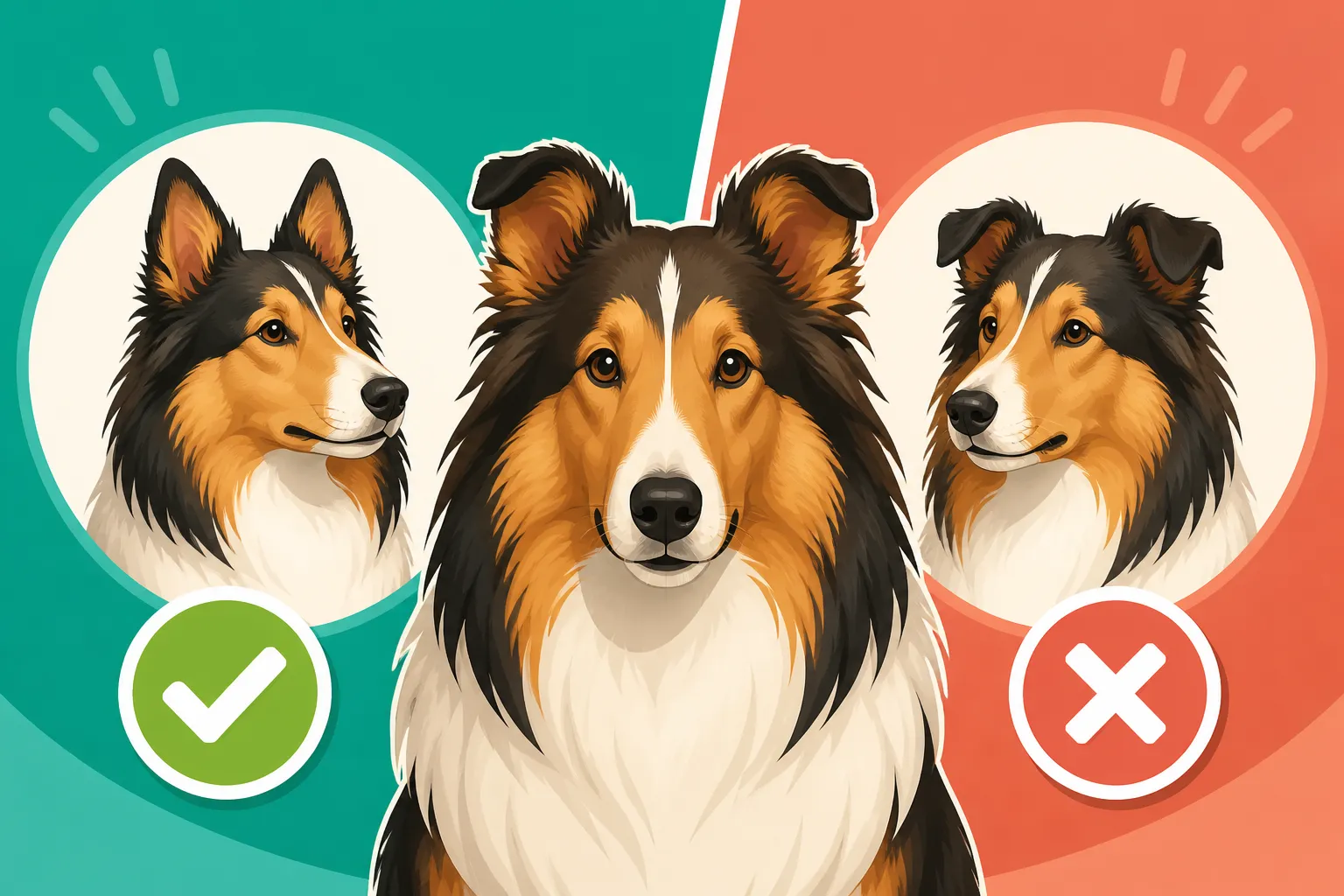
A Collie’s ears are meant to lift when the dog is alert, with the upper portion tipping forward rather than standing completely upright. That shape is part of the traditional breed look, but it is not a health requirement—and plenty of Collies have ears that do not fold neatly. Here’s what the standard means, what puppy ear setting involves, and when an ear change deserves a vet’s attention.
What a Collie’s tipped ears are supposed to look like
The characteristic ear shape
In the Collie breed standard, the ears are small and set well back on the head. When the dog is alert, they should come forward and stand mostly erect, with the upper portion tipping forward. In everyday language, people often call this a “tipped” or “semi-prick” ear.
The tip is not supposed to flop down like a hound’s ear, and the whole ear is not meant to stand rigidly upright. It is a distinct shape: much of the ear rises, while the top folds forward. When a Collie is relaxed, the ears may naturally fall back or to the side. A dog’s expression, attention and mood can make the same ears look different from one moment to the next.
This feature is one small part of the Collie’s overall expression. The shape and placement of the ears work alongside the head, eyes and other features. If you are learning what the breed standard describes, Whether a Collie's Ears Are Taped as a Puppy and Whether a Collie's Almond Eyes Are in the Standard offer useful context on how appearance traits are discussed.
A breed-standard detail, not a health requirement
A tipped ear is an appearance preference associated with the breed standard. It is not necessary for a Collie to hear well, feel comfortable or live a healthy life. An ear that stands fully upright, folds differently, or does not match the ideal shape is not automatically a medical problem.
This distinction matters because owners can feel pressured to “fix” a puppy’s ears simply because they do not look like the Collies in show photos. But appearance and health are different questions. If your dog’s ears are clean, comfortable and functioning normally, a different ear shape alone is usually not a reason for treatment.
The Rough and Smooth Collie Are Two Varieties of One Collie explains another breed detail that can be easy to misunderstand: coat variety does not make a dog a different kind of Collie. Ear shape, like coat, should be considered in the context of the whole dog rather than treated as a stand-alone measure of health or quality.
How ear shape varies among Collies
Even within the same litter, ears can look different. One puppy may have a clear forward tip, another may carry one ear higher than the other, and a third may have ears that stand more upright. As a puppy grows, cartilage and the surrounding tissues develop, so the appearance can shift.
A Collie’s ears may also look more or less tipped depending on whether the dog is listening, playing, resting or responding to something nearby. A photo taken when a dog is alert may show a more standard-looking shape than a photo taken while it is napping. That does not mean the ear has permanently changed between pictures.
If you are comparing your dog with show dogs, remember that photographs often capture a carefully posed moment. For broader breed context, The Collie Against the Border Collie and the Sheltie can help distinguish the Collie’s overall look from that of related herding breeds.
Do Collie puppies need their ears taped
Why some owners set a puppy’s ears
Some Collie breeders or owners use a temporary ear-setting method to encourage the upper part of the ear to fold forward. This is usually done for appearance, particularly when someone hopes to present the dog in conformation shows. It is not a procedure needed for ordinary hearing or general health.
People sometimes describe the practice as taping, gluing or setting the ears, but the details vary. Because a puppy’s skin is delicate and the ear is still developing, a method that is too tight, poorly placed or left in place too long could irritate or injure the skin. An owner who is considering ear setting should ask the puppy’s breeder or a veterinarian for guidance rather than improvising with household tape or adhesive.
The key question is what you want for your dog. If your Collie is a much-loved companion and you are not showing, there may be no practical reason to alter the ears’ appearance. A puppy does not need to meet a show ideal to be a wonderful Collie.
Why timing and technique should not be guessed
Puppy ears change as the dog grows, and there is no single visual milestone that guarantees how they will look as an adult. A breeder familiar with the puppy’s family and development may be able to explain what they are seeing, but even experienced people cannot promise a particular final shape.
If you are considering ear setting, ask the breeder what they recommend, why they recommend it, and how they protect the puppy’s skin. Ask whether the puppy has any irritation or sensitivity and what signs would mean the setup should come off. A veterinarian can advise on skin safety and evaluate any discomfort, sores or swelling.
Do not keep reapplying tape simply because the ear does not look different immediately. Repeated handling can make grooming and ear checks stressful, particularly if the puppy has not been gradually taught to accept it. For help making routine care feel more comfortable, Whether Grooming a Collie Should Start in Puppyhood is a useful related read.
When ear setting is not the right choice
Skip ear setting and seek veterinary advice if the ear is red, painful, swollen, warm, bleeding, or has a bad smell or discharge. A puppy that persistently scratches an ear, shakes its head, or pulls away when the area is touched may be uncomfortable. Those signs call for an examination, not an attempt to change the ear’s shape.
Also avoid trying to correct a sudden change. A puppy’s ears may naturally look different from one day to another as the dog’s attention changes, but an ear that suddenly droops along with pain, swelling or head shaking should be checked. Do not put adhesive, oils or unprescribed products into the ear canal.
For ordinary supplies such as a soft cloth or a veterinarian-recommended ear-care product, some owners shop at Chewy alongside their regular pet supplies. The important part is choosing products for a specific need, not assuming that an ear cleaner or adhesive will create the desired shape. Chewy or any other retailer cannot replace veterinary advice when there is pain, discharge or skin irritation.
Upright, uneven or floppy ears
Do prick ears disqualify a Collie
People often ask whether a Collie with fully upright ears is “wrong.” The breed standard describes a tipped ear, and a fully erect ear may not match the preferred show appearance. That is a conformation question—not a statement that the dog is unhealthy, poorly cared for or less deserving of a good home.
Whether a feature affects a dog’s placement in a show depends on the rules and the judge’s evaluation of the entire dog. A pet owner does not need to treat a standard as a checklist for whether their dog is acceptable. If you are curious about the specific appearance distinction, Whether Prick Ears Disqualify a Collie explores it further.
A dog with upright ears can still be affectionate, athletic, trainable and unmistakably part of the breed. Conversely, a perfectly tipped ear does not prove that a dog is healthy or well bred. Health, temperament and responsible care involve far more than one visible feature.
Is one ear up and one ear down a problem
Uneven ears can look surprising, especially in puppies. One may tip while the other stands more upright, or they may seem to alternate as the dog grows. If the puppy is comfortable and there are no signs of irritation or illness, the difference may simply be part of normal variation and development.
Look at the whole picture rather than judging the ear shape in isolation. Is the puppy eating, playing and responding normally? Is the skin comfortable? Is there any odor, discharge, redness or tenderness? A different answer to those questions matters more than whether both ear tips match in a photograph.
If the asymmetry appears suddenly or comes with head shaking, scratching, pain or a change in balance, call your veterinarian. An ear infection, injury or another ear problem can affect how an ear is carried. Do not assume that a new droop is just a cosmetic change.
What a breeder can and cannot tell you
A responsible breeder can explain the ear shapes seen in the puppy’s relatives and whether the litter’s ears have changed as they mature. They can also tell you whether they recommend ear setting for a show prospect and what care they expect an owner to provide. That conversation can help you understand the likely range of appearances without treating a prediction as a guarantee.
A breeder cannot make every puppy’s ears develop identically, and an ear’s final appearance is not a reliable shortcut for judging health or temperament. If the breeder recommends taping, ask for hands-on instruction and clear guidance about skin checks. If you feel unsure, pause and ask your veterinarian before applying anything.
For more on how to assess a puppy beyond a single physical trait, Whether a Collie Breeder Should Test the Whole Litter and The Three Genetic Tests a Collie Breeder Owes You address broader questions about responsible breeding and health information.
How to care for Collie ears safely
Check the ears without over-cleaning
A simple visual check is often enough for routine care. Look at the visible part of each ear for redness, swelling, debris or an unpleasant smell. Handle the ears gently so your dog learns that checks are ordinary and comfortable.
Avoid pushing cotton swabs or other objects down the ear canal. If your veterinarian recommends a cleaner, follow the product directions and the clinic’s instructions. Cleaning too often or using an unsuitable product can irritate the ear, while cleaning will not make the tips fold forward.
You can pick up basic grooming items at a pet retailer such as Chewy, but choose an ear product only when it is appropriate for your dog and situation. If the ear looks inflamed or the dog is uncomfortable, arrange an exam before cleaning or applying anything. A quick message or call to the clinic can help you avoid making a painful ear more irritated.
Make handling part of gentle grooming
Start with short, calm handling sessions. Touch the outside of the ear, reward your puppy for staying relaxed, and stop before the puppy becomes worried. Gradually, you can look at the visible ear and make gentle checks part of normal grooming.
This approach is useful whether or not you plan to set the ears. A Collie that is comfortable having its ears handled is easier to examine at home and at the veterinary clinic. Keep sessions brief, especially with a young puppy, and do not hold the dog down to force cooperation.
If you are buying grooming basics along with food and other supplies, Chewy may be one place owners browse, but the tool matters less than gentle technique. For ear concerns, stick to advice from your veterinarian or a knowledgeable breeder; don’t rely on product reviews to diagnose a problem.
A quick guide to common ear concerns
| What you notice | What it may mean | What to do |
|---|---|---|
| Ears look more upright when your Collie is alert | Normal change in attention and posture | Observe without trying to reshape them |
| One ear tips differently from the other | Natural variation, especially during puppy growth | Monitor comfort and ask the breeder if you want context |
| The ear is fully upright but not sore | A difference from the preferred show appearance | No health treatment is needed for shape alone |
| Redness, odor, discharge or persistent scratching | Possible irritation, infection or another ear problem | Contact your veterinarian |
| Sudden drooping with pain or head shaking | Possible injury or ear discomfort | Arrange a veterinary examination |
| Tape or adhesive causes redness or sores | Skin irritation or injury | Remove the product if safe to do so and contact your veterinarian |
A Collie’s ears are meant to have a forward tip when the dog is alert, but the ideal shape is a breed-standard detail rather than a health requirement. Puppy ear setting is optional and should never involve guesswork or cause discomfort. If the ears are simply different in shape, there is usually no medical problem to solve; if they are suddenly painful, inflamed or producing discharge, ask your veterinarian.
Disclaimer
This article is for general informational purposes only and does not constitute professional advice. Laws, prices and regulations vary by location and change over time. Consult a qualified professional for guidance on your specific situation.