Whether a Collie’s Almond Eyes Are in the Standard
A Collie’s almond-shaped eyes are part of the breed’s traditional appearance, but “almond” does not mean narrow, squinting, or unusually small. The standard describes a balanced eye shape and placement that help create the Collie’s familiar alert, intelligent expression. Here’s what the wording means, how eye color can vary, and what to look for without confusing appearance with eye health.
What the Collie standard means by almond-shaped eyes
Almond describes the outline, not a particular expression
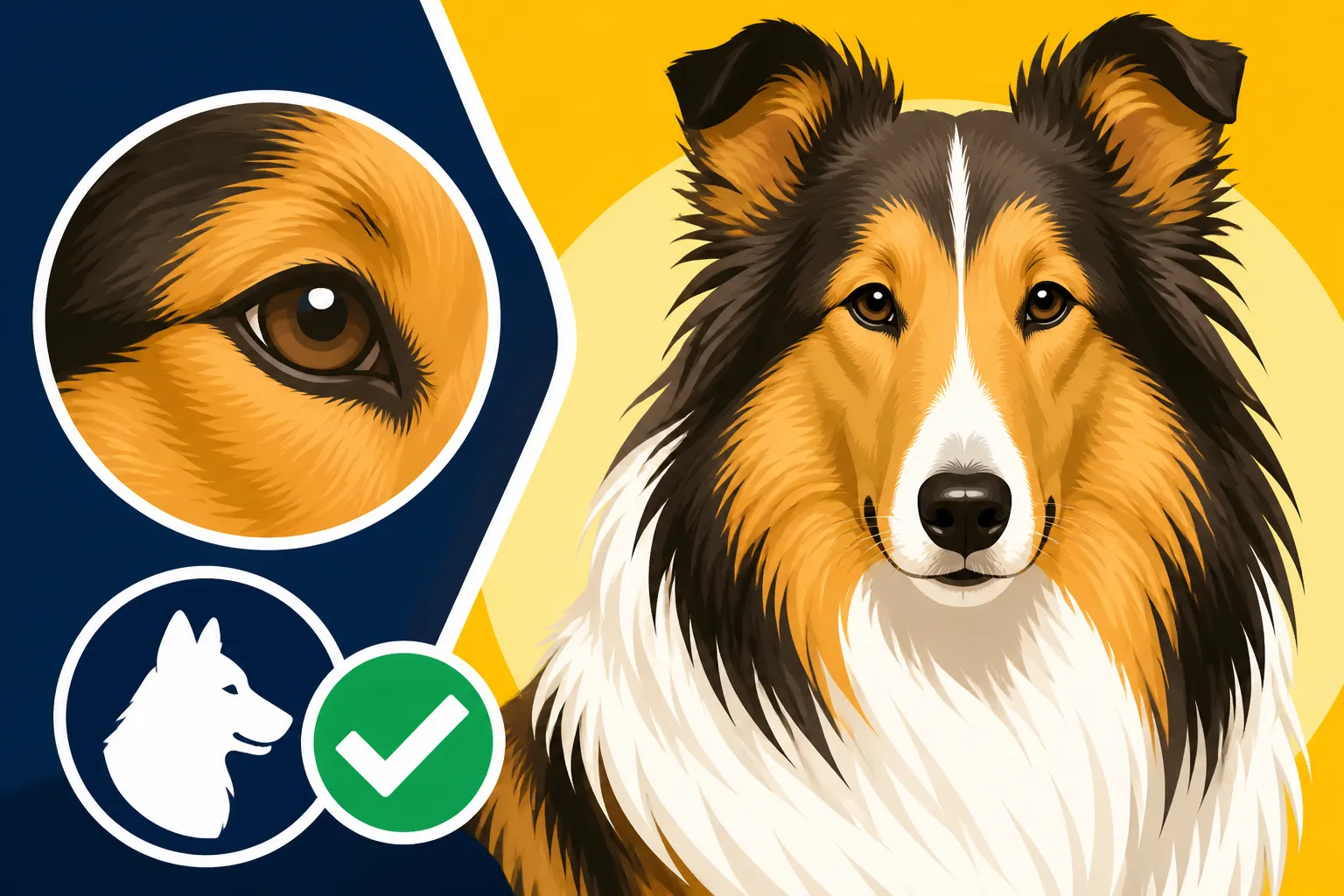
In a breed standard, “almond-shaped” refers to an eye that is gently oval and tapers toward the corners. It is not supposed to look round like a button, nor should it appear so narrow that the dog seems to be squinting. The shape is considered alongside the eye’s size, angle, color, and position on the head.
The standard’s wording is about proportion. A Collie’s eyes should suit the head and contribute to a clear, attentive expression. An eye that looks too round, too prominent, or unusually small may change the overall impression, even if its outline could loosely be called almond-shaped. Judges assess the complete picture rather than checking one feature in isolation.
That distinction can be helpful when comparing dogs in photographs. Lighting, camera angle, facial markings, and a dog’s mood can all make an eye look rounder or narrower than it does in person. A relaxed Collie may have a softer expression than one watching a moving object, while a close-up taken from above can distort the shape. A single snapshot is not a reliable way to decide whether a dog’s eyes meet the standard.
Placement matters as much as shape
The standard also describes the eyes as set obliquely. In everyday terms, they sit at a slight angle rather than looking perfectly level across the face. That placement, together with the almond-like outline, helps produce the characteristic Collie expression: alert and intelligent, but not hard or startled.
The eyes should also be positioned in a way that looks balanced with the muzzle, skull, and ears. An eye can have an oval outline yet still seem out of place if it is set too close to the side, too high, or too low for the overall head. This is why breed descriptions often group several details together instead of treating eye shape as a stand-alone checklist.
If you are learning to evaluate the breed, compare the eye description with the rest of the head and expression guidance. Whether a Collie's Expression Is Judged offers a useful companion topic, while Whether a Collie's Ears Should Tip shows how another small feature contributes to the familiar outline of the Collie’s head.
Eye color and the exceptions in the standard
Dark eyes are typical, but merles have an exception
For most Collies, the standard calls for dark eyes. The color works with the dog’s coat and facial markings to create a cohesive expression. In blue merles, however, blue eyes or eyes with blue areas may be permitted under breed-standard wording. The precise phrasing can vary by registry, so anyone preparing for a show should check the standard used by that organization.
An eye-color exception does not mean that every blue-eyed Collie is a blue merle, or that eye color alone establishes whether a dog meets the standard. Coat pattern, eye color, eye shape, placement, and the full dog are considered together. A blue eye in a dog with a different coat pattern may be treated differently under the relevant standard, so it is best not to rely on a general rule without checking the registry’s wording.
Blue merle markings can also make photographs tricky. A patch of blue may look like a fully blue eye in one image, while a blue eye can appear darker under different lighting. If you are comparing coat patterns and eye color, What a Blue Merle Collie Looks Like and The Four Colors a Collie Comes In provide helpful background.
Eye color does not tell you whether an eye is healthy
A standard describes appearance; it is not a diagnosis. A dark, almond-shaped eye is not automatically healthy, and a permitted blue eye does not by itself mean that a Collie has a vision problem. Health concerns need to be assessed separately, rather than inferred from whether a dog’s eyes match the expected look.
Likewise, a dog can have an eye condition that is not obvious from a casual glance. Some eye findings are identified during an examination even when a dog seems to see and behave normally. Breeders and prospective owners should ask about appropriate eye examinations and records rather than assuming that a pleasing expression is evidence of good eye health. For more on that distinction, see Collie Eye Anomaly Affects Most Collies, So Ask How Badly and Whether a Collie's Eye Test Can Be Done by DNA Instead.
| Feature | What the standard generally describes | What it means for an owner |
|---|---|---|
| Shape | Almond-shaped, gently oval and tapered | A balanced outline, not round or squinting |
| Placement | Set obliquely | The eyes sit at a slight angle that suits the head |
| Size | Medium and in proportion | Neither overly large and prominent nor unusually small |
| Color | Usually dark | Blue or partly blue eyes may be allowed for blue merles, depending on the standard |
| Expression | Clear, bright, alert, and intelligent | The whole face matters; eye shape is only one part |
How almond eyes contribute to the Collie expression
The expression is created by the whole head
People often recognize a Collie by its expression before they can name the details that create it. The eyes are important, but they work together with the head shape, muzzle, ears, coat markings, and the dog’s posture. The result should feel alert and responsive without looking harsh or exaggerated.
That is also why two Collies can both have almond-shaped eyes and still look quite different. One may have a softer, more relaxed expression; another may look intensely attentive because it is focused on a person or movement. The dog’s mood and the way its face is photographed can change the impression without changing the underlying eye shape.
The same principle applies when comparing Rough and Smooth Collies. Their coat varieties differ, but the eye description belongs to the breed’s overall type rather than to a separate eye standard for each coat. Rough and Smooth Are Two Varieties of One Collie explains how the varieties relate, while Rough and Smooth Collies Are Two Varieties of One Collie is not a separate standard: check the breed-specific material for how their shared features are described.
Puppies and adults may look different in photographs
A puppy’s face changes as it grows, and its expression may not look exactly like an adult Collie’s. Coat development and markings can also affect how visible the eyes appear. A puppy photograph taken during play, fatigue, or a bright outdoor moment may show a temporary expression rather than a settled adult look.
For that reason, avoid judging a young dog solely from one image or expecting a puppy’s eye shape to predict every detail of its adult appearance. If you are choosing a puppy, ask the breeder how they assess structure and health over time, and look at the dog in person when possible. A responsible breeder should be willing to discuss the puppy’s family, health records, and the limits of what can be predicted from a very young dog.
It is equally reasonable for a pet owner not to worry about show-ring terminology. If your Collie’s eyes appear comfortable and the dog is behaving normally, the standard’s description is mainly useful for understanding breed type. If you notice a change in appearance or behavior, that is a separate question from whether the eyes look typical for the breed.
Reading the standard without overinterpreting it
Breed standards are descriptions, not a scorecard for every pet
A breed standard gives judges and breeders a shared description of the ideal type. It does not mean that every pet Collie must look identical, or that a dog with a minor difference is unhealthy, poorly cared for, or somehow less loved. Standards are most relevant in breeding and conformation settings; they are not a measure of a companion dog’s value.
The wording can also differ slightly between kennel organizations and countries. One standard may use a particular phrase or provide a more detailed exception, while another may arrange the information differently. If you are considering showing a Collie, use the official standard for the specific registry and event rather than relying on a general description copied elsewhere.
When reading the standard, separate three questions: What shape and placement are preferred? What color exceptions are allowed? Is there a health concern that needs a veterinary examination? Keeping those questions distinct prevents an appearance description from being mistaken for medical guidance.
When to focus on health instead of appearance
A sudden change in an eye’s appearance deserves attention regardless of whether the eye is almond-shaped. Watch for signs such as persistent redness, discharge, cloudiness, squinting, pawing at the face, or a visible difference between the eyes. A Collie that bumps into objects, hesitates in familiar places, or seems less confident in low light may also need an examination.
These signs do not identify a particular condition on their own, and not every small amount of tear residue signals a serious problem. Still, new or worsening symptoms should not be dismissed as a breed-standard variation. Avoid putting human eye drops or household remedies into your dog’s eyes unless a veterinary professional has specifically advised you to do so.
For routine cleanliness, a soft, clean cloth dampened with water may be enough to wipe away minor debris around the outer eye area. Do not press on the eyeball or use a product just because it is marketed for people. If the eye itself looks irritated or the discharge keeps returning, ask your veterinarian what is appropriate for your dog.
A practical way to evaluate what you are seeing
If you are simply trying to understand your Collie’s appearance, look at both eyes in ordinary daylight while the dog is relaxed. Notice whether their shape and placement appear balanced, and consider the head as a whole rather than focusing tightly on one feature. Then remember that expression changes with attention, fatigue, and camera angle.
If you are evaluating a puppy or a potential show dog, consult the applicable written standard and ask an experienced breeder or judge to explain its wording in context. For health questions, use veterinary examinations and documented screening rather than visual guesswork. A standard can tell you what the breed is meant to look like; it cannot confirm that an individual dog’s eyes are healthy.
Disclaimer
This article is for general informational purposes only and does not constitute professional advice. Laws, prices and regulations vary by location and change over time. Consult a qualified professional for guidance on your specific situation.