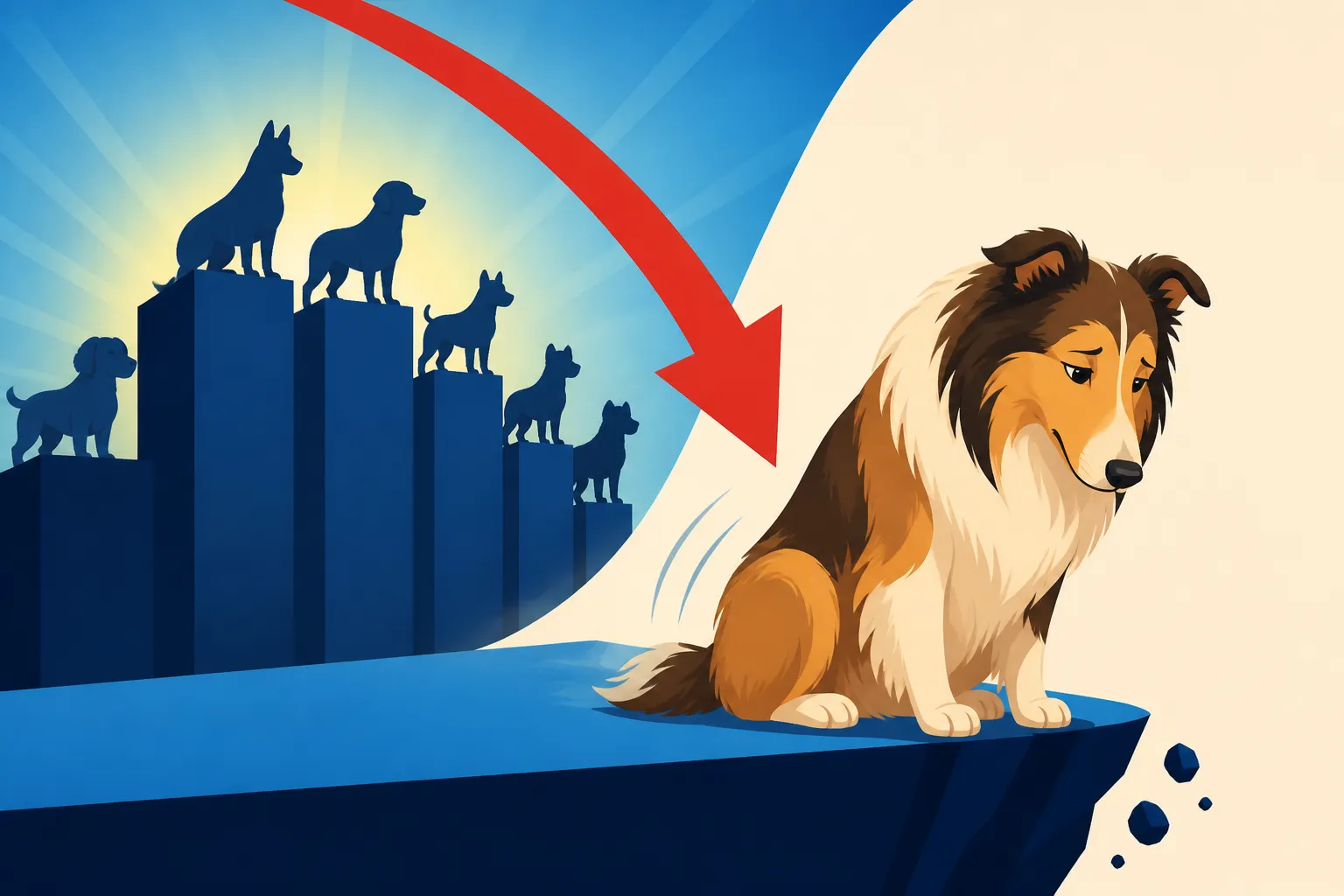
Why the Collie Fell Out of the Top Fifty
It's truly a puzzling and, frankly, a bit heartbreaking thought for many of us who adore this magnificent breed: how did the Collie, once the undisputed darling of American households and a symbol of loyalty and intelligence, fall out of the top fifty most popular dog breeds? This gentle, majestic dog, forever etched in our minds as the heroic "Lassie," used to grace magazine covers and movie screens, but today, you're far less likely to see one trotting down your local park path. It's a complex story, reflecting changes in our society, our homes, and our understanding of what we want in a canine companion, and in this guide, we're going to explore the various forces that conspired to nudge our beloved Collies from their perch.
The Shifting Landscape of American Households and Canine Companionship
Our lives today look very different from the mid-20th century when the Collie was at its zenith of popularity. Back then, sprawling suburban homes with ample yards were the norm, and families often had more time and space for large, active dogs. But times change, and so do our living situations, which inevitably impacts the kinds of dogs we choose to bring into our lives.
Smaller Homes, Smaller Yards, and the Desire for Compact Canines
Modern housing trends often lean towards smaller homes, apartments, and townhouses, particularly in urban and densely populated suburban areas. These living spaces frequently come with much smaller yards, or sometimes no private outdoor space at all. For prospective dog owners navigating these environments, the sheer size of a Collie—a dog that can stand over two feet tall at the shoulder and weigh upwards of 70 pounds—can feel daunting.
Think about it: bringing home a large dog like a Collie means needing a larger crate, more floor space for them to stretch out, and certainly more room for them to get those zoomies out without knocking over lamps. Owners often worry about a big dog feeling cramped or unhappy in a smaller home, and while Collies are known for being relatively calm indoors given proper exercise, the perception of their size can be a barrier. Many families are drawn to smaller, more compact breeds that seem like a more natural fit for a cozy apartment or a backyard that's more patio than lawn. This shift towards smaller living spaces has undeniably contributed to the decline in popularity of many larger breeds, including our lovely Collies.
The Decline of the Rural Lifestyle and Working Dog Needs
The Collie's historical roots are firmly planted in the working fields of Scotland, where they were bred as exceptional herding dogs, managing flocks of sheep with intelligence and a keen eye. In America's past, a significant portion of the population lived in rural settings, and even in many suburban areas, the idea of a dog with a working background felt natural and practical. A Collie could find purpose and exert its natural instincts, even if it was just "herding" the kids in the backyard.
However, as society became increasingly urbanized and industrialized, the practical need for working dogs diminished dramatically. Most modern dog owners are looking for a companion animal, not a livestock guardian or herder. While Collies can adapt beautifully to a family companion role, their inherent herding drive, though often soft, can manifest in ways that are unexpected for owners unfamiliar with working breeds. They might try to "herd" children, other pets, or even houseguests, which, while endearing to some, can be perplexing or even frustrating for others seeking a more passive companion. This disconnect between the breed's historical purpose and contemporary pet ownership desires has certainly played a role in its decreased demand.
The Rise of "Designer" Breeds and Novelty Appeal
Another significant factor in the changing dog landscape is the surge in popularity of "designer" breeds and novelty dogs. These are often crossbreeds, like Goldendoodles or Labradoodles, or sometimes breeds that have been less common in the past but gain sudden traction through social media, celebrity ownership, or a perceived "hypoallergenic" quality. People are increasingly drawn to the unique looks, specific temperament promises (often exaggerated), or the simple novelty of a breed that isn't seen everywhere.
Against this backdrop of constantly emerging new canine trends, a classic breed like the Collie, which has a long-established look and temperament, might seem less "exciting" or contemporary to some prospective owners. The established breeds sometimes struggle to compete with the buzz and mystique surrounding these newer, often heavily marketed crossbreeds. While there's absolutely nothing wrong with a well-bred crossbreed, the sheer volume and promotion of these options mean that many potential dog owners simply aren't looking at traditional breeds like the Collie anymore, or they might not even be aware of the smooth Collie variety, which offers a much lower-maintenance coat.
The Grooming Reality Versus the Romanticized Image
One of the most defining features of the rough Collie is its magnificent, flowing coat. It's truly a sight to behold, creating that iconic silhouette that immediately brings "Lassie" to mind. But let's be honest, that beautiful coat doesn't maintain itself, and the reality of its upkeep often comes as a shock to unprepared owners.
Underestimating the Rough Collie's Magnificent Coat
Many people fall in love with the look of a rough Collie without fully grasping the commitment required to keep that coat healthy and free of mats. We see them groomed to perfection in movies or at dog shows, sleek and glorious, but we don't always consider the hours of brushing that go into maintaining that appearance. It's not just a quick brush-through once a week; a rough Collie in full coat needs regular, thorough line brushing, often for 20-30 minutes several times a week, to prevent tangles and mats from forming deep within the dense undercoat. If you've ever tried to work out a knot from behind a Collie's ear or from their "petticoat," you know it's a labor of love, and sometimes, a true wrestling match.
The sheer volume of hair, especially the thick undercoat, can be overwhelming for those who haven't owned a double-coated breed before. It sheds, it picks up burrs and leaves, and it can become a magnet for dirt and debris. This consistent grooming requirement is often underestimated and can become a significant "pain point" for busy families or first-time dog owners. Many find that what seemed beautiful on screen becomes a time-consuming chore in real life. Finding the right tools for this job is crucial, and owners often look to specialized retailers or online stores to purchase their pin brushes, slicker brushes, and undercoat rakes. Four Tools and Twenty Minutes: Brushing a Rough Collie provides an excellent overview of what's needed.
The Seasonal "Coat Blow" and Its Impact on Home Life
If the regular grooming wasn't enough, Collies, like many double-coated breeds, experience a phenomenon known as "blowing coat" usually twice a year. This is when they shed their entire undercoat, typically in spring to prepare for warmer weather and in fall for a new winter coat. And when a Collie blows its coat, it's not a subtle affair. We're talking about tumbleweeds of soft undercoat swirling around your floors, clinging to your furniture, and seemingly appearing out of thin air just moments after you've vacuumed.
For weeks, sometimes even a month, your house can feel like it's being continuously redecorated with Collie hair. While regular brushing helps manage this, it's a battle against nature, and the sheer volume of hair can be astonishing. For families who value a pristine home or are sensitive to pet hair, this biannual "coat blow" can be a significant deterrent. It requires constant cleaning, and even then, you'll still find hair everywhere. This intensive shedding period means extra vacuuming, more lint rolling, and a constant awareness of hair on clothes and furniture. It's a commitment that many modern households are simply not willing or equipped to handle, especially when there are so many perceived "low-shedding" options available. The Three Weeks Twice a Year When a Collie Buries Your House goes into more detail.
The Smooth Collie: An Overlooked Low-Maintenance Alternative
It's one of the great ironies in the story of the Collie's decline that a lower-maintenance version of the breed exists and is perfectly healthy and temperamentally identical: the smooth Collie. The smooth Collie possesses the same intelligence, gentle nature, and striking good looks as its rough-coated cousin, but with a short, dense coat that requires significantly less grooming. A quick brush a couple of times a week and less dramatic shedding make the smooth Collie an incredibly practical choice for many families.
However, the smooth Collie has always been overshadowed by the rough variety, largely due to the enduring "Lassie" image. Most people, when they think of a Collie, automatically envision the long-coated version. As a result, the smooth Collie often goes unrecognized and unconsidered by prospective owners who are put off by the grooming demands of the rough coat. This lack of awareness means that a perfectly suitable and easier-to-care-for alternative within the breed itself remains largely undiscovered by the general public. If more people knew about and considered the smooth Collie, perhaps the breed's overall popularity might not have declined as steeply.
The "Lassie Effect" – Unrealistic Expectations and Subsequent Disappointment
No discussion about the Collie's public perception would be complete without addressing the elephant in the room: Lassie. This iconic fictional character, brought to life by a series of incredibly talented Collies (most famously Pal), created a global sensation and skyrocketed the breed's popularity. But sometimes, a good thing can lead to unforeseen consequences.
The Unattainable Ideal of the On-Screen Hero
Lassie wasn't just a dog; she was a superhuman canine, capable of feats of intelligence, loyalty, and problem-solving that went far beyond the abilities of any real dog. Lassie communicated complex ideas, rescued children from perilous situations, and always seemed to know exactly what needed to be done. She was the perfect dog: brilliant, brave, always obedient, and unfailingly devoted. This created an incredibly high and, frankly, impossible standard for the average pet Collie to live up to.
Many people, captivated by Lassie's on-screen heroics, rushed out to buy a Collie puppy, expecting to bring home their own furry genius. They envisioned a dog that would instinctively understand their every command, rescue them from danger, and exhibit an almost human level of intuition. When their real-life Collie, for all its wonderful qualities, behaved like a normal dog—needing training, making mistakes, and not speaking English—the disparity between expectation and reality could be crushing. This led to disappointment, frustration, and unfortunately, sometimes even rehoming. No dog, not even a Collie, can live up to the myth of Lassie, and the breed paid a price for this unrealistic ideal.
The Gap Between Television Heroics and Everyday Canine Behavior
The problem wasn't that Collies aren't intelligent or loyal; they absolutely are. They are highly intelligent, sensitive dogs that form deep bonds with their families. But intelligence in a real dog manifests as the ability to learn commands, solve puzzles, and understand routines, not to navigate treacherous terrain to fetch a doctor from miles away. The "heroics" often seen in movies are the result of countless hours of professional training, careful staging, and clever editing, not spontaneous canine genius.
For a new owner expecting Lassie, the reality of a puppy that needed house-training, chewed on furniture, barked at the mailman, and required consistent positive reinforcement to learn basic commands could be a rude awakening. The Bark Is the Trait Collie Owners Underestimate discusses their vocal nature. Instead of celebrating their Collie for what it truly was—a wonderfully affectionate, intelligent, and beautiful companion—some owners became fixated on what it wasn't: a flawless, self-sufficient hero. This often led to feelings of inadequacy, both for the owner who felt they couldn't "train" their dog to be Lassie, and for the dog, who couldn't fulfill an impossible role. This gap between Hollywood fantasy and everyday dog ownership profoundly impacted the breed's reputation and popularity.
The Fallout of Impulse Adoptions Based on Media Influence
The intense popularity spurred by Lassie led to a breeding boom, with many people jumping into breeding Collies to meet the sudden, skyrocketing demand. Unfortunately, not all of these breeders were responsible. Some prioritized profit over health and temperament, leading to an increase in poorly bred Collies with shy temperaments, health issues, or an exaggerated bark. When people bought these puppies on impulse, solely based on the Lassie image, without researching the breed's actual needs or the importance of responsible breeding, the consequences were often negative.
These impulse adoptions frequently resulted in dogs ending up in shelters or rescue organizations when owners discovered the reality of caring for a large, double-coated dog with specific needs. The breed became a victim of its own success, as the sheer volume of dogs produced to meet demand meant that many ended up in homes ill-equipped to handle them. This created a cycle where disappointment led to rehoming, which further tainted the breed's reputation and contributed to its decline in popularity. It's a stark reminder that responsible ownership starts with thorough research and finding a reputable breeder who prioritizes the well-being of their dogs. Why Collies Reach Rescue After a Shedding Season touches on this.
Temperament Traits Misunderstood or Underestimated by New Owners
While Collies are famously gentle and intelligent, they also possess specific temperament traits rooted in their herding heritage. These traits, while wonderful for the right owner, can be misunderstood or underestimated by those unfamiliar with the breed, leading to challenges in the home environment.
The Collie's Vocal Nature and Guardian Instincts
One of the most common surprises for new Collie owners is just how vocal they can be. Collies, as herding dogs, were historically bred to use their voices to communicate, alert, and control flocks. This inherent trait translates into a tendency to bark, often quite readily, at anything they perceive as unusual or approaching their territory. A knock at the door, a squirrel in the yard, a car passing by, or even a sudden noise outside can trigger a round of enthusiastic barking.
While this makes them excellent natural watchdogs, alerting their families to anything out of the ordinary, it can be a significant challenge for owners living in close proximity to neighbors, in apartments, or simply those who prefer a quieter household. Many owners underestimate the breed's strong guardian instinct and vocal nature, leading to frustration when their "Lassie" turns out to be a persistent alarm system. Consistent training from a young age is crucial to manage this trait, but it's a commitment that not all owners are prepared for. Whether a Collie Can Be Taught a Quiet Cue offers some strategies.
Herding Behaviors in a Non-Herding Environment
The herding instinct is deeply ingrained in the Collie. Even if they've never seen a sheep, this instinct can manifest in various ways within a typical home environment. Collies might try to "gather" family members, especially children, by nudging them, circling them, or even gently nipping at their heels in an attempt to direct movement. This isn't aggression; it's the dog's natural inclination to control and manage a "flock."
While these behaviors are usually soft and not malicious, they can be startling or even problematic for families with young children, who might not understand why the dog is "chasing" or "nipping" at their heels. Why a Collie Herds Your Children delves into this. Without appropriate outlets for their herding drive, such as organized herding activities or even engaging puzzle toys and structured play, these instincts can become a source of frustration for both the dog and the owner. Owners who are looking for a purely passive companion might find these active herding instincts to be more than they bargained for.
The Sensitive Soul: When Harsh Handling Backfires
Collies are renowned for their sensitivity and their desire to please. They are incredibly attuned to their owner's emotions and respond best to positive reinforcement, gentle guidance, and clear communication. This sensitivity, while making them deeply empathetic companions, also means they are not suited for harsh training methods, loud corrections, or punitive approaches.
Unfortunately, in the past, and even sometimes today, dog training advice sometimes leaned towards more dominant or confrontational methods. For a sensitive Collie, such approaches are not only ineffective but can be actively detrimental. Harsh handling can cause a Collie to shut down, become fearful, lose trust, or even develop anxiety and behavioral problems. They can become withdrawn or even defensively reactive if constantly subjected to harsh treatment. An owner who attempts to "dominate" a Collie will quickly find that the dog becomes confused and distressed, leading to a breakdown in the human-animal bond. Harsh Handling Breaks a Collie and It Does Not Come Back highlights this critical point. This mismatch between the Collie's sensitive nature and certain training philosophies may have also contributed to the perception that they are difficult or stubborn, when in fact, they simply require a different, more empathetic approach.
Perception of Health Concerns and Breeding Practices
Every breed of dog has its potential health challenges, and Collies are no exception. While many breeds enjoy robust health for their lifespans, certain genetic conditions are more prevalent in Collies. The public's awareness of these conditions, combined with the difficulties sometimes faced in finding responsible breeders, has also contributed to the breed's decline.
Breed-Specific Health Issues and Public Awareness
Collies are known to be predisposed to a few specific genetic health conditions. Perhaps the most widely known is the MDR1 (Multi-Drug Resistance 1) mutation, which makes them highly sensitive to certain common medications, including some anti-parasitics, pain relievers, and anesthetics. Administering these drugs to an MDR1-affected Collie can lead to severe neurological symptoms, seizures, or even death. The Drug List That Can Kill a Collie is a vital resource for any Collie owner.
Another significant concern is Collie Eye Anomaly (CEA), a congenital eye disease that can range from very mild choroidal hypoplasia to severe retinal detachment and blindness. While DNA testing can identify MDR1 status and eye exams can detect CEA in puppies, public awareness of these issues means that potential owners might become wary, fearing significant veterinary costs or the heartbreak of a sick dog. Other conditions like bloat, epilepsy, and dermatomyositis are also seen in the breed. While many Collies live long, healthy lives, the perception of these breed-specific health issues can deter new owners, especially if they are not well-informed about testing and responsible breeding practices designed to minimize these risks.
The Challenge of Finding Reputable, Health-Tested Breeders
For a prospective owner interested in a Collie, the importance of finding a reputable breeder who actively screens their breeding stock for genetic diseases cannot be overstated. Responsible breeders will perform DNA tests for conditions like MDR1, conduct regular eye examinations for CEA, and often screen for other issues like hip and elbow dysplasia, and even thyroid function. They are transparent with their results and will provide proof of testing. The Three Genetic Tests a Collie Breeder Owes You explains these in detail.
However, as the breed's popularity declined from its peak, the number of truly dedicated, health-focused breeders may have also dwindled. For someone new to the breed, navigating the world of breeders to find one who is doing all the right health clearances can be challenging. It's not always easy to differentiate between a truly responsible breeder and one who is simply breeding for profit without prioritizing health. The perceived difficulty in finding a "healthy" puppy or the fear of unknowingly purchasing from an irresponsible source can push potential owners towards other breeds where health testing might seem less complex or more widely practiced.
The Financial Burden of Potential Inherited Conditions
Even with responsible breeding, there's always a possibility of unforeseen health issues in any dog. However, when specific genetic conditions are known to be prevalent in a breed, the potential financial burden of managing these conditions can weigh heavily on prospective owners. Dealing with an MDR1 reaction, managing a dog with epilepsy, or addressing severe CEA can involve specialized veterinary care, prescription medications, and ongoing monitoring, all of which come with significant costs.
For example, while many routine medications are inexpensive, if an MDR1 Collie needs an alternative drug that isn't as commonly prescribed, it might be pricier. The proactive approach of testing, while essential, still puts the onus on the owner to be diligent. While pet insurance can help mitigate some of these costs, the mere contemplation of these potential expenses can be enough to make some families hesitate. What MDR1 Costs a Collie Owner in Caution and Vet Time gives insight into this. When faced with the choice, some families opt for breeds where the known genetic risks, or the perceived costs associated with them, seem lower.
Competition from Other Breeds and Changing Fashions
The world of dog breeds is dynamic, with trends and preferences constantly evolving. Just as certain styles of clothing or car models fall in and out of favor, so too do dog breeds experience shifts in popularity. The Collie, unfortunately, found itself outpaced by newer darlings.
The Ascendance of Golden Retrievers and Labradors as Family Favorites
While the Collie was enjoying its moment in the sun, other breeds were steadily rising in prominence, particularly the Golden Retriever and the Labrador Retriever. These breeds also possess many of the qualities that make Collies wonderful family pets: intelligence, gentleness with children, and a friendly disposition. However, they often come with a slightly different package that appealed to the changing desires of American families.
Golden Retrievers and Labradors tend to have a reputation for being more outwardly boisterous and resilient, perhaps perceived as "hardier" with children who might be less gentle. Their shorter coats (especially the Lab) require less intensive grooming than a rough Collie, making them seem like an easier choice for busy families. Furthermore, their enthusiastic, outgoing personalities made them ideal for the active, outdoorsy family lifestyle that became increasingly popular. The image of a Golden bounding through a park or a Lab splashing in a lake perfectly captured the aspirational family pet, gradually eclipsing the more reserved and elegant Collie in the public consciousness.
The Appeal of "Hypoallergenic" or Non-Shedding Breeds
For many modern households, one of the biggest considerations when choosing a dog is shedding and potential allergens. The widespread desire for "hypoallergenic" or low-shedding breeds has dramatically influenced breed popularity. While no dog is truly 100% hypoallergenic, breeds like Poodles and their various "doodle" crosses are often marketed as such, appealing to families with allergy concerns or those simply fed up with pet hair.
As we discussed earlier, the rough Collie is a heavy shedder, especially during its biannual coat blow. This characteristic, which can be a deal-breaker for many, puts the Collie at a distinct disadvantage in a market increasingly dominated by breeds that promise minimal shedding. The continuous search for a clean home and reduced allergy symptoms has diverted a significant number of potential owners away from double-coated breeds like the Collie and towards those with hair-like coats or simpler grooming needs. Many turn to online retailers, such as Chewy, to find specialized vacuums and cleaning supplies to manage pet hair, which speaks to the significant impact shedding has on owner choice.
The Marketing of New Breeds and Crossbreeds
The sheer volume of information available today, largely thanks to the internet and social media, means that new and less common breeds, as well as various crossbreeds, are constantly being introduced to the public. Animal rescue organizations also do an incredible job of promoting mixed-breed dogs, highlighting their unique charm and the importance of adoption. This constant influx of options means that the pool of potential choices for a new pet owner is vast and ever-expanding.
In this crowded market, a classic breed like the Collie, which doesn't have a constant stream of viral videos or celebrity endorsements, can easily get lost. The marketing power of "newness" or "unique combinations" often overshadows the quiet, enduring qualities of established breeds. This isn't necessarily a fault of the Collie itself, but rather a reflection of how consumer preferences and information dissemination have changed in the pet industry. People are often drawn to what's trending or what feels novel, and the Collie, for all its timeless appeal, simply hasn't been "trending" in recent decades.
The Cost of Raising a Collie Beyond the Initial Purchase
Bringing any dog into your home involves a financial commitment, but for a large, long-coated breed like the rough Collie, certain expenses can be higher than for other dogs. These ongoing costs, particularly for grooming and feeding, can be a deterrent for budget-conscious families.
Ongoing Grooming Expenses for the Rough Collie
While a smooth Collie is relatively low-maintenance, the rough Collie's majestic coat, as beautiful as it is, comes with a price tag beyond just the time commitment. If an owner isn't able or willing to do all the extensive brushing and dematting themselves, professional grooming becomes a regular, necessary expense. A full professional groom for a rough Collie, including bathing, drying, brushing out, and tidying feet and ears, can be substantial.
These grooming sessions are not just for aesthetics; they are crucial for the dog's health and comfort, preventing painful mats and skin issues. Depending on the climate and the individual dog's coat, these appointments might be needed every 6-8 weeks. Over the lifespan of a Collie, these costs add up significantly. For many families, especially with rising living costs, budgeting for these regular professional grooming sessions for a large dog can be a barrier. They might look at breeds with shorter coats, which require less frequent or less expensive professional intervention, if any at all. What a Professional Groom Costs on a Rough Collie details this.
Feeding a Large Dog: More Than Just a Bag of Kibble
Collies are large dogs, typically weighing between 50 to 75 pounds for females and 60 to 90 pounds for males. As you might expect, larger dogs require more food than smaller breeds, and that translates directly into higher monthly food bills. While there are budget-friendly dog foods available, many owners opt for higher-quality kibble, specialized diets (e.g., for sensitive stomachs, joint support), or even raw feeding, all of which can be considerably more expensive.
A 70-pound Collie might consume several cups of kibble a day, meaning a large bag of dog food might only last a few weeks. When you factor in treats, dental chews, and any supplements, the monthly food budget for a Collie can be quite significant. For a family on a tight budget, this ongoing expense can be a serious consideration. The difference in food costs between a small breed and a large breed like a Collie can be hundreds of dollars annually, which for many, is a tangible factor in their decision-making process when choosing a pet. Online retailers like Chewy make it easier to compare prices and ensure a steady supply of large breed formulas, but the sheer volume needed remains a consideration. What Feeding a Seventy Pound Collie Costs provides a deeper dive.
Veterinary Care and Preventative Health Investments
Beyond the routine vaccinations and annual check-ups that all dogs require, the potential for breed-specific health issues in Collies means that owners often need to be prepared for more specialized veterinary care or preventative measures. For example, if a Collie is MDR1 affected, extra caution and potentially more expensive alternative medications are necessary. Monitoring for conditions like bloat, a life-threatening emergency common in deep-chested breeds, requires owners to be vigilant and ready for potentially expensive emergency surgery.
Investing in DNA health panels from reputable labs like Optimal Selection or Embark, while initially done by responsible breeders, might also be considered by new owners for peace of mind if their puppy's parents weren't fully tested. Regular eye exams for CEA, especially in puppies, are crucial. As Collies age, they may also need joint supplements, specialized diets, or more frequent veterinary visits, adding to the financial commitment. While these are investments in a dog's health and longevity, the perception of potentially higher-than-average veterinary costs can make some families choose a breed with fewer known predispositions, particularly if they are not prepared for these financial realities. What a Collie's Eye and Skin Workups Cost offers more perspective on these expenses.
Disclaimer
This article is for general informational purposes only and does not constitute professional advice. Laws, prices and regulations vary by location and change over time. Consult a qualified professional for guidance on your specific situation.