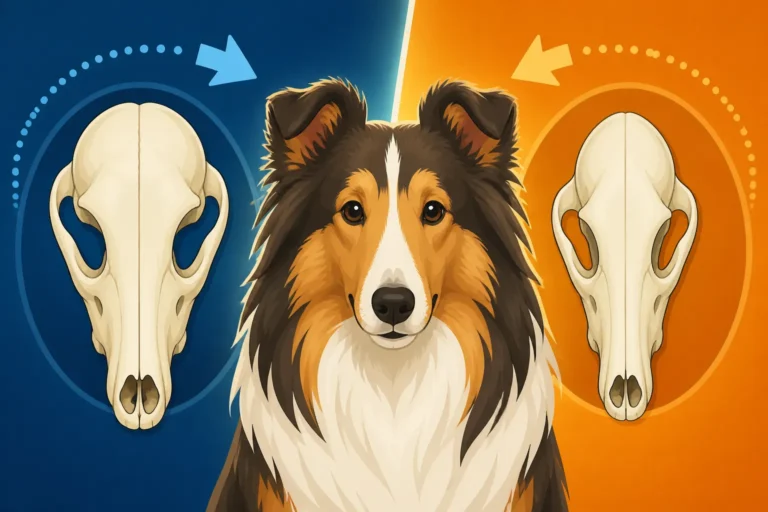
Whether a Collie Must Have a White Collar
Many people harbor a very specific image of a Collie in their mind's eye, often conjured from classic films or old storybooks. This image invariably includes that quintessential, striking white collar that seems to perfectly frame their elegant head. It's a lovely picture, to be sure, but it often leads to a common misconception: that every true Collie must have this signature white marking. If you're wondering if your beautiful, but perhaps less perfectly collared, Collie measures up, or if you're looking to understand the breed standard a bit better, you've come to the right place. We're going to dive deep into the fascinating world of Collie coats and help you appreciate the full spectrum of their inherent beauty.
The Breed Standard and White Markings
When you look at a Collie, especially a Rough Collie, their luxurious coat is often the first thing that catches your eye. This flowing mane, the soft frill around their neck, and those expressive eyes create an unforgettable silhouette. It's easy to see why certain markings became so iconic, but the official breed standard is actually quite nuanced about white. It aims to describe the ideal, but it also acknowledges the natural variations within the breed.
What the Official Standard Says About White
The breed standard for Collies, as outlined by organizations like the American Kennel Club (AKC) and the Collie Club of America, provides a detailed description of the ideal Collie. When it comes to color, it specifies four primary types: sable and white, tricolor, blue merle, and white (predominantly white). Within these color descriptions, white markings are not just permitted, but often considered desirable, contributing to the breed's striking appearance. However, nowhere does it state that a full, unbroken white collar is mandatory.
Instead, the standard typically describes "white markings desirable." This usually includes a white collar, but also white on the chest, legs, feet, and brush of the tail. For example, a partial white collar, often called a "ruff" or "shawl," is perfectly acceptable. It might be broken at the back of the neck, or simply extend partway around. The emphasis is on attractive placement and balance, rather than a rigid requirement for a 360-degree white band. A Collie with a beautiful blaze (white stripe up the face) and white on its chest and legs, but only a slight hint of white on its neck, is still a perfectly wonderful and conformationally correct Collie.
The Ideal Look Versus Natural Variation
While a full white collar is often seen as the "ideal" in the show ring, particularly on sable and tricolor Collies, it's important to remember that nature doesn't always paint perfectly. A breeder strives for symmetry and the markings described in the standard, but genetic expression can lead to a wide array of beautiful patterns. You might have a Collie with white that extends further up one shoulder than the other, or a collar that's wider on one side. These are not faults that diminish a Collie's inherent quality or beauty.
Think of it like human hair color or eye color; there's a spectrum, and while some shades might be more common or traditionally admired, every variation has its own appeal. The beauty of a Collie lies in its overall presence, its intelligent eyes, its graceful movement, and its magnificent coat, regardless of whether that white collar is perfectly continuous. We should celebrate these individual differences. Sometimes the most distinctive Collies are those with slightly unexpected markings that make them truly one-of-a-kind.
Why the White Collar Expectation Persists
It's completely understandable why so many people believe a Collie must have that crisp white collar. This image has been deeply ingrained in our collective consciousness for decades, largely thanks to powerful cultural influences and historical breeding preferences that favored a certain aesthetic. It’s hard to shake off an image that’s been portrayed as the epitome of the breed for so long.
The Enduring Lassie Legacy
Undoubtedly, the biggest reason for the pervasive belief in the mandatory white collar is the legendary Lassie. The original Lassie, a magnificent Rough Collie named Pal, epitomized the breed for millions around the world. A Dog Named Pal Played Lassie and Changed the Breed Forever is a testament to his impact. Pal, and almost every Collie that followed in his paw prints, sported an immaculate, broad white collar that wrapped around his neck, extending down his chest and up into a striking blaze on his face. This iconic image, portrayed through films, television shows, and books for generations, became the blueprint for what a Collie "should" look like.
When you picture a Collie, chances are you're subconsciously pulling from Lassie's image. This wasn't just a fleeting trend; Lassie's appeal endured for decades, firmly cementing that particular look as the Collie look. It’s hard for reality to compete with such a powerful and beloved fictional representation. As a result, many potential Collie owners, and even those less familiar with the breed, might feel that a Collie without this distinct white collar isn't quite "right" or "purebred," which is simply not true according to the breed standard. Whether Lassie Gave the Collie a False Reputation explores how this idealized image shaped public perception.
Historical Aesthetic Preferences in Breeding
Beyond Lassie, early Collie breeders and fanciers also played a significant role in establishing the white collar as a highly desired trait. In the early days of dog shows and breed standardization, specific aesthetic qualities were sought after to differentiate breeds and create a distinct "look." White markings, especially on the chest and neck, tend to make a dog’s head appear more pronounced and elegant, contrasting beautifully with the sable or tricolor base.
As Collies gained popularity, notably after figures like Queen Victoria Made the Collie Fashionable in the 1860s, breeders began to selectively breed for these visually appealing characteristics. A full, symmetrical white collar became a mark of quality and careful breeding in the show ring. While the breed standard always allowed for variations, the prevailing taste in the show world heavily influenced what was considered "ideal." This historical preference, passed down through generations of breeding programs and judges’ preferences, reinforced the idea that a top-tier Collie would always have a perfect white collar.
Understanding the Spectrum of Collie Coat Colors and Markings
Collies truly are a canvas of beautiful colors and patterns. While the white markings often get the most attention, they are just one component of their stunning coats. Understanding the different accepted colors and how white accentuates them can give you a fuller appreciation for the breed's diversity. The white collar is a highlight, but it works in concert with the underlying base color.
The Four Accepted Coat Colors
The breed standard recognizes four primary coat colors for Collies, each with its own unique charm. These base colors are then accented by white markings, which are typically found on the neck, chest, legs, feet, and tail. The Four Colors a Collie Comes In is a fantastic resource if you want to dive deeper into each one.
- Sable and White: This is perhaps the most familiar color, often associated with Lassie. Sable refers to a range of shades from light golden to rich mahogany, often with black tipping on the outer guard hairs, giving it depth. These Collies almost always have significant white markings. What a Sable and White Collie Looks Like will give you a clear visual.
- Tricolor: As the name suggests, tricolor Collies display three distinct colors: black, tan, and white. Their bodies are predominantly black, with rich tan markings often found on their face (eyebrows, cheeks) and legs. The white markings usually provide a striking contrast against the dark base. For a closer look, see What a Tricolor Collie Looks Like.
- Blue Merle: Blue merle Collies are truly breathtaking, featuring a marbling pattern of grey, black, and sometimes tan, with splashes of blue or silver. Their base color is usually a mottled grey, with patches of black. White markings are common and contribute to their unique appearance. Sometimes, these Collies can have blue eyes, or one blue and one brown eye, adding to their allure. Check out What a Blue Merle Collie Looks Like for more details.
- White (Predominantly White): These Collies have a coat that is mostly white, with patches of sable, tricolor, or blue merle on their head and sometimes on their body. While some people might confuse them with albino dogs, they are not. They are genetically distinct and their white is a color pattern, not an absence of pigment due to a health issue. White Collies still have pigment in their nose, eye rims, and lips. What a White Collie Is explains this variation beautifully.
The Range of White Markings
Beyond the collar, white markings are an integral part of the Collie's appearance, regardless of the base color. These markings are carefully described in the breed standard because their placement and extent contribute significantly to the breed's overall aesthetics and balance. It's not just about having white; it's about where that white appears.
Typically, white appears as a blaze (a stripe up the face, usually between the eyes), a full or partial collar, a chest marking, on all or part of the legs, and on the tip of the tail. Some Collies will have a very narrow blaze, while others will have a broad, almost mask-like white face. Similarly, the white on their legs can be minimal or extend high up, creating what's sometimes called "stockings." These variations are all part of the natural genetic lottery and make each Collie unique. The goal, especially in the show ring, is for these white markings to be well-defined and symmetrically distributed, enhancing the dog's overall regal appearance.
The Genetics Behind the Markings
The beautiful tapestry of colors and markings on a Collie isn't just random; it's a fascinating interplay of genetics. Understanding a little about how these patterns develop can demystify why some Collies have that perfect white collar and others have more subtle or different white accents. It's not about being "less pure" but about the specific genes at play.
The "White Factor" Genes
The white markings you see on a Collie – the collar, blaze, chest, and leg markings – are primarily controlled by specific genes that determine the extent and distribution of white. One of the most significant is the S (spotting) locus, which dictates the amount of white on a dog. Collies typically carry alleles that result in what's known as "Irish spotting" or "piebald" patterns, which manifest as white on the chest, belly, legs, and often the neck and face.
It's not usually a single gene that controls just the collar, but rather a combination of genes that influence the overall pattern of white. Some genes act as modifiers, increasing or decreasing the amount of white. This is why you can have littermates with similar base colors but vastly different white patterns – one might have a full collar, another a broken one, and another just a small white patch on the chest. It's a complex dance of genetics that results in the wide array of beautiful Collies we see.
Predicting White Patterns in Breeding
For dedicated Collie breeders, understanding these genetic patterns is crucial. While they can predict the base color of a litter with reasonable accuracy if they know the parents' genetics, predicting the exact configuration of white markings, especially a perfect collar, can be more challenging. Breeders often refer to pedigrees and the white patterns of previous generations to inform their breeding decisions. They aim to produce puppies that conform to the breed standard's description of desirable white markings.
However, even with careful selection, nature always has its own surprises. A breeder might breed two Collies with beautiful, full white collars and still get a puppy with a broken collar or less extensive white markings. This isn't a failure in breeding; it's simply the natural variation inherent in complex genetic traits. What matters most is that the Collie is healthy, has a wonderful temperament, and embodies the other essential qualities of the breed. Focusing solely on a perfect white collar can sometimes overshadow these more critical aspects of a good breeding program.
| Collie Color Variety | Typical White Markings Expected | Common White Collar Presentation |
|---|---|---|
| Sable and White | Blaze, full/partial collar, chest, legs, feet, tail tip | Very common, often broad and distinct |
| Tricolor | Blaze, full/partial collar, chest, legs, feet, tail tip | Common, provides strong contrast against black base |
| Blue Merle | Blaze, full/partial collar, chest, legs, feet, tail tip; may have blue eyes | Common, can be striking with merle pattern |
| White | Patches of sable, tricolor, or blue merle on head/body; white dominant | White body often blends collar; distinct colored head often has blaze |
Appreciating the Diversity of Collie Beauty
When we become fixated on a single trait, like a perfectly formed white collar, we risk overlooking the incredible beauty and individuality that each Collie brings. The truth is, the charm of this breed extends far beyond a specific marking. A Collie's true essence lies in its spirit, its intelligence, and its overall presence, which are certainly not defined by the exact distribution of white on its coat.
Beyond the "Lassie Look"
It's wonderful to admire the classic "Lassie look," and it's certainly a part of the Collie's history and appeal. However, as responsible and loving Collie owners, we need to broaden our appreciation to encompass the entire spectrum of the breed's appearance. Not every Collie will have that iconic, perfectly unbroken white collar, and that's not just okay – it's part of what makes them unique. Whether a Collie Puppy's Color Changes can sometimes surprise owners as their dogs mature, further illustrating the dynamic nature of their coats.
When you're choosing a Collie, whether from a reputable breeder or through a rescue, try to look beyond superficial expectations. Focus on the dog's health, temperament, and how well it fits into your life. A Collie with a fantastic personality, strong health, and the gentle, intelligent nature the breed is known for is far more valuable than one with a picture-perfect collar but lacking in other areas. The real magic of a Collie isn't just skin deep; it's in their unwavering loyalty and their ability to become an integral part of the family. You can find all sorts of supplies for any Collie, no matter their markings, at places like Chewy, ensuring they get the best care.
The Charm of Unique Markings
Every Collie has a unique set of markings, a genetic fingerprint that makes them distinctly themselves. Whether your Collie has a bold blaze, subtle white highlights on its chest, or an asymmetrical white collar, these details contribute to their individual charm. Instead of measuring them against an idealized image, take a moment to truly see your dog and appreciate the specific patterns that make them stand out.
Imagine a stunning blue merle Collie with deep amber eyes and a white blaze that just barely touches the corner of one eye – beautiful! Or a sable Collie with a wide, splashy white chest and legs, but only a hint of a white "scarf" rather than a full collar – equally beautiful! These variations are what make Collies so interesting and visually diverse. Embrace your Collie's specific markings as part of their identity. After all, their beauty is more than just a list of characteristics; it’s about the whole package. To keep that coat healthy and shining, regardless of its markings, regular grooming is key, and you can find excellent brushes and shampoos on Chewy.
The breed standard is a guide, but it's not a rigid mandate for perfection in every detail. It describes an ideal, but the true beauty of Collies lies in their range and versatility. So, next time you see a Collie, whether it has that famous white collar or not, appreciate the intelligent eyes, the dignified bearing, and the sheer elegance that makes this breed so beloved. Caring for their magnificent coat, ensuring they have proper nutrition (perhaps a great food from Chewy), and understanding their specific needs are far more important than any single marking.
Disclaimer
This article is for general informational purposes only and does not constitute professional advice. Laws, prices and regulations vary by location and change over time. Consult a qualified professional for guidance on your specific situation.