Whether a Collie Puppy’s Color Changes
A Collie puppy’s coat can look surprisingly different by the time it reaches adulthood. Sable puppies may darken, markings can seem to shift as the coat grows, and seasonal shedding can temporarily change the overall look. This guide explains what changes are normal, what usually stays the same, and how to avoid mistaking coat development for a health problem.
Why a Collie puppy’s coat changes
Puppy coat and adult coat are not the same
Collie puppies begin with a softer, shorter coat that can make their coloring look lighter, blurrier, or more uniform than it will later. As the adult coat comes in, longer guard hairs and a developing undercoat add depth and texture. This can make the same markings appear darker or more sharply defined without the dog’s inherited color pattern actually changing.
The transition happens gradually, not like a single switch being flipped. A puppy may look one way in a photo at ten weeks and noticeably different several months later, especially around the shoulders, neck, back, and tail. Growth, lighting, coat length, and shedding all affect what your eye sees.
That is why puppy photos can be a poor guide to an adult Collie’s final shade. If you are comparing a littermate’s coat with your puppy’s, remember that two puppies of the same color can develop at different rates. Their adult coats may also vary in shade, even when their basic color pattern is alike.
Color pattern and shade are different things
A Collie’s basic color pattern is inherited, but the shade within that pattern can change in appearance as the coat matures. A sable Collie may become darker or more heavily shaded. A tricolor’s black areas may seem more prominent once the longer coat grows in. A blue merle’s mottling may look more or less obvious depending on coat length and how the hairs lie.
It helps to separate three things: the color pattern, the amount of white, and the exact shade of the colored areas. The pattern usually remains recognizable, while shade and visual contrast may vary. White markings often appear to move simply because the surrounding coat grows, fluffs, or lies differently.
The recognized Collie colors are discussed in The Four Colors a Collie Comes In. Individual dogs do not always match a simple mental picture of a color name, so it is useful to look at the whole pattern rather than judging by one patch of fur.
Growth, light, and photos can fool the eye
A coat photographed indoors can look very different from the same coat in bright outdoor light. Warm household lighting can make sable appear more golden or reddish; shade can make blue merle markings look muted. A wet coat may look much darker, while a freshly brushed coat may show more color variation than a coat that has been lying flat.
For a useful record, take occasional photos in similar natural light, from roughly the same distance and angle. You do not need a professional camera. The goal is simply to compare the puppy with itself over time rather than relying on memory.
This can be especially reassuring during an awkward coat stage, when the puppy’s fur seems uneven or patchy because different areas are growing at different speeds. If the skin looks healthy and the puppy is otherwise well, an uneven appearance alone does not mean the color pattern is changing abnormally.
What to expect from each Collie color
Sable and white puppies may darken
Sable is the color most likely to surprise new Collie owners. A young sable puppy may look pale, golden, or lightly shaded, then develop darker hairs as the adult coat grows. Some remain relatively light, while others gain pronounced dark shading along the back, neck, or face. The degree and timing of change vary from dog to dog.
A sable puppy’s appearance is not always a reliable predictor of its adult shade. Looking at the parents and older relatives may offer clues, but it cannot guarantee the puppy will mature to an exact color. Even puppies from the same litter can finish with different depths of sable shading.
White areas may seem to change in proportion as colored hair grows around them, but the white markings themselves generally do not migrate across the body. For a closer look at the pattern, see What a Sable and White Collie Looks Like. If you are choosing a puppy, ask the breeder how the parents’ coats developed, while treating that information as context rather than a promise.
Tricolor puppies usually keep their basic pattern
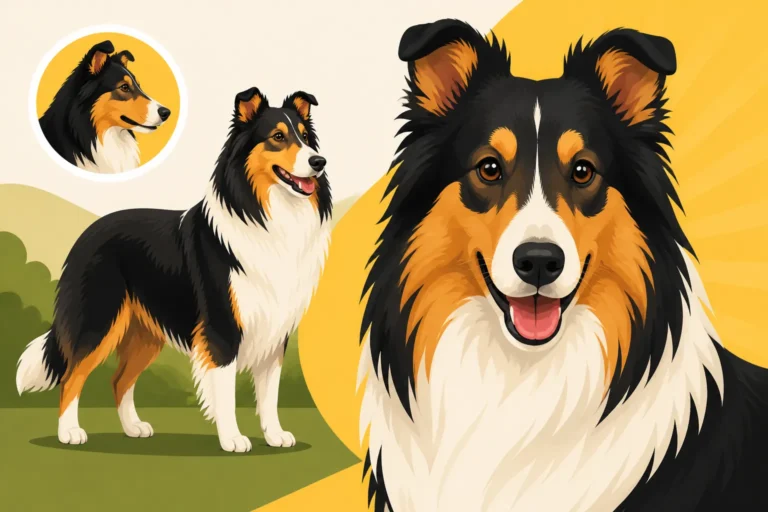
A tricolor Collie has black, tan, and white areas. The black pattern is generally recognizable as the coat matures, though longer hair can make the black regions look larger or more striking. Tan markings may become easier to notice as the coat grows, or seem less prominent in certain light.
The puppy coat can also soften the contrast between colors. Once the longer coat fills in, you may see sharper differences between the black, tan, and white areas. This is usually a change in visibility rather than a change in the dog’s underlying color pattern.
For examples of the usual pattern, read What a Tricolor Collie Looks Like. If an area seems to be losing hair, becoming irritated, or changing color along with a skin problem, that is different from normal coat development and is worth discussing with a veterinarian.
Blue merle markings can look more or less obvious
Blue merle Collies have a mottled pattern involving diluted black areas, often alongside darker patches and white markings. The pattern is inherited; it does not appear because the puppy is exposed to a particular diet or grooming product. Still, the adult coat can make the mottling seem more pronounced or more subtle than it did in puppyhood.
Longer hair may soften the edges between patches, while sunlight and coat position can make individual areas stand out. A puppy’s coat may also be less full and less layered, which changes the way the pattern reads. The color is not necessarily becoming a different pattern just because the mottling looks different from one month to the next.
If you are trying to identify the pattern, What a Blue Merle Collie Looks Like gives helpful visual context. It is also useful to distinguish a blue merle from a gray-looking coat caused by another issue. A puppy’s color label should come from its inherited pattern, not from a quick judgment based on one photograph.
White Collies are not simply puppies that have faded
A predominantly white Collie is a color pattern, not a normal coat color that develops when a puppy’s colored fur fades away. A white Collie may have colored markings, and the distribution of white is part of the dog’s inherited appearance. It should not be confused with a sable or tricolor puppy whose coat is changing as it grows.
White markings can look slightly different as the coat lengthens, but a puppy does not ordinarily become a white Collie through routine maturation. For background on the pattern, see What a White Collie Is. If a colored patch appears to lose hair or pigment, or the skin underneath looks inflamed, ask a veterinarian rather than assuming it is a harmless color transition.
| Collie color | What may look different with age | What usually remains recognizable |
|---|---|---|
| Sable and white | Sable shading may deepen or become more noticeable | The basic sable pattern and white markings |
| Tricolor | Black areas may look more prominent; tan may become clearer | The black, tan, and white pattern |
| Blue merle | Mottling may seem stronger or softer as the coat grows | The merle pattern and its distribution |
| Predominantly white | Coat length may change how markings appear | The inherited white pattern and colored markings |
When a coat change is normal and when to ask for help
Normal changes usually happen alongside healthy skin
A gradual difference in shade as the puppy’s coat grows is usually not concerning when the skin looks normal and the puppy is comfortable. You may notice more undercoat, longer feathering, or a change in texture at the same time. Collies develop substantial coats, so the shift from puppy fur to adult coat can make the whole dog look like a different color even when the underlying pattern is unchanged.
Shedding also affects appearance. Loose pale undercoat may make a coat look lighter or dusty, while a fresh layer of darker guard hairs can make it seem richer. Brushing can reveal colors that were hidden beneath loose fur, so a puppy may appear to change after grooming.
A calm grooming routine helps you keep track of both color and skin condition. If you are shopping for a basic comb or brush, Chewy is one retailer where owners can compare grooming options; choose a tool appropriate for a puppy’s coat and use it gently. A grooming supply does not change the dog’s inherited color, but regular, comfortable handling can make it easier to spot actual skin changes.
Skin symptoms are different from color development
Contact your veterinarian if the coat change comes with bald patches, persistent itching, redness, scabs, sores, unusual odor, or broken hair. Those signs may point to a skin or coat problem rather than ordinary maturation. Likewise, a sudden, sharply defined change in one area deserves more attention than a gradual shift across the coat as it grows.
Pay attention to the skin beneath the fur, not just the color on top. Part the coat in good light and check whether the skin looks irritated, whether the hair is thinning, and whether your puppy reacts as if an area is painful. A puppy that is scratching constantly or seems unwell should not be left to “grow out of it” simply because its coat is changing.
If you are unsure, take clear photos and note when you first noticed the change. That gives your veterinarian a useful comparison point. Avoid applying human hair dye, color sprays, or unapproved skin products; they are not a safe way to correct a perceived color difference.
Grooming can change the look, but not the inherited pattern
Brushing removes loose hair and separates the coat, which can make markings look sharper. Bathing and drying can also affect how the hairs lie. A puppy that looks fluffy and pale after a bath may look darker once the coat is dry and settled. These are temporary visual effects, not evidence that the coat’s genetic color has changed.
Use products made for dogs and follow the label. If you need to compare puppy-safe grooming supplies, Chewy may be one place to review product descriptions, but the key is selecting an appropriate product and avoiding anything irritating or heavily fragranced. If your puppy has sensitive skin or a diagnosed skin condition, ask your veterinarian before trying a new shampoo or topical product.
For more on how coat development relates to grooming, see Whether a Collie Puppy's Coat Predicts the Adult One and How Often a Rough Collie Should Be Brushed. A gentle, consistent routine is more useful than trying to make the coat look a certain way.
How to follow your puppy’s color as it matures
Keep a simple photo record
Take one photo every few weeks or once a month in natural light. Photograph the puppy from the side and, if helpful, include a close view of the face and back. Try not to compare a sunny outdoor photo with a dim indoor one, since lighting can create the impression of a significant color shift.
Write down the puppy’s age and any relevant coat changes, such as increased shedding or a new patch of adult coat. This makes it easier to see gradual development. It can also help your breeder answer questions if you are wondering whether your puppy’s coat is developing in a typical way for its family.
Do not feel that every shade change needs documenting. The point is to notice broad patterns, not to scrutinize every hair. If you see skin symptoms as well as a color change, share the photos with your veterinarian.
Ask the breeder useful, specific questions
A breeder may be able to explain how the puppy’s parents and close relatives developed their coats. Ask whether the parents darkened with age, when they began to grow their adult coats, and whether their puppy photos looked different from their mature appearance. Those details can help set expectations, especially for a sable puppy.
It is also reasonable to ask the breeder to explain the puppy’s color designation and markings. A responsible breeder should be able to describe the pattern without promising that the puppy will mature into an exact shade. Color can be a fun part of choosing a Collie, but health, temperament, and a good match for your household matter far more than predicting every future variation.
If you are comparing patterns, Whether the Rough and Smooth Collie Are One Breed explains the relationship between the two coat varieties. The coat length differs, but rough and smooth Collies share the same breed identity and color patterns.
Give the coat time
The adult coat takes time to develop, and the pace differs among individual dogs. A puppy’s appearance during the transition may be less polished than either the soft puppy coat or the eventual adult coat. That in-between stage is normal, even if it makes the dog look a little uneven or unfamiliar for a while.
Do not shave a Collie to reveal or even out its color. Shaving changes the coat’s appearance and can interfere with the natural protective coat; it does not alter the dog’s inherited pattern. For more on that concern, see Why a Collie Should Never Be Shaved.
Most importantly, enjoy the puppy in front of you rather than trying to predict every adult hair. Take a few photos, keep grooming gentle, and contact a veterinarian if color changes come with skin or health symptoms. A Collie’s coat may mature in shade and texture, but the puppy’s distinctive pattern is usually part of what makes that individual recognizable.
Disclaimer
This article is for general informational purposes only and does not constitute professional advice. Laws, prices and regulations vary by location and change over time. Consult a qualified professional for guidance on your specific situation.