Whether a Collie Can Be Solid Colored
A Collie can look nearly solid in color, especially when dark sable or blue merle markings dominate the coat, but “solid colored” is not one of the usual Collie color descriptions. The distinction matters when you’re identifying a puppy, comparing breed standards, or trying to tell whether a white-looking dog is a recognized Collie color or something else.
What “solid colored” means on a Collie
A Collie can look solid without being described as a solid-color variety
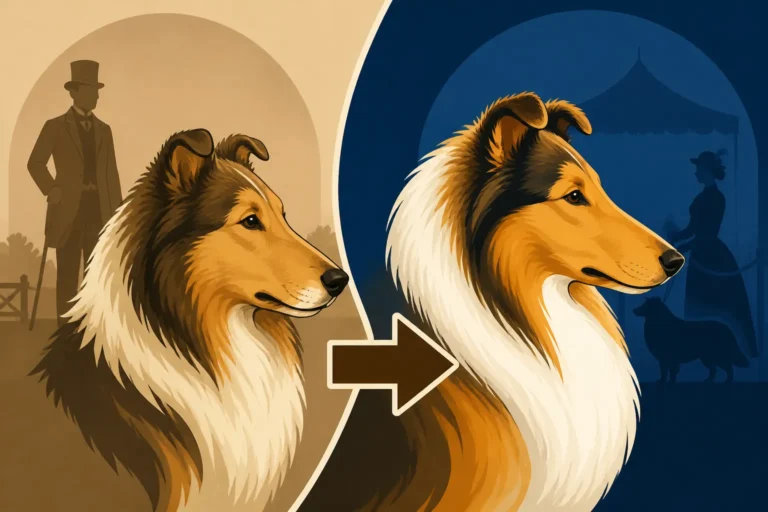
People often use “solid colored” to mean that a dog’s coat appears mostly one color at a glance. A dark sable Collie, for instance, may look almost uniformly brown, while a blue merle can look like a patchwork of gray and black that reads as one overall shade from a distance. That appearance is not quite the same as having a recognized solid-color category in the breed standard.
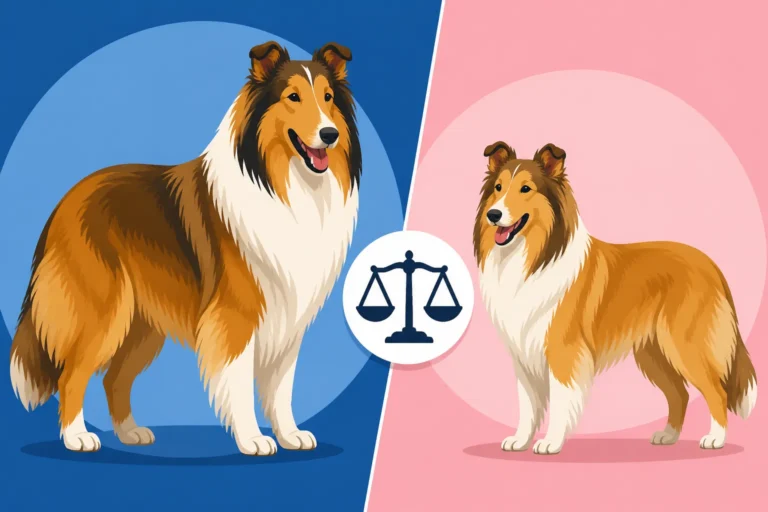
Collies are commonly described by a combination of base color, markings, and white areas. The familiar color descriptions are sable and white, tricolor, and blue merle. In the American standard, white is also listed as a color variety, but a white Collie generally has colored markings rather than being an entirely unmarked, pure-white dog. The exact wording and preferences can vary among kennel clubs and countries.
White markings are a major part of the typical Collie look. They can appear as a collar or ruff, a blaze on the face, white on the chest and legs, and a white tail tip. The amount of white differs from dog to dog. A Collie with limited white may look more solid than a dog with a broad white collar, but that does not necessarily make it a separate solid-colored type.
If you are comparing a dog’s appearance with the breed’s listed colors, The Four Colors a Collie Comes In is a useful starting point. It helps to keep “what the coat looks like” separate from “what the color is called.”
The main Collie colors include more than one shade
Sable and white Collies range from pale gold to deep mahogany, and some have dark-tipped hairs that make the coat look shaded or almost black in places. Tricolor Collies have black, tan, and white markings. Blue merles have a mottled pattern of black patches on a blue-gray background, often with tan and white markings as well.
These combinations can create misleading first impressions. A richly shaded sable may look like a single brown color when the dog is standing in shadow. A tricolor with little tan showing may appear mostly black and white. A blue merle can look mainly gray from across a field, even though its coat is patterned rather than solid.
A puppy’s coat can also look different from the adult coat. As the coat grows and changes, the color may appear lighter, darker, or more clearly patterned. Lighting, seasonal coat changes, and grooming can affect what you see in a photograph, too. For a closer look at one common pattern, see What a Blue Merle Collie Looks Like. For sable variations, What a Sable and White Collie Looks Like explains why sable coats are not all the same shade.
Breed standards and everyday descriptions are not identical
A breed standard is a description used for judging and registration contexts; it is not always the same thing as the casual language owners use. Someone may say “solid sable” to describe a dog whose body looks mostly sable, even if the dog has the white markings typical of a Collie. That casual phrase may communicate the appearance, but it should not be mistaken for an additional standard color category.
Standards also differ by country and organization. If you are considering a show prospect or trying to understand a breeder’s description, check the applicable standard rather than relying on a general online color list. The article Whether a White Collie Is Recognized by the AKC covers one point where American descriptions may differ from what people expect elsewhere.
| What you see | Common description | Why it may look solid |
|---|---|---|
| Mostly gold, tan, or mahogany, sometimes with dark tips | Sable and white | The sable area may dominate the coat |
| Black with tan points and white markings | Tricolor | Tan may be subtle or hidden by the coat |
| Blue-gray mottling with black patches, often with tan and white | Blue merle | The gray background can read as one overall shade |
| Mostly white with colored markings, especially on the head | White Collie in the American standard | The white body can dominate the first impression |
| Nearly one color with very little visible white | A description of appearance, not necessarily a separate color category | White markings may be small or hidden by coat |
Is a white Collie the same as a solid-white dog
White Collies usually have colored markings
A white Collie is not simply a dog with an entirely white coat. In the American description, white Collies have a predominantly white body and colored markings, often on the head. The details of the markings can vary, so two white Collies may look quite different from one another.
This is one reason a photograph can be confusing. A dog photographed from the side may appear completely white if its colored head is turned away or outside the frame. In another image, the same dog may show obvious sable, tricolor, or merle markings around the head. Ask for clear photographs from several angles rather than deciding from a single cropped image.
The phrase “white Collie” is also not a substitute for checking a dog’s background and health information. Coat appearance alone cannot tell you every detail about a dog’s genetic makeup. If you are choosing a puppy, ask the breeder how they describe the color, what standard they follow, and what health screening has been done. What a White Collie Is offers more detail on the term and how it is used.
White is not automatically a sign of albinism or a double-merle dog
A white-looking Collie is not automatically albino, and it is not automatically a double merle. Those are different genetic situations, and coat appearance by itself is not enough to diagnose either one. In particular, white markings and a mostly white body should not be treated as proof that a dog has the same genetic risks associated with a merle-to-merle mating.
The phrase “double merle” refers to a particular inheritance pattern involving merle variants, not simply to a dog having a lot of white fur. Responsible breeding decisions depend on the parents’ genetic information and the breeding history, not on visual guesswork. If a breeder cannot explain the parents’ colors and testing clearly, that is a fair reason to ask more questions before making a commitment.
For broader background, Whether a White Collie Is the Same as a Double Merle addresses the distinction, and Whether Two Merle Collies Should Be Bred Together explains why merle breeding decisions require care. These questions are especially relevant when a puppy’s color is being used as a selling point.
Look beyond coat color when assessing a puppy
Color can be striking, but it should not be the main measure of a puppy’s quality or suitability. Temperament, socialization, health screening, and the breeder’s practices matter much more in day-to-day life than whether a dog’s coat looks unusually uniform.
Ask to see the puppy with its littermates and, where possible, meet the mother. Request clear information about the parents’ health testing and ask what the breeder means by any unusual color description. A responsible breeder should be able to explain the terminology without making dramatic promises based on coat appearance.
A family choosing a companion may also want practical answers: how the puppy responds to handling, what early experiences it has had, and how the breeder supports new owners. Color can help you identify a pattern, but it cannot tell you whether the puppy will suit your household.
How to identify a Collie’s color accurately
Check the coat in natural light and from several angles
Indoor lighting can make a sable coat look darker or give a blue merle a flat gray appearance. Take a look outdoors in even daylight, without strong filters or dramatic shadows. Photograph the dog’s head, sides, back, legs, and tail so that patches and white markings are visible.
Part the coat gently if the fur is long or dense. A Collie’s outer coat can hide the color near the skin, and the coat may look different when it is wet, brushed out, or shedding. A single close-up of the back may not show the face markings that help distinguish one description from another.
If you are looking at a puppy online, ask for recent, unedited pictures and a written color description from the breeder. This is a simple way to avoid misunderstandings such as calling a shaded sable “solid brown” or describing a mottled merle as plain gray.
Use the breeder’s description, but ask what it means
Color terms are useful when everyone means the same thing by them. If a breeder says “solid sable,” ask whether they mean a sable dog with minimal white, a particular shade, or simply a coat that looks mostly sable. Clarifying the phrase is not being difficult; it helps you understand what you are actually seeing.
You can also ask which registry or standard the breeder uses when describing the color. That is particularly helpful if you are comparing descriptions from different countries, or if the puppy is being considered for conformation events. A description used casually by one person may not match formal terminology elsewhere.
Keep a note of the breeder’s wording and compare it with photographs of recognized Collie colors. If the answer remains unclear, an experienced Collie breeder or breed club can often help you understand the pattern. The goal is not to label every hair perfectly; it is to avoid confusing appearance with a separate color category.
Don’t let coat color distract from ordinary care
A Collie’s color does not change the basic work of keeping the coat clean, brushed, and comfortable. Long coats can collect debris, and tangles may form around the ears, behind the legs, and in the feathering. A regular comb-through and a calm grooming routine matter whether the dog is sable, tricolor, merle, or white.
For a new owner putting together basic grooming supplies, Chewy is one place to browse for combs and brushes; choose tools suited to the dog’s coat and ask a groomer or breeder to demonstrate how to use them. Chewy can also be a convenient place to look for a gentle dog shampoo, but color alone is not a reason to use whitening products or harsh treatments. If the dog has skin irritation, unusual staining, or persistent odor, ask a veterinarian before trying to mask the problem with a product.
It can help to keep a simple coat log with photographs taken in similar lighting every few months. That makes gradual changes easier to notice and gives you a useful record to share with a breeder or veterinarian. If grooming appointments or at-home brushing are part of your routine, Chewy may offer basic supplies for the job, but the key is using them gently and consistently rather than chasing a particular shade of coat.
Questions to ask before choosing a Collie for its color
Ask what the color description means in practice
When an advertisement calls a puppy “solid colored,” ask the seller to describe the markings and the color pattern plainly. Do they mean mostly sable, a white Collie, or a puppy with less visible white than its littermates? Ask for photographs in daylight and views of the face and body.
If the seller emphasizes that a color is rare or unusually valuable, request a clear explanation rather than taking the claim at face value. A dramatic color label should not replace health records, information about the parents, or a thoughtful discussion of temperament. Avoid making a decision based only on a photograph or an appealing phrase.
It is reasonable to ask whether the color description is informal or based on a particular registry’s terminology. This is especially useful if you hope to show the dog, since appearance preferences and accepted descriptions are governed by the relevant standard. The Four Colors a Collie Comes In and The Collie Against the Border Collie and the Sheltie can help keep breed and color comparisons in perspective.
Prioritize health, temperament, and breeder transparency
A responsible breeder should welcome sensible questions about health testing, the parents, puppy-raising practices, and lifelong support. Their answers should be specific and consistent. If the conversation keeps returning to color while basic health questions go unanswered, slow down and gather more information.
Do not assume that an unusual-looking coat guarantees a special temperament or better health. Color does not tell you whether a puppy has been well socialized, whether the parents have been screened for relevant conditions, or whether the dog will fit your household. Those questions deserve more attention than the difference between a deep sable and a lighter one.
If you are adopting an adult Collie, the same principle applies. Focus on the dog’s known medical history, behavior, grooming needs, and adjustment to your home. A rescue dog may have incomplete records, so ask what is known and arrange a veterinary checkup rather than trying to infer health from coat color.
Choose the dog, not the label
A Collie may look almost solid in one light and distinctly patterned in another. That is normal: base color, markings, coat length, and lighting all affect what you see. The usual color descriptions are combinations and patterns, not a simple list of single-color coats.
If a dog is described as solid, treat that as a description to clarify, not proof of a separate recognized variety. Look at the whole coat, ask how the breeder or rescue is using the term, and check the standard relevant to your plans. Then give more weight to health, temperament, and the quality of the dog’s care.
Disclaimer
This article is for general informational purposes only and does not constitute professional advice. Laws, prices and regulations vary by location and change over time. Consult a qualified professional for guidance on your specific situation.