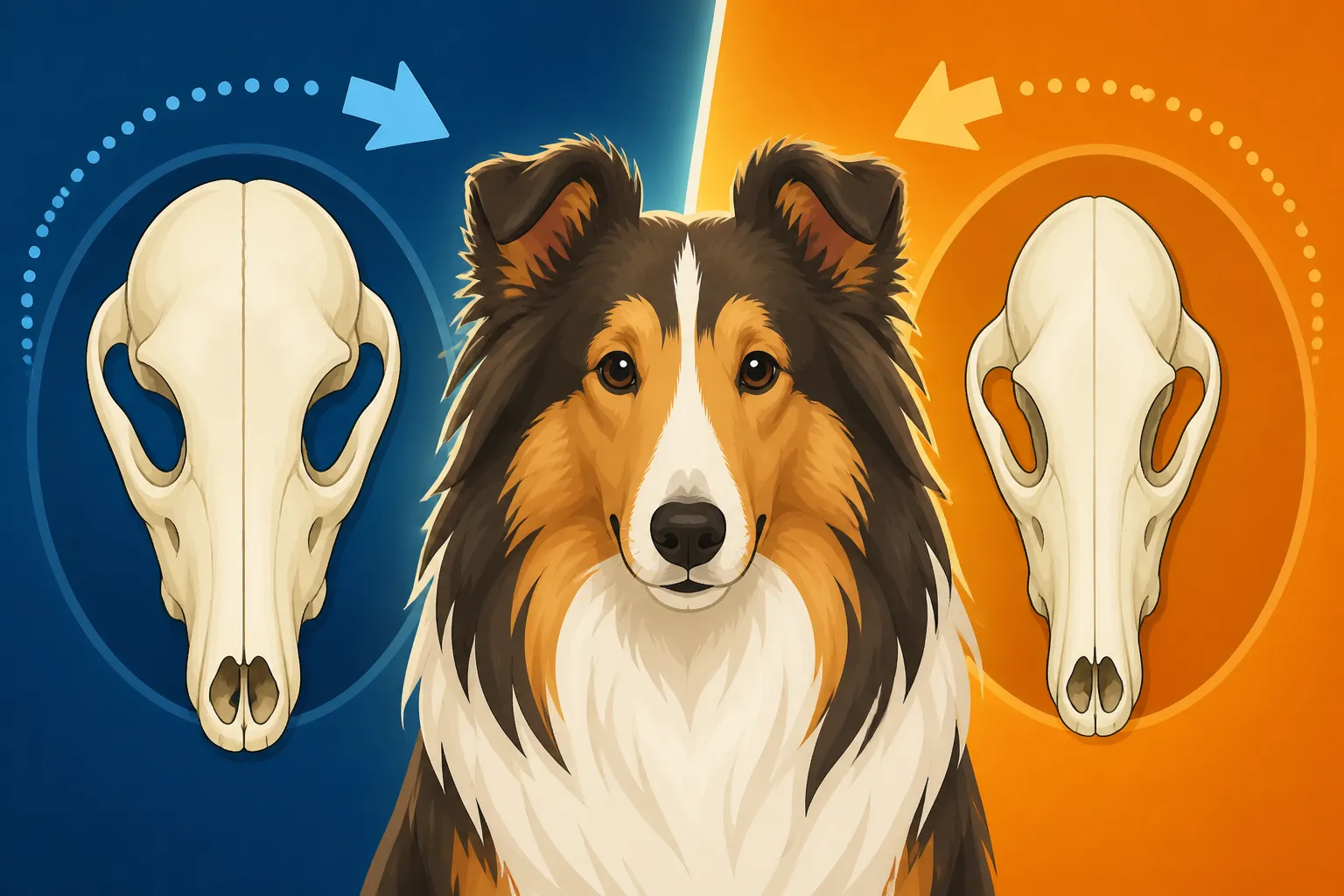
Whether the Collie’s Skull Has Narrowed Over Time
It’s a thought that crosses many a long-time Collie lover’s mind: does it seem like our beautiful Collies have narrower skulls, or more refined heads, than they used to? It’s not just your imagination; the breed has indeed undergone significant changes in appearance over the decades, driven by evolving ideals in the show ring. This guide will take a thoughtful look at the history of the Collie's head, exploring how breeding choices have shaped their distinctive profile and what that means for our beloved companions today.
The Collie's Head: From Humble Herder to Regal Companion
Before Collies graced the pages of breed standards or trotted confidently into show rings, they were simply working dogs. Their physical form, including their head, was primarily dictated by the demands of their job. Understanding this original purpose helps us appreciate the journey of the Collie's head shape.
The Working Dog's Head: Before the Show Ring
Imagine the rugged hills and glens of Scotland, where the Collie's ancestors toiled for centuries. These dogs weren't chosen for their elegant profiles or fine bone structure; they were selected for their intelligence, stamina, and ability to manage livestock, often in harsh conditions. Their heads were robust, functional, and built for purpose. They needed strong jaws to deliver a firm, but not damaging, grip when moving stubborn sheep, and a good brain capacity to figure out complex herding tasks.
The working Collie had a sturdy muzzle that tapered appropriately, allowing for efficient breathing and chewing. The "stop"—that gentle rise from the muzzle to the forehead—was present but not overly pronounced, giving a smooth, continuous line. Overall, the head was proportionate to the body, providing balance and strength, rather than an extreme length or fineness. It was a head designed for a demanding job, not for winning ribbons. The Collie Was a Scottish Droving Dog Before It Was a Show Dog
Early Show Ring Influences and the Victorian Era
The Collie's fortunes, and its looks, began to change dramatically in the mid-19th century. Queen Victoria, captivated by the breed during her visits to Balmoral Castle, brought Collies into fashionable society. Suddenly, these humble working dogs were elevated to the status of beloved pets for the aristocracy and emerging middle class. Queen Victoria Made the Collie Fashionable in the 1860s
With this new popularity came the birth of the dog show circuit and the establishment of breed standards. Breeders, eager to produce dogs that met the evolving aesthetic preferences, began to select for specific visual traits. The original functional aspects of the working Collie started to give way to what was considered beautiful or refined. This period marked the beginning of a deliberate shift in the Collie's head type, moving towards a more elongated and chiseled appearance that was perceived as more elegant and distinctive for a "gentleman's companion" or a "lady's pet." The seeds of the "narrower" head, or at least a dramatically different proportion, were sown here.
The Evolution of the Collie Skull: Real Changes and Perceptions
So, did the Collie's skull truly narrow over time? The answer is nuanced, but largely yes, in the sense that the proportions and overall impression of the head changed significantly towards greater length and less breadth, especially in the foreface.
The Quest for Refinement: Long and Lean
As the Collie moved from the pasture to the parlor and then onto the show bench, breeders began to idealize a particular type of head. The desire for "refinement" became paramount. This meant a head that was long, lean, and clean-cut, without any coarseness. The preference was for a skull that was flat between the ears and a muzzle that was long and tapered, but still strong. The original breed standards, and certainly the interpretation of them, encouraged this elongation.
The perception of "narrowness" comes largely from this emphasis on length and the desire for the skull and muzzle planes to be parallel, creating a sleek, elegant profile. The width of the skull, relative to its length, became less prominent than in the earlier working dogs. This wasn't necessarily about physically squeezing the braincase, but about refining the overall proportions, particularly the length of the muzzle and the flatness of the skull. The desired look moved away from the more rustic, robust head of a herding dog towards something more aristocratic. Whether the Victorian Show Ring Changed the Collie's Head
The Impact of Breeding Decisions on Head Type
This shift wasn't accidental; it was the direct result of generations of selective breeding. Breeders consciously chose dogs that exhibited these refined head characteristics, hoping to produce puppies that would excel in the show ring. If a dog had a slightly broader skull or a shorter muzzle, it was less likely to be chosen for breeding, or its offspring might not be held to the same standard of "ideal."
This table illustrates some of the key shifts in Collie head characteristics:
| Feature | Early Working Collie (Pre-Victorian) | Modern Show Collie (Ideal Standard) |
|---|---|---|
| Overall Shape | Robust, functional, moderate length | Long, refined, chiseled, elegant |
| Skull Width | Proportionate to length, good breadth | Flat, moderate width, often appears narrower due to length |
| Muzzle Length | Adequate for gripping, strong | Long, tapering, clean-cut, powerful |
| Stop | Gentle, gradual, not very defined | Distinct but not abrupt, well-defined |
| Expression | Alert, intelligent, watchful | Sweet, intelligent, questioning, soulful |
| Purpose | Efficiency in herding, durability | Aesthetic appeal, breed type |
Over time, this intense focus on aesthetics led to the distinctive head shape we recognize today. While the term "narrowed" might imply a reduction in vital space, it's more accurate to say the skull became longer and less broad in proportion, creating a more delicate and aristocratic appearance. Responsible breeders, of course, always strive for a balance between type and health, ensuring that these aesthetic choices don't compromise the dog's well-being.
Modern Collie Head Structure: Balance and Health
Today's Collie breed standard reflects a refined ideal, one that seeks a balance between elegance and robust health. The aim is for a head that is long and noble, but never extreme to the point of being fragile or compromising function.
The Current Breed Standard's Ideal Head
The modern Collie breed standard calls for a head that is a masterpiece of proportion. It should be long, but not disproportionately so, with a skull that is flat between the ears and of moderate width. The muzzle should be long and smoothly tapering, ending in a strong underjaw. The stop should be discernible but not sharply defined, creating a graceful profile. The overall impression is one of intelligence, strength, and elegance. The placement and shape of the eyes, coupled with the set of the ears, are crucial in achieving the desired "sweet" and intelligent expression that is a hallmark of the breed. Whether a Collie's Expression Is Judged
Breeders today are dedicated to preserving this balance. They aim for heads that are structurally sound, allowing for good dentition and normal brain development, while still embodying the refined beauty that defines the modern Collie. The goal is a head that is beautiful to behold, yet still functional and healthy.
The Link Between Head Type and Health
It's a valid concern for any breed where specific physical traits are emphasized: do these aesthetic preferences impact health? For Collies, while the head has certainly become more refined, breeders and breed clubs have generally avoided extremes that could lead to widespread health issues. Unlike some brachycephalic (short-nosed) breeds that face significant breathing problems due to their skull shape, the Collie's elongated muzzle generally promotes good airflow.
However, any extreme can potentially lead to issues. An overly narrow skull could, in theory, impact dental alignment, leading to overcrowding or malocclusion. An extremely fine or weak muzzle might also be less resilient to injury. Thankfully, the current breed standard emphasizes a "strong" underjaw and a well-filled muzzle, which helps prevent such problems. Reputable breeders understand that while an elegant head is desirable, it must never come at the expense of the dog's health or quality of life. They conduct thorough health screenings, not just for the visible traits, but for underlying genetic conditions. Whether the Collie Is Bred for Health Now They ensure their breeding pairs have good dentition and overall sound structure, confirming that the pursuit of beauty doesn't compromise well-being.
What a Prospective Collie Owner Should Look For
If you're considering bringing a Collie into your home, you'll naturally want a healthy and well-adjusted companion. Understanding what to look for in a Collie's head can be part of that decision-making process, though it's never the only factor.
Recognizing a Well-Bred Head
When you look at a Collie puppy or adult, observe the overall balance of its head. Does it appear proportionate to its body? The skull should be flat and the muzzle should taper smoothly, without appearing snipey or pinched. The stop should be distinct but gentle. Check that the teeth meet in a scissors bite. A well-bred Collie's head will convey intelligence and kindness. You want to see strength and elegance combined, not fragility. Don't be shy about asking a breeder to explain the head structure of their dogs and how it aligns with the breed standard. They should be proud to discuss it!
Sometimes, when looking at a puppy, you might notice that their ears are taped to encourage the desired "tipped" ear set. This is a common practice in the breed and isn't a cause for concern regarding the skull itself, but it highlights the attention given to head aesthetics. Whether a Collie's Ears Should Tip
Prioritizing Overall Health and Temperament
While the head is a defining feature of the Collie, it's just one piece of a much larger puzzle. The most beautiful head in the world won't make up for poor health or an unsuitable temperament. When choosing a Collie, always prioritize breeders who conduct comprehensive health testing. Ask about genetic tests for conditions like MDR1, Collie Eye Anomaly (CEA), and Dermatomyositis. The Three Genetic Tests a Collie Breeder Owes You A good breeder will be transparent about the health history of their lines and provide documentation for all relevant screenings, including eye certifications for puppies. Collie Eye Anomaly Affects Most Collies, So Ask How Badly What a Collie Puppy Eye Exam Costs
Ensure the puppy comes from parents with stable, friendly temperaments. A Collie should be sensitive and intelligent, not fearful or aggressive. Discuss the breeder's contract and what guarantees they offer regarding health. What a Collie Breeder's Contract Covers Remember, you're not just getting a beautiful dog; you're welcoming a family member who will share your life for many years. Choosing a healthy, well-socialized puppy from a reputable breeder who prioritizes overall well-being above extreme aesthetics is always the best path. For feeding, if you’re ever concerned about dental health or proper eating posture, you can explore specially designed bowls that support good alignment; a quick search on Chewy will show you many options, including elevated or slow-feeder bowls.
Disclaimer
This article is for general informational purposes only and does not constitute professional advice. Laws, prices and regulations vary by location and change over time. Consult a qualified professional for guidance on your specific situation.