Whether Male Collies Photograph Better Than Females
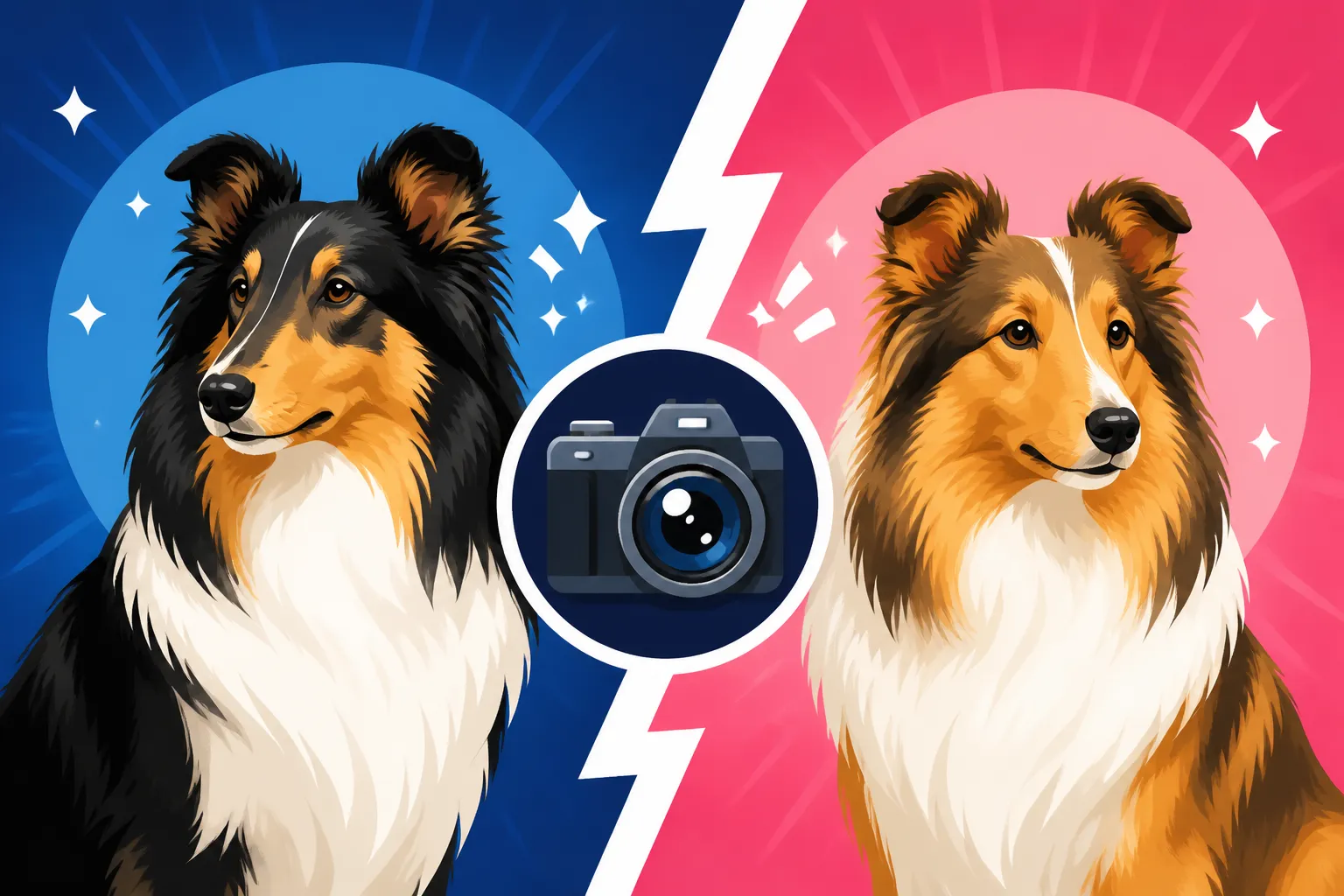
A male Collie may look broader and more imposing in a portrait, while a female may appear finer-boned or more compact—but neither sex is automatically more photogenic. Coat, posture, expression, grooming, light, and the dog’s comfort in front of a camera usually matter much more. This guide explains what can differ, what is simply individual variation, and how to photograph either dog beautifully.
Do male Collies really photograph better
Why some people perceive males as more photogenic
Adult male Collies are often somewhat larger and heavier in build than females, though there is plenty of overlap between individual dogs. In a standing portrait, a male’s broader outline, fuller ruff, or more substantial head may create a dramatic silhouette. That can read as “more photogenic” to someone who likes a bold, statuesque look.
But a larger outline is only one kind of visual appeal. A female’s lighter frame can make her look elegant and alert, especially in a moving photo or a close-up. A compact dog may also be easier to position in a small space, fit into a tighter composition, or photograph at eye level without the camera needing to be held so high. For general size context, see What a Collie Weighs and How Tall It Stands.
Breed type and coat variety also shape the impression. Rough Collies have long, abundant coats that can emphasize the neck and outline, while Smooth Collies show more of their natural body shape. Either variety can be male or female, so a viewer may be reacting to coat volume or grooming rather than sex. Rough and Smooth Are Two Varieties of One Collie explains how those varieties differ.
Why the camera can exaggerate differences
A camera does not record a dog exactly as the eye sees it. A low camera angle can make a dog appear taller or more powerful; a close wide-angle phone shot can exaggerate the muzzle or chest. A large ruff may look especially dramatic when the light catches its texture, while a narrower angle can make the same coat seem flatter.
The setting matters, too. A male Collie photographed against a plain background with his head held high may seem more imposing than a female captured mid-blink in cluttered surroundings. That difference says more about timing and composition than about which sex is inherently better looking. It is worth taking several shots rather than judging either dog by one awkward frame.
Color can alter the impression as well. Darker markings may create contrast around the face, while lighter coat areas can catch bright sunlight and lose detail. The Collie has several recognized colors, and each can photograph differently depending on the background and light. The Four Colors a Collie Comes In offers useful context when you’re choosing a setting that helps your dog’s coat stand out.
What matters more than sex
For most portraits, the strongest ingredients are an attentive expression, relaxed posture, good light, and a coat that is clean and free of distracting tangles. A dog that feels comfortable is more likely to look engaged. One that is worried, overexcited, or tired may turn away, pin its ears, pant heavily, or keep shifting position, regardless of whether it is male or female.
That is why a calm dog with a simple, well-lit portrait can outshine a larger or more heavily coated dog in a rushed photo. The most flattering image is usually the one that shows the individual Collie’s character. A thoughtful, gentle expression can be more memorable than a perfectly posed outline.
How male and female Collies may look different
Size, proportions, and silhouette
Male Collies tend to be somewhat larger on average, but sex alone cannot predict the exact size or shape of a particular dog. Age, family lines, condition, and development all matter. A lean male may appear less substantial than a sturdy female, and a young dog may not yet have the proportions or coat fullness of a mature adult.
When comparing two dogs, look at the whole picture rather than one feature. In a standing photo, check whether the dog is balanced over its legs, whether the head is turned naturally, and whether the camera is level with the dog’s body. A picture taken from above can make either dog appear smaller and less confident; a very low angle can make either one seem unusually large. Whether a Male Collie Is Much Larger Than a Female looks at the size question in more detail.
For a fair comparison, photograph both dogs in similar conditions: the same location, similar light, and a similar camera distance. Otherwise, a difference in perspective can be mistaken for a difference in build. Even then, the goal need not be to decide which one looks “better.” The images may simply show two different, equally appealing styles.
Coat volume and grooming
A full coat can create a dramatic frame around the head and neck, but it does not necessarily make a dog easier to photograph. Long furnishings can hide the outline of the legs, catch leaves or burrs, and form small tangles behind the ears or around the feathering. A smooth, brushed coat is often more important than adding extra volume or styling.
Before a photo session, check the areas where mats commonly start, especially behind the ears, under the collar, and around the legs. Use gentle brushing and avoid turning grooming into a stressful last-minute project. If a dog dislikes being handled or is already restless, a shorter session after a calm walk may work better than trying to perfect every strand. How to Line Brush a Collie offers a practical approach to reaching through the coat, and Whether a Collie Enjoys Being Brushed discusses how comfort with grooming can vary.
A quick grooming checklist can help:
- Check behind the ears, under the collar, and around the tail and legs.
- Remove loose debris and smooth the coat gently.
- Wipe away eye discharge if needed, using a clean, soft cloth.
- Make sure the dog is comfortable before asking for a pose.
- Stop if the dog becomes uncomfortable rather than forcing a longer session.
If you need to replenish basic grooming supplies, Chewy is one retailer owners may compare for items such as combs, brushes, and coat-care products. Choose tools suited to your dog’s coat and handling comfort, rather than buying equipment just for a photo.
Expression and individual personality
People often talk about a Collie’s expression as though it were a fixed breed feature, but a photograph captures a fleeting moment. A dog looking toward a familiar person may seem warm and connected; the same dog glancing at an unfamiliar noise may look wary or distracted. Ears, eye direction, mouth position, and head angle all affect the impression.
Some Collies are naturally comfortable holding still, while others prefer to move or watch what is happening around them. That difference is not a measure of beauty or trainability. Allowing a dog to settle in a familiar place, with a trusted person nearby, often produces a more natural portrait than repeatedly asking for a formal sit. For more on the way expression is considered in the breed, see Whether a Collie's Expression Is Judged.
A practical way to photograph either sex
Set up the scene before bringing your Collie in
Choose a quiet, uncluttered spot where your dog can stand or sit comfortably. A shaded area outdoors can provide soft light, while a bright window can work well indoors if the dog is not staring into direct sun. Avoid placing a dark-coated dog against a very dark background or a pale dog against a background that blends into its coat.
Before the session, decide what kind of picture you want. A full-body photo shows outline and coat; a head-and-shoulders portrait emphasizes expression; an action shot captures movement and personality. Trying to get all three at once can make the session feel chaotic. It is usually easier to start with a few simple portraits and then let the dog move naturally.
A few treats or a familiar toy can help attract attention, but keep the interaction easy. If you use treats, make sure they are appropriate for your dog and offer small amounts. Chewy may be one place to browse for treats or other everyday pet supplies, but the best photo aid is often a calm voice and a person the dog already trusts.
Use light, angle, and timing to your advantage
For a standing portrait, place the camera around the dog’s chest or eye level rather than photographing straight down. Step back and use a modest zoom if your phone allows it; this can reduce the distorted look that happens when a lens is held very close. Keep the dog’s face in focus, and take several frames as the expression changes.
Soft light is generally forgiving. In harsh midday sun, a Collie may squint, and strong shadows can obscure the face or coat texture. On an overcast day, or in open shade, the light is often more even. If you are indoors, avoid mixing several different light sources when possible, since the coat can take on uneven color.
Timing matters just as much. Photograph after the dog has had a chance to sniff around and settle, not immediately after an exciting arrival or vigorous play. A short session with breaks is more likely to preserve a relaxed expression than a long series of repeated commands. If the dog turns away, offer a pause instead of pursuing the face with the camera.
Keep the session kind and realistic
A good photo session does not need to look like a show-ring setup. Let your Collie stand naturally, sit beside a familiar person, or investigate a quiet patch of grass. Capture the dog as they are, rather than trying to make every image match an idealized pose.
Watch for signs that it is time to stop: repeated lip licking, turning away, yawning when not tired, tense posture, or trying to leave. One or two breaks can reset the mood, but continuing after the dog has had enough often leads to stiff, unhappy images. A portrait that includes a little movement or a slightly imperfect coat is still a worthwhile memory.
You may find it helpful to take photos during ordinary routines: after a gentle walk, while the dog waits by the door, or while relaxing at home. That can reveal more personality than a staged setup. Keep the camera ready, but do not make the dog perform for every moment.
Which Collie will photograph best
There is no reliable rule that male Collies photograph better than females. A male’s size or coat may appeal to someone who likes a bold silhouette; a female’s proportions may suit someone who prefers a lighter, more refined look. But those are preferences, not universal advantages, and individual dogs vary widely.
| What affects the photo | How it changes the result | What to try |
|---|---|---|
| Camera angle | Can make a dog look taller, smaller, or more imposing | Photograph near chest or eye level |
| Light | Can flatten coat detail or create harsh shadows | Choose soft daylight or open shade |
| Coat condition | Tangles and loose debris can distract from the dog | Check common matting areas before the session |
| Background | Can make coat markings blend in or stand out | Choose a simple background with contrast |
| Comfort | A tense dog may look worried or disengaged | Use a familiar place, short sessions, and breaks |
| Timing | A blink or head turn can change the whole expression | Take several frames and wait for a relaxed moment |
If you are choosing between two dogs based on photographs, remember that photos are limited glimpses. A flattering picture cannot tell you everything about temperament, health, grooming needs, or how a dog will fit into your home. Spend time with the individual dog when possible, and ask about its routine, background, and care.
If you already live with a Collie, the most useful goal is not to prove that one sex is more photogenic. It is to learn what helps your own dog feel at ease and what makes their particular features shine. For one dog, that might be a quiet headshot in the living room. For another, it might be a moving photo on a familiar trail. The best picture is often the one where the dog looks comfortable enough to be unmistakably themselves.
Disclaimer
This article is for general informational purposes only and does not constitute professional advice. Laws, prices and regulations vary by location and change over time. Consult a qualified professional for guidance on your specific situation.