How Many Hours a Year a Collie Owner Spends Brushing
If you've ever admired a beautiful Collie's flowing mane and thought about bringing one into your home, you've probably also wondered about the practicalities of maintaining such a glorious coat. Many prospective owners underestimate the sheer volume of time that goes into keeping a Collie's luxurious fur in tip-top condition, often picturing a quick daily once-over. The truth is, managing a Collie's coat is a significant, ongoing commitment, and this guide will break down just how many hours a year you can expect to spend wielding a brush to keep your furry companion looking their best.
The Myth vs. The Reality: Understanding Your Collie's Coat Needs
Let's be real, the image of Lassie trotting through fields with nary a tangle is a beautiful one, but it doesn't quite capture the reality of living with a Rough Collie. Their magnificent double coat isn't just for show; it's a marvel of natural engineering, designed to protect them from the elements when they were working as herding dogs in the Scottish Highlands. This dense, weather-resistant fur, while stunning, demands a consistent and thorough grooming routine to prevent mats, remove shedding undercoat, and maintain skin health.
The key to understanding the time commitment lies in appreciating the two distinct layers of a Rough Collie's coat. There's the harsh, straight outer coat that provides protection, and then there's the soft, dense undercoat that offers insulation. It's this undercoat that really creates the bulk of the grooming challenge, especially during seasonal sheds. Without regular attention, it can quickly become matted, leading to discomfort, skin issues, and even painful hot spots. Even Smooth Collies, with their much shorter coats, still possess a double layer and will shed, though their grooming needs are significantly less intense. For the purpose of this discussion, we're focusing primarily on the Rough Collie, as they represent the larger time investment.
When we talk about grooming, we're not just talking about surface-level brushing. A proper Collie grooming session involves line brushing, a technique where you systematically brush through small sections of hair, all the way down to the skin, ensuring no tangles are left behind. This isn't a five-minute job. It requires patience, a good selection of tools, and a dog who is comfortable with the process. Ignoring this task doesn't make the hair go away; it just compacts it, turning soft fur into felted mats that are incredibly difficult and often painful to remove, sometimes requiring professional intervention or even shaving. A Collie's Coat Is the Bill That Arrives Every Eight Weeks touches on the financial aspect of this, but the time cost is equally significant.
Routine Maintenance Brushing vs. Seasonal Coat Blows
The grooming demands of a Collie aren't static throughout the year. They fluctuate dramatically, primarily due to what's known as a "coat blow." Collies, like many double-coated breeds, typically blow their undercoat twice a year, usually in spring and fall. This is a period where they shed an incredible amount of fur as their bodies adjust to the changing seasons, replacing their dense winter undercoat with a lighter summer one, or vice-versa.
During routine maintenance periods, outside of a major coat blow, you'll still need to dedicate time to regular brushing to prevent tangles and remove daily shedding. This is your baseline effort to keep the coat healthy and prevent problems from building up. Think of it like regular house cleaning – if you stay on top of it, it never becomes an overwhelming task. This maintenance is crucial for preventing the formation of small mats that can quickly escalate into larger, more stubborn ones, especially in areas like behind the ears, under the legs, and in the "frill" around their neck.
However, when a coat blow hits, the game changes entirely. The amount of undercoat that detaches can be astounding. This isn't just light shedding; it's a monumental release of fur that, if not diligently brushed out, will become a felted nightmare. Many a Collie owner has filled multiple grocery bags with fur during a heavy coat blow, and it requires consistent, often daily, intensive brushing sessions to navigate. This is where your annual time commitment truly skyrockets, and neglecting it can have serious consequences for your dog's comfort and skin health. The Three Weeks Twice a Year When a Collie Buries Your House delves deeper into what to expect during these intense periods.
Calculating the Annual Brushing Commitment for a Collie
So, let's get down to brass tacks: how many hours are we actually talking about? It's tough to give an exact number, as every Collie and every owner's approach is slightly different, but we can certainly lay out some realistic estimates. These figures assume you're doing a thorough job, using the right tools, and not just skimming the surface.
For routine maintenance outside of a coat blow, a Rough Collie generally benefits from 2-3 thorough brushing sessions per week. Each session, if done correctly (line brushing, checking for mats, covering the entire dog), can easily take anywhere from 30 minutes to an hour, sometimes more for a very heavily coated dog or one not used to the routine. Let's average it out to 45 minutes per session. If you do this three times a week, that's 2.25 hours weekly.
Now, factor in those dreaded coat blows. These typically last for about 2-4 weeks, twice a year. During these periods, you'll likely need to brush your Collie daily, and these sessions will often be longer and more intensive than routine maintenance. Expect 45-90 minutes per session, perhaps even more if you're battling significant shedding. If we take an average of 60 minutes a day for four weeks, twice a year, that's 56 hours just for coat blow management. This doesn't include the extra vacuuming and house cleaning you'll be doing to keep up with the tumbleweeds of fur! How Much Hair Comes Off a Collie in a Session can give you a better visual.
Let's put this into a table for clarity:
| Activity | Frequency | Estimated Time Per Session | Weekly Time (Maintenance) | Annual Time (Maintenance) | Annual Time (Coat Blow) | Total Estimated Annual Time |
|---|---|---|---|---|---|---|
| Routine Brushing | 3 times per week | 45 minutes | 2.25 hours | 108 hours (48 weeks) | N/A | 108 hours |
| Intensive Coat Blow Brushing | Daily for 8 weeks (4+4) | 60 minutes | N/A | N/A | 56 hours (8 weeks x 7 hours) | 56 hours |
| Grand Total | 164 hours |
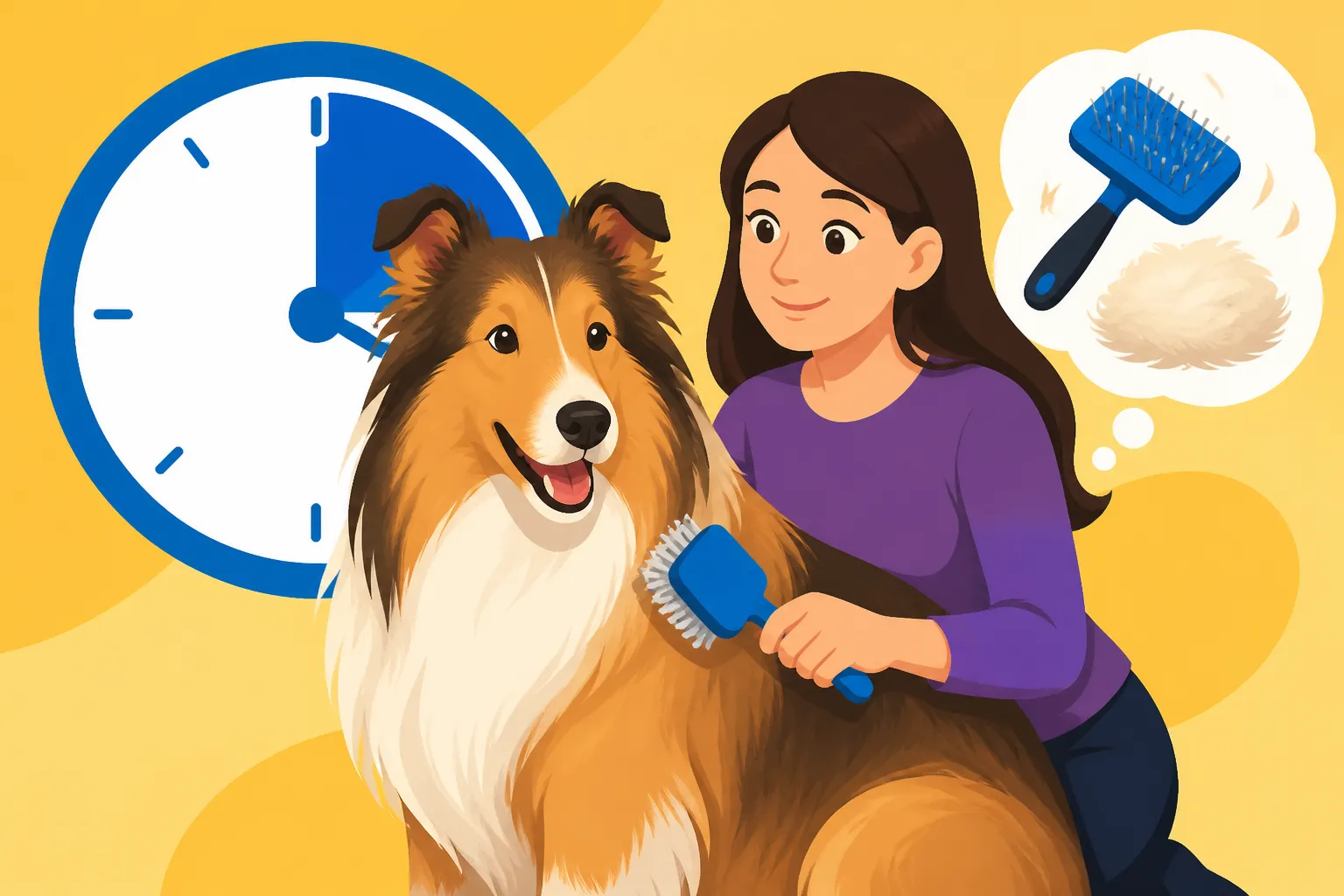
This calculation suggests that a dedicated Collie owner could easily spend 164 hours a year on brushing alone. That's roughly 6.8 full days of your life, every single year, solely dedicated to brushing your dog. And remember, this is an estimate; factors like your dog's coat condition, their overall health, and how quickly they mat can all influence this number. For a show Collie in full coat, you can add many more hours to that figure.
Factors That Influence Brushing Time
Several variables can significantly impact how many hours you clock with the brush in hand. Understanding these can help you better prepare or adjust your expectations.
1. Coat Type and Density: While we've focused on Rough Collies, even among them, there's a range. Some Collies have incredibly dense, profuse coats, while others are a bit lighter. A Collie with a very heavy coat will naturally require more time and effort to brush thoroughly. Similarly, a Smooth Collie, as mentioned, will demand far less time, perhaps only a quick weekly brush and slightly more during their less intense shed cycles.
2. Lifestyle and Environment: A Collie who spends a lot of time romping through fields and woods is more likely to pick up burrs, twigs, and dirt, leading to more tangles and debris that needs to be brushed out. A more sedate, indoor Collie might have slightly fewer external challenges to their coat, but dust and indoor static can still contribute to matting. The amount of activity, exposure to weather, and even the type of bedding your Collie uses can affect how quickly their coat mats.
3. Age and Health: Puppy coats are generally softer and easier to manage, but as the adult coat comes in, especially around 18 months to two years, you'll notice a significant increase in density and the need for more diligent grooming. Older Collies might have thinning coats or skin sensitivities that require a gentler, but still consistent, approach. Underlying health conditions, like thyroid issues, can also affect coat quality and shedding patterns, sometimes increasing the need for brushing.
4. Diet and Supplements: A high-quality diet plays a huge role in coat health. Dogs fed a diet rich in omega fatty acids often have healthier skin and coats that shed more efficiently and are less prone to matting. Brands like Ollie, known for their fresh, human-grade ingredients, or high-quality kibbles available through retailers like Chewy, can make a difference. Some owners also opt for supplements like fish oil to boost coat health. While these won't eliminate brushing, they can make the coat more manageable.
5. Owner Consistency and Technique: This is perhaps the biggest factor. An owner who consistently line brushes their Collie 2-3 times a week is going to spend less total time dealing with difficult mats than an owner who only brushes once a month and then has to untangle a major felted area. Learning proper techniques, such as How to Line Brush a Collie, is invaluable. The quicker you address nascent tangles, the less time they'll take to resolve.
Strategies to Make Collie Grooming More Efficient and Effective
While the hours might seem daunting, there are certainly ways to streamline the process and make those brushing sessions as efficient and pleasant as possible for both you and your Collie. It's all about having the right tools, the right techniques, and a proactive approach.
Investing in the Right Tools
You wouldn't try to build a house with a spoon, and you shouldn't try to groom a Collie with a flimsy brush. The right tools are absolutely non-negotiable for effective and efficient grooming.
- Pin Brush: A good quality pin brush is your primary weapon for general detangling and working through the outer coat. Look for one with smooth, rounded pins that won't scratch your dog's skin.
- Slicker Brush: This brush is excellent for removing dead undercoat and fluffing up the coat. Use it gently, as the fine wires can be harsh if pressed too hard.
- Undercoat Rake (V-Rake): This is essential, especially during coat blows, for getting deep into the undercoat and pulling out loose fur without damaging the topcoat. What a V Rake Does on a Collie highlights its importance.
- Long-toothed Metal Comb: Crucial for checking your work and finding any small mats you might have missed. A comb should be able to glide through the coat all the way to the skin. If it snags, you've found a mat.
- High-Velocity Dryer: While an investment, a good force dryer can dramatically cut down drying time after a bath and, more importantly, blow out a significant amount of loose undercoat, especially during a shed. It can save you hours of brushing time by physically removing the hair. Whether a High Velocity Dryer Is Worth It for a Collie explores this in more detail.
- Detangling Spray: A good quality detangling spray can help loosen knots and protect the coat from breakage during brushing.
Having these tools readily available and in good condition will turn what could be a frustrating struggle into a much smoother experience.
Mastering Efficient Brushing Techniques
Knowing how to brush your Collie is just as important as having the right brushes. Simply brushing the top layer of fur achieves little more than a shiny surface and leaves the deep undercoat untouched, allowing mats to form underneath.
- Line Brushing is Key: This technique involves parting the coat horizontally and brushing a small section at a time, working from the skin outwards, holding the hair above the section up and out of the way. Once that section is tangle-free, you move to the next. This ensures you're reaching all the way to the skin and thoroughly removing all dead undercoat. It's labor-intensive but prevents mats far more effectively than surface brushing.
- Work in Sections: Don't try to tackle the entire dog at once. Break it down into manageable sections: one side of the body, then the other, the legs, the frill, and finally the tail. This makes the task less overwhelming for both of you.
- Be Gentle Around Sensitive Areas: Behind the ears, in the armpits, and under the tail are common areas for mats and can be tender. Use extra care and take your time in these spots.
- Positive Reinforcement: Make grooming a positive experience from puppyhood. Treats, praise, and a calm demeanor will help your Collie tolerate and even enjoy their brushing sessions. How to Teach a Collie Puppy to Lie Still for Grooming offers great tips on starting early.
When to Consider Professional Grooming Assistance
Even with the best intentions and tools, there might be times when professional help is invaluable.
- During Heavy Coat Blows: A professional groomer with industrial dryers and specialized tools can often complete a thorough deshedding much faster and more effectively than you can at home, especially during a heavy coat blow. They can blast out enormous amounts of loose undercoat, saving you many hours of personal brushing.
- For Stubborn Mats: If you encounter a mat that you simply can't get out without causing your dog pain, a professional groomer is your best bet. They have techniques and tools to safely remove mats, sometimes requiring a partial shave of the affected area, which is far better than causing your dog distress.
- Regular Maintenance (if time is short): If your schedule is particularly demanding, a professional groomer can take over some of the regular maintenance, reducing your weekly commitment. Just be clear about your expectations and find a groomer experienced with double-coated breeds like Collies. Inquire about their "deshedding" services, not just a trim. What a Professional Groom Costs on a Rough Collie and How Many Times a Year a Rough Collie Needs a Groomer can help you budget for this.
Preventative Care and Lifestyle Choices
Prevention truly is the best medicine when it comes to Collie coats.
- Regularity is Key: The most important factor in reducing overall brushing time is consistency. Short, regular sessions prevent the build-up of tangles and mats that take much longer to resolve. Don't wait until you see a mat; brush to prevent it.
- Quality Diet: As mentioned earlier, a healthy diet contributes to a healthy coat. Ensure your Collie is getting good nutrition. Brands like Ollie or high-quality kibble from Chewy can provide the necessary nutrients for skin and coat health. A well-nourished coat is less prone to excessive shedding and matting.
- Avoid Shaving: Unless medically necessary, never shave a Collie. Shaving can damage their double coat, causing it to grow back improperly, sometimes patchy or with a duller texture, and can impair its natural insulating properties. Why a Collie Should Never Be Shaved explains this in detail.
- Protect from Debris: If your Collie loves to run through brushy areas, consider a light coat or bandana to protect their frill and feathering from collecting burrs and twigs. A quick check after outdoor adventures can prevent small bits of debris from working their way into deep mats.
- Pet Insurance: While it doesn't reduce brushing time, pet insurance from providers like Healthy Paws can be a lifesaver if a neglected coat leads to skin infections or requires extensive veterinary attention to remove severe matting, turning a grooming problem into a health emergency.
By implementing these strategies, you can make the significant annual time commitment of brushing your Collie much more manageable and ensure your beloved companion remains comfortable, healthy, and looking their absolute best.
Disclaimer
This article is for general informational purposes only and does not constitute professional advice. Laws, prices and regulations vary by location and change over time. Consult a qualified professional for guidance on your specific situation.