Whether a Collie Needs a Grain Free Diet
It’s completely understandable to feel overwhelmed by the sheer volume of information, and sometimes misinformation, circulating about dog diets these days. As a Collie owner, you want the absolute best for your beloved companion, and the question of whether a grain-free diet is truly necessary or even beneficial for them is a common one that often causes a lot of anxiety. This guide aims to cut through the noise and provide you with a clear, realistic understanding of grains in your Collie's diet, so you can make informed decisions with confidence.
The Popularity of Grain-Free Diets and Why We Hear So Much About Them
Not too long ago, "grain-free" wasn't even a term you'd hear in the pet food aisle. Now, it seems to be everywhere, emblazoned on bags and cans as a hallmark of premium nutrition. This rise in popularity didn't happen in a vacuum; it’s largely a reflection of human dietary trends, coupled with savvy marketing that taps into our desire to provide our dogs with the "most natural" or "ancestral" diet possible. For many of us, the idea that something is "natural" automatically equates to "healthy," especially when it comes to our furry family members.
The Allure of "Natural" and "Ancestral" Diets for Our Collies
The marketing behind grain-free diets often paints a picture of wolves roaming free, thriving on meat and eschewing carbohydrates. The implicit message is that our domesticated dogs, including our beautiful Collies, are genetically identical to these wild ancestors and should therefore eat a similar diet. This narrative can be incredibly compelling. Who wouldn't want to feed their Collie a diet perfectly aligned with their evolutionary biology? We love our Collies for their intelligence, their loyalty, and their connection to a working past, and we want to honor that heritage. The thought of feeding them something that might be perceived as artificial or "unnatural" feels counterintuitive to their well-being. This desire to do right by our dogs, to give them a diet that seems intuitively correct, is a powerful motivator, and pet food companies have certainly noticed.
Common Misconceptions About Grains in Dog Food
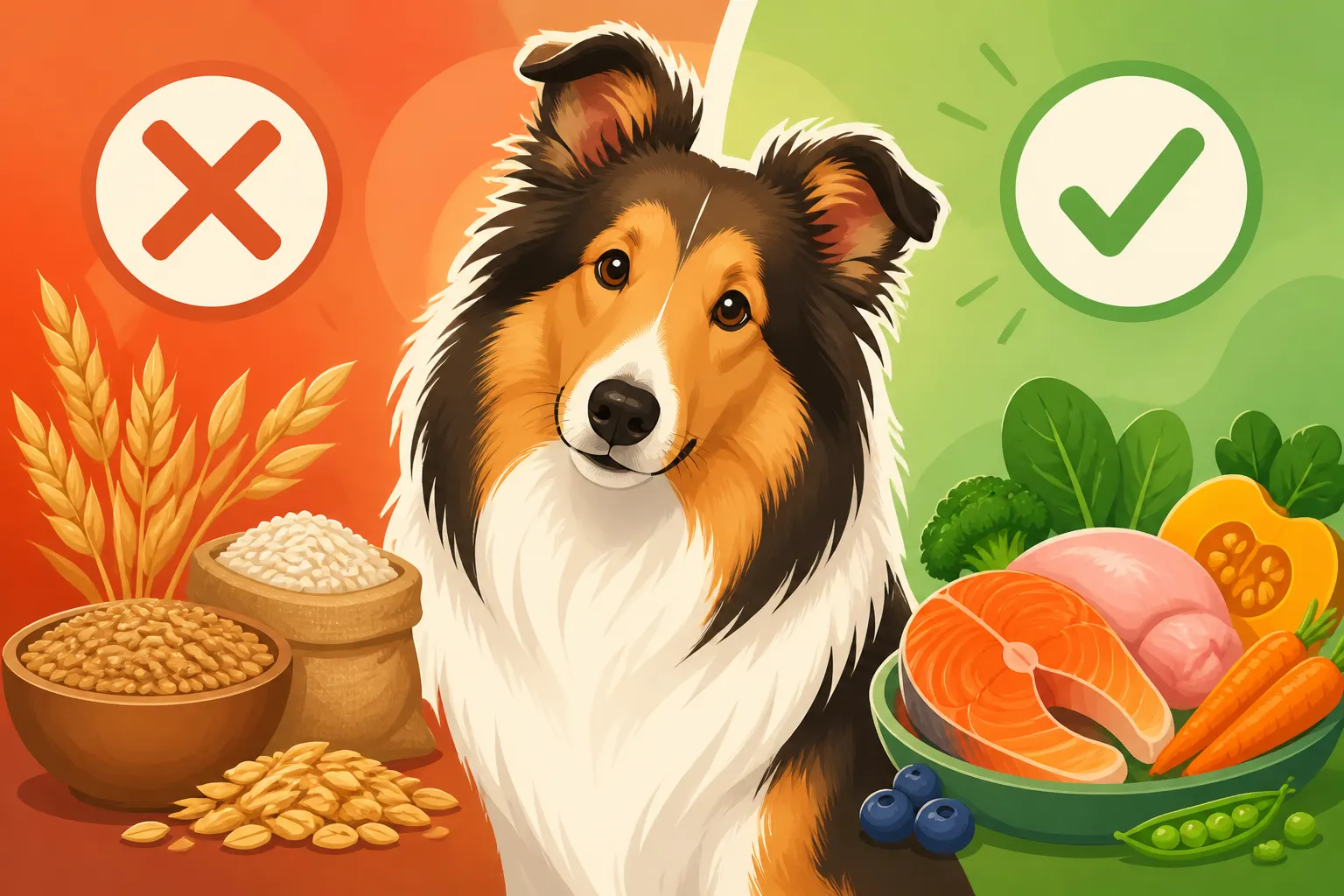
Beyond the ancestral diet argument, there are several persistent myths about grains that have fueled the grain-free movement. Many people believe that grains are simply "fillers" – cheap ingredients added to dog food to bulk it up without providing real nutritional value. This couldn't be further from the truth. Whole grains like rice, oats, barley, and corn are excellent sources of digestible carbohydrates, which provide energy for your active Collie. They also contribute fiber for digestive health, and contain essential vitamins, minerals, and even some protein. The term "filler" often suggests an ingredient is useless, but for most dogs, including Collies, grains are far from it. Another common misconception is that grains are a primary cause of allergies in dogs. While food allergies do exist, true allergies to grains are actually quite rare compared to allergies to protein sources like beef, chicken, or dairy. This confusion has led many well-meaning owners to needlessly eliminate grains from their Collie's diet.
Grains, Collies, and the Realities of Canine Health
When we talk about what's best for our Collies, it's crucial to separate marketing hype from scientific reality. While the idea of a "natural" diet sounds appealing, our Collies have evolved significantly from their wolf ancestors over thousands of years, adapting to a diet that includes starches and grains alongside meat. Their digestive systems are perfectly capable of processing and utilizing carbohydrates from grains. The real questions we need to ask are: are grains harmful, especially for Collies? And what are the actual health implications of avoiding them?
True Grain Allergies in Collies: Rarity Versus Perception
Let's address the big one first: actual grain allergies. It’s a common fear among dog owners, especially when their Collie starts scratching or develops digestive upset. However, diagnosed grain allergies in dogs are genuinely uncommon. When a dog does have a food allergy, it's almost always to a protein source, not a carbohydrate. The usual culprits are often beef, dairy, chicken, or lamb. Symptoms of a food allergy in a Collie typically manifest as skin issues (itchiness, chronic ear infections, paw licking, hot spots) or gastrointestinal upset (vomiting, diarrhea, excessive gas). If you suspect your Collie has a food allergy, the first step is always to work with your veterinarian, who will likely recommend an elimination diet. This involves feeding a novel protein and carbohydrate source for several weeks to see if symptoms resolve, then carefully reintroducing ingredients one by one. Simply switching to "grain-free" without a proper diagnosis might eliminate a potential allergen, but it also might miss the real issue entirely, and potentially introduce other concerns. What a Collie's Dermatologist Referral Costs can be a significant investment, so accurate diagnosis is key.
The Link Between Grain-Free Diets and Canine Dilated Cardiomyopathy (DCM)
Now, here's where the conversation about grain-free diets for Collies takes a serious turn, and it's something every Collie owner needs to be aware of. In recent years, the veterinary community, particularly the FDA, has been investigating a potential link between certain grain-free diets (and other "boutique" or "exotic ingredient" diets) and Dilated Cardiomyopathy (DCM) in dogs. DCM is a severe heart condition where the heart muscle becomes thin and weak, making it difficult to pump blood effectively. While some breeds, like Dobermans and Great Danes, are genetically predisposed to DCM, the recent rise in atypical DCM cases in breeds not typically predisposed – including herding breeds like Collies – has raised significant alarms.
The diets under scrutiny are often characterized by high levels of legumes (peas, lentils, chickpeas), potatoes, or sweet potatoes as primary ingredients, replacing grains. The exact mechanism isn't fully understood yet, but researchers believe it might be related to taurine deficiency, or other nutrient imbalances or antinutrients present in these high-legume formulations. Some dogs, when switched to a grain-inclusive diet or supplemented with taurine (under veterinary supervision), have shown improvement. This is a profound concern, as DCM can be life-threatening. When you're browsing for dog food on platforms like Chewy or Amazon, it's easy to get lost in the sheer volume of options. If you're considering a grain-free diet, it is absolutely vital to discuss this DCM concern with your vet. They can help you evaluate the ingredients and decide if the potential risks outweigh any perceived benefits for your specific Collie. What Most Collies Die Of naturally includes heart conditions, and we certainly don't want to inadvertently contribute to that risk.
When a Grain-Free Diet Might Be Considered (Under Vet Guidance)
So, with all this information, are grain-free diets ever appropriate? The answer is yes, but with a huge asterisk: only under the direct guidance of a veterinarian, and usually for very specific, medically confirmed reasons. This isn't a decision to take lightly or base on internet forums or anecdotal evidence. Your vet has the expertise to assess your Collie's individual needs and health profile.
Diagnosing Food Sensitivities and Allergies Accurately
The most common legitimate reason for a veterinarian to recommend a grain-free diet is a confirmed food allergy or severe sensitivity where grains have been definitively identified as the trigger. As we discussed, this is rare, and the diagnostic process is thorough. It almost always involves an elimination diet, which isn't just about cutting out grains. It's a structured approach to identifying specific problematic ingredients. For instance, if your Collie is experiencing persistent skin irritation or digestive upset, your vet might suggest a prescription hydrolyzed protein diet, or a novel protein diet that contains no ingredients your Collie has eaten before, which could be grain-inclusive or grain-free. The goal is pinpoint accuracy, not just a blanket "grain-free" switch. Without this precise diagnosis, you might be removing beneficial nutrients and potentially exposing your Collie to the risks associated with certain grain-free formulations, all while the real allergen continues to cause problems. Whether a Collie's Diet Affects Its Shedding is a good example of how diet can impact visible health.
Choosing a Responsible Grain-Free Formulation (If Necessary)
If, and only if, your veterinarian determines that a grain-free diet is medically necessary for your Collie, the next step is to choose a formulation very carefully. This isn't about grabbing the first bag labeled "grain-free" off the shelf. You'll need to look for brands that have a long history of scientific research, employ veterinary nutritionists, and conduct feeding trials. These companies typically have stringent quality control and understand the complexities of canine nutrition beyond simple ingredient lists. Avoid diets that rely heavily on legumes (peas, lentils, chickpeas) or potatoes as the main carbohydrate source, especially if they are among the first five ingredients. Look for companies that are transparent about their sourcing and formulation processes. Some fresh food services, like Ollie, offer custom meal plans that can be grain-free, but again, always review their specific ingredient breakdown with your vet to ensure it's balanced and safe, particularly concerning the DCM concerns. Remember, the focus should always be on a complete and balanced diet, not just the absence of grains.
What to Feed Your Collie for Optimal Health Instead
For the vast majority of Collies, a well-formulated, grain-inclusive diet from a reputable brand is not only perfectly safe but often the best choice for their long-term health. The emphasis should be on overall nutritional balance, quality ingredients, and digestibility, rather than fixating on the presence or absence of a single ingredient type like grains.
Prioritizing Balanced Nutrition for Your Collie
A healthy diet for your Collie should be built on a foundation of high-quality protein, digestible carbohydrates, essential fats, and a full spectrum of vitamins and minerals. Think of your Collie's diet like a finely tuned engine: every component plays a vital role. Protein, typically from meat, poultry, or fish, is essential for muscle maintenance, tissue repair, and overall body function. Healthy fats provide concentrated energy, support skin and coat health, and aid in nutrient absorption. Carbohydrates, whether from grains or alternative sources, are crucial for energy, especially for an active breed like a Collie. They provide the glucose necessary for brain function and sustained energy throughout the day. Fiber, often found in grains, is important for gut health and can help maintain a healthy weight. What an Adult Collie Eats in a Month illustrates that these dogs need substantial, nutritious food. When selecting a food, look for brands that list a named meat source (e.g., "chicken meal," not just "meat meal") as one of the first ingredients, and then a digestible carbohydrate source.
Consulting Your Veterinarian: Your Best Resource
Ultimately, your veterinarian is your most trusted and knowledgeable resource when it comes to your Collie's diet. They know your dog's individual health history, any underlying conditions, age, activity level, and breed-specific predispositions. This holistic view allows them to recommend a diet tailored to your Collie's unique needs. Don't hesitate to schedule a nutritional consultation if you have concerns or are considering a significant dietary change. Your vet can provide evidence-based recommendations, helping you navigate the confusing world of pet food labels and marketing claims. They can also advise on appropriate portion sizes (helpful for Signs a Collie Is Overweight Under All That Coat), discuss supplements if needed, and ensure that any changes are made safely and effectively. They might suggest a specific brand or type of food, or simply advise on what to look for on labels. They can even help you understand how factors like Caring for a Collie Past Nine might influence dietary needs, as older Collies often require different nutritional support. For general shopping, a platform like Chewy offers a vast selection, but it's always best to have a vet-approved list of criteria before you start adding items to your cart.
When you're faced with all the decisions about your Collie's health, remember that good nutrition is a cornerstone. Don't let marketing sway you from what the science and your trusted veterinarian recommend. Your Collie deserves a diet that's not just trendy, but truly healthy and safe for them, supporting their long, happy life by your side.
Disclaimer
This article is for general informational purposes only and does not constitute professional advice. Laws, prices and regulations vary by location and change over time. Consult a qualified professional for guidance on your specific situation.