Whether a Collie Owner Should Learn to Groom
The majestic, flowing coat of a Collie is undoubtedly one of their most defining and beautiful features, but let's be honest, it's also a source of constant wonder and, sometimes, outright frustration for us owners. That gorgeous mane doesn't just happen; it requires significant care, and many new Collie parents find themselves asking if they should just take the plunge and learn to handle it all themselves. This guide is here to walk you through the real considerations, the triumphs, and the occasional tribulations of becoming your Collie's personal groomer.
The Herculean Task of a Collie's Coat
Before we even consider learning to groom, let's acknowledge the sheer scale of what we're talking about. A Collie's coat is a double coat, meaning it has a soft, dense undercoat for insulation and a longer, coarser outer coat that protects from the elements. This combination is what gives them their magnificent appearance but also demands a consistent and thorough grooming routine. We're not talking about a quick brush-through here; we're talking about a serious commitment.
Think about the sheer volume of hair. It's like having a permanent cloud of fluff inhabiting your home, especially during those infamous "coat blows" that happen a couple of times a year. If you've never experienced a full Collie coat blow, imagine waking up to what looks like a snowstorm inside your house, except it's all dog hair. This isn't just a shedding problem; it's an event that requires specific tools and techniques to manage effectively. When your dog is blowing coat, simply running a brush over the top isn't going to cut it. You need to get down to the skin, through that dense undercoat, to release all the dead hair that's just waiting to turn into mats.
Beyond the shedding, there's the matting. Collies, especially the rough-coated variety, are prone to mats forming in specific areas. Behind the ears, under the "frill" (the glorious hair around their neck), in their "petticoats" (the long hair on their rear legs), and even on their belly and armpits. These aren't just cosmetic issues; mats can pull on the skin, causing pain and irritation. They can also hide skin infections, parasites, and hot spots. It's a constant battle, and if you're not on top of it, those little tangles quickly become impenetrable knots that require drastic measures. Many a Collie owner has sadly had to learn Whether a Groomer Charges Extra for a Matted Collie because the mats became too severe to handle at home.
The Undeniable Benefits of DIY Grooming
Despite the daunting nature of a Collie's coat, there are compelling reasons why many owners choose to learn how to groom their dogs at home. The sense of accomplishment is certainly one, but the benefits go far deeper than just pride.
Firstly, let's talk about the financial aspect. Professional grooming for a large, long-coated breed like a Collie can be a significant recurring expense. Depending on where you live and the services you need, a full groom can really add up. Over the lifespan of your dog, these costs can accumulate into thousands of dollars. Learning to groom yourself, even if you only do the maintenance between professional visits, can drastically reduce this expenditure. While there's an initial investment in good quality tools – and yes, you'll need more than just one brush; we're talking about Which Four Brushes a Collie Owner Needs – these are largely one-time purchases that pay for themselves quickly. You might even find some great deals on supplies through retailers like Chewy.
Secondly, and perhaps more importantly, is the bond and trust you build with your Collie. Grooming is a tactile, intimate experience. When you regularly handle your dog, gently working through their coat, checking their ears, and feeling for any lumps or bumps, you deepen your connection. Your Collie learns to trust your touch, making future veterinary visits or even simple cuddles more comfortable for them. It also allows you to become intimately familiar with your dog's body, meaning you're far more likely to notice subtle changes in their skin, coat, or overall health that a groomer might miss during a quick session. This early detection can be invaluable for catching potential health issues before they become serious.
Finally, you have complete control over the process. You can groom your Collie when it best suits their mood, break up sessions if they get tired, and use products you trust. You dictate the pace, ensuring your Collie has a positive experience every time. You're not relying on someone else's schedule or their interpretation of what your Collie's coat needs. This means you can maintain their coat exactly as you like, keeping it healthy, free of mats, and looking its best year-round, rather than just every eight weeks when a professional appointment rolls around. It’s an investment in their long-term comfort and appearance, which is priceless. You can also explore different feeding options, like Ollie, which can contribute to a healthier coat from the inside out.
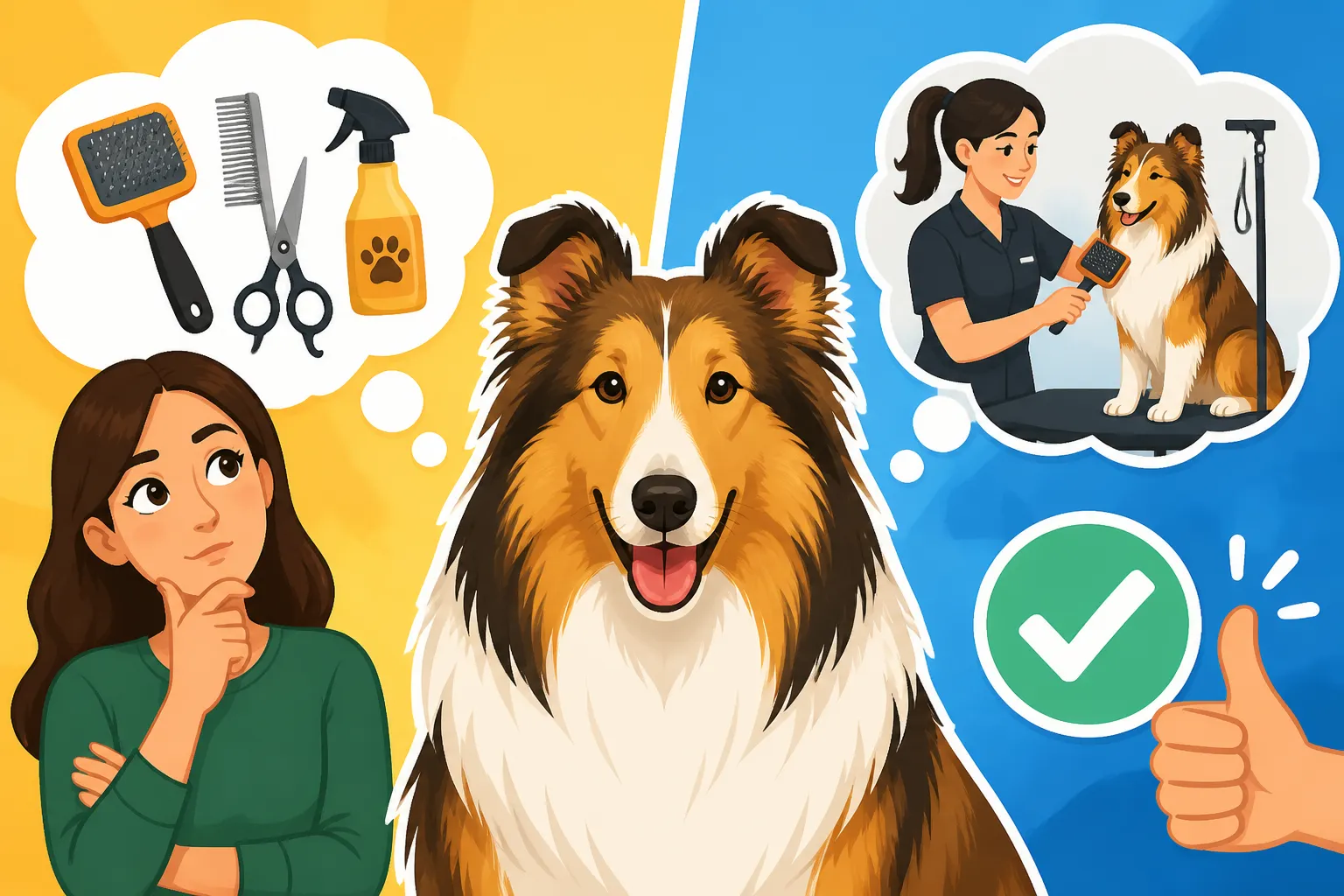
| Feature | DIY Grooming (Owner) | Professional Grooming (Service) |
|---|---|---|
| Cost | High initial tool investment, then low recurring. Saves money long-term. | Significant recurring expense every 6-8 weeks. |
| Time Commitment | High weekly/bi-weekly commitment, plus coat blow periods. | Drop-off/pick-up time, but no daily owner time. |
| Skill Required | Significant learning curve, requires patience and practice. | Expert knowledge and experience with various coat types. |
| Bonding | Deepens bond, increases trust, improves handling tolerance. | Limited direct interaction with owner during grooming. |
| Health Checks | Regular, thorough examination of skin, lumps, parasites. | Groomer may note issues, but primary focus is coat maintenance. |
| Convenience | Schedule flexibility, can break up sessions. | Appointments required, fixed schedule. |
| Risk of Injury | Higher initial risk for beginners (nicks, clipper burns). | Low risk due to professional tools and technique. |
| End Result | Varies with skill, improves over time. May not achieve show quality initially. | Consistent, high-quality finish, breed-standard styling. |
The Realities and Downsides of Taking on the Brush Yourself
While the idea of saving money and bonding with your Collie through grooming is appealing, it's crucial to approach this decision with a realistic understanding of the downsides and challenges involved. Learning to groom a Collie is not a weekend project; it's a skill that requires dedication, patience, and a thick skin (both yours and your dog's, metaphorically speaking).
First off, let's talk about the time commitment. This is perhaps the biggest hurdle for most owners. We're not just talking about a quick five-minute brush. To truly maintain a rough Collie's coat, you should be dedicating at least 20-30 minutes, 2-3 times a week, to a thorough line brushing session. And that's just maintenance. During a full coat blow, which can last several weeks, you might be brushing daily for an hour or more to prevent massive matting. Ask any experienced Collie owner about How Many Hours a Year a Collie Owner Spends Brushing, and they'll likely give you a number that sounds more like a part-time job than a hobby. It's a big chunk of time to carve out of an already busy schedule, and consistency is key. Skipping a week can set you back considerably, turning small tangles into major headaches.
Then there's the learning curve. Nobody picks up a set of grooming shears or a high-velocity dryer and instantly becomes a pro. There's a proper technique for How to Line Brush a Collie to ensure you're getting down to the skin. There's an art to dematting without causing pain. You need to learn how to trim nails safely without "quick-ing" your dog, how to clean ears, and how to spot potential problems. Mistakes can happen – nicks with scissors, clipper burns if you're not careful, or simply making the coat look uneven and choppy. While these aren't usually life-threatening, they can be painful for your dog and frustrating for you. It takes practice, sometimes with a lot of trial and error, to become proficient.
Finally, the initial investment in tools can be substantial. You need a good quality pin brush, a slicker brush, a wide-toothed comb, a metal greyhound comb, nail clippers or a Dremel, ear cleaner, dog-specific shampoo and conditioner, a high-velocity dryer (an absolute must for proper drying and de-shedding), and possibly a grooming table. These aren't cheap items, and buying low-quality tools will only make the job harder and less effective. Plus, you’ll need a good vacuum cleaner that can handle the sheer volume of hair shed. If you end up needing to treat any accidents or skin irritations from learning, a good pet insurance plan like Healthy Paws can be a lifesaver.
When Professional Help is Still the Smartest Choice
Even for the most dedicated and skilled DIY groomer, there are times when calling in a professional is not just a convenience, but an absolute necessity. Understanding these boundaries is crucial for your Collie's well-being and your own sanity.
One of the most common reasons to seek professional help is severe matting. If you've fallen behind on grooming, or your Collie has rolled in something sticky, and the mats have become dense and close to the skin, attempting to remove them yourself can be a nightmare. It's painful for your dog, time-consuming, and there's a high risk of nicking their skin with scissors. Professional groomers have specialized tools and techniques, like force dryers, and the expertise to safely and humanely remove even the worst mats. Sometimes, a full shave-down is the kindest option, and that's best left to someone with appropriate clippers and experience to avoid clipper burn. You might also want to consult with a vet about potential skin issues if matting has caused irritation, and pet insurance like Healthy Paws can help cover those unexpected visits.
Certain tasks, like nail trimming, can also be a source of anxiety for many owners. If your Collie is particularly sensitive about their paws or if you're nervous about cutting too far back and hitting the quick, a professional groomer can do it quickly and efficiently. They're accustomed to handling reluctant dogs and can ensure the nails are trimmed to the correct length, promoting good paw health and preventing discomfort. Similarly, tasks like expressing anal glands, while not strictly "grooming," are often offered by groomers and are best left to professionals if you're unsure.
Furthermore, a professional groomer can offer a fresh perspective and spot potential issues you might miss. They see dozens of dogs a week and are trained to notice skin conditions, ear infections, or unusual lumps and bumps that could indicate a health problem. They can also offer advice on coat maintenance, recommend specific products that work well for Collies, or even provide insights into your dog's temperament during grooming. Sometimes, just having a professional give your Collie a thorough "deshedding bath" during their seasonal coat blow can save you weeks of battling hair at home. For example, a good professional can make all the difference in managing The Three Weeks Twice a Year When a Collie Buries Your House.
Ultimately, whether you choose to learn to groom your Collie yourself, rely solely on professionals, or opt for a hybrid approach, the most important thing is your Collie's comfort and health. It’s a big decision, but with realistic expectations and the right tools (and maybe a little help from Chewy for supplies!), you can ensure your beloved companion always looks and feels their best.
Disclaimer
This article is for general informational purposes only and does not constitute professional advice. Laws, prices and regulations vary by location and change over time. Consult a qualified professional for guidance on your specific situation.