Whether Collie Puppy Mills Followed the Lassie Films
When Lassie Come Home brought a heroic collie to the screen, families wanted to bring that image home too. The popularity helped create demand, but it is difficult to prove that the films alone caused a wave of collie puppy mills. Here’s what can be said about the Lassie effect, commercial breeding, and how to judge a breeder today.
Did Lassie lead to collie puppy mills?
The films made collies highly visible
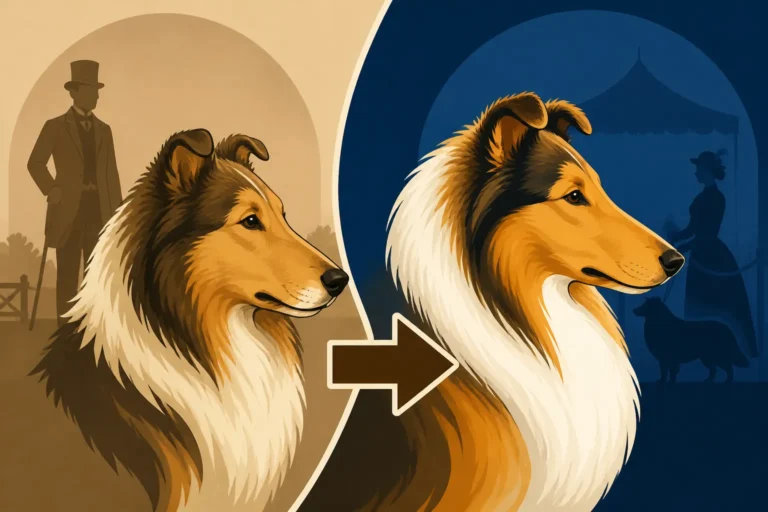
Lassie Come Home, released in 1943, introduced many moviegoers to a brave, clever collie who seemed to understand what people needed before they said it. The character’s appeal lasted beyond one film, and the later Lassie stories kept the breed in the public eye. For families who had not thought much about collies before, the films offered a vivid picture of a beautiful, loyal, capable dog.
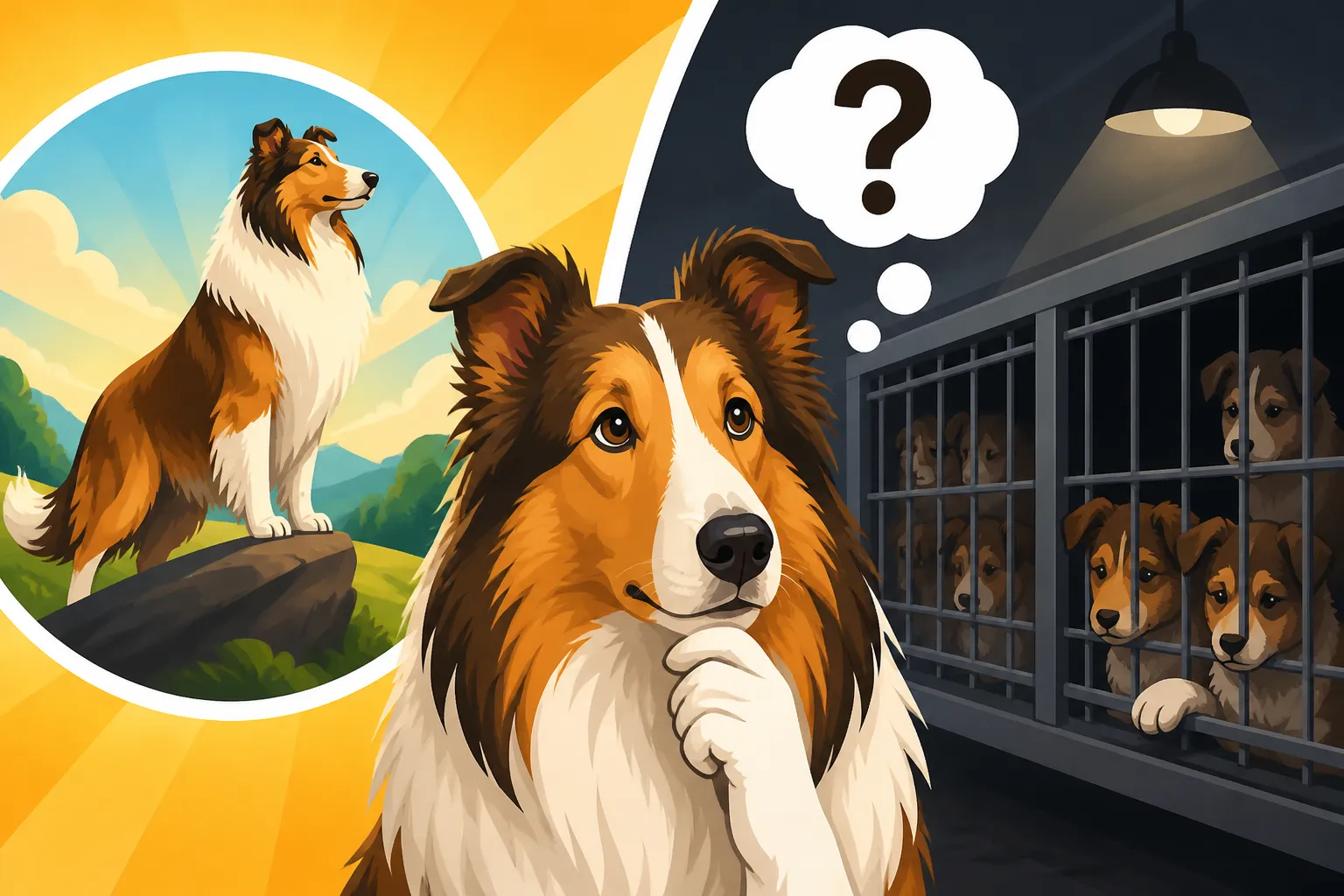
That kind of attention can influence what people want to buy. A family might see a collie on screen, imagine a dog with the same calm judgment and devotion, and start looking for a puppy. More interest can create more opportunities for responsible breeders, but it can also attract sellers who prioritize volume and profit over health, temperament, and good placement.
It is fair to say Lassie helped make collies more desirable and recognizable. It is not as simple to say that the movies directly caused puppy mills. Popularity and commercial breeding may rise together, but a tidy cause-and-effect claim requires more evidence than the general historical pattern provides. For more background on the character and the film, see The Year Lassie Come Home Was Released and What Lassie Did to Collie Registrations.
Commercial breeding was not invented for Lassie
Commercial dog breeding existed before the Lassie films. The term puppy mill is commonly used for high-volume breeding operations where dogs’ welfare and the quality of puppy placement are neglected. It does not describe every breeder who sells puppies, and the exact legal meaning can vary by location.
A surge in interest in a particular breed can make commercial breeding more attractive. Sellers may see a market for puppies and increase production, sometimes without the care, screening, or support that prospective owners should expect. But separating the effect of Lassie from other influences—such as changing family life, advertising, and wider interest in pets—is difficult.
A more careful answer is that Lassie’s popularity likely contributed to demand for collies, while commercial breeding was already part of the wider dog market. The films may have made it easier to sell the dream of a collie; they do not, by themselves, establish when or how many irresponsible breeders began producing them. Whether Lassie Gave the Collie a False Reputation explores the gap between a fictional dog and the real breed.
Why a popular dog can attract poor breeders
Demand can reward appearance over responsible care
When people fall for a breed’s screen image, they may focus first on its looks. A prospective buyer might arrive asking for a puppy with a particular coat color or a “Lassie face” and give less attention to the questions that matter for the dog’s long-term welfare: how the parents live, what health concerns the breeder considers, and how puppies are socialized.
A poor breeder can take advantage of that excitement. They may use attractive photos, promise that every puppy will have an ideal temperament, or create pressure to pay a deposit quickly. None of those signs alone proves a seller is running a puppy mill, but they are reasons to slow down and ask for verifiable details.
Responsible breeding is not simply producing puppies that look like a famous dog. It involves thoughtful choices about health, temperament, and whether a particular pairing is appropriate. A breeder should be prepared to discuss the dogs’ care and provide records rather than relying on a movie-inspired sales pitch. For a broader look at the breed’s history before its screen fame, see The Household a Collie Was Built For.
The real collie is not a movie character
Lassie is a fictional character, shaped by scripts, training, editing, and the demands of a story. A real collie may be devoted and responsive, but it will also have ordinary needs: exercise, training, grooming, veterinary care, and time to settle into a home. A puppy is not born knowing how to rescue someone, read a family’s mind, or behave perfectly around children.
This distinction matters when demand is driven by an idealized image. Families can feel disappointed if they expect effortless obedience or a dog that never barks, worries, or makes mistakes. The puppy may then be blamed for failing to match an unrealistic expectation, even though those expectations came from fiction rather than responsible breed information.
A better starting point is learning what collies are generally like and considering whether that fits your household. Read The Collie Was a Scottish Droving Dog Before It Was a Show Dog and Whether a Collie Suits a First Time Owner before deciding that the Lassie image alone makes the breed right for you.
How to assess a collie breeder today
Look for transparency, not a polished story
A responsible breeder should welcome sensible questions and be willing to explain how puppies are raised, what health screening is relevant to the line, and what support they offer after a puppy goes home. You should be able to learn about the mother and, where possible, the father, including their health and temperament. Ask what daily life is like for the dogs, not just how impressive they look in photographs.
Be cautious if a seller refuses to share records, will not answer basic questions, or insists that you commit before you have had time to think. Other warning signs can include puppies being available in a constant stream, little interest in the homes they are going to, or vague explanations about where and how the dogs are kept. A single concern deserves follow-up; several together should make you pause.
Ask for copies of relevant health information and make sure you understand what each result means. A health test is useful only if it is genuine, relevant, and interpreted in the context of the breeding pair. The Genetic Testing a Collie Breeder Has Already Paid For and Whether a Collie Breeder Provides an Eye Certificate can help you prepare more specific questions.
Use a checklist before paying a deposit
An organized checklist can help keep enthusiasm from turning into a rushed decision. If you are talking to a breeder by phone or messaging, write down the answers and ask for time to review any documents. A trustworthy seller should not need you to decide on the spot simply because a puppy has captured your heart.
| What to check | Useful question | Reason to pause |
|---|---|---|
| Puppy’s home environment | Can I learn where the puppies are raised and meet the mother? | The seller avoids discussing the dogs’ living conditions |
| Health information | Which health checks apply to the parents, and can I see the records? | Claims are made without documentation |
| Puppy’s development | How are puppies introduced to household sounds, handling, and people? | The seller cannot explain how puppies are cared for |
| Placement process | What do you want to know about my home and plans for the dog? | The seller will sell to anyone without discussion |
| Written agreement | Can I read the contract before committing? | Terms are unclear or you are pressured to pay immediately |
| Ongoing support | What happens if I need help after the puppy comes home? | The seller will not discuss follow-up or the dog’s future |
Do not treat one document, a friendly conversation, or a tidy website as proof on its own. Consider the whole picture. If you are uncertain, ask a veterinarian or an experienced collie club member to help you understand the health records and the questions you should be asking. If the seller’s answers remain evasive, it is reasonable to walk away.
What prospective collie owners can take from the Lassie era
Let the breed’s needs guide the decision
The useful lesson is not that every popular breed becomes a victim of puppy mills, or that every collie breeder is suspect. It is that public excitement can reward sellers who know how to market a breed’s image. A famous dog can make a puppy feel like an obvious choice before a family has considered the everyday work of living with that breed.
Give yourself room to think beyond appearance. Meet adult collies if you can, ask owners what they find rewarding and challenging, and consider grooming, training, exercise, and health care. If you are drawn to the breed because of Lassie, keep that affection—but use it as the beginning of your research rather than the end of it.
Once you have chosen a puppy responsibly, practical preparation can make the first weeks less hectic. Chewy may be one place to compare basic supplies such as a crate, grooming tools, and food-storage items, but a retailer cannot verify a breeder or substitute for health records. A written list can help you avoid buying more than you need. For coat-related planning, Four Tools and Twenty Minutes: Brushing a Rough Collie offers a useful starting point.
Separate the source of the story from the decision in front of you
It is tempting to look for one clear historical moment when puppy mills began following Lassie’s success. The more responsible conclusion is less dramatic: the films helped bring collies into the public imagination, and increased interest can create incentives for both careful breeders and careless sellers. That connection is plausible, but it does not prove that Lassie alone caused a specific puppy-mill boom.
For a buyer today, the practical question is not whether a seller benefited from an old movie’s popularity. It is whether that seller is transparent, prioritizes the dogs’ welfare, documents relevant health information, and makes thoughtful placements. Those standards matter whether a family discovered collies through Lassie, a friend’s dog, or a local rescue.
If a breeder’s process does not feel right, take a breath and keep looking. A puppy’s availability today is not a reason to accept unclear records or pressure. You can also consider breed-specific rescue and ask what is known about a dog’s background and health. For a puppy from a breeder, Whether an Untested Collie Is Ever Worth Buying can help frame the health-testing conversation.
Disclaimer
This article is for general informational purposes only and does not constitute professional advice. Laws, prices and regulations vary by location and change over time. Consult a qualified professional for guidance on your specific situation.