Whether the Collie Belongs to the Herding Group
A Collie belongs to the herding group, but that label can be confusing if you picture a dog that needs sheep to be happy. It describes the breed’s history and instincts, not a requirement that every Collie work livestock. This guide explains where Collies fit, what herding traits you might notice at home, and how those traits can shape everyday life with the breed.
Why the Collie Is in the Herding Group
The group reflects the work Collies were bred to do
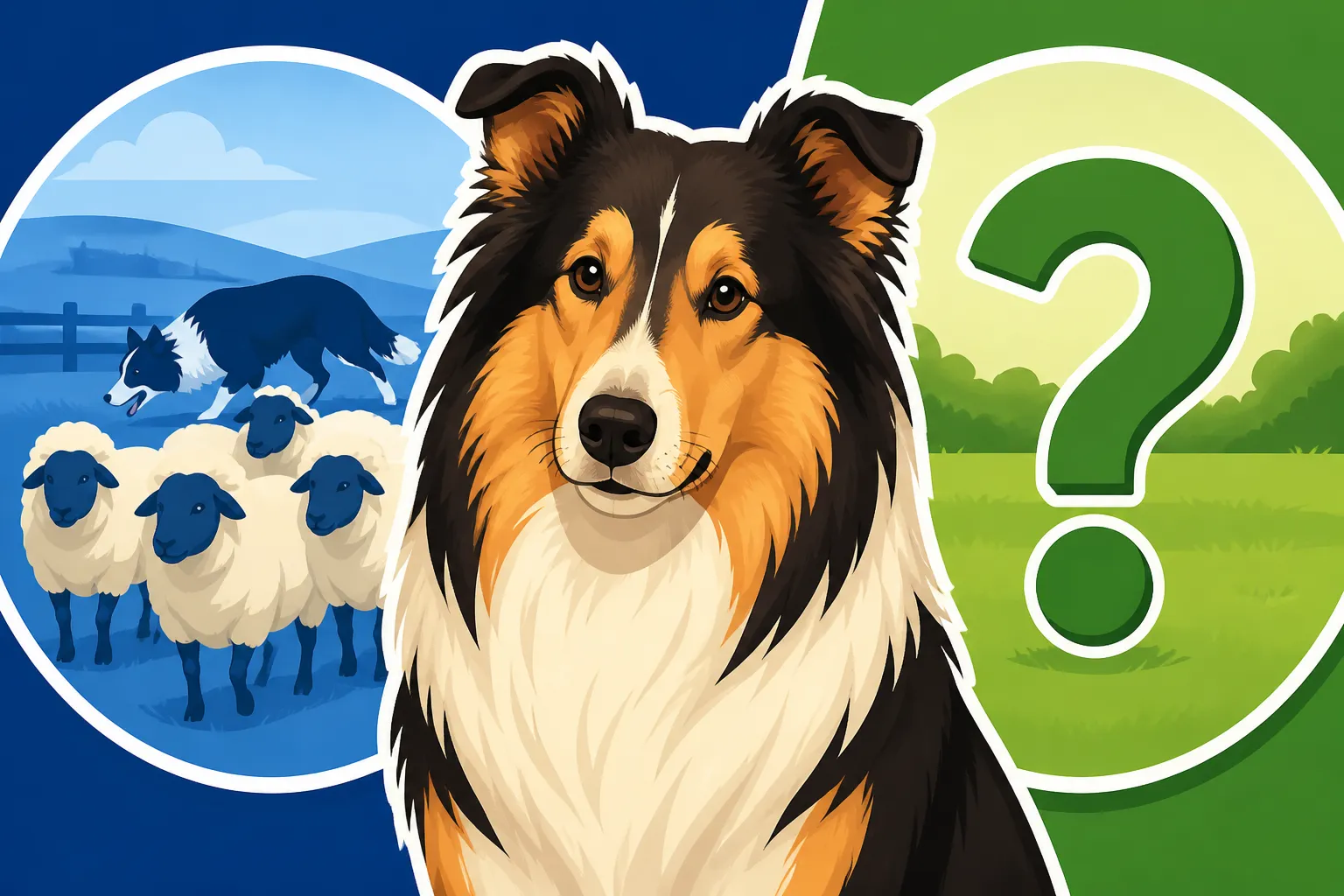
Collies were developed as working dogs, helping people manage livestock. Their place in the herding group reflects that history: they were bred to notice movement, respond to direction, and help guide animals. Those qualities are part of why a Collie can seem so attentive to what people and other animals are doing around them.
A herding group label doesn’t mean every dog in it works in the same way. Some breeds were developed to move livestock over long distances, while others were used to gather or control animals in different settings. Collies have their own particular history and style. For more on that background, see The Collie Was a Scottish Droving Dog Before It Was a Show Dog.
Today, most Collies live as companions rather than farm dogs. The breed can still carry instincts shaped by its working past, but those instincts show up in ordinary settings too: a dog may watch a family moving through the house, alert to changes in its surroundings, or respond quickly to a familiar cue. That doesn’t mean it is trying to take charge. It may simply be doing what its breeding has made it especially good at: paying attention.
The category name can vary by kennel organization
“Herding group” is commonly used by the American Kennel Club. Other kennel organizations may use a different group name for broadly similar breeds. In the United Kingdom, for example, “Pastoral” is a common category name. So if you see Collies described under different group headings in different countries, that doesn’t necessarily mean their role or breed identity has changed.
The group is a way to organize breeds, not a complete description of an individual dog. A Collie’s temperament, confidence, interest in livestock, and activity level depend on the dog as well as its breeding and experiences. Two Collies can both belong to the same group and still differ in how much they bark, how readily they chase movement, or how quickly they settle at home.
That distinction is useful when choosing a dog. A group label can point you toward relevant history and likely tendencies, but it cannot promise that a particular Collie will behave in a specific way. If you’re comparing herding breeds, The Collie Against the Border Collie and the Sheltie offers a useful starting point for understanding how related breeds can differ.
What Collie Herding Instincts Can Look Like at Home
Watching and responding to movement
Some Collies closely track activity around them. A child running across the yard, a bicycle passing the front window, or a dog moving quickly at the park might draw a Collie’s attention. The dog may stare, bark, follow, or circle, depending on the individual and the situation.
This behavior can catch new owners off guard. They may expect a calm family companion and then discover their dog has a strong opinion about the daily school-run traffic outside the window. But noticing movement is not the same thing as being aggressive, and it isn’t proof that a dog needs to live on a farm. It is a cue to observe what gets your dog excited and plan how to guide that response.
For instance, if your Collie barks at people passing the front window, you might block access to that view during the busiest hours and reward the dog for settling elsewhere. If a dog fixates on runners during walks, increase distance before it becomes too excited and reward attention back to you. The goal is not to punish an instinct out of the dog; it’s to teach a safer, more manageable response.
Circling, barking, or heel-nipping
A Collie may circle people or other dogs, especially when activity is fast or unpredictable. A puppy might nip at a person’s heels as they hurry through the house. These behaviors can be related to herding tendencies, but context matters: excitement, frustration, lack of practice around moving people, or simple puppy play can all contribute.
If children are in the home, supervision matters. Make sure children aren’t expected to train the dog, and give the Collie a quiet place to rest away from busy play. Calmly interrupting the behavior and offering an alternative—such as coming to you, settling on a mat, or following a simple cue—can be more helpful than shouting or chasing the dog around.
Consistent routines also help. Practice a reliable recall, reward calm behavior around movement, and arrange walks where the dog has enough space to stay under control. If you’re seeing circling or nipping, How to Stop a Collie Circling the Family and Whether a Collie Nips at Heels address those specific challenges. If children are involved, Whether a Collie Should Be Supervised With Toddlers is also worth reading.
Do Collies Need a Job Because They Are Herding Dogs
A job can mean more than livestock work
A Collie doesn’t need a flock of sheep to have a satisfying life. For many pet dogs, a “job” means having regular chances to use their body and brain: walks with time to sniff, short training sessions, food puzzles, or games that ask them to search and solve a problem. These activities can give an attentive dog something constructive to focus on.
A useful routine does not have to be elaborate. You might ask your Collie to practice a few cues before breakfast, take a relaxed walk after work, and hide treats around one room for a supervised search game. On another day, a short class or a new walking route may provide enough variety. The right amount depends on the individual dog, its age, health, and energy.
If you’re shopping for enrichment equipment, retailers such as Chewy carry options like food puzzles and treat-dispensing toys. The item matters less than choosing something appropriate for your dog and supervising its use. A puzzle that is too difficult may frustrate a beginner; one that is too easy may hold little interest. Starting simply and making the activity more challenging as your dog learns is often the better approach.
When herding sports may be a good fit
Some Collies enjoy herding lessons or trials, while others prefer entirely different activities. Herding is not an automatic consequence of belonging to the herding group. A dog’s interest and comfort around livestock should be assessed carefully, ideally with a qualified instructor who can introduce the activity safely and humanely.
If livestock work doesn’t appeal to you—or isn’t practical where you live—there are other ways to work with a Collie’s attentiveness and responsiveness. Obedience, rally, agility, and scent work can offer structured practice without requiring access to farm animals. A game of fetch may suit one dog, while another would rather learn a new trick or follow a scent trail.
You can find useful gear for training games through general pet retailers, including Chewy, but equipment alone won’t replace patient teaching or suitable instruction. For a broader look at activity options, see Herding, Rally and the Sports a Collie Was Made For and Whether a Collie Needs a Job to Be Content. The best activity is one your dog enjoys and can do safely—not the one that sounds most impressive for a herding breed.
What the Herding Group Label Means When Choosing a Collie
It’s a helpful clue, not a personality guarantee
The herding group can help explain why a Collie may be observant, responsive, and interested in movement. It can also prompt practical questions: How does the dog react to children running? Can it settle after activity? How does it respond to training? Those questions are more useful than assuming every dog in the group has the same needs.
When meeting an individual dog, look beyond the label. Ask about its behavior in everyday situations, its experience with children or other animals, and what helps it relax. A breeder or rescue organization may be able to describe how the dog responds to noise, visitors, and new environments. Your home and routine matter too: a thoughtful plan for training, companionship, and daily activity can make a real difference.
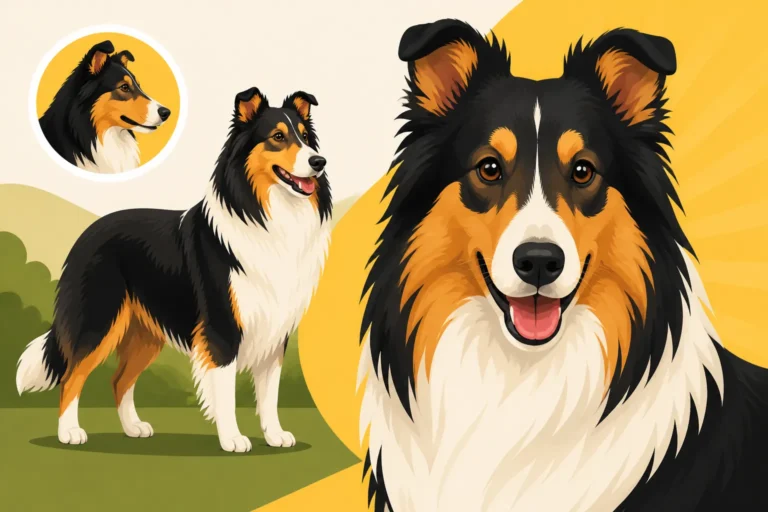
Also remember that Collies come in Rough and Smooth varieties. Both are Collies; the coat is the visible difference, not a different place in the herding group. Rough and Smooth Are Two Varieties of One Collie explains that distinction, while The Collie Against the Border Collie and the Sheltie can help if you’re weighing breed options.
A practical way to think about the label
| The label can suggest | The label cannot tell you |
|---|---|
| The breed has a history of working with livestock | Whether an individual dog will enjoy herding |
| The dog may notice movement and respond quickly | Exactly how much exercise that dog needs |
| Training and purposeful activities may be rewarding | Whether the dog will bark, circle, or nip |
| The breed belongs to a recognized herding category | Whether it will suit a particular household without preparation |
So, does a Collie belong to the herding group? Yes. The group describes the breed’s working heritage and helps place Collies among other breeds with herding backgrounds. It does not mean a Collie must live on a farm, herd children, or spend every day doing organized sports.
The most helpful approach is to treat the category as context. Notice your dog’s individual preferences, teach practical skills early, and provide suitable outlets for attention and energy. A Collie can be a companion first while still carrying traits shaped by generations of work. For more on how a Collie fits into family life, see The Household a Collie Was Built For.
Disclaimer
This article is for general informational purposes only and does not constitute professional advice. Laws, prices and regulations vary by location and change over time. Consult a qualified professional for guidance on your specific situation.