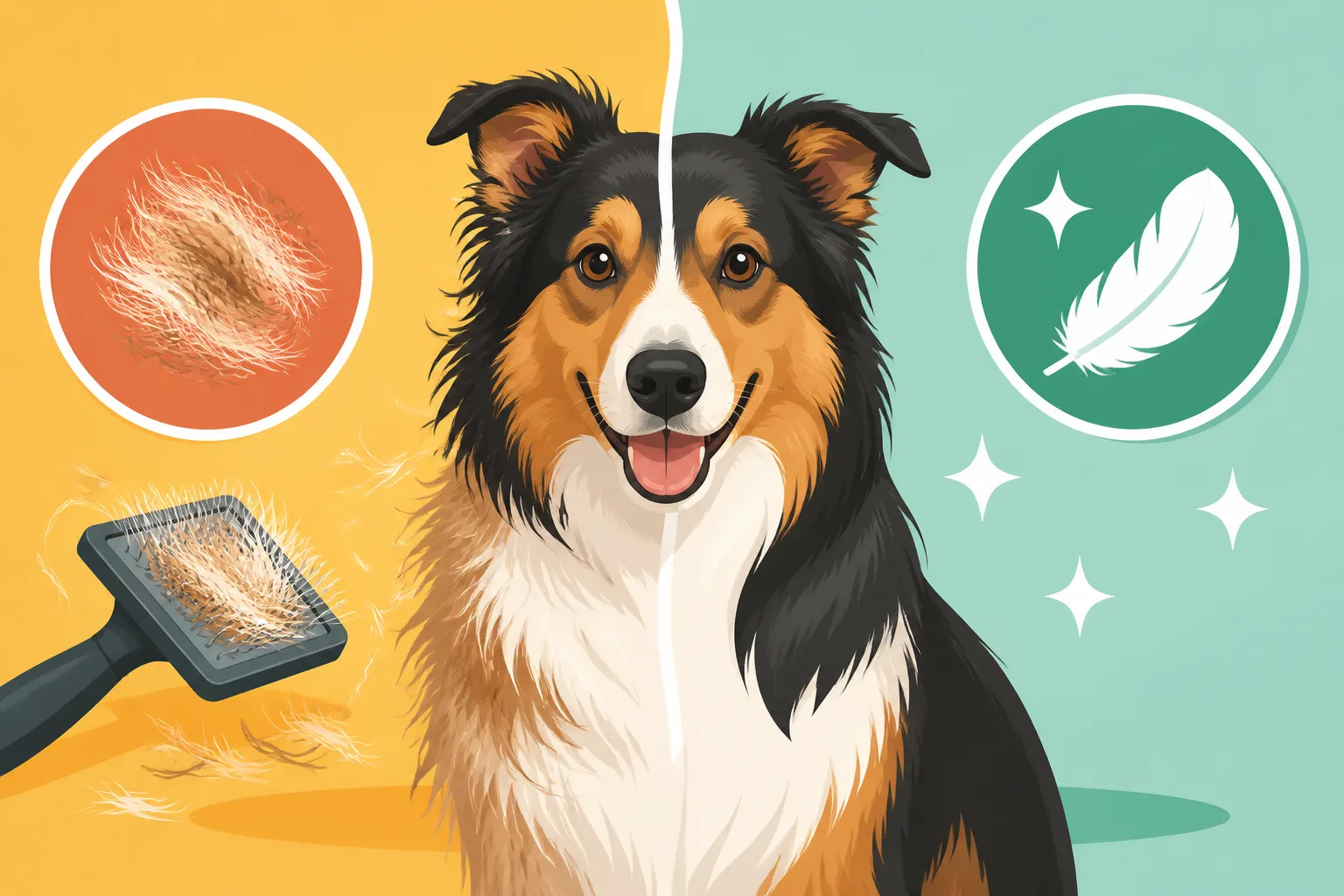
Whether a Collie Mix Keeps the Coat
A Collie mix may inherit the Collie’s long, dense coat, a shorter coat from the other parent, or something in between. That uncertainty can be frustrating when you’re trying to plan for shedding, brushing, and grooming costs. This guide explains what coat traits a Collie mix might inherit, what to look for as a puppy grows, and how to care for the coat you actually get.
What Coat Can a Collie Mix Inherit
Coat length depends on both parents
A Rough Collie has a long outer coat over a softer undercoat. A Smooth Collie has a short coat, but it is still double-coated and can shed. The difference between these varieties is a useful reminder that “Collie coat” does not always mean long, flowing hair. For more background on the varieties, see Rough and Smooth Are Two Varieties of One Collie.
A mixed-breed puppy gets genetic material from both parents, so its adult coat depends on the combination it inherits. A Collie crossed with a short-coated dog might have short hair, a medium coat, or a longer coat with feathering on the legs, tail, or chest. Even puppies in the same litter can look different because they inherit different combinations of traits.
The other parent’s coat matters, but it does not give a perfect prediction. A short-coated parent does not guarantee every puppy will have short hair, and a Collie parent does not guarantee every puppy will grow a full Rough Collie coat. Coat traits are influenced by multiple genes, and a dog’s appearance may not reveal all the traits it carries.
Long hair, short hair, and texture are separate traits
People often use “coat” to mean one thing, but it helps to separate a few qualities: length, texture, density, and whether the dog has an undercoat. A Collie mix could inherit long hair without the same thickness or outline as a Rough Collie. Another mix might have a relatively short coat that still sheds heavily because it has an undercoat.
Texture can vary too. The coat may feel silky, coarse, soft, or somewhere between. Some dogs develop longer hair around the ears, chest, tail, or backs of the legs even if most of the body coat stays shorter. Those areas can tangle more readily, so a dog with a medium-length coat may need more brushing than its overall appearance first suggests.
The label “Collie mix” also covers many different pairings. A Collie crossed with a breed known for a dense double coat may produce a very different grooming routine from a Collie crossed with a short-coated breed. If you know the other parent’s breed, use that information as a clue—not a guarantee.
Shedding is not determined by hair length alone
A long coat can leave visible hair on floors and furniture, but short-coated dogs shed too. Hair length mostly affects how noticeable shed hair is and where it collects. Short hairs may weave into fabric, while longer hairs can gather in corners, on clothing, or around furniture legs.
Undercoat is another important factor. A Collie mix with a dense undercoat may shed more seasonally, often with heavier coat changes during warmer or cooler parts of the year. A dog with less undercoat may shed more steadily instead. Individual dogs vary, and indoor living can make shedding feel less seasonal because temperature and lighting are more consistent.
If shedding is one of your main concerns, ask about both parents’ coats and observe the puppy’s coat as it develops.
How to Estimate a Collie Mix’s Adult Coat
Treat puppy fur as a clue, not a promise
Puppy coats are often softer and fluffier than adult coats. As a dog matures, the texture, length, density, and pattern of shedding can change. A young puppy that looks sleek may grow feathering later, while a fluffy puppy may end up with a more moderate coat than you expected.
Changes happen gradually, so one look at a puppy is rarely enough to predict the final result. The hair around the ears, tail, chest, and legs may offer hints, but it still cannot tell you exactly how dense the adult coat will be. For a related discussion, see Whether a Collie Puppy's Coat Predicts the Adult One.
If the dog is a rescue or its parentage is uncertain, there may be no reliable way to know the exact mix. That does not mean you are stuck guessing about care. Start with a gentle brushing routine and adjust it as you learn how quickly the coat tangles, how much undercoat it has, and when shedding becomes heavier.
Look at the parents when you can
When meeting a puppy from a planned litter, ask to see both parents or clear photos of them. Notice more than coat length: look at the density of the coat, the amount of feathering, the undercoat, and how much loose hair is present. Ask the breeder or rescue what they know about the parents’ usual grooming needs.
Even then, treat the answer as a range rather than a promise. A puppy may inherit a trait that is less obvious in one parent, and siblings can end up with different coats. A responsible explanation is usually more realistic than a firm prediction that every puppy will be low-shedding or easy-care.
With an adult rescue dog, you have a better indication of the coat you will manage day to day. The coat can still change with age, health, season, or other life changes, but you can directly assess its length, texture, and grooming needs. If you are also learning about other inherited traits in Collie mixes, Whether a Collie Mix Can Still Carry MDR1 explains why a mixed-breed appearance does not rule out a Collie-related genetic concern.
Use a practical checklist instead of guessing
When assessing a Collie mix’s coat, ask yourself:
- Does the dog have a visible undercoat?
- Is the hair short, medium, or long across most of the body?
- Are the ears, tail, chest, or leg feathering prone to tangles?
- Does loose hair come out steadily or in heavier seasonal waves?
- Does the coat stay clean and untangled with brief, regular brushing?
These observations help you plan better than a label alone. A dog with medium-length hair and heavy feathering may need more attention than a short-haired dog with little undercoat. If you are considering adoption, ask the rescue what brushing has been needed so far and whether the dog has had mats or coat problems.
Grooming a Collie Mix With Any Coat Type
Build a routine around the dog in front of you
For a longer or denser coat, regular brushing helps remove loose undercoat and catch small tangles before they tighten. Pay particular attention to friction areas, such as behind the ears, under the collar, in the armpits, and around the tail and rear legs. A quick surface brush may make the coat look neat while leaving tangles close to the skin, so occasionally part the hair and check down to the roots.
A shorter coat usually takes less time to brush, but it still benefits from occasional grooming. Brushing can lift loose hair and gives you a chance to notice changes in the skin, lumps, irritation, or parasites. The right schedule depends on the coat, the season, and your dog’s activities. A muddy walk through brush, for example, may call for a careful check even if the dog’s usual coat is low-maintenance.
You do not need an elaborate collection of tools to begin. A suitable brush and comb for the dog’s coat, plus a calm approach, are often enough. If you are shopping for basic grooming supplies, retailers such as Chewy may be one place to compare options; choose tools based on the coat and how they feel on your dog rather than buying a large kit by default. The guide Which Four Brushes a Collie Owner Needs offers more detail on tool selection for Collie coats.
Prevent mats before they become a painful problem
A small tangle can turn into a tight mat when loose hair, moisture, and movement combine. Mats are especially likely in places where hair rubs together or against a collar or harness. Check those areas by gently separating the coat with your fingers or a comb, rather than assuming the surface looks clear.
If you find a small tangle, work slowly from the outer edge and avoid pulling hard on the skin. Stop if your dog is uncomfortable or the mat is close to the skin. Tight mats can be painful, and cutting them out at home can be risky because skin may be caught inside the mat. A groomer can help decide whether it can be safely worked out or needs a different approach. See Where a Collie Mats First for common trouble spots.
Make grooming easier by building it into ordinary life. Keep sessions brief at first, reward calm behavior, and let your dog take breaks. If the dog only sees a brush when a painful mat needs attention, brushing can become stressful for both of you. A few calm minutes at a time can be more useful than waiting until the coat is difficult to manage.
Avoid shaving as a shortcut for shedding or heat
Shaving a Collie mix may seem like an easy fix for summer heat or loose hair, but it is not a substitute for grooming. If the dog has a double coat, removing the outer coat and undercoat can affect the coat’s natural protective function. The coat may also grow back unevenly or with a changed texture, though individual outcomes differ. For more detail, see Why a Collie Should Never Be Shaved.
If your dog’s coat is severely matted, uncomfortable, or difficult to maintain, ask a qualified groomer or veterinarian what approach is appropriate. A necessary clip for a medical procedure or serious coat problem is different from shaving simply because the dog sheds. For everyday comfort, provide shade, water, and a cool place to rest, and avoid strenuous activity during the hottest part of the day.
What to Expect From a Collie Mix Over Time
Coat care can change with age and season
A puppy’s coat may be easier to manage than its adult coat, so it is smart to start gentle grooming before the coat becomes dense. As the dog grows, you may notice more feathering, a thicker undercoat, or a different shedding pattern. That is a good time to reassess your tools and routine rather than assuming the puppy schedule will always be enough.
Adult dogs may shed more during seasonal coat changes, and older dogs can develop changes in coat texture or density. Hormonal changes, illness, and skin conditions can also affect the coat. A sudden change—especially alongside itching, bald patches, redness, or a change in overall health—is a reason to ask a veterinarian rather than treating it as ordinary shedding.
Plan for a range of grooming needs
If you are deciding whether a Collie mix fits your household, plan for the more demanding plausible coat rather than the easiest one. That does not mean expecting a full Rough Collie coat from every mix. It means being prepared for regular brushing and some loose hair, particularly if the dog has a dense coat or noticeable feathering.
| Coat feature | What it may mean for care |
|---|---|
| Short hair with little undercoat | Usually quicker brushing, but loose hairs may still shed |
| Short hair with a dense undercoat | Regular brushing may help during heavier shedding |
| Medium hair with feathering | Check ears, legs, tail, and friction areas for tangles |
| Long, dense double coat | Expect more thorough brushing and closer mat checks |
| Unknown adult coat | Observe shedding and tangling, then set a routine based on what you see |
If the dog’s coat becomes difficult to maintain, consider whether the issue is the tool, the technique, or the schedule. A slicker brush may be too harsh for some coats or dogs, while a comb may be needed to check longer hair. Professional grooming can be useful when you need help with a heavy shed, difficult tangles, or a bath and dry. For grooming frequency and shedding patterns, How Often a Rough Collie Should Be Brushed and When a Collie Blows Its Coat provide related guidance.
Make the decision based on the individual dog
There is no single coat prediction that applies to every Collie mix. The dog may inherit a Collie-like outline, a shorter coat, or a blend of traits that changes as it matures. Knowing the parents can help, but daily observation is what tells you how much brushing your own dog needs.
If you are adopting, ask about coat care and observe the dog’s skin and coat in person when possible. If you already have a Collie mix, begin with gentle, regular checks and adapt your routine as the coat develops. That approach is more dependable—and kinder to the dog—than trying to force a mixed-breed coat into a prediction made from breed names alone. You may also find Whether a Collie Mix Lives Longer helpful when researching other questions about Collie mixes.
Disclaimer
This article is for general informational purposes only and does not constitute professional advice. Laws, prices and regulations vary by location and change over time. Consult a qualified professional for guidance on your specific situation.