Whether a Collie Poodle Cross Sheds Less
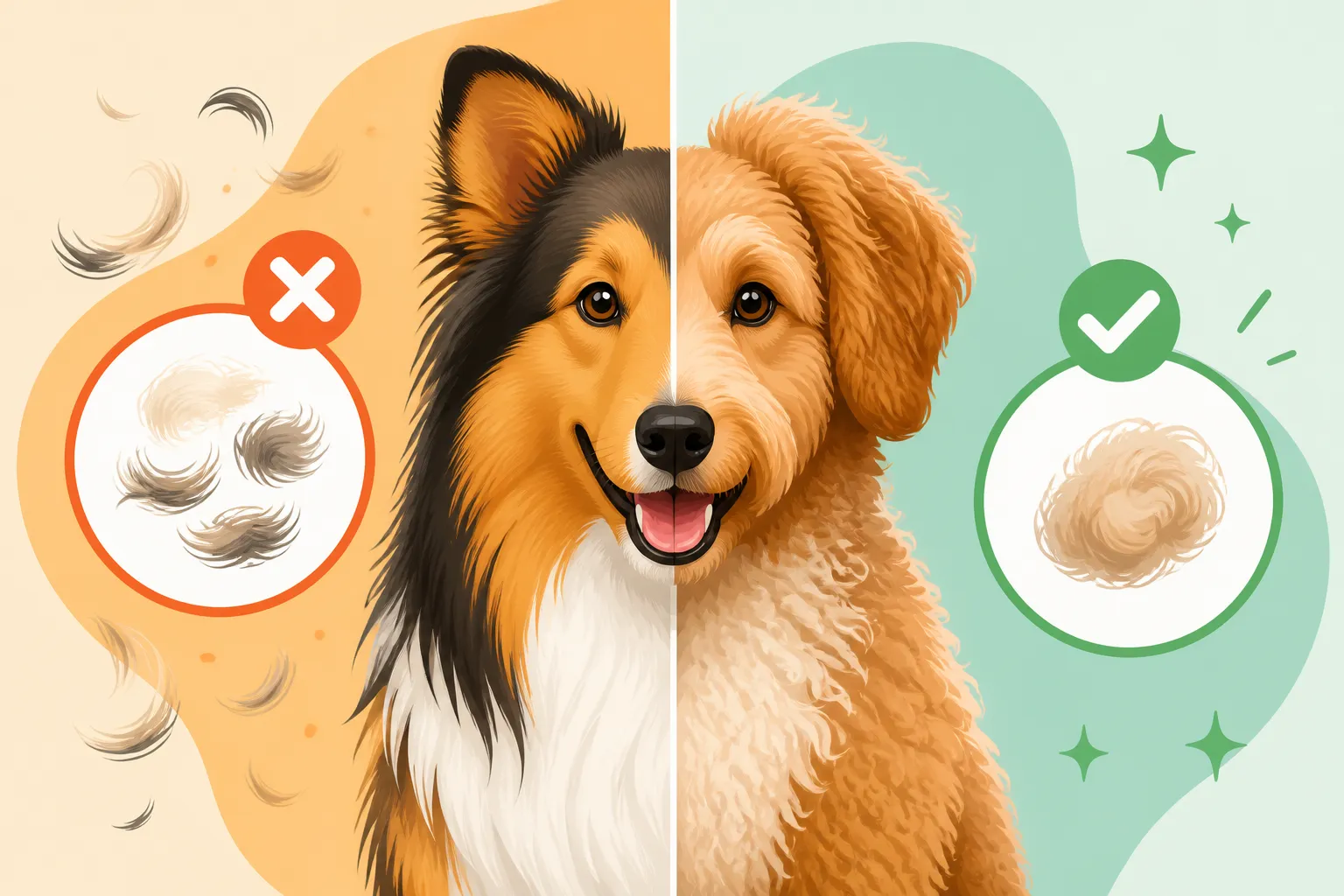
A Collie-Poodle cross may shed less than a Collie, but the mix is not a reliable way to guarantee a low-shedding dog. Coat type can vary even among puppies in the same litter, and a curly coat can trade loose hair on the floor for more brushing, mat prevention, and professional grooming. This guide explains what to expect and how to assess the coat realistically.
Does a Collie-Poodle Cross Shed Less Than a Collie
Why the cross may leave less hair around the house
Poodles are often described as low-shedding dogs because loose hairs tend to stay caught in their curly coat rather than dropping freely onto floors and furniture. A Collie-Poodle cross may inherit a coat that behaves this way, so you could see fewer loose hairs around the home than you would with a typical Rough Collie.
That does not mean the dog stops shedding. Dogs naturally lose hair, and a curly or wavy coat can hold loose strands until brushing removes them. You may find less hair floating across the kitchen floor but more hair coming out on the brush during a grooming session. “Less visible shedding” and “no hair loss” are not the same thing.
The comparison also depends on which Collie coat is in the mix. A Rough Collie has a substantial double coat, while a Smooth Collie has shorter hair and a different grooming routine. Both varieties shed. If you are comparing your possible mix with a Smooth Collie, The Smooth Collie Is the Same Dog With Less Work offers useful context on how coat variety affects care. You can also read Whether a Smooth Collie Sheds Less for a closer look at that comparison.
Why the coat can vary from one puppy to another
A mixed-breed puppy does not necessarily inherit a neat half-and-half blend of its parents’ coats. One puppy may have loose waves, another tight curls, and a littermate may develop a straighter coat with more noticeable shedding. Coat texture, length, density, and the amount of undercoat can all affect what you see at home.
The names used for generations of Poodle crosses can offer clues about a dog’s ancestry, but they do not promise a particular adult coat or shedding level. Even when a puppy has a curly coat, its coat can change as it matures. Puppy fluff is not always a dependable preview of the adult dog’s coat, so ask the breeder or rescue what is known about the parents and any adult relatives, while recognizing that family patterns are not a guarantee.
If you are considering a Collie mix generally, Whether a Collie Mix Keeps the Coat explains why coat inheritance is hard to predict. The practical takeaway is simple: meet the individual dog if possible, ask about its parents, and plan for regular grooming even if it appears to shed very little.
| Coat you may see | What shedding may look like | Grooming concern to plan for |
|---|---|---|
| Tight curls | Loose hairs may be held in the coat until brushing | Frequent, thorough combing to prevent mats |
| Loose waves | Shedding may be moderate and vary with the coat | Check behind ears, under legs, and around the collar |
| Straighter coat with undercoat | Hair may be more visible around the home, especially during seasonal coat changes | Regular brushing to remove loose undercoat |
| Mixed or changing texture | Shedding and coat care can be difficult to predict | Reassess as the adult coat develops |
What Coat Care Usually Requires
Less hair on the floor can mean more brushing
A common surprise for people choosing a curly-coated mix is that less visible shedding does not necessarily mean less work. Loose hair can become trapped in curls and waves. If it stays there, it can tangle with new growth and form mats close to the skin. Mats are not just untidy; they can pull painfully, hide irritated skin, and make a dog uncomfortable when moving.
Brushes can glide over the top of a coat while leaving tangles underneath. For that reason, many owners learn to part the coat in sections and brush from the skin outward, then check the same area with a comb. Pay particular attention to friction points: behind the ears, beneath the collar or harness, in the armpits, around the thighs, and where feathering rubs together.
A useful routine is to start with short, calm sessions and make sure the coat is being checked all the way through, not just smoothed on the surface. How to Line Brush a Collie describes a method that can help with longer coats, and Whether a Collie's Coat Mats If You Skip a Week explains why a small delay can sometimes turn into a much bigger detangling job. The right schedule depends on the individual coat, but a curly, dense coat generally needs consistent attention.
Plan for trimming as well as brushing
Some Collie-Poodle crosses need regular clipping or trimming to keep the coat manageable. The frequency and style depend on how fast the coat grows, how easily it mats, and what suits the dog’s daily life. A shorter practical trim may be easier to maintain than a long, fluffy coat, especially for a dog that enjoys muddy walks, swimming, or running through brush.
A professional groomer can show you how to keep the coat comfortable between appointments and identify areas that are beginning to tangle. When choosing a groomer, explain that the dog is a Collie-Poodle cross and share what you know about its coat and skin. Ask how the groomer handles mats and what brushing routine they recommend at home. If the dog becomes distressed during grooming, work on gradual handling practice rather than forcing a long session.
Home supplies can make routine care easier. A suitable comb, brush, detangling product, and nail-care tools are common starting points; stores such as Chewy may be one place owners look for grooming supplies. The best tool depends on the coat and the dog’s comfort, so ask a groomer or veterinarian if you are unsure. Avoid cutting tight mats out with scissors close to the skin, where it can be difficult to tell where the mat ends and the skin begins.
Shedding, Allergies, and Choosing the Right Dog
Low-shedding does not mean allergy-proof
People sometimes look for a Poodle cross because someone in the household has allergies. A Collie-Poodle cross cannot be guaranteed to be hypoallergenic. Allergic reactions may involve proteins from a dog’s skin flakes, saliva, and urine, not only loose hair. A coat that drops less hair around the house may still trigger symptoms.
If allergies are a serious concern, spend time around the specific dog before bringing it home, if that is practical. Notice whether symptoms appear after handling the dog or spending time in the space where it lives. Even then, a brief visit cannot guarantee how someone will react over time. A healthcare professional can help a family think through allergy management, and a rescue or breeder may be able to explain the dog’s coat history without promising an allergy-free outcome.
It also helps to separate two questions: “Will this dog leave less hair on my clothes?” and “Will this dog be suitable for someone with allergies?” The first may depend largely on coat type and grooming. The second is much less predictable. Do not rely on a label such as “Poodle mix” as a health or allergy guarantee.
Look at the dog’s care needs, not just the hair on the sofa
Before choosing a Collie-Poodle cross, consider the whole routine you can realistically manage. Would you brush several times a week? Can you check for mats after wet or muddy outings? Are you comfortable arranging regular grooming if the coat grows continuously or tangles easily? These questions matter just as much as whether the dog sheds less on the carpet.
If your main concern is a house full of hair, compare coat types honestly rather than assuming a cross will solve the problem. A dog with a straighter coat may leave more visible hair but be easier to brush out. A curly-coated dog may shed less visibly yet need more hands-on maintenance. For a sense of Collie coat upkeep, Whether a Collie Needs Daily Brushing in Full Coat offers a useful point of comparison. You might also consider the broader question in Whether a Collie Is Too Much Coat for Most People.
Before making a decision, ask about the parents’ coats, whether the puppy’s coat has begun changing, what grooming the dog currently receives, and whether there are known skin sensitivities. If adopting an adult dog, observe the coat in ordinary conditions and ask the current caregiver how much brushing and trimming it takes. No answer can predict every future shed or mat, but specific details are more useful than a broad promise that the cross is “low shedding.”
How to Manage Hair and Grooming at Home
Set up a routine that fits the individual coat
Start with a calm inspection rather than waiting until you notice a large tangle. Part the coat with your fingers and look at the skin beneath it, especially around the ears, collar, legs, and tail. If you find a small loose tangle, work gently and stop if the dog seems uncomfortable. Pulling hard can make grooming stressful and can irritate the skin.
Keep grooming sessions manageable. For a dog that is new to brushing, begin with a few minutes at a time, reward relaxed behavior, and gradually handle more areas. Let the dog get comfortable with the brush and comb before expecting it to stand still for a full grooming session. A non-slip surface and a familiar quiet room can help, but a dog that panics or struggles may need help from a qualified groomer or veterinarian.
Track what you find over several weeks. If the brush collects little hair but the comb repeatedly catches near the skin, the issue may be coat tangling rather than shedding. If loose hairs appear throughout the home, the dog may have a straighter or more Collie-like coat than expected. That record helps you adjust brushing and grooming before a minor nuisance becomes a painful mat.
Respond to seasonal changes and coat problems
A Collie-influenced coat may still shed more at certain times, particularly when the dog changes its coat seasonally. The amount and pattern vary with the dog, its coat, and its living conditions. If shedding suddenly increases or comes with bald patches, itching, redness, odor, or sores, contact a veterinarian rather than assuming it is ordinary coat change.
Drying matters, too. A damp, dense coat can tangle more easily, and moisture held against the skin may contribute to discomfort. After bathing or getting caught in the rain, dry the coat thoroughly and check friction areas for knots. If you use a dryer, introduce the sound and airflow gradually and choose an approach the dog tolerates. Whether a High Velocity Dryer Is Worth It for a Collie discusses one grooming option, though the best choice depends on the dog and the owner’s experience.
The most realistic expectation is not “a Collie-Poodle cross will not shed.” It is “this individual may shed less visibly than a Collie, but its coat may need more active maintenance.” If you are comfortable with brushing, coat checks, and likely trimming, a lower-shedding coat may suit your household. If you need a dog that requires little grooming as well as little shedding, meet the individual dog and assess its actual coat-care needs before deciding.
Disclaimer
This article is for general informational purposes only and does not constitute professional advice. Laws, prices and regulations vary by location and change over time. Consult a qualified professional for guidance on your specific situation.