Whether the Collie Was Shown at the First Dog Shows
It’s easy to look at the majestic, perfectly groomed Collie in today’s show ring and imagine they've always held such a prestigious place. But many of us dog lovers wonder about the true origins of competitive dog shows, and whether our beloved Collies were really there from the very beginning. This guide will take a fascinating journey back in time, exploring the humble beginnings of dog shows and tracing the Collie's remarkable path from a hard-working farm dog to a celebrated star of the show circuit.
The Humble Beginnings of Competitive Dog Shows
Before the grand arenas and polished judges' tables we associate with dog shows today, these events were often much more rustic, reflecting a time when dogs were primarily valued for their utility rather than their beauty. It’s a common frustration to hear people talk about the "good old days" of dogs without understanding just how different that world was, especially for our Collies.
More Than Just a Beauty Contest
In their earliest forms, what we now consider "dog shows" were far from the sophisticated events of today. Picture local fairs, agricultural gatherings, and pub-side challenges. These informal competitions might have focused on a dog's ability to retrieve, to flush game, or even just to be the best "ratting" dog in the village. It wasn't about a perfectly proportioned skull or a flowing mane; it was about grit, instinct, and a dog's practical value to its owner. Farmers and working folk would bring their best dogs, not necessarily to parade them, but to prove their efficacy in a specific task. These weren't about conformation to a breed standard, but rather about conforming to a job description. The dogs were an integral part of daily life, earning their keep, and any competition was merely a public demonstration of their working prowess, often celebrated with bragging rights rather than rosettes.
As the industrial revolution gained momentum and leisure time slowly increased for some, there was a gradual shift in how people viewed their dogs. The idea of keeping a dog purely for companionship or aesthetic pleasure began to take root, especially among the emerging middle and upper classes. This meant that while working ability was still deeply respected, there started to be an appreciation for physical attributes – a symmetrical build, a striking coat, an alert expression – even if those traits didn't directly contribute to hunting or herding. This was a slow, subtle cultural shift, moving from purely functional admiration to a more artistic appreciation of canine form, setting the stage for organized dog shows to truly flourish. The frustration for many purists today often stems from this early shift, lamenting that beauty began to overshadow brains or working instinct, but it’s an undeniable part of how dog shows evolved.
The Very First Officially Recorded Shows
Historians generally point to a specific event in Newcastle-upon-Tyne, England, in 1859, as one of the first truly organized competitive dog shows. It wasn’t a sprawling, multi-day affair like Crufts or Westminster. Instead, it was a relatively small gathering, primarily showcasing pointers and setters, breeds that were highly valued by the gentry for hunting purposes. The entries were quite limited, and the judging criteria, while more formalized than a pub wager, were still relatively basic. They looked for good health, sound structure for the field, and overall "sporting" appearance. It was about solid, functional dogs for a very specific purpose. The idea of "breed purity" as we understand it was still in its infancy, with many dogs simply categorized by their type rather than a meticulously documented lineage.
Following this initial success, other small shows began to pop up across the British Isles. Early entries often highlighted breeds like spaniels, terriers, and various gundogs. These breeds were well-established in their roles and their physical characteristics were already somewhat distinct. Collies, at this very early stage, were largely still relegated to the hills and glens of Scotland, performing their vital herding duties, a world away from the burgeoning show circuit. The judges were often sportsmen themselves, valuing traits that demonstrated a dog's capacity to perform its job. Imagine a judge assessing a setter on its ability to hold a point, or a terrier on its conformation for digging. It was practical application mixed with an emerging appreciation for a handsome animal. The categories were broad, sometimes simply "sporting dogs" or "non-sporting dogs," without the dozens of individual breed classes we see today.
The Collie's Grand Entrance: From Farm to Fancier's Ring
For centuries, the Collie was a true working-class hero, indispensable to shepherds in the rugged landscapes of Scotland. Their entry into the glamorous world of dog shows was a journey of transformation, driven by changing social tastes and the influence of a very powerful individual.
The Collie Before the Spotlight
Before the Victorian era, the Collie was a robust, intelligent, and tireless worker, known primarily as a "colley dog" – a dog that worked "colley" (black-faced) sheep. These dogs were built for endurance, quick thinking, and resilience against harsh weather. Their physical appearance was secondary to their ability to manage flocks across vast, unforgiving terrain. They often had shorter, coarser coats than the rough Collies we know today, a practical choice for shedding burrs and resisting rain, and their muzzles were often broader, better suited for nipping at heels to move sheep without causing injury. You can read more about their original purpose in The Collie Was a Scottish Droving Dog Before It Was a Show Dog. Their worth was measured in their skill, their reliability, and their unwavering loyalty to their shepherd.
These Collies weren't considered "fancy" dogs. They lived and worked outdoors, sharing the simple lives of their human companions. Their intelligence was valued for its problem-solving abilities on the pasture, not for learning tricks or winning obedience titles. They were far from the elegant creatures depicted in paintings and photographs of later eras. Their rough-and-tumble existence meant that nicks, scars, and a less-than-pristine appearance were just badges of a life well-lived. Many people today get frustrated when they see some breeds that have been so heavily bred for looks that their working instincts have diminished, and it's important to remember that for the Collie, this journey began from a place of pure, unadulterated utility.
Early Appearances and Recognition
The Collie's fortunes began to change dramatically with the patronage of Queen Victoria. She visited Balmoral Castle in the Scottish Highlands regularly, and it was there, in the 1860s, that she fell in love with the local shepherd's dogs. She acquired several Collies for her personal kennels, elevating them from humble working dogs to royal companions. This royal seal of approval sparked a profound interest in the breed among the British aristocracy and, subsequently, the burgeoning middle class. You can learn more about this pivotal moment in Queen Victoria Made the Collie Fashionable in the 1860s and When Queen Victoria First Saw a Collie.
With this new popularity, Collies began to appear in dog shows in the late 1860s and early 1870s. Initially, their classes were often quite broad, sometimes simply "shepherd's dogs" or "Scotch Collies." Judges, influenced by the emerging aesthetic preferences of the time and the Queen's admiration, started to look for qualities beyond pure working ability. They began to appreciate the Collie’s striking appearance: its intelligent expression, its graceful movement, and, increasingly, its luxurious coat. This period marked a transition where the Collie was no longer just a functional tool but was recognized for its inherent beauty and noble bearing. The enthusiasm for these dogs quickly spread across the Atlantic, leading to the formation of the Collie Club of America in 1886, marking a significant step in formal breed recognition in the United States, as discussed in When the Collie Club of America Was Founded.
Shaping the Breed Standard
Once Collies entered the show ring, a fascinating and sometimes contentious process began: the development of a breed standard. Early standards were often quite fluid, based on the opinions of influential judges and breeders, leading to a rapid evolution in the preferred "look" of the Collie. What had once been a practical, hard-headed working dog began to transform into the elegant, long-muzzled specimen we recognize today. There was a strong drive towards refining the head, lengthening the muzzle, and increasing the amount of coat, particularly the abundant ruff and frill. This shift wasn't always without its critics, with some lamenting that the emphasis on appearance was detracting from the breed's original working capabilities.
This era saw a clear divergence between working Collies, which continued to be bred for their herding prowess on farms, and show Collies, which were increasingly selected for their conformity to the evolving aesthetic ideal. You can explore this split in Whether Working Collies and Show Collies Diverged. Breeders meticulously selected for traits like ear set, eye shape, and the distinct "sweet" expression that became a hallmark of the breed. Exhibitors spent countless hours grooming their dogs, often using a variety of brushes and combs to achieve that magnificent, flowing coat. Owners, perhaps picking up a new brush or a bag of premium kibble from places like Chewy, were becoming more discerning about their dogs' appearance. This focus on physical perfection meant that the Collie’s head shape, in particular, underwent significant changes during the Victorian era, a topic explored in Whether the Victorian Show Ring Changed the Collie's Head. The breed became a canvas for breeders to sculpt their vision of canine beauty, forever altering its physical destiny.
Impact and Legacy: How Early Shows Defined the Modern Collie
The early dog shows didn't just introduce the Collie to a wider audience; they irrevocably shaped its physical characteristics, its role in society, and even how we care for them today.
Broadening the Collie's Appeal
The visibility gained through competitive dog shows was immense. Suddenly, the Collie wasn't just a shepherd’s dog; it was an animal of beauty and intelligence, capable of becoming a cherished family companion. The images of elegant Collies winning ribbons and accolades resonated with a public increasingly looking for pets that combined loyalty with an impressive appearance. This exposure allowed the breed to transcend its working origins and find a place in homes across the country, from suburban residences to grand estates. It paved the way for the Collie's later stardom in popular culture, most notably with "Lassie," cementing its image as the heroic, intelligent, and devoted family dog.
This burgeoning popularity also meant an increase in demand for puppies, leading to more breeders and a wider distribution of the breed. With this expansion, the care requirements also evolved. Owners weren't just thinking about feeding their dogs and ensuring they could work; they were now considering grooming, training, and providing for their overall well-being as household members. This broadened appeal created a market for pet products that simply didn't exist when Collies were solely farm dogs. If you think about the range of specialized products we have today, from different food formulas to a myriad of grooming tools available on platforms like Chewy, it all started with this shift in how dogs, and Collies in particular, were perceived and valued.
The Enduring Influence on Breed Characteristics
The ideals established in the early show rings have cast a long shadow, defining many of the physical characteristics that are still considered essential to the breed standard today. The long, refined head, the sweet almond-shaped eyes, the perfectly tipped ears, and the magnificent double coat – these were all traits heavily favored and refined by early show breeders. While some of these characteristics, like the deep chest, are naturally present due to the breed's working heritage, others, such as the sheer volume and length of the Rough Collie's coat, were undoubtedly accentuated by selective breeding for the show ring.
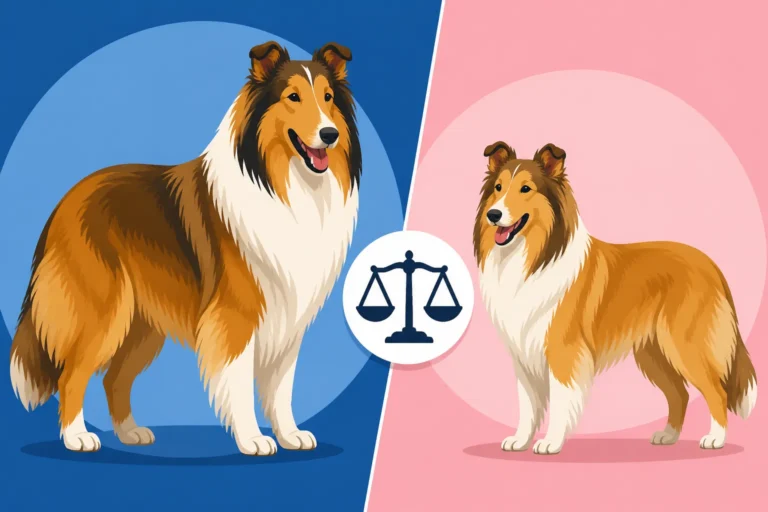
This focus on specific physical attributes also led to a clear differentiation between the two varieties of Collie: the Rough and the Smooth. While both are genetically the same breed, sharing the same temperament and core characteristics, their distinct coat types became a primary identifier. Smooth Collies, with their sleek, dense coats, maintained a more utilitarian appearance, while Rough Collies became the epitome of canine elegance, particularly in the show world. The range of acceptable colors, such as sable and white, tricolor, and blue merle, also solidified during this period, contributing to the breed's diverse beauty. You can read more about the variety of appearances in The Four Colors a Collie Comes In and What a Collie Weighs and How Tall It Stands. The rigorous adherence to these standards ensures that the modern Collie retains the signature look developed over a century ago.
Health and Heredity in the Early Show Era
While early dog shows certainly propelled the Collie into the spotlight, the understanding of canine genetics and inherited health conditions was, frankly, rudimentary at best. In those early days, the primary focus was on producing visually appealing dogs that conformed to the emerging breed standard. This often meant breeding popular champions without a full grasp of potential hereditary issues. It’s a common frustration for modern breeders and owners who face a legacy of certain health predispositions in many purebred lines. There wasn't the widespread knowledge or the readily available genetic testing that we have today to identify carriers of conditions like MDR1 or Collie Eye Anomaly.
The consequences of this aesthetic-first approach, though unintentional, sometimes led to the inadvertent propagation of certain health concerns. Conditions that might have been less prevalent in the broader, diverse working population sometimes became more concentrated within the smaller gene pool of show lines. However, as veterinary science and genetic understanding advanced, so did the awareness within the dog fancy. Over time, breed clubs and responsible breeders began to prioritize health alongside conformation, leading to the development of health registries and recommended testing protocols that are commonplace today. It's a continuous journey, but it’s important to acknowledge that the early days of dog shows laid the groundwork for both the breed's enduring beauty and the ongoing challenges of ensuring its robust health.
To illustrate the evolution of show categories and the Collie's place within them, consider this simplified overview:
| Era | Primary Focus | Typical Entry Breeds | Collie Presence (Rough & Smooth) |
|---|---|---|---|
| Pre-1860s | Working Ability, Utility | Pointers, Setters, Terriers, Sheepdogs | Limited, as working dogs only |
| 1860s – 1880s | Emerging Conformation, Utility | Pointers, Setters, Terriers, Spaniels, Scotch Collies | Growing, with increasing aesthetic focus |
| 1880s – Early 1900s | Refined Breed Standards, Aesthetics | Sporting Group, Terrier Group, Herding Group (incl. Collies) | Established, with distinct show lines emerging |
The journey of the Collie from a rugged Scottish drover to an international show ring icon is a testament to its enduring appeal and adaptability. While the very first dog shows predominantly featured sporting breeds, the Collie quickly made its presence known once royal approval and public interest converged. These early competitions weren't just about parades of pretty dogs; they were the crucible in which the modern Collie's appearance and characteristics were forged. They introduced the world to the intelligent, loyal, and undeniably beautiful breed we cherish today, forever changing its destiny. As we navigate the world with our own Collies, it’s wonderful to think how easily we can now access information and supplies, whether through online communities or pet retailers like Chewy, to care for our beloved Collies, carrying forward a legacy that began with a queen's admiration and a shepherd's indispensable companion.
Disclaimer
This article is for general informational purposes only and does not constitute professional advice. Laws, prices and regulations vary by location and change over time. Consult a qualified professional for guidance on your specific situation.