Whether a Collie Needs a Cooling Mat in Summer
When summer temperatures rise, many Collie owners find themselves wrestling with a very real and understandable concern: how do you keep such a gloriously coated dog comfortable and safe? It's a valid worry, seeing your beautiful, majestic friend panting in the heat, and it often leads to questions about specific tools like cooling mats. This guide is here to unravel the complexities of keeping your Collie cool, exploring everything from their unique physiology to practical solutions like cooling mats and other smart summer strategies.
The Double-Edged Sword of Your Collie's Magnificent Coat
That flowing, dense coat that makes your Collie so striking is, ironically, both their blessing and their curse when it comes to hot weather. Many people look at a Rough Collie's long hair and immediately assume they must be boiling in the summer, prompting thoughts of shaving them down. However, it's not quite that simple. Your Collie's coat isn't just for show; it's a marvel of natural engineering, designed to do more than just keep them warm in winter.
Understanding the Insulation Factor
A Collie's coat is a double coat, meaning it has two distinct layers. There's the harsh, straight outer guard coat, which you see and admire, and then a softer, incredibly dense undercoat packed underneath. This undercoat is what provides the bulk of the insulation. In winter, it traps warm air close to the body, keeping them toasty. But here's the clever part: in summer, this same double coat can actually help insulate them from heat. It creates a barrier against the sun's harsh UV rays and helps regulate body temperature by preventing too much heat from penetrating their skin. It's a bit like wearing loose, light-colored clothing in the desert – it protects you from the sun.
However, this natural protection works best when the coat is well-maintained and free of mats. A matted coat loses its ability to circulate air, trapping heat and moisture against the skin. This is where the "double-edged sword" comes in; while the coat can protect, if it's not healthy and shedding properly, it can quickly become a hindrance. Owners often ask Whether a Collie's Coat Protects It From Heat, and the answer is yes, but only if it's in good condition and the ambient temperature isn't too extreme. Even with a perfect coat, there are limits to its effectiveness, and your Collie is still susceptible to overheating in high temperatures or during strenuous exercise.
Why Collies Still Struggle with Heat
Despite their coat's natural abilities, Collies, like all dogs, don't sweat efficiently through their skin like humans do. Their primary method of cooling is panting, which involves evaporating moisture from their tongue, mouth, and respiratory tract. They also release some heat through their paw pads. This means they're not nearly as effective at cooling themselves as we are. When the air temperature is high, especially coupled with humidity, panting becomes less effective. The air they're trying to draw in isn't much cooler than their own body, and there's less evaporation happening.
This makes Collies, particularly the Rough variety with their dense coats, quite vulnerable to heat stress and heatstroke. Imagine trying to cool yourself down by blowing hot air over your wet tongue – it just doesn't work well. Their desire to please and engage, coupled with their stoic nature, can also make them push themselves too far without showing clear signs of distress until it's critical. This is why being proactive with cooling strategies is so vital. Owners need to understand that even an active, seemingly robust Collie can quickly succumb to heat if not properly managed. This vulnerability leads to the concern of Whether a Collie Overheats in Its Coat even when all seems normal.
Recognizing the Red Flags: Signs Your Collie is Overheating
The first step in preventing serious heat-related issues is to be acutely aware of the subtle, and not-so-subtle, signs that your Collie is getting too hot. Our dogs can't tell us directly when they're uncomfortable, so it's up to us to observe their behavior and physical cues. Ignoring these warnings can lead to dangerous conditions like heat exhaustion and heatstroke, which are veterinary emergencies.
Early Warning Signs of Heat Stress
Before full-blown heatstroke sets in, your Collie will likely exhibit a range of behaviors indicating they're struggling. One of the most common and earliest signs is excessive panting. While some panting is normal for dogs trying to cool down, pay attention if it becomes more intense, rapid, or labored than usual, especially if they haven't been exercising vigorously. Their tongue might appear wider or longer than normal as they try to maximize the surface area for evaporation.
Another tell-tale sign is seeking shade or cool surfaces. Your Collie might lie down on tile floors, try to dig a cool spot in the yard, or simply refuse to move from a shady area. They might also become less responsive to commands or seem generally lethargic and less energetic than usual. Their gums might appear a darker red than their normal healthy pink. Some Collies might even start drooling more than usual as their body tries desperately to cool itself. Being vigilant for these early cues allows you to intervene before the situation escalates.
When to Act Immediately: Symptoms of Heatstroke
If early signs are missed or disregarded, your Collie's condition can rapidly worsen into heatstroke, a life-threatening emergency. The symptoms become much more severe and alarming. You might notice very heavy, exaggerated panting that sounds almost painful, with a pale or even blue-tinged tongue and gums. Their eyes might appear glazed, and they could seem disoriented or confused. They might stagger, lose coordination, or even collapse.
Other critical symptoms include vomiting or diarrhea, sometimes with blood, and seizures. Their body temperature will be dangerously high. At this point, immediate veterinary attention is crucial. Do not try to force large amounts of water on them or submerge them in ice water, as this can be counterproductive. Instead, use lukewarm water to wet their coat and transport them to the nearest emergency vet as quickly as possible. This is a situation where every minute counts. Ensuring your Collie has access to plenty of fresh, cool water is fundamental, and it's worth checking How Much Water a Collie Drinks a Day to understand their normal intake.
Beyond Shade: Practical Cooling Strategies for Your Collie
While finding a shady spot is always a good first step, keeping a Collie truly comfortable and safe in the summer heat requires a multi-pronged approach. Relying on just one method might not be enough for these heavily coated dogs. From adjusting daily routines to leveraging various cooling aids, a proactive strategy is key.
Adjusting Daily Routines and Environment
The simplest and most effective way to manage your Collie's comfort in summer is to adjust their daily schedule. Avoid walks or strenuous play during the hottest parts of the day, typically late morning to late afternoon. Instead, aim for early morning or late evening when temperatures are significantly cooler. This isn't just about their comfort, it's about their safety. Concrete and asphalt can get scorching hot, easily burning sensitive paw pads. Many owners find that Whether a Collie Should Be Walked Early in Summer becomes a non-negotiable part of their routine.
Inside the home, ensure your Collie has access to the coolest rooms. Air conditioning or fans can make a huge difference. Even something as simple as opening windows at night and closing them during the day can help keep the house naturally cooler. Consider an elevated dog bed that allows air to circulate underneath, preventing heat from building up where they lie. If your yard is not naturally shady, create some with tarps, shade cloths, or strategically placed umbrellas. Remember that dogs, especially those with pink noses like some Collies, are susceptible to sunburn, so also consider Whether a Collie's Nose Gets Sunburned and Whether a Collie Needs Sunscreen if they'll be out for extended periods.
Leveraging Water and Hydration
Water is your Collie's best friend in the heat. Always provide multiple bowls of fresh, cool water, both indoors and out. Some Collies enjoy playing in shallow wading pools or having a gentle spray from a hose on their chest and belly. A wet bandana around their neck can also offer some relief by cooling the large blood vessels in that area. For dogs that aren't big drinkers, you can add ice cubes to their water or even a splash of low-sodium chicken broth to entice them. Some owners find that adding a high-quality, hydrating food from brands like Ollie to their diet can also contribute to overall hydration, though it doesn't replace fresh water.
Frozen treats are another fantastic way to provide hydration and entertainment. You can make 'pup-sicles' using diluted broth or dog-safe fruit purees. Remember, while a quick dip can cool them down, ensure their coat dries properly afterwards, especially if they have a very dense undercoat. Persistent dampness can lead to skin irritation or even hot spots, so a good towel-dry or even a quick blow-dry on a cool setting is advisable for particularly dense areas after a swim.
Making the Most of Cooling Mats: Selection and Synergy
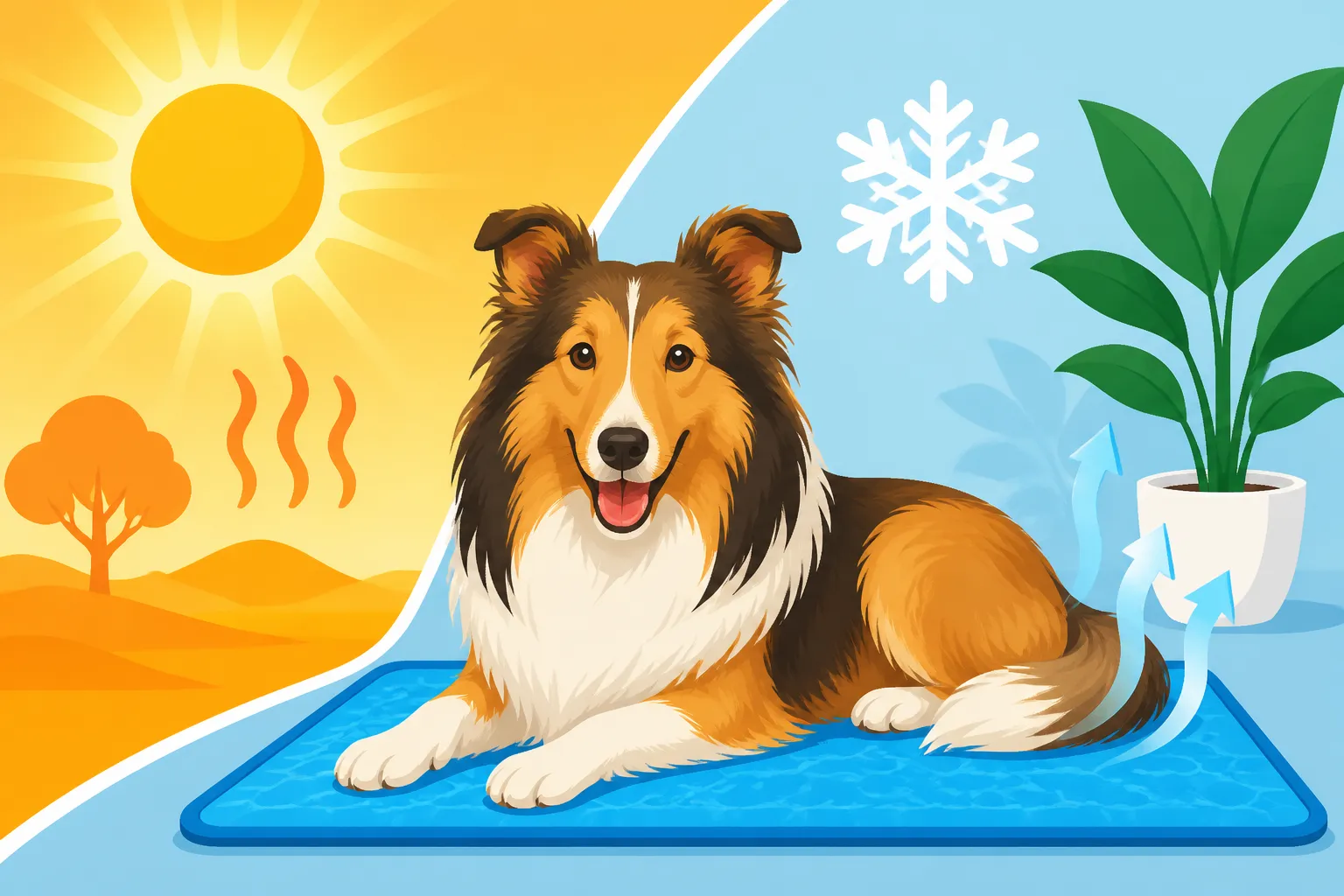
Now, let's talk about the specific tool in question: cooling mats. These can be a fantastic addition to your summer arsenal for keeping your Collie comfortable, but they're not a magic bullet and work best when integrated into a broader cooling strategy. Understanding the different types and how to use them effectively will maximize their benefit.
Types of Cooling Mats for Collies
Cooling mats come in a few main varieties, each with its own mechanism for drawing heat away from your dog.
| Mat Type | How It Works | Pros | Cons |
|---|---|---|---|
| Gel-Activated | Contains a non-toxic gel that absorbs body heat, then dissipates it into the air or cool floor. | No electricity or water needed; self-recharging; portable. | Can be punctured; may not stay cool indefinitely; some dogs dislike the texture. |
| Water-Filled | You fill the mat with water, which then conducts heat away from the dog. | Excellent cooling power; often very durable. | Requires filling; can be heavy; potential for leaks; can get warm with prolonged contact. |
| Elevated Beds | Allows air to circulate under and around the dog, preventing heat buildup. | Excellent airflow; very durable; easy to clean; no "recharging." | Not a "cooling" mat in the traditional sense; doesn't actively draw heat away. |
| Cooling Vests/Bandanas | Wetted fabric evaporatively cools the dog's core. | Directly targets the dog's body; portable; good for walks. | Needs re-wetting; can make the coat damp; not a stationary solution. |
When choosing a mat for a Collie, durability is key. Their long nails and tendency to "dig" a comfortable spot mean a flimsy mat won't last. Look for puncture-resistant materials. You can find a wide selection of these mats on online retailers like Amazon and Chewy, making it easy to compare options and read reviews from other pet owners.
Integrating Cooling Mats into Your Collie's Summer Routine
A cooling mat is most effective when placed in a location your Collie already enjoys resting, but ensure it's in a cooler part of the house, away from direct sunlight. Some Collies take to them immediately, while others might need a little encouragement with treats or praise. Never force your dog onto the mat. If they don't like the texture, an elevated bed might be a better option for them to get airflow.
Remember, a cooling mat is a supplement to, not a replacement for, other essential cooling practices. Continue with early morning walks, provide plenty of fresh water, and ensure they have access to air conditioning or fans. For Collies, especially those past their prime, whose coats might be thinning or whose internal thermostats aren't as efficient What Changes in an Old Collie's Coat, these combined strategies become even more crucial. While some might consider Whether Shaving a Collie Helps It in Summer, it's generally advised against, as it can actually expose their skin to harmful UV rays and even damage the coat's natural ability to grow back correctly. A cooling mat, used intelligently, offers a much safer and more effective way to help your beloved Collie beat the heat.
Disclaimer
This article is for general informational purposes only and does not constitute professional advice. Laws, prices and regulations vary by location and change over time. Consult a qualified professional for guidance on your specific situation.