Whether Lassie Gave the Collie a False Reputation
A Collie may look like the dog from the screen, but real life is less scripted: not every dog will rush into danger, understand a whispered command, or know how to get help. That gap can leave owners feeling they chose the wrong breed—or that their dog is somehow falling short. Here’s what Lassie did and didn’t teach us about Collies.
How Lassie shaped the Collie’s public image
A memorable character became a breed stereotype
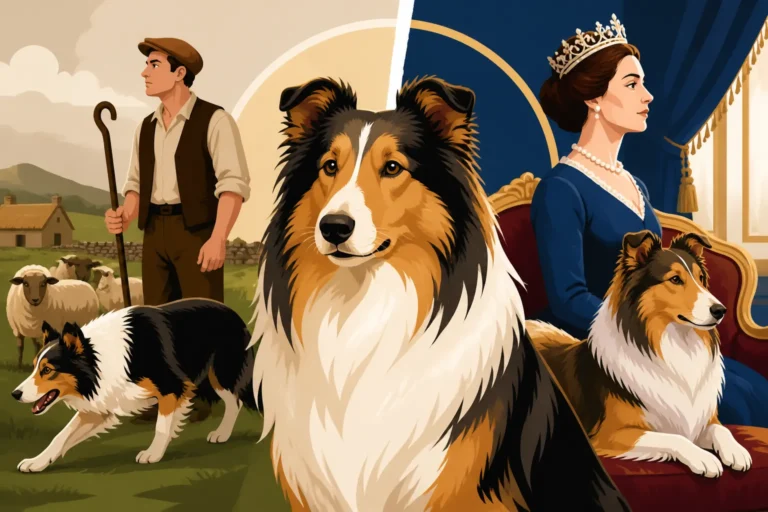
Lassie gave audiences a vivid picture of a Collie: beautiful, loyal, quick-thinking, gentle with children, and ready to act when someone was in trouble. Those traits made for a compelling character, but they also became a kind of unofficial checklist for the breed. People began expecting an ordinary Collie to behave like a highly trained fictional hero.
That expectation can be surprisingly heavy. A Collie who barks at a delivery driver, hesitates around a stranger, or needs time to learn a recall cue may seem less “Lassie-like” to people who know the character better than they know the breed. Owners can end up second-guessing themselves over normal dog behavior.
The screen image also compresses a complicated animal into a simple story. A television Collie appears to know what the family needs, when to act, and how to do it safely. Real dogs don’t come with a script. They respond to their experience, temperament, surroundings, training, and the information they can actually gather in the moment.
If you want the real story behind the dog who helped establish that image, A Dog Named Pal Played Lassie and Changed the Breed Forever offers useful context. And because the role continued across later productions, it’s worth separating Pal’s story from the broader question of whether later Lassies were related to him: Whether Every Later Lassie Descended From Pal.
The stories made extraordinary behavior look routine
A fictional Collie may find a lost child or alert the family to danger at exactly the right moment. In an actual emergency, a dog might bark, hide, freeze, follow a familiar person, or simply be confused by the noise and movement. None of those responses means the dog lacks loyalty or intelligence. It means the dog is a dog, not a character whose choices are arranged to move a story forward.
Films and television also benefit from careful production. A scene can be repeated, edited, and presented so the dog’s behavior looks perfectly timed. The viewer sees the successful action, not the training behind it, the multiple takes, or the human guidance outside the frame. That makes a demanding behavior look effortless.
This is why “Lassie would have done it” isn’t a fair measure for a pet. Even very clever dogs don’t automatically understand human intentions, recognize every hazard, or know when a situation calls for intervention. They learn specific behaviors through repetition and rewards, and their performance can change with distractions, stress, fatigue, or unfamiliar settings.
What real Collies are like beyond the screen
Intelligence is not the same as mind reading
Collies are often responsive and observant, but being bright doesn’t mean a dog understands every sentence or anticipates every need. A Collie might quickly learn that a particular sound means a walk is coming, while still being unsure what you want when you point toward a distant object. Dogs make sense of patterns, cues, body language, and past experience—not the full human meaning behind a situation.
That ability can make training rewarding, but it can also make a Collie sensitive to inconsistency. If one person allows jumping and another finds it unacceptable, the dog has to work out which rule applies. A clear cue, a predictable response, and short, positive practice sessions are more useful than expecting the dog to “just know.” For more on the difference between a reputation for cleverness and everyday behavior, see Whether Collies Are Actually That Intelligent.
A practical example: a family wants its dog to fetch a dropped phone. The Collie may happily retrieve a soft toy but have no idea that a phone is valuable, that it should be brought to a person, or that it should not be chewed. Those are separate skills, and each one needs to be taught. A heroic-looking outcome is often the result of small, deliberate training steps.
Temperament varies from one dog to another
Breed tendencies can offer clues, but they don’t guarantee a particular personality. One Collie may be outgoing and eager to greet visitors; another may watch quietly from behind its owner. Some enjoy busy outings, while others feel more comfortable with space and a gradual introduction. A dog’s early experiences, genetics, health, and adult environment all matter.
Owners sometimes worry when their Collie isn’t instantly confident or sociable. But calm observation, caution, or a need for warm-up time isn’t automatically a problem. Pushing a hesitant dog into close contact can make the experience harder, not easier. Letting the dog approach at its own pace and rewarding relaxed behavior gives it a chance to build confidence without pressure.
The screen version can also create the mistaken idea that every Collie is naturally perfect with children or strangers. Supervision and respectful handling matter with any dog. A Collie can be affectionate and still need a quiet place to retreat, especially when a household is busy. The breed’s history and typical household fit are explored in The Household a Collie Was Built For, while Whether People Expect a Collie to Be Lassie looks directly at the expectations that come with the familiar image.
| Lassie-inspired expectation | More realistic view of a pet Collie |
|---|---|
| The dog will understand what people need | Dogs learn specific cues and routines; they don’t automatically understand human intentions |
| The dog will act bravely in a crisis | A dog may be startled, confused, or frightened, even if it is normally confident |
| Every Collie is gentle and outgoing | Temperament differs between individual dogs and is shaped by experience |
| The dog will obey after one instruction | Skills take practice, and distractions can make a familiar cue harder |
| A clever dog needs little training | Intelligence can help learning, but it does not replace patient, consistent teaching |
| The dog can safely manage itself around children | Adults should supervise interactions and make sure the dog can move away |
What Lassie got right and where the image misleads
Loyalty and attentiveness are real, but they have limits
Many Collie owners recognize something familiar in Lassie’s watchfulness. Their dogs may track where family members are, notice changes in household routines, or seek close company. A Collie can be attentive to its people without being able to interpret every situation accurately. Seeing you reach for a coat might predict a walk; it doesn’t mean the dog knows where you’re going or why.
The same is true of loyalty. A close bond doesn’t require a dog to perform a dramatic rescue. It may look like settling near you while you work, checking in during a walk, or coming over when called in a quiet room. Those ordinary moments can matter more than a cinematic display of courage.
The fictional version can also make independence look effortless: Lassie seems able to leave the family, navigate unfamiliar places, and return at just the right moment. A real Collie’s safety depends on management, training, and a suitable environment. Reliable recall takes practice, and an unfamiliar road or open area can overwhelm a dog. No breed should be expected to make a dangerous situation safe by instinct alone. For a grounded look at the rescue-dog idea, see Whether a Real Collie Would Fetch Help.
Barking, sensitivity, and herding instincts are not character flaws
A Collie who barks at a sound outside may be responding to something the household barely noticed. A dog who startles at a sudden noise may need a calmer introduction rather than a stern correction. And a Collie who circles or watches moving children may be showing herding-related behavior, not trying to be difficult. The behavior still needs thoughtful management, especially around young children, but it is easier to address when you understand what may be driving it.
Some owners feel embarrassed when their dog doesn’t match the gentle, composed image associated with Lassie. That reaction is understandable: people often assume a famous breed character is a promise about every dog in that breed. In practice, a Collie can be affectionate and still vocal, sensitive, energetic, or cautious. Training should work with the individual dog rather than punish it for failing to imitate a fictional one.
A predictable routine can help many dogs settle. That might mean a walk, a little training, a quiet rest period, and appropriate play, rather than an endless stream of stimulation. It also means noticing what makes the dog uneasy and adjusting where possible. The goal isn’t to make a Collie perform a role; it’s to help that particular dog feel safe and learn workable household habits.
Living with a Collie without expecting a television hero
Build practical skills one at a time
If you want a Collie to come when called, start in a quiet place where success is likely. Say the cue once, reward the dog for turning toward you and coming close, then gradually practice with more distance and mild distractions. A dog who responds in the kitchen may not yet be ready to do so beside a busy park path. That isn’t defiance; it’s a sign that the skill needs to be strengthened in steps.
The same approach works for greetings, settling on a mat, walking politely, and leaving household items alone. Keep practice brief enough that your dog can stay engaged. If a session goes sideways, make the next attempt easier rather than repeating the cue more loudly. Repetition at a level the dog can manage builds a more reliable behavior than expecting a perfect response on the first try.
Also teach practical safety habits: use secure equipment appropriate for the dog, supervise interactions with children, and don’t rely on a dramatic breed reputation in place of management. If your dog struggles with fear, persistent barking, or behavior that risks someone’s safety, a qualified reward-based trainer or veterinary professional can help you make a plan tailored to the situation.
Make room for ordinary care and an individual personality
Real Collie ownership includes routine care, not just affection and clever tricks. Rough Collies need coat maintenance, and even a Smooth Collie benefits from regular brushing and checks for tangles, debris, and skin changes. If a grooming session feels daunting, break it into manageable pieces and teach your dog to relax for handling gradually. A supply checklist from a retailer such as Chewy can be useful when organizing brushes, combs, and other everyday grooming items, but choose tools that suit your dog’s coat and comfort.
Food and activity also need to fit the individual dog. A Collie’s appetite, body condition, and exercise needs can vary, so avoid judging health by the coat alone. Feel the dog’s body and discuss weight or diet concerns with a veterinarian. If you’re comparing everyday supplies or trying to keep a regular feeding routine, Chewy may be one place to check for options, while your dog’s health needs should guide the choices.
Most of all, notice the dog in front of you. Maybe your Collie is a cheerful greeter, a cautious observer, a devoted shadow, or a noisy neighborhood announcer. Maybe the dog loves learning cues but needs help winding down. Those traits are not a failed Lassie audition. They’re part of the relationship you’re building with a real animal.
The Lassie legacy can be a lovely doorway into appreciating Collies, as long as it isn’t treated as a behavioral guarantee. A Collie doesn’t need to rescue a stranger, fetch help, or anticipate every need to be a remarkable companion. Patience, sensible training, and respect for the individual dog make a better guide than any fictional standard.
Disclaimer
This article is for general informational purposes only and does not constitute professional advice. Laws, prices and regulations vary by location and change over time. Consult a qualified professional for guidance on your specific situation.