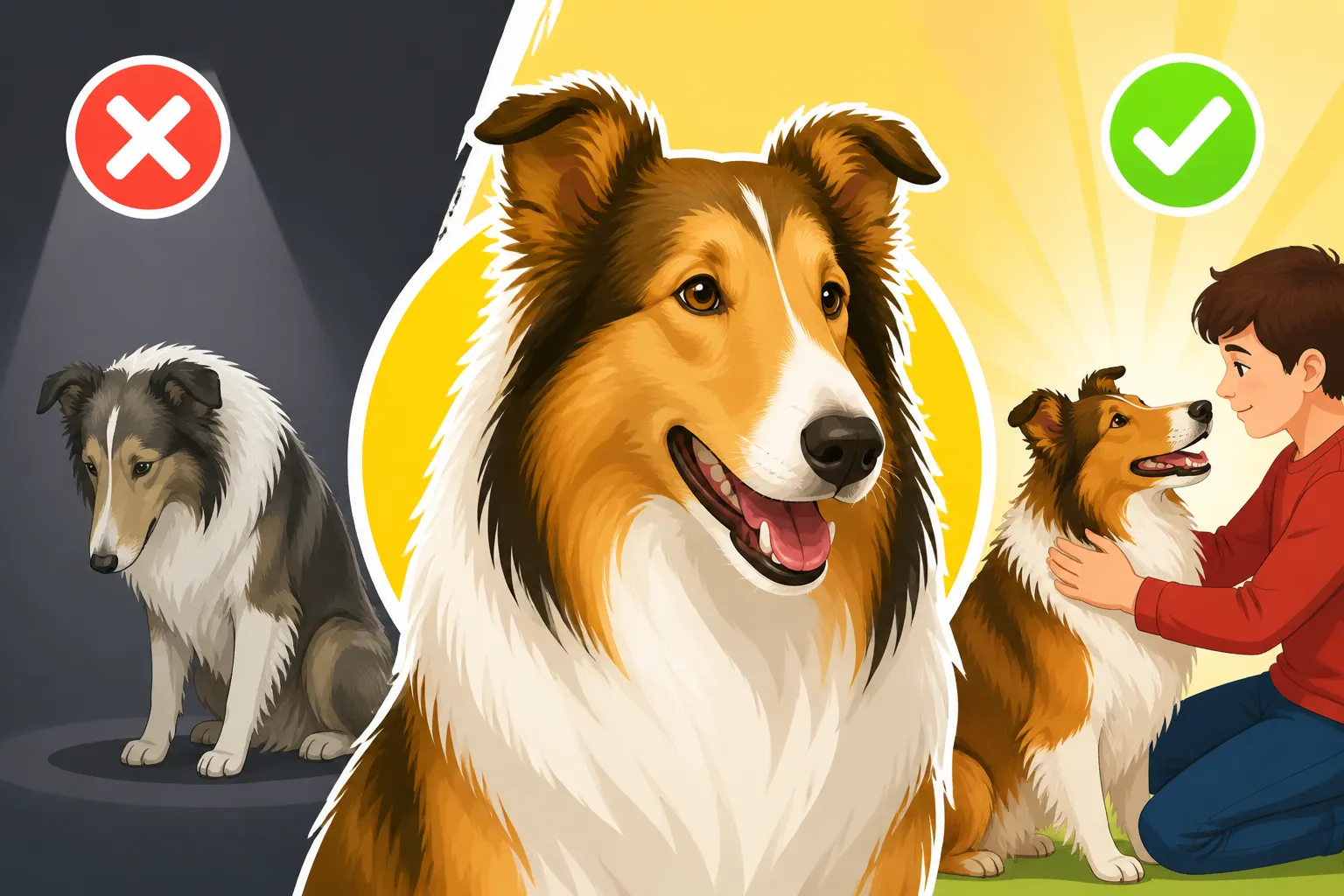
Whether Pal Was Rejected Before Being Cast as Lassie
It's a story that has been whispered among Collie enthusiasts and movie buffs for decades: "Was Pal, the original Lassie, really rejected before he landed the iconic role?" This persistent rumor feeds into a narrative of an underdog finally getting his big break, a tale that resonates with our love for a good comeback. Today, we're going to dive deep into the truth behind Pal's journey to becoming the world's most famous canine, separating fact from the heartwarming fiction, and exploring how his path forever changed the perception of our beloved breed.
The Enduring Allure of the Underdog Narrative
There’s something incredibly compelling about an underdog story, isn’t there? We love to believe that talent, no matter how overlooked, will eventually triumph. This sentiment is often why tales of Pal, the original canine actor who played Lassie, include a dramatic rejection before his eventual stardom. It paints a picture of perseverance, making his success even sweeter. The idea that this magnificent dog was initially deemed "unsuitable" for the role, only to prove everyone wrong, solidifies his legend in a truly heartwarming way. It fits the classic Hollywood trope, and frankly, it just feels right for a hero dog like Lassie.
However, the truth is often a bit more nuanced than the captivating myths we create. While Pal's path to stardom wasn't entirely straightforward, the narrative of outright rejection for the role of Lassie is largely a romanticized embellishment rather than historical fact. Understanding Pal's actual journey gives us a clearer picture of his incredible talent and the foresight of his trainer.
Why the "Rejection" Story Persists
The rumor likely stems from a few key elements that were indeed part of Pal's early life and the film's production. First, Pal was originally brought in not to play Lassie, but a male collie character. Second, the studio was initially looking for a female dog to play Lassie, adhering strictly to Eric Knight's novel, Lassie Come Home, which explicitly describes Lassie as a female. Pal, being a male, immediately presented a challenge to that vision. And let's be honest, studios often have very specific criteria, and a male dog playing a female lead might not have been the first choice for every director, even if Pal possessed all the right qualities.
Then there's the very nature of dog acting. Training a dog for such demanding roles requires immense skill and dedication, and it's rare for an animal to be "perfect" from day one. There would have been moments of frustration, challenges to overcome, and perhaps even initial doubts about whether any dog could pull off the complex emotional range required for Lassie. These moments, perhaps exaggerated over time, could have morphed into the widely circulated "rejection" narrative. It’s a compelling story, but not entirely accurate when it comes to the actual casting for the titular role.
Pal's Early Days and the Road to Stardom
Before he was Lassie, Pal was just a very promising Collie pup with an owner who saw something truly special in him. He was born in 1940 and was eventually acquired by Rudd Weatherwax, a renowned animal trainer who would become synonymous with the Lassie name. Weatherwax was known for his incredible ability to connect with and train animals for film, and he quickly recognized Pal's exceptional intelligence, eagerness to please, and striking good looks. These natural attributes, coupled with Weatherwax's expert training, laid the groundwork for Pal's future success.
The Hollywood animal training world was a competitive place, even back then. Trainers like Weatherwax were constantly seeking out dogs with that extra spark, that certain something that would make them shine on screen. Pal certainly had it. He was not just a pretty face; he was incredibly receptive to training, capable of learning complex sequences, and had an uncanny ability to convey emotion through his expressions and body language—a trait that is often underestimated in canine actors. If you’ve ever wondered Whether Collies Are Actually That Intelligent, Pal was a living testament to their incredible minds.
The Initial Purpose: Not Lassie (Yet)
It's crucial to understand that Pal wasn't originally brought in with the specific intention of playing Lassie. When MGM began production on Lassie Come Home, they were indeed searching for a female Collie. Pal, being a male, was initially hired as a stunt dog or a stand-in for the main female lead, primarily for the more demanding action sequences, like the famous river crossing scene. The studio had cast another female Collie in the lead role, aiming for strict adherence to the novel's depiction of Lassie.
This initial role as a "secondary" dog might have contributed to the myth of his rejection. He wasn't the first choice for the lead role. However, this wasn't due to any perceived failing on Pal's part, but rather the studio's initial casting parameters. Weatherwax, with his characteristic foresight, continued to work with Pal, honing his skills, knowing that his exceptional abilities would eventually speak for themselves. This dedication from both Pal and Weatherwax is a wonderful example of What Motivates a Collie and how that motivation, when channeled correctly, can lead to incredible achievements. You can find quality training treats and other essentials at places like Chewy to keep your own Collie motivated!
The Audition That Changed Everything
The true turning point in Pal's career, and indeed in Collie history, came during the filming of a crucial scene in Lassie Come Home. The original female Collie cast in the lead role struggled with a challenging scene: a river crossing followed by a sequence where she had to appear exhausted and crawl on the ground. Despite repeated attempts, the female Collie couldn't quite deliver the performance the director envisioned.
This is where Pal stepped in. Knowing his dog's capabilities, Rudd Weatherwax convinced the director to let Pal attempt the scene. What happened next was cinematic magic. Pal, with his natural athleticism and Weatherwax's expert guidance, performed the scene flawlessly. He not only navigated the river with powerful grace but then, on cue, convincingly portrayed exhaustion, collapsing and crawling as if truly spent. His performance was so compelling, so emotionally resonant, that it brought the entire crew to tears. It was a moment that solidified not just Pal's place in the film, but his destiny as a star.
The Moment of Breakthrough
It wasn't a formal audition in the traditional sense, but a real-time demonstration of unparalleled talent on set. This dramatic shift in perception was immediate. The studio executives, who had been set on a female Collie, watched Pal’s performance and realized they had a star on their hands, regardless of gender. They quickly made the decision to replace the original lead with Pal, re-shooting all prior scenes that featured Lassie. This wasn't a rejection of Pal, but rather a profound recognition of his unique and irreplaceable talent when it truly mattered.
This wasn't just about his ability to perform tricks; it was about his ability to act. Pal conveyed emotion, purpose, and a deep understanding of his role, which is a testament to How Long a Collie Takes to Learn a New Cue when guided by a patient and skilled trainer. This pivotal moment launched not only Pal's career but also established the iconic image of Lassie that has endured for generations, shaping public perception of the breed for decades to come.
Pal's Legacy and the Golden Age of Lassie
Once Pal secured the role, his star soared. He appeared in Lassie Come Home (1943), which was a massive critical and commercial success, endearing the Collie breed to audiences worldwide. From then on, Pal was Lassie, starring in six more MGM feature films: Son of Lassie (1945), Courage of Lassie (1946), Hills of Home (1948), The Sun Comes Up (1949), Challenge to Lassie (1949), and The Painted Hills (1951). His performances were consistently lauded, proving time and again that his initial "audition" was no fluke. He wasn't just a dog performing tricks; he was a character, a symbol of loyalty, intelligence, and unwavering courage.
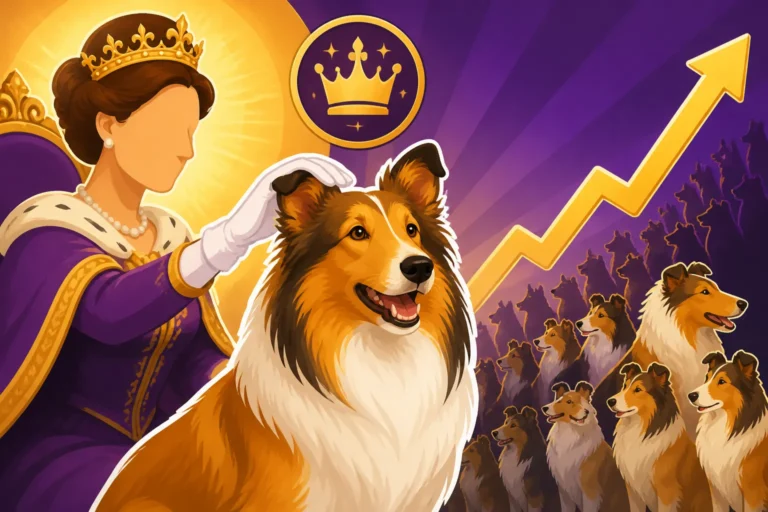
The impact Pal had on the Collie breed was monumental. Before Lassie, Collies were popular, certainly, but Pal catapulted them into superstardom. Everyone wanted a Lassie of their own. This surge in popularity had both positive and negative consequences for the breed, something we often reflect on when discussing Whether the Lassie Boom Hurt Collie Health. On the positive side, it cemented the Collie's image as a loving, intelligent family dog. On the other hand, the demand sometimes led to unscrupulous breeding practices focused solely on appearance rather than health or temperament.
The Enduring Lineage
Pal didn't just star in films; he established a dynasty. Whether Every Later Lassie Descended From Pal is a question that often comes up, and the answer is a resounding yes. Every single canine actor who has played Lassie in subsequent films and the long-running television series was a direct descendant of Pal, trained by Rudd Weatherwax and his family. His son, Lassie Junior, took over the role after Pal's retirement, and the lineage continued for decades, ensuring that the essence of Pal's original performance was carried forward. This remarkable continuity is a testament to the strong genetic traits and trainability passed down through his line.
The legacy of Pal is more than just a series of films; it's about the deep emotional connection he forged with audiences. He demonstrated the profound bond possible between humans and dogs, inspiring countless people to welcome Collies into their homes. His story, far from being one of initial rejection, is one of undeniable talent, a trainer's unwavering belief, and a breakthrough performance that forever etched him into the annals of Hollywood and the hearts of dog lovers everywhere. While you can find wonderful Collies in rescues and from reputable breeders, don't forget that a well-stocked pet supply store, like Chewy, is essential for all your Collie's needs, from nutritious food to engaging toys.
| Myth About Pal's Casting | Reality of Pal's Casting | Impact on Collie Image |
|---|---|---|
| Pal was explicitly rejected for the role of Lassie due to gender or perceived flaws. | Pal was initially hired as a stunt/stand-in dog because the studio sought a female lead for strict adherence to the novel. | Reinforced the idea that Collies are exceptional, often overcoming odds. |
| He was seen as an "underdog" who struggled to prove himself. | He was a highly intelligent and trainable dog from the start, a true talent recognized by his trainer, Rudd Weatherwax. | Highlighted the Collie's intelligence and trainability as key breed traits. |
| His eventual role was a stroke of luck. | His lead role was secured by a single, breathtaking performance on set that demonstrated his unparalleled ability to act and convey emotion. | Cemented the Collie's reputation for loyalty, bravery, and emotional depth. |
| The studio was reluctant to cast a male in a female role. | While initial preference was for a female, Pal's performance was so compelling that the studio immediately revised its casting decision. | Showcased the Collie's versatility and ability to transcend superficial requirements. |
The Lasting Impression and True Story of Pal
The story of Pal, the original Lassie, is a true Hollywood legend, but perhaps not in the way the popular myth suggests. He wasn't truly rejected; he simply wasn't initially considered for the main role due to the studio's preconceived notions about gender and strict adherence to the novel's text. His true genius was discovered through a challenging on-set trial, where his unparalleled talent shone so brightly that it forced a change in direction. This is a far more powerful and accurate story: one of a dog proving his worth through sheer, undeniable ability rather than overcoming an unjust dismissal.
Pal's journey reminds us that sometimes the greatest opportunities arise when we least expect them, and that true talent has a way of revealing itself. His legacy extended beyond the silver screen, influencing countless pet owners and shaping the entire future of the Collie breed. His descendants continued his work, carrying on the tradition of cinematic excellence and reinforcing the breed's image as the ultimate family companion.
The impact of Pal cannot be overstated. He became a cultural icon, a symbol of hope and unwavering companionship, and he did it all by simply being the best dog for the job. You can still see his influence today, not just in the ongoing legacy of Lassie, but in how people view the very essence of a loyal, intelligent, and beautiful dog. If you ever have the pleasure of sharing your life with a Collie, you’ll quickly understand why A Dog Named Pal Played Lassie and Changed the Breed Forever and why his story continues to captivate us decades later. He set the standard for canine actors and for the incredible potential of our four-legged family members.
Disclaimer
This article is for general informational purposes only and does not constitute professional advice. Laws, prices and regulations vary by location and change over time. Consult a qualified professional for guidance on your specific situation.