Where the Collie Ranks for Obedience Intelligence
A Collie is often listed 16th in Stanley Coren’s well-known obedience-intelligence ranking, placing the breed among the stronger performers for learning and following commands. That number is a useful shorthand, not a verdict on every dog. This guide explains what the ranking measures, what it misses, and how to help a real Collie learn without turning training into a battle.
What the Collie’s obedience intelligence ranking means
The Collie is a strong learner, but not the top-ranked breed
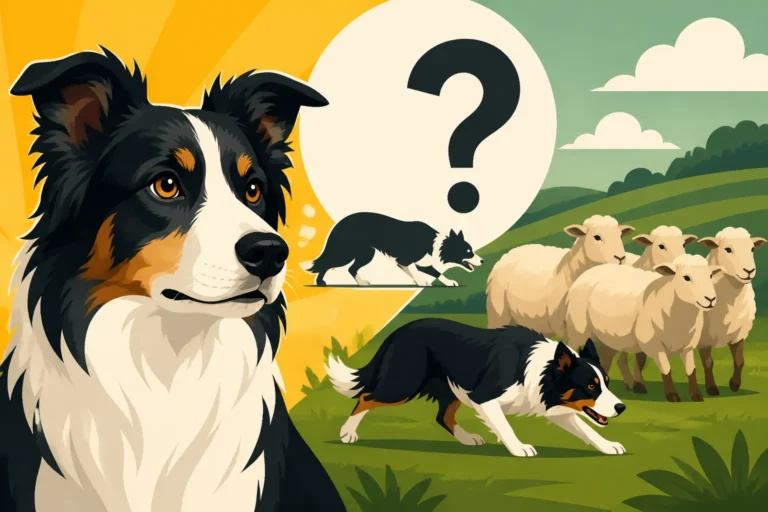
In Stanley Coren’s ranking of working and obedience intelligence, the Collie is commonly placed 16th among 138 breeds. That puts it in a high-performing group, though not at the very top. The Border Collie, for example, is ranked first in this system. The Collie’s position reflects a breed generally capable of picking up cues quickly and responding reliably when trained.
The ranking is often described using two measures: how many repetitions a dog may need to learn a new command and how often it may respond the first time a familiar command is given. In Coren’s framework, dogs in the Collie’s broad category are said to learn a new command within roughly 5 to 15 repetitions and respond to a known command on the first request about 85 percent of the time or more. Those figures describe a category, not a promise about an individual dog.
If you have lived with a Collie who seems to understand a cue and then chooses to sniff the hedge instead, you have already met the limits of a simple ranking. A dog’s response can depend on distractions, motivation, confidence, health, past learning, and whether the person giving the cue has made the expected behavior clear.
It measures a particular kind of intelligence
The ranking is specifically about working and obedience intelligence: how readily dogs learn commands and respond to them. It does not measure every quality people mean when they call a dog intelligent. It does not directly assess emotional sensitivity, problem-solving in daily life, adaptability, scent ability, herding instinct, or how well a dog understands household routines.
That distinction matters with Collies. A dog may appear to read your mood, anticipate the walk routine, or notice a visitor’s arrival before anyone else does. Those are meaningful abilities, but they are not what a command-learning ranking is designed to score. For a broader look at the topic, see Whether Collies Are Actually That Intelligent.
A ranking also cannot tell you whether one Collie will be easier to train than another. One dog may learn “down” in a few short sessions, while another needs a gentler approach because the floor is slippery or the cue has been taught inconsistently. Breed tendencies can offer a starting point; your dog’s behavior gives you the information that matters day to day.
Why a Collie may seem clever in one moment and distracted in the next
Collies notice their surroundings and their people
Collies are often attentive to people and changes in the environment. That can make them quick to notice a hand signal or routine, but it can also mean they are aware of everything happening around them. A delivery van passing the window, a child running through the yard, or a tense conversation at the kitchen table may compete with your cue.
This is one reason a Collie can look highly responsive in a quiet living room but less dependable at a busy park. It is not necessarily stubbornness or a sudden loss of intelligence. The setting has become harder. Asking a dog to sit in the kitchen is not the same task as asking for a sit beside a barking dog, a rolling skateboard, and a picnic table full of food smells.
Start with a calm, familiar space, then gradually make training more challenging. If your Collie can respond reliably in the house, practice in the yard before moving to a quiet sidewalk. Add distractions one at a time. Rewarding a successful response near a mild distraction helps the dog learn that the cue still matters when something interesting is happening.
Motivation and clarity shape performance
A dog may know a cue but not find the reward worth the effort in that moment. Some Collies are enthusiastic about food; others are more motivated by a favorite toy, play, praise, or the chance to move on to something they enjoy. If a dog ignores a cue while watching squirrels, repeating it louder usually does not make the reward more compelling.
Clear cues matter just as much. If “come” sometimes means “come get a treat” and sometimes means “the fun is over, go inside,” a dog may hesitate. If several family members use different words or hand signals, the dog has to sort out conflicting information. Agreeing on one cue and one consistent response makes learning easier for everyone.
For practical ideas on finding what your dog enjoys, see What Motivates a Collie. If you are shopping for a treat pouch or training rewards, Chewy may be one place to compare options; choose rewards that are safe for your dog and easy to deliver quickly during practice.
How to build reliable obedience skills with a Collie
Teach one small behavior at a time
Begin by deciding exactly what you want the dog to do. “Settle” might mean lying on a mat with the body relaxed, while “stay” means holding a position until released. If you use the same word for several different behaviors, your Collie may seem confused when you expected an instant response.
Break each behavior into manageable steps. For a recall, start a short distance away in a quiet room. Say the cue once in a cheerful voice, then reward the dog for turning toward you and coming close. Gradually increase the distance and practice in different safe places. A long line can give your dog room to explore while helping you prevent a risky dash toward a road or wildlife.
Keep sessions short enough that your dog is still engaged. A few successful repetitions are more useful than a long practice session that ends with both of you frustrated. If the dog misses the cue several times in a row, make the exercise easier: move closer, reduce distractions, or return to a behavior the dog already understands.
Reward the response you want to see again
Reward-based training makes the connection between the cue and the desired behavior clear. The reward does not have to be food every time. A toy, a brief game, a chance to sniff, or enthusiastic praise may work, depending on the dog and the situation. The key is that the reward arrives promptly enough for the dog to connect it with the behavior.
For example, if you are teaching a polite greeting, reward your Collie for keeping four paws on the floor while a visitor approaches. If jumping gets attention and standing calmly gets ignored, the dog may learn that jumping is the more effective strategy. Everyone in the household needs to follow the same plan, or the dog receives mixed feedback.
Avoid treating a missed cue as defiance. A Collie that looks away, freezes, or repeatedly fails to respond may be overwhelmed, uncertain, or distracted. Lower the difficulty and reward a small success. Collies can be sensitive to a person’s tone and body language, so calm, consistent handling is generally more productive than scolding. For more on that interaction, read How a Collie Responds to a Raised Voice.
Practice obedience in ordinary life
Formal training is only one part of teaching. Everyday moments can reinforce the behaviors you want: asking for a sit before opening the door, rewarding a check-in on a walk, or sending the dog to a mat while you prepare dinner. These small repetitions help cues become useful outside a dedicated training session.
A simple progression looks like this:
- Teach the behavior in a quiet, familiar place.
- Reward correct responses promptly and consistently.
- Practice the same cue in a slightly different setting.
- Add mild distractions gradually.
- Use a long line or other safe management when practicing outdoors.
- Reduce food rewards over time while continuing to reward good choices in varied ways.
If you are preparing for a class or a Canine Good Citizen evaluation, practice the relevant skills in different settings rather than relying on one perfect performance at home. Whether a Collie Is Competitive in Obedience and Whether a Collie Passes the Canine Good Citizen Test offer useful next steps for thinking about structured training and everyday manners.
| Training situation | What can make it difficult | A helpful adjustment |
|---|---|---|
| Learning a new cue | The behavior is too complicated or the cue is unclear | Break it into smaller steps and reward each early success |
| Responding outdoors | Smells, movement, people, and dogs compete for attention | Begin in a quiet area and increase distractions gradually |
| Coming when called | The cue predicts the end of fun or the reward is weak | Reward generously and practice without calling only to end an activity |
| Greeting visitors | Excitement and attention reinforce jumping | Reward calm greetings and ask visitors to follow the same plan |
| Practicing around family | Different people use different words or rules | Agree on shared cues and consistent expectations |
What the ranking cannot tell you about your Collie
Intelligence is not the same as instant obedience
A quick learner may also learn unintended patterns quickly. If a Collie discovers that barking brings someone to the window, or that pulling makes a walk move forward, those behaviors can become well-practiced too. The dog is learning; the issue is that the outcome has reinforced a behavior the household would rather reduce.
That is why obedience is not simply about whether a breed is smart. It is about teaching useful behaviors, setting up the environment, and reinforcing the responses you want. A dog that performs beautifully in a training class may still need practice waiting at the front door or walking past a squirrel. Those are separate situations, and skills do not automatically transfer from one to another.
The same is true of trick training. Some Collies love learning new actions; others would rather work on a familiar routine or play. Tricks can be a pleasant way to build communication, but they are not a test of whether your dog is intelligent or well behaved. See Whether a Collie Enjoys Trick Training for ideas about matching activities to your dog’s preferences.
Individual differences matter more than a single number
Age, temperament, health, early experience, and the quality of training all influence what a dog can do. A puppy may have a short attention span. An adolescent Collie may understand a cue but struggle to respond amid excitement. An older dog may need shorter sessions, slower movement, or a veterinary check if its behavior changes unexpectedly.
A rescue dog may also be learning your household’s routines while adjusting to a new home. Give the dog time to settle, use predictable cues, and avoid expecting polished obedience immediately. If you are buying training supplies such as a clicker, a treat pouch, or a suitable leash, Chewy can be a convenient place to look, but the equipment should fit your dog and your training approach. It cannot replace patient practice.
The most useful takeaway from the Collie’s ranking is that the breed often has strong potential for learning and responding to cues. It does not mean your dog should understand every command after a handful of attempts, or that a slow response reflects a lack of intelligence. Notice what helps your own Collie succeed, make the next step achievable, and build reliability in the places where you actually need it. If you want to make training more fun, How Many Cues a Collie Can Learn and How Long a Collie Takes to Learn a New Cue can help you set realistic expectations.
Disclaimer
This article is for general informational purposes only and does not constitute professional advice. Laws, prices and regulations vary by location and change over time. Consult a qualified professional for guidance on your specific situation.