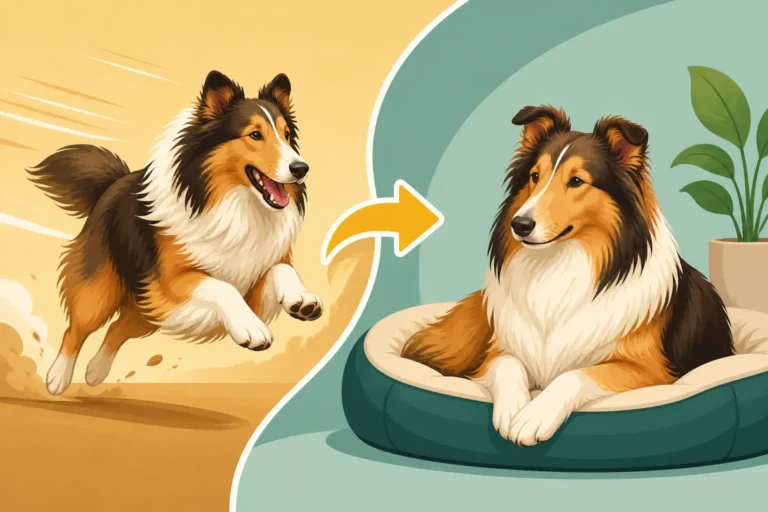
How Many Cues a Collie Can Learn
It's a common feeling, isn't it? You bring home your beautiful Collie, and while you know they're intelligent, you might secretly wonder if they'll ever move past "sit" and "stay." You see videos of dogs performing incredible feats, and it's easy to feel intimidated, or worry if your own furry family member has a limited capacity for learning. The truth is, Collies are incredibly bright and eager partners, capable of learning a vast array of cues throughout their lives. This guide will dive into their impressive cognitive abilities and show you just how many commands and tricks your Collie can master, given the right approach.
Understanding the Collie's Natural Intelligence and Willingness to Please
When we talk about how many cues a Collie can learn, we're really talking about tapping into their inherent intelligence and their deep-seated desire to work with their people. These aren't just pretty faces; they're thinkers, problem-solvers, and loyal companions eager to engage their minds.
The Herding Dog Brain: Smart and Observant
Collies were originally bred for herding, a job that requires significant brainpower. Think about it: a herding dog isn't just following a rote set of commands. They need to read the flock, anticipate movement, respond to subtle cues from the shepherd (often from a distance), and make independent decisions in a rapidly changing environment. This isn't just about strength or speed; it's about observation, problem-solving, and a nuanced understanding of their surroundings. This historical role has hardwired Collies to be incredibly observant of their environment and, more importantly, of their human companions. They are constantly watching you, picking up on your routines, your moods, and your subtle body language. This makes them highly receptive to training, often understanding what you want even before you fully articulate it. They’re less likely to be blindly obedient and more likely to be collaborative partners, which is a key distinction that impacts their learning style. When you consider this background, it's clear that a Collie's intelligence goes far beyond simple obedience.
Eagerness to Engage: More Than Just Commands
One of the most wonderful traits of a Collie is their strong desire to please and connect with their family. This isn't a breed that operates solely on compulsion; they thrive on interaction and positive reinforcement. They genuinely enjoy learning new things, especially when it involves spending quality time with you. This eagerness means that teaching them new cues isn't a chore, but an enriching activity for both of you. They're often described as sensitive souls, and Harsh Handling Breaks a Collie and It Does Not Come Back, making gentle, rewarding methods incredibly effective. Their willingness to engage their minds, combined with their desire for your approval, creates an almost limitless potential for learning. They don't just learn a trick; they learn how to learn, and they learn that learning with you is a fun, rewarding experience. This intrinsic motivation is a huge advantage when you're looking to expand their repertoire of cues.
Setting Realistic Expectations: Quantity vs. Quality of Cues
It's easy to get caught up in the idea of teaching a dog dozens of complex tricks, but it's important to differentiate between simply memorizing a command and truly understanding its application. For a Collie, quality and comprehension often outweigh a mere tally of known words.
The Myth of the "Limited" Dog
Some people mistakenly believe that dogs can only learn a finite number of commands before their "brain is full." This couldn't be further from the truth, especially for a breed as intelligent as the Collie. Think of it like a child learning a language; there isn't a hard cap on their vocabulary. While a dog won't learn a human language, their capacity for associating sounds and gestures with actions is expansive. A well-trained Collie can easily learn hundreds of individual cues and behaviors throughout their lifetime. The limiting factor is rarely the dog's intelligence, but rather the consistency and clarity of the training they receive. When you factor in different contexts, variations in tone, and even hand signals, the number of distinct cues a Collie can respond to becomes quite impressive. They are constantly learning, even when you aren't actively "training" them, picking up on routines and unspoken expectations.
Building a Strong Foundation: The Core Cues
Before you aim for advanced tricks, it's vital to ensure your Collie has a rock-solid understanding of the fundamental commands. These are the building blocks for all future learning and essential for their safety and good manners around the house and in public. These core cues include:
- Sit: To settle down.
- Stay: To remain in place.
- Come/Recall: The single most important command for safety.
- Down: For a more relaxed posture.
- Leave It: To ignore tempting distractions.
- Drop It: To release something from their mouth.
- Heel/Walk Nicely: For polite leash walking.
Mastering these basic cues provides a framework for communication and builds confidence in both you and your Collie. It also teaches them how to learn, making subsequent cues much easier to introduce. How Long a Collie Takes to Learn a New Cue can vary, but strong foundational work pays dividends. Many online training resources, like BAXTER & Bella, offer structured programs that guide owners through these essential stages, providing step-by-step instructions and support.
Expanding the Repertoire: Learning Beyond the Basics
Once the foundation is firm, the sky's the limit for what your Collie can learn. Their intelligence and desire to engage make them excellent candidates for a wide variety of activities. This isn't just about "tricks" in the circus sense, but also practical skills and engaging mental exercises.
Here are just a few categories of cues your Collie can excel at:
- Advanced Obedience: Off-leash heeling, distance stays, retrieving specific items by name.
- Trick Training: "Roll over," "play dead," "weave through legs," "take a bow." Whether a Collie Enjoys Trick Training is almost always a resounding yes!
- Dog Sports: Agility courses (jumps, tunnels, weave poles), Rally Obedience (performing a sequence of stations), scent work (finding hidden articles). Whether a Collie Can Earn a Herding Title is a testament to their innate abilities and capacity for complex training.
- Household Tasks: "Fetch the remote," "put toys away," "close the door," "ring a bell to go outside."
- Therapy or Assistance Work: Learning to provide deep pressure stimulation, retrieve dropped items, or alert to specific sounds, showing Whether a Collie Makes a Therapy Dog is a real possibility.
The sheer diversity of these examples demonstrates that a Collie's learning capacity isn't just about memorizing discrete words; it's about understanding concepts, applying behaviors in different contexts, and even problem-solving. A Collie Reads a Room Better Than It Reads a Command, meaning they pick up on more than just the verbal prompt.
Strategies for Maximizing Your Collie's Learning Potential
Unlocking your Collie's full learning potential isn't about magical secrets; it's about consistent, positive, and engaging methods that resonate with their intelligent and sensitive nature.
Positive Reinforcement: The Collie's Best Teacher
This cannot be stressed enough: Collies thrive on positive reinforcement. They respond best to rewards, praise, and gentle guidance, rather than harsh corrections or punishment. When you make learning a fun and rewarding experience, your Collie will be eager to participate and quick to pick up new cues. This means using high-value treats (think small pieces of cooked chicken or cheese), enthusiastic verbal praise, and favorite toys as motivators. Every successful attempt should be celebrated! This builds a strong bond and a positive association with training, making your Collie a willing and happy student. Remember, What Motivates a Collie is often simply your approval and a chance to engage with you. If they enjoy the process, they'll learn faster and retain more.
Consistency and Repetition: The Keys to Retention
Just like humans learning a new skill, repetition is crucial for dogs to solidify their understanding of a cue. However, "repetition" doesn't mean drilling the same command fifty times in a row until they're bored stiff. Instead, it means:
- Short, frequent training sessions: Aim for 5-10 minute sessions several times a day rather than one long, tedious one.
- Practice in different environments: Once they understand a cue at home, practice it in the yard, at the park, or even in a quiet pet store. This helps them generalize the command.
- Involve the whole family: Everyone should use the same words, hand signals, and expectations for each cue to avoid confusion.
Consistency in your commands and expectations is paramount. If "sit" sometimes means plopping down, and other times means a precise, attentive sit, your Collie will struggle to understand what you want. The more consistently you apply a cue and reward the correct behavior, the faster and more reliably your Collie will learn it.
Mental Stimulation: Beyond Physical Exercise
While Collies definitely need physical exercise, their intelligent minds crave mental stimulation just as much, if not more. A mentally bored Collie can become anxious, destructive, or develop undesirable behaviors like excessive barking. Integrating brain games and puzzle feeders into their daily routine can significantly enhance their learning capacity and overall well-being. Forty Five Minutes a Day, and Half of It in Its Head really speaks to this need for mental engagement.
Consider these options:
- Puzzle Toys: Fill a KONG or a specific puzzle feeder (easily found on Amazon) with treats or peanut butter. Your Collie will spend time figuring out how to get the reward, engaging their problem-solving skills. Whether Puzzle Feeders Tire a Collie is often true – they can be surprisingly exhausting for their brains!
- Scent Games: Hide treats around the house and encourage your Collie to "find it." This taps into their natural scenting abilities and is a low-impact way to burn mental energy.
- New Tricks: Continually teach new, fun tricks. It doesn't have to be practical; the act of learning itself is enriching.
- Obedience Games: Turn routine commands into fun games. For example, a "red light, green light" game with "sit" and "stay" can be entertaining.
When to Seek Professional Guidance
While many Collie owners can successfully train their dogs at home, there's absolutely no shame in seeking help from a professional dog trainer. In fact, it's often the smartest thing you can do, especially if you're hitting a wall with a particular behavior or want to pursue advanced training. A good trainer can offer:
- Personalized strategies: Tailored advice for your Collie's specific personality and learning style.
- Problem-solving: Help identify why certain cues aren't sticking or address behavioral challenges.
- Advanced techniques: Guidance for more complex skills or dog sports.
- Motivation and support: Keeping you on track and confident in your training journey.
Look for trainers who use positive reinforcement methods and have experience with herding breeds. Online resources, like the aforementioned BAXTER & Bella, also provide a wealth of structured programs and expert advice that can be incredibly valuable, offering flexibility for busy schedules.
Real-World Examples of Collie Learning Capacity
To truly grasp how many cues a Collie can learn, let's look at the practical application of their intelligence across different aspects of their lives. From simple household manners to highly specialized roles, Collies consistently demonstrate remarkable versatility.
Everyday Commands and Household Manners
Beyond the core obedience cues, Collies effortlessly integrate countless "unspoken" cues and routines into their daily lives. They learn the sound of the treat jar, the jingle of car keys signaling an outing, or the specific way you ask them to "move" when you need to vacuum. They learn that "bedtime" means going to their crate, or that a specific tone of voice means "stop that right now." Whether a Collie Is Easy to House Train is generally yes, but it still involves learning specific cues (like where to eliminate) and routines.
Consider a Collie named Lassie (because, of course!). Lassie might learn:
- "Go get your leash"
- "Go to your bed"
- "Wait" at the door before going outside
- "Gentle" when taking a treat
- "Off" the furniture
- "Quiet" when the doorbell rings, which addresses Whether a Collie Can Be Taught a Quiet Cue.
These aren't always formal commands, but they are cues that Lassie understands and responds to, making her a harmonious part of the household. The number of these informal cues often far outstrips the formal ones.
Advanced Tricks and Dog Sports
Collies truly shine when given a job to do, and dog sports provide an excellent outlet for their intelligence and athleticism. From the intricate sequences of an agility course to the precise movements of competitive obedience, Collies absorb and execute complex chains of commands.
- Agility: Imagine your Collie navigating a course with cues like "tunnel," "weave," "over," "left," "right," and "go on." Each obstacle requires a distinct command and a specific action.
- Rally Obedience: This involves performing a series of numbered stations, each with a different exercise to complete, requiring a dog to understand cues like "spiral right," "send over jump," "side step right," or "figure eight."
- Herding: For Collies with active herding instincts, they can learn commands to gather, drive, shed, and pen livestock, often with subtle whistle or verbal cues. What a Herding Instinct Test Shows in a Collie is just the beginning of a complex language.
These activities don't just teach individual cues; they teach sequences, responsiveness to nuanced direction, and problem-solving within a dynamic environment.
Service and Assistance Roles
The highest testament to a Collie's learning capacity comes from their ability to serve in assistance roles, though less common than some other breeds. These roles demand an extraordinary number of cues, often involving multiple steps and precise execution.
- Hearing Dogs: Learning to alert their handler to specific sounds like a smoke alarm, doorbell, or phone, each with its own distinct response.
- Mobility Assistance: Retrieving dropped items, opening and closing doors, turning lights on/off. These tasks often break down into several smaller cues.
- Therapy Dogs: While not service dogs, therapy Collies must learn cues for appropriate interaction, such as "visit," "lap," "gentle," and maintaining calm composure in novel environments.
In these roles, a Collie isn't just learning a handful of cues; they are learning a functional "vocabulary" that directly impacts their human's quality of life. The ability to distinguish between different objects (e.g., "keys" vs. "phone") or perform actions on cue (e.g., "press button") demonstrates a profound level of cognitive understanding.
The number of cues a Collie can learn is, effectively, limited only by the dedication and imagination of their human companion. With consistent positive reinforcement and a commitment to mental enrichment, your Collie can become a truly remarkable and skilled partner.
| Cue Category | Examples of Cues Learned | Complexity Level | Typical Time to Master Initial Cue |
|---|---|---|---|
| Basic Obedience | Sit, Stay, Come, Down, Leave It, Drop It | Low to Moderate | Weeks to a Few Months |
| Household Manners | Off, Quiet, Place, Crate, Wait, Settle, Go Potty | Moderate | Months |
| Simple Tricks | Shake a Paw, Roll Over, Spin, Bow, Speak | Moderate | Weeks to Several Months |
| Advanced Obedience | Stand for Exam, Heeling (off-leash), Distance Stays | High | Many Months to a Year+ |
| Dog Sports (e.g., Agility) | Tunnel, Weave, Over, Jump, Go On, Left/Right Direction | High | Year+ (ongoing skill development) |
| Specific Tasks/Service | Retrieve Item by Name, Open Door, Alert to Sound, Find Keys | Very High | Multiple Years |
Disclaimer
This article is for general informational purposes only and does not constitute professional advice. Laws, prices and regulations vary by location and change over time. Consult a qualified professional for guidance on your specific situation.