Whether a Collie Makes a Therapy Dog
It's a common daydream for many Collie owners: seeing their beloved, gentle companion bringing comfort and joy to others. You look at your sweet-natured Collie, so intuitive and affectionate within your home, and you can't help but wonder if they possess that special something to be a therapy dog. The truth is, while Collies certainly have many of the right qualities, becoming a therapy dog is a journey with specific requirements and a commitment that goes beyond just being a good pet. This guide will delve into what it truly takes for a Collie to make a successful therapy dog, exploring their natural strengths, the challenges they might face, and the steps to get them ready to spread their unique brand of canine calm.
Understanding What Makes a Therapy Dog
Before we dive into the specific traits of our beautiful Collies, it's really important to understand what the role of a therapy dog entails. It's not just about being friendly or well-behaved at home. A therapy dog is a highly trained animal that provides comfort, affection, and support to people in various settings, such as hospitals, nursing homes, schools, and even disaster areas. This work requires a unique blend of innate temperament and rigorous training. Many well-meaning owners believe their dog would be perfect, and while that might be true in spirit, the practicalities are quite demanding.
Temperament and Personality Traits
At the core of a successful therapy dog is an unwavering, stellar temperament. A therapy dog must be calm, patient, and exceptionally gentle. They need to be adaptable and unflappable in the face of unfamiliar sights, sounds, and smells. Think about a hospital environment: beeping machines, strong cleaning odors, people in wheelchairs, crutches, or with IV poles. A therapy dog must not only tolerate these things but remain relaxed and engaging. They should genuinely enjoy interacting with strangers, often showing a natural affinity for people, even those who might be moving slowly or speaking softly due to illness or age. The dog can't be easily startled or prone to shyness; they need to be resilient and recover quickly from any minor disturbances. Essentially, they need a "bomb-proof" disposition, able to offer warmth without being overwhelmed themselves.
They also need to be intuitive, sensing when a person needs a gentle nudge or a quiet presence. This is where Collies often shine, with their deep empathy. A dog that is overly boisterous, easily stressed, or reactive to sudden movements or loud noises simply isn't suitable, no matter how loving they are with their own family. It’s a job where a dog's emotional resilience is just as important as its physical health.
Basic Obedience and Socialization Requirements
Beyond temperament, impeccable obedience and extensive socialization are non-negotiable. A therapy dog must respond reliably to basic commands like "sit," "stay," "down," "come," and "leave it" in distracting environments. This isn't just for show; it's for safety—the dog's, the handler's, and the people they are visiting. Imagine a dog lunging for a dropped pill in a hospital or jumping excitedly on a frail patient. That's simply not acceptable.
Early and ongoing socialization is paramount. A therapy dog needs to be comfortable with people of all ages, sizes, and appearances, including those using mobility aids, wearing hats, or speaking different languages. They should be accustomed to various environments, from quiet rooms to bustling lobbies. They also need to be comfortable around other dogs, as they might encounter them in waiting areas or during group sessions. This means exposure to countless new experiences in a positive, controlled manner from puppyhood onward. Programs like those offered by BAXTER & Bella can provide a fantastic foundation in online puppy training and socialization, helping owners systematically expose their pups to various stimuli and build confidence, which is crucial for therapy work. This foundation ensures the dog sees new things as interesting rather than frightening.
The Difference Between a Therapy Dog and a Service Dog
It's easy to confuse these terms, but they represent very different roles with distinct legal protections and training requirements. Understanding this difference is vital for anyone considering therapy work for their Collie.
-
Service Dogs: These are individually trained to perform tasks for people with disabilities. Their job is directly related to their handler's disability, such as guiding the blind, alerting the deaf, pulling a wheelchair, or detecting seizures. Under the Americans with Disabilities Act (ADA), service dogs have public access rights, meaning they can go almost anywhere their handler goes, even places pets are typically not allowed. They are not pets; they are working animals whose presence is essential for their handler's independence and safety. Their training is highly specialized and often takes years.
-
Therapy Dogs: These dogs provide comfort and affection to many people in various facilities, not just their handlers. They are typically owned by volunteers who take them to hospitals, schools, or nursing homes. Therapy dogs do not have public access rights under the ADA; their visits are by invitation only, arranged with the facility. While highly trained in obedience and temperament, their role is to offer emotional support and interaction to a wider group of individuals. Your Collie, for example, would visit a nursing home with you, its owner, to bring smiles to residents, not to perform a specific task for you.
-
Emotional Support Animals (ESAs): These animals provide comfort to their owners through their presence alone, helping to alleviate symptoms of a disability. Unlike service dogs, ESAs are not trained to perform specific tasks. They do not have public access rights, though they may have housing rights in some areas. They are pets that offer therapeutic benefits, but they are not considered working animals in the same way service dogs or even certified therapy dogs are.
Here's a quick comparison table to help clarify:
| Feature | Therapy Dog | Service Dog | Emotional Support Animal (ESA) |
|---|---|---|---|
| Role | Provides comfort/affection to many people. | Performs specific tasks for one disabled handler. | Provides comfort to one owner by its presence. |
| Training | Advanced obedience, temperament. | Highly specialized task training. | No specific task training required. |
| Public Access | No ADA public access rights (by invitation only). | Full ADA public access rights. | No ADA public access rights. |
| Certification | Often certified by therapy organizations. | No formal certification, but rigorous training. | Letter from a mental health professional. |
| Who Benefits | Patients, students, residents, public. | Handler with a disability. | Owner with a mental/emotional disability. |
| Legal Status | Pet with special training, volunteer role. | Working animal, essential medical equipment. | Pet providing therapeutic benefit. |
Why Collies Excel as Therapy Dogs
Now that we understand the framework, let's talk about why our Collies often make such stellar candidates for this rewarding work. They possess several inherent qualities that truly make them stand out in a crowd. It’s not just their beauty, though that certainly helps draw people in!
Collie Temperament: Gentle and Empathetic Nature
If you've ever lived with a Collie, you know they are renowned for their incredibly gentle and sensitive nature. They are often described as having an almost uncanny ability to read human emotions, offering a comforting nudge or a quiet lean exactly when it's needed most. This deep empathy is a cornerstone of effective therapy work. They don't just tolerate interaction; they actively seek it and seem to genuinely enjoy providing solace. A Collie is rarely pushy or demanding; instead, they often approach with a soft gaze and a slow wag of the tail, inviting interaction without overwhelming anyone.
This inherent gentleness makes them particularly well-suited for interacting with vulnerable populations, such as young children or elderly patients who might be fragile or easily startled. Their calm demeanor can have a profoundly soothing effect, helping to lower anxiety and encourage interaction. Many Collies seem to carry an almost serene aura about them, a quiet strength that emanates comfort. This is a breed that genuinely enjoys being close to people and forming bonds, which is exactly what therapy work is all about. They are often described as "nanny dogs" for a reason—they have a protective instinct without being aggressive, combined with a remarkable tenderness.
Intelligence and Trainability
Collies are notoriously intelligent dogs, eager to please their human companions. This makes them highly trainable, a critical advantage for therapy work which demands consistent, reliable behavior in a multitude of unpredictable environments. They pick up commands quickly and thrive on mental stimulation. While How Long a Collie Takes to Learn a New Cue can vary for any dog, Collies generally excel at absorbing new information and routines. They respond wonderfully to positive reinforcement methods, thriving on praise, gentle handling, and tasty treats. This isn't a breed that tolerates harsh training; in fact, Harsh Handling Breaks a Collie and It Does Not Come Back. Instead, they flourish with patience and understanding, learning not just the "what" of a command but often the "why" in terms of pleasing their handler.
Their intelligence also means they can adapt to different situations and learn to differentiate appropriate behaviors for various settings. A Collie can learn that a quiet head on a lap is perfect for a nursing home visit, while a playful "bow" is just right for a child's reading program. Their desire to be a part of the family unit and their strong bond with their owners translates into a willingness to work cooperatively, making the extensive training required for therapy dog certification much more achievable. It's truly a partnership, and Collies are excellent partners.
The Calming Presence of a Collie
There's something uniquely comforting about a Collie's presence. Perhaps it's their soft, flowing coat, their expressive eyes, or their generally serene disposition. Whatever it is, Collies often exude a calming influence that can significantly reduce stress and anxiety in people. Their quiet nature means they aren't constantly seeking attention in an overly boisterous way, instead offering a gentle, steady source of comfort. This is invaluable in settings where individuals might be in pain, feeling isolated, or experiencing emotional distress.
Think about a child nervous about reading aloud, or an elderly person feeling lonely. A Collie sitting patiently, allowing gentle strokes, can act as a silent, non-judgmental confidant. Their presence encourages relaxation, which can lead to lower blood pressure, reduced feelings of loneliness, and even improved mood. They offer a tangible, furry anchor in moments of uncertainty. This inherent ability to bring peace and quiet joy is perhaps their greatest asset as a therapy dog, making them truly special companions in the world of emotional support.
Challenges and Considerations for Collie Therapy Work
While Collies are wonderful candidates, it would be unrealistic to pretend there are no hurdles. Like any breed, they come with their own set of characteristics that need careful management and consideration when aiming for therapy work. Understanding these challenges upfront helps prepare owners for success.
Grooming and Maintenance for Public Settings
Let's face it: that magnificent Collie coat is a double-edged sword when it comes to therapy work. While it's incredibly soft and inviting for people to pet, it requires diligent grooming to keep it pristine, especially when visiting public facilities. A shaggy, matted, or dirty coat is simply unacceptable in sterile environments like hospitals, and it can also detract from the professional, comforting image a therapy dog should project. Regular brushing is a must, and not just for aesthetics; it helps keep dander down, which is a consideration for people with allergies.
This means a commitment to daily or every-other-day line brushing, even when your Collie isn't "blowing coat." Four Tools and Twenty Minutes: Brushing a Rough Collie isn't just a suggestion; it's a routine for life. You'll need to invest in good quality brushes and combs, and become proficient at using them. Beyond the brushing, nails must be kept short, ears clean, and teeth cared for. A Collie presenting for therapy work needs to be impeccably clean and well-maintained from head to tail. This can be a significant time commitment, and some owners might find it challenging to maintain this level of grooming consistency, especially with a full-coated Rough Collie.
Sensitivity and Stress in New Environments
Collies are known for their sensitivity. While this translates into empathy, it also means they can be more susceptible to stress in unfamiliar or overwhelming environments. A truly successful therapy dog needs to be resilient and recover quickly from novel or startling experiences. While a Collie might handle the quiet calm of a nursing home beautifully, a bustling school hallway during a fire drill or a noisy hospital emergency room could potentially be too much for a sensitive dog, even with prior socialization.
Owners need to be acutely aware of their Collie's body language and recognize subtle signs of stress, such as lip licking, yawning, tucked tail, or excessive shedding. It’s crucial to advocate for your dog, knowing when to take a break or even end a visit early if they are becoming overwhelmed. Over-scheduling or pushing a sensitive Collie past its comfort zone can lead to burnout or a negative association with therapy visits. The goal is to make the experience positive for both the dog and the people they meet, and that means managing the dog's comfort level as a top priority. Proper socialization, as well as a strong bond of trust with their handler, are key in helping a Collie navigate these challenges.
Managing the Collie's Natural Barking Tendency
Ah, the Collie bark! The Bark Is the Trait Collie Owners Underestimate in many situations, and therapy work is no exception. Collies are herding dogs, and barking is a natural part of their communication and alerting system. They can be quite vocal, whether it's to alert you to a leaf blowing past the window, a squirrel in the yard, or the doorbell ringing. While a certain level of alert barking is normal, excessive or inappropriate barking can be a major issue in therapy settings. Imagine a Collie barking in a quiet hospital ward or during a reading session with children. It's disruptive and counterproductive to the calming atmosphere you're trying to create.
Therefore, extensive training to manage and reduce unnecessary barking is absolutely essential for a therapy Collie. This might involve teaching a solid "quiet" cue, addressing the triggers for their barking, and rewarding calm, silent behavior in various environments. While you can't erase a dog's natural instincts entirely, you can certainly train them to be more discerning and responsive to commands regarding their voice. This training takes consistency and patience, but it’s a non-negotiable step to ensure they remain a welcome guest in any facility.
The Path to Certification: Steps and Training
Once you've honestly assessed your Collie's temperament and considered the challenges, and you still feel they're a good fit, the next exciting step is to pursue official therapy dog certification. This isn't just a formality; it ensures your Collie is safe, reliable, and effective in its role, and it provides the credibility needed for facility access.
Essential Training and Socialization
The journey toward therapy dog certification begins long before you even consider taking an evaluation. It starts with solid basic obedience and comprehensive socialization from puppyhood. Enroll your Collie in puppy classes, then move on to intermediate and advanced obedience classes. Look for trainers who use positive reinforcement methods. Your Collie should be proficient in all basic commands (sit, stay, down, come, leave it, walk nicely on a leash) not just at home, but in busy, distracting environments.
Beyond structured classes, expose your Collie to a wide variety of people, places, sounds, and objects. Think about the types of scenarios they might encounter during therapy visits: people in wheelchairs, crutches, walkers, loud noises, sudden movements, different smells, other dogs, and children. Practice greeting strangers politely without jumping. Teach them to settle quietly under a table or beside your chair in public places. Consider using online resources like BAXTER & Bella which offers lifetime access to a comprehensive training system, including puppy foundations and advanced manners, that can be done at your own pace and provides valuable insights into building a well-rounded, confident dog. This consistent, positive exposure is what builds a dog’s confidence and adaptability, making them unflappable when it matters most.
Choosing a Therapy Dog Organization
There are several reputable national and local organizations that certify therapy dogs. It's crucial to choose one that aligns with your values and offers thorough evaluation and support. Some of the well-known organizations include Pet Partners, Alliance of Therapy Dogs, and Therapy Dogs International. Each organization will have specific requirements regarding dog age, handler age, training standards, and evaluation protocols.
Typically, the certification process involves:
- Handler Course: You, the owner, will often need to complete an online or in-person course that teaches you about therapy dog best practices, facility guidelines, dog safety, and how to read your dog's body language.
- Dog Evaluation: Your Collie will undergo an evaluation, usually conducted by a certified evaluator. This test assesses their temperament, obedience skills, and reaction to various stimuli. They'll be tested on their ability to remain calm around strangers, loud noises, medical equipment, and other dogs. They'll need to demonstrate polite greetings, reliable recalls, and a solid "leave it." This is where all that prior training and socialization truly pay off.
- Supervised Visits: After passing the initial evaluation, you and your Collie will often complete a certain number of supervised visits with an experienced therapy team mentor. This allows you to gain practical experience in a real-world setting, with guidance and feedback, before becoming fully certified.
Do your research, ask questions, and choose an organization that provides good resources and support for its volunteers. You might even find local groups through a simple online search for "therapy dog groups near me."
Ongoing Practice and Continuing Education
Certification isn't a one-and-done event; it's a commitment to ongoing excellence. To maintain certification, most organizations require periodic re-evaluations to ensure your Collie's skills and temperament remain up to standard. This is a good thing! It encourages you to continue working with your dog, keeping their obedience sharp and their socialization current.
Beyond formal re-evaluations, regular practice is essential. Continue to work on obedience commands daily, even if it's just for a few minutes. Seek out new, positive socialization opportunities. Join a local dog club, explore new parks, or practice in different pet-friendly stores (like a big box hardware store where you can find all sorts of interesting things, or even a pet store for specialized supplies on Amazon). The more varied and positive experiences your Collie has, the more adaptable and resilient they will be in therapy settings. Staying fresh, engaged, and well-behaved ensures your Collie can continue to bring comfort and joy for many years to come, making a real difference in the lives of others. Remember, this isn't just a hobby; it's a valuable service, and maintaining high standards benefits everyone involved.
Real-World Scenarios for Collie Therapy Dogs
The beauty of a Collie’s versatile temperament means they can excel in a wide array of therapy settings. Their gentle nature and intuitive understanding of human emotion open doors to many different environments where their presence can be profoundly impactful. It's truly inspiring to see them at work, transforming a sterile room or a nervous moment into something warmer and more hopeful.
Visiting Hospitals and Nursing Homes
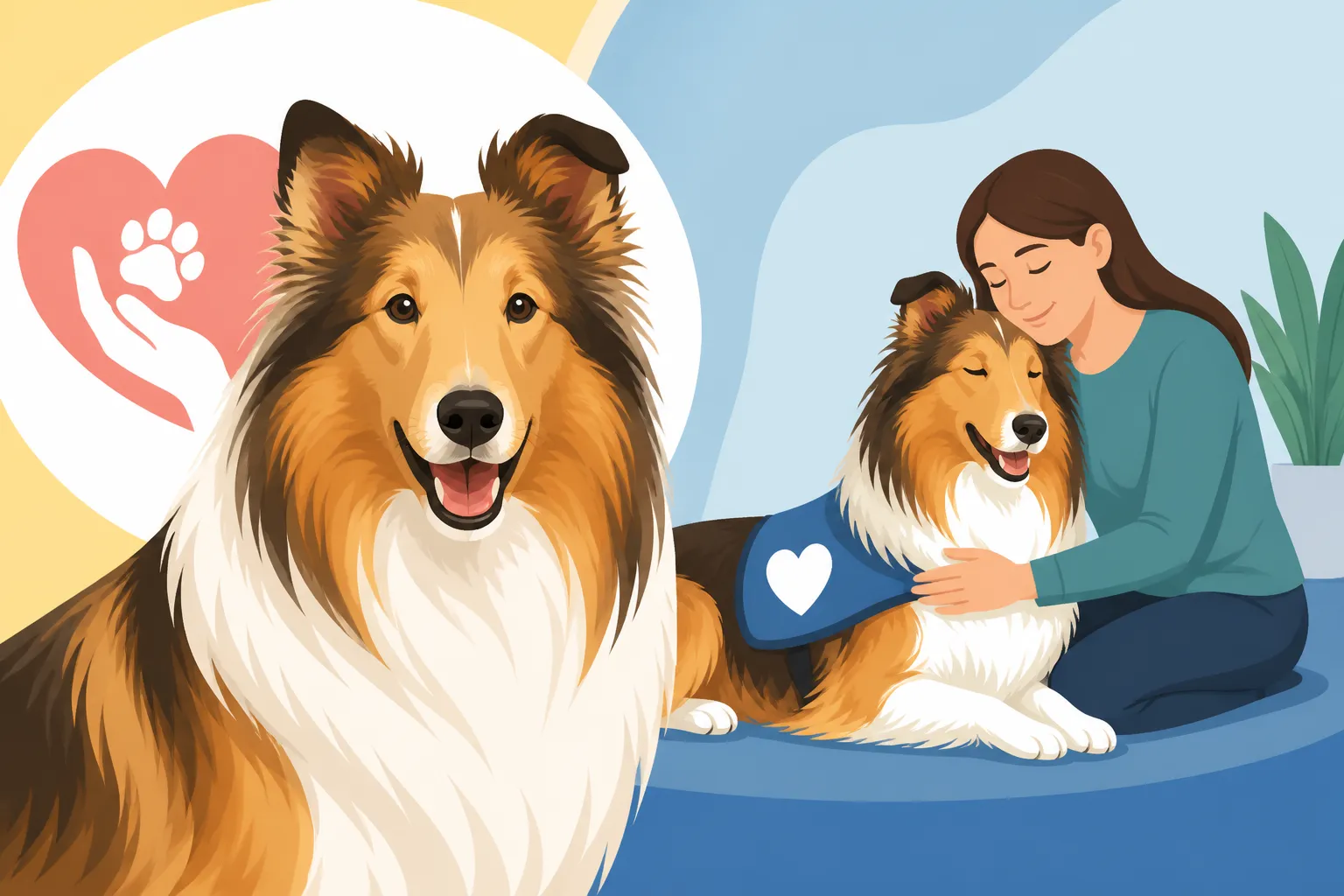
This is perhaps the most classic role for a therapy dog, and Collies are exceptionally well-suited for it. In hospitals, they can provide a much-needed distraction from pain, fear, or boredom for patients of all ages. A soft nose nudge or a gentle gaze can remind someone of home, bring a smile to a weary face, or simply provide a quiet, non-judgmental presence during a difficult time. They might visit children's wards, helping kids feel less scared about procedures, or spend time with adults undergoing long-term treatment.
In nursing homes and assisted living facilities, Collies truly shine. Many residents miss their own pets terribly, and a therapy Collie can fill that void, if only for a short visit. The act of petting a soft coat can lower blood pressure, reduce feelings of loneliness, and stimulate memories. Collies are often patient with slower movements and quieter voices, allowing residents to interact at their own pace. Their calm demeanor prevents overstimulation, which is critical in environments with vulnerable individuals. Imagine the joy of an elderly resident, perhaps with dementia, whose face lights up at the sight of a beautiful Collie, reminding them of a beloved dog from their past. The empathy of the Collie in these settings is truly profound. Whether a Collie Hides Pain is a characteristic that makes them sensitive to discomfort in others, creating an empathetic bond.
Reading Programs and Schools
Collies make fantastic "reading dogs" in schools and libraries. Many children, especially those who struggle with reading or have learning differences, feel less intimidated reading aloud to a dog than to a human. A non-judgmental, furry listener creates a safe and relaxed environment, boosting a child's confidence and making reading a positive, enjoyable experience. The Collie sits patiently, offering gentle encouragement without correction, allowing the child to relax and focus on the story.
Beyond reading programs, therapy Collies can visit classrooms to teach children about responsible pet ownership, dog safety, and the importance of kindness to animals. Their gentle nature makes them excellent ambassadors, demonstrating how to approach and interact with dogs respectfully. Their presence can also reduce anxiety in children, making school a more welcoming place for those who might struggle with social interactions or stress. It's a fantastic way to combine the Collie's intelligence with its innate kindness to support youth development. This kind of calm, steady presence is exactly why a Collie excels in environments where other dogs might be too excitable or boisterous.
Crisis and Disaster Relief Support
While perhaps less common for Collies due to their sensitivity, some highly resilient and well-trained individuals can provide comfort during crisis and disaster relief efforts. Following traumatic events, therapy dogs can offer a source of calm and normalcy amidst chaos. They provide unconditional affection to victims, first responders, and volunteers, helping to alleviate stress, grief, and shock. A furry head in a lap can be a powerful antidote to overwhelming emotions.
This type of work requires an exceptional dog and handler team, as the environments can be unpredictable, noisy, and emotionally draining. The dog must be incredibly stable and able to maintain its composure in highly stressful situations. While Whether a Collie Is Sensitive to Household Tension usually means they absorb moods easily, some Collies, with the right training and a strong handler, can channel that sensitivity into a profound ability to comfort in times of great need. It's a testament to the depth of their character when they can offer solace when it's needed most, even in the most challenging circumstances.
Disclaimer
This article is for general informational purposes only and does not constitute professional advice. Laws, prices and regulations vary by location and change over time. Consult a qualified professional for guidance on your specific situation.