Whether a Collie Is Sensitive to Household Tension
It's a common misconception that our dogs are simply furry companions oblivious to the undercurrents of our human lives. But if you live with a Collie, you've likely witnessed their uncanny ability to pick up on the subtle shifts in mood and atmosphere. This guide will delve into just how sensitive Collies are to household tension, exploring the signs they exhibit, the impact it has on their well-being, and practical strategies to create a more harmonious environment for your perceptive companion.
The Collie's Innate Sensitivity: A Product of Their Herding Roots
Collies are renowned for their intelligence, loyalty, and often, their gentle nature. But beneath that beautiful coat and alert gaze lies a highly sensitive soul, a trait deeply rooted in their history as herding dogs. These aren't dogs bred for brute force or independent action; they were developed to work in close communication with a shepherd, responding to nuanced commands and subtle body language. This historical role cultivated an inherent attunement to their environment and the emotions of those around them.
For a Collie, understanding human cues wasn't just about performing a task; it was about cooperation and cohesion within the "pack"—even if that pack was a flock of sheep and one human. This means they are often acutely aware of discord, argument, or even unspoken tension. They're wired to detect shifts in the emotional landscape because, in their ancestral role, such awareness was crucial for maintaining order and safety. They thrive on harmony and predictability, and anything that disrupts this can feel genuinely unsettling to them. This isn't just about being "smart"; it's a fundamental aspect of their emotional processing.
Why Herding Instincts Foster Empathy
Think about what a herding dog does: it manages a flock, often anticipating movements, reading intentions, and responding with precision. This requires a profound level of observation and a delicate touch. A harsh, unresponsive herding dog would scatter the flock, not guide it. Similarly, a Collie in a household often acts as an emotional barometer. They observe, they process, and they react to the emotional state of their human "flock." This makes them deeply empathetic, often mirroring the feelings they perceive. If you're stressed, your Collie feels it, too. If the household atmosphere is strained, your Collie will likely register that strain. It's a testament to their deep bond with their people that they become so attuned to these subtle signals. They want to please, they want to maintain equilibrium, and tension directly conflicts with that core drive. They can truly read a room, often better than we give them credit for. A Collie Reads a Room Better Than It Reads a Command is a testament to this inherent ability.
This innate empathy means that when a Collie senses conflict, their nervous system can go into overdrive. They might not understand the words being exchanged, but they certainly pick up on the raised voices, the rigid body language, and the emotional energy radiating from their humans. This can be genuinely frightening for a creature whose instincts tell them to maintain peace and order within their group. They are not like some other breeds that might be more independent or less affected by human drama; a Collie feels it deep in their bones. This deep connection makes them wonderful, sensitive companions, but it also places a responsibility on us to protect their gentle spirits.
The Impact of Consistency and Routine
Given their sensitive nature, Collies also deeply value consistency and a predictable routine. Imagine a shepherd who is erratic, shouting one moment and silent the next. The flock would be anxious, and the dog confused. In a home environment, frequent arguments, unpredictable schedules, or sudden changes without clear reassurance can leave a sensitive Collie feeling adrift. They depend on the stability of their environment to feel secure. When that stability is compromised by ongoing tension, it can erode their sense of safety. They might become more vigilant, anxious, or even withdrawn as they try to make sense of the shifting emotional ground. Maintaining a calm, consistent home provides the mental and emotional security a Collie needs to thrive. Whether a Collie Needs a Predictable Routine is not just about physical needs, but emotional ones too.
For example, if meal times are regularly delayed or walks are skipped because of a tense atmosphere, your Collie notices. These disruptions, when coupled with emotional discord, contribute to an overall feeling of instability. They learn quickly to associate the changes in your mood or household tension with disruptions to their expected routine. This can make them worry even before an argument starts, simply by picking up on the initial shift in your energy. A predictable routine acts like a safety blanket for a sensitive Collie, signaling that all is well and there's no need to be on high alert. Without it, their natural inclination towards timidity, as explored in Whether a Collie Is Naturally Timid, can become more pronounced.
Recognizing the Signs: How Your Collie Reacts to Tension
It's easy to miss the subtle cues your Collie is giving you when they sense tension. They don't typically shout or throw things, but their body language and behavior will absolutely tell a story. Learning to read these signals is key to understanding their inner world and providing the support they need. Collies often try to be the peacemakers, or they may simply try to escape the uncomfortable feeling, making their reactions varied but always indicative of their discomfort.
One of the most immediate signs is a change in their posture and facial expression. You might see a Collie slinking lower to the ground, ears flattened back, or their tail tucked. Their eyes might soften or dart nervously, avoiding direct eye contact. Sometimes, they'll yawn excessively, lick their lips, or turn their head away—all classic signs of appeasement or stress in dogs. These are their ways of saying, "I'm uncomfortable; please stop." If you’re not paying close attention, these signals can be easily overlooked amidst human drama. It's important to differentiate these subtle signs from normal behaviors, as an ordinary yawn is different from a stress yawn, which is often quick and purposeful, seemingly out of context.
Behavioral Changes as a Cry for Help
Beyond immediate body language, prolonged exposure to household tension can manifest in more noticeable behavioral changes. A typically outgoing Collie might become withdrawn, spending more time alone, perhaps retreating to another room or hiding under furniture. Conversely, some sensitive Collies might become "velcro dogs," seeking constant reassurance, following you from room to room with an anxious clinginess. They might even try to insert themselves physically between arguing family members, almost like a furry referee, hoping to diffuse the situation.
You might also notice an increase in displacement behaviors. These are actions dogs do when they're stressed and trying to cope, such as excessive licking (paws, air), scratching when not itchy, or sudden bursts of zoomies that seem out of place. Some Collies might even develop more noticeable stress-related behaviors like destructive chewing, inappropriate urination, or increased vocalization, like barking or whining. A sensitive Collie, when overwhelmed, might try to self-soothe in unhealthy ways. For instance, if you find your Collie suddenly pacing more, seemingly aimlessly, it could be a sign of internal distress. Whether a Collie Paces When Understimulated often relates to boredom, but pacing can also be a clear symptom of anxiety when the stimulation is negative. How to Build Confidence in a Nervous Collie involves recognizing these stress signals and providing outlets and reassurance, rather than punishing the behavior.
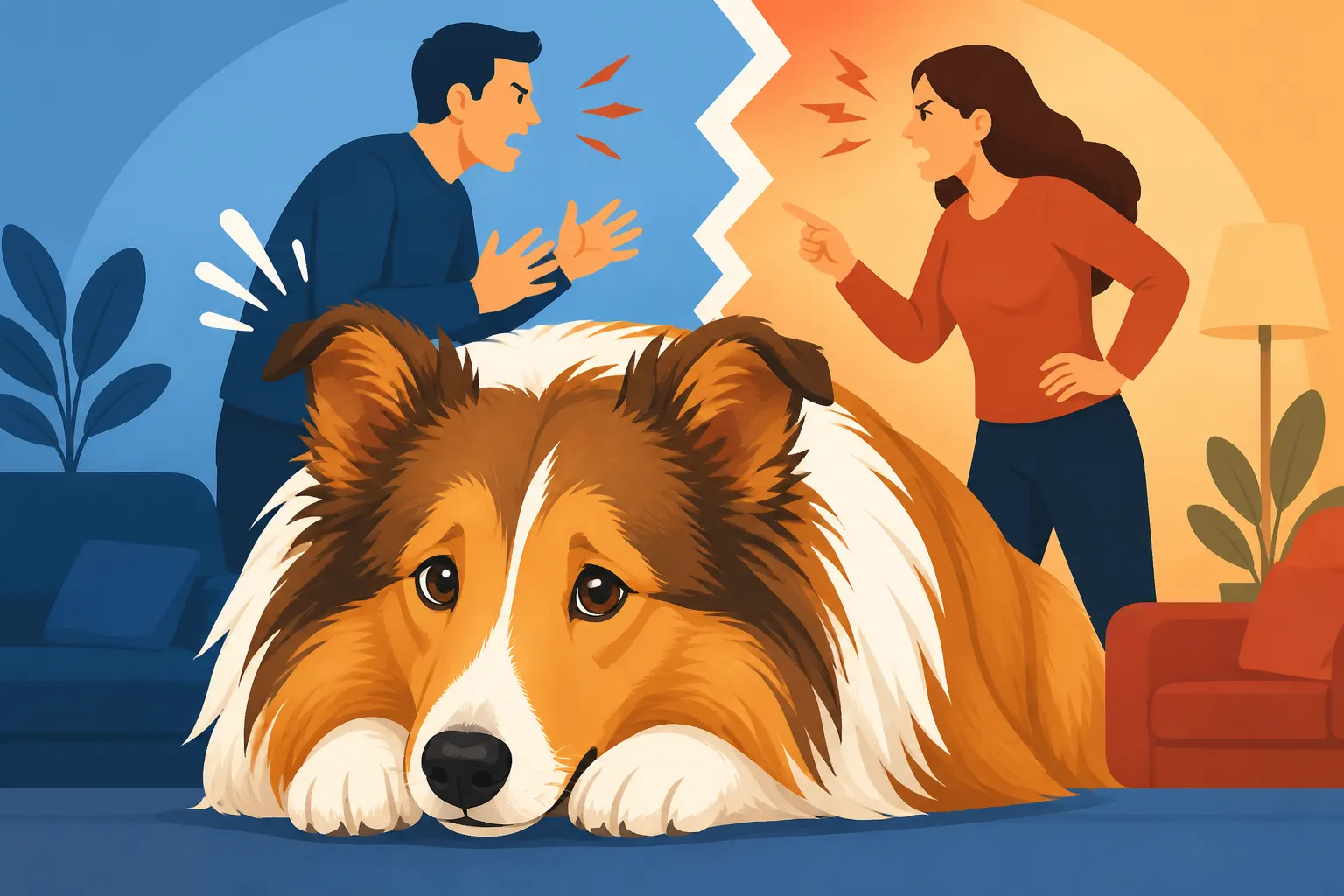
Consider this scenario: A couple is having a heated discussion in the living room. Their Collie, usually lounging peacefully, might get up, walk to one person, nudge their hand, then go to the other, perhaps even letting out a soft whine. If the tension continues, the Collie might then retreat to their crate or a quiet corner, observing from a distance with a worried expression. They're not just passive observers; they are active participants in the emotional ecosystem of your home. They are trying to communicate their discomfort and perhaps even attempting to mend the rift they perceive.
| Sign of Tension in a Collie | Description | Common Misinterpretation |
|---|---|---|
| Panting/Yawning | Not due to heat; short, shallow breaths or wide, forced yawns. | Tired, warm, needs exercise |
| Lip Licking | Rapid licking of the nose or air, especially when no food is present. | Hungry, thirsty, chapped lips |
| Ears Flattened/Pinned | Ears held tightly back against the head, sometimes accompanied by lowered gaze. | Relaxed, submissive |
| Tail Tucked | Tail held low between legs, sometimes pressed against the belly. | "Bad dog" behavior, guilty |
| Whining/Soft Barking | Low, continuous vocalization, not demand barking. | Wants attention, needs to go out |
| "Velcro" Behavior | Excessive following, leaning, or pawing for attention. | Wants cuddles, loves you so much |
| Withdrawn/Hiding | Retreating to a safe space, avoiding interaction. | Independent, sleepy |
| Displacement Activities | Excessive scratching, grooming, sniffing ground, sudden zoomies. | Itchy, bored, playful |
| Inappetence | Reluctance to eat, even favorite treats. | Picky eater, upset stomach |
| Destructive Chewing | Chewing on inappropriate items beyond normal puppy behavior. | Bored, destructive |
The Long-Term Effects of a Tense Environment on Your Collie
It's not just about a temporary discomfort; sustained exposure to household tension can have genuine, long-lasting impacts on a Collie's mental and physical health. Just like humans, dogs aren't designed to live in a constant state of low-grade stress. Their bodies react to perceived threats, releasing stress hormones like cortisol. While short bursts of these hormones are natural and necessary for survival, chronic elevation can lead to a cascade of negative effects.
Imagine feeling perpetually on edge, never quite knowing when the next argument might erupt or the atmosphere might shift. That's what it can be like for a sensitive Collie in a tense home. This constant state of alert can lead to chronic anxiety, which in turn can manifest as a range of issues. Their immune system might be compromised, making them more susceptible to illness. Digestive problems, skin issues, or even a dulling of their typically bright, intelligent personality can all be linked to ongoing stress. They might also find it harder to learn new things or respond to commands, as their mind is preoccupied with scanning for threats. How Long a Collie Remembers a Bad Session highlights how negative experiences, including perceived tension, can leave a lasting imprint, shaping their future responses.
Developing Chronic Anxiety and Fear
A Collie living in a tense environment is at a higher risk of developing generalized anxiety or specific fears. They might become jumpy, easily startled by sudden noises or movements, even those not directly related to the source of tension. What might have started as mild unease could escalate into genuine fear responses, making them hesitant to interact with strangers, other dogs, or even certain family members. This isn't their fault; it's a natural coping mechanism for a sensitive creature trying to protect itself from perceived danger. An anxious Collie may also develop separation anxiety, struggling when left alone, as the home feels less secure without their primary human's calming presence. Whether a Collie Gets Separation Anxiety can be exacerbated by an unstable home environment, making them even more reliant on their humans for a sense of safety.
They might lose that characteristic Collie confidence and joy. Instead of greeting you with a happy bounce and a wagging tail, they might approach hesitantly, always looking for clues about your mood. This can be heartbreaking for any owner who cherishes their Collie's spirited nature. It becomes a vicious cycle: the tension stresses the dog, the dog displays stress behaviors, which can, in turn, frustrate the humans, potentially increasing tension. Breaking this cycle requires awareness and intentional effort from the human family. Without intervention, a once playful and engaged Collie can become a shadow of their former self, constantly on guard and unable to relax fully. This is especially poignant if you consider Whether a Collie Grieves a Lost Family Member; a tense environment can feel like a perpetual state of grief or loss of their peaceful home.
Physical Health Implications
Beyond mental distress, chronic stress can manifest physically. Collies, like many breeds, can be prone to certain health issues, and prolonged stress can certainly exacerbate them. You might see a dull coat, unexplained weight loss or gain, or even more frequent upset stomachs. Some studies suggest a link between chronic stress and increased inflammation, which could contribute to various ailments. It's a subtle but insidious process, gradually chipping away at their vitality. For example, a Collie under constant stress might experience more frequent episodes of diarrhea or vomiting, or develop hot spots on their skin due to nervous licking.
It’s crucial to remember that your Collie isn't just a pet; they are a sentient being with a deep capacity for emotion. Their well-being is intrinsically linked to the emotional health of their household. Ignoring their signs of distress is not only unkind but can also lead to a dog that is a shadow of its true self, struggling with preventable issues. Investing in a calmer home is an investment in your Collie's overall health and happiness. Their inherent need for a peaceful environment means that your efforts to reduce tension will directly contribute to a healthier, happier, and more well-adjusted dog. Understanding what motivates a Collie, as discussed in What Motivates a Collie, often points to positive reinforcement and a calm, happy environment as key drivers for their well-being.
Creating a Haven: Strategies for a Harmonious Home
Recognizing that your Collie is sensitive to household tension is the first crucial step. The next is actively working to mitigate that tension and create a calm, predictable, and reassuring environment for them. This isn't always easy, as life can be stressful, but even small, conscious efforts can make a world of difference to your perceptive companion.
The most direct approach, of course, is to address the sources of tension directly, if possible. If arguments are frequent, consider how and where they occur. Perhaps move sensitive discussions to a time or place where your Collie isn't present, or consciously lower voices and maintain a calm demeanor even during disagreements. Your Collie primarily reads your body language and tone, so even if you're upset, trying to maintain a calmer outward appearance can help shield them. Remember, Harsh Handling Breaks a Collie and It Does Not Come Back applies not just to direct training but to the overall emotional climate of the home. Even if a Collie understands specific household rules, as in Whether a Collie Understands Household Rules, a tense environment undermines their willingness to comply or participate.
Providing a Safe Retreat
Every sensitive Collie needs a dedicated safe space where they can retreat when they feel overwhelmed. This might be a crate covered with a blanket, a quiet room, or even just a cozy dog bed in a less-trafficked area of the house. Teach your Collie that this is their zone, a place for calm and peace, not punishment. Encourage them to use it, perhaps by placing favorite toys or a long-lasting chew there. During periods of known tension (like a loud party or a heated discussion), gently guide them to their safe space and ensure they're not disturbed. Making this space appealing can be as simple as adding a comfortable bed from a brand you trust, easily found on Amazon, or a calming diffusers that emits dog-appeasing pheromones.
When things are tense, offer them a calming activity. A puzzle feeder, a KONG stuffed with frozen peanut butter, or a chew toy can help redirect their anxiety and give them something positive to focus on. These activities engage their minds in a constructive way, helping to release some of that nervous energy. Having these tools readily available can be a lifesaver for both you and your Collie during stressful times.
Structured Training and Enrichment
Consistent, positive reinforcement training can be incredibly beneficial for a sensitive Collie. It builds their confidence, strengthens your bond, and provides a sense of predictability. Knowing what's expected of them, and being rewarded for it, can be very reassuring. Focus on calm, clear communication and positive reinforcement, avoiding any methods that rely on fear or intimidation. For puppy owners, programs like BAXTER & Bella can offer structured, positive training guidance that sets a great foundation for a confident dog, helping to prevent anxiety before it takes root.
Mental stimulation is just as important as physical exercise for Collies. Engaging their minds with scent games, new tricks, or even short, consistent training sessions helps them feel fulfilled and less prone to anxiety. A tired mind, like a tired body, is often a calmer one. Forty Five Minutes a Day, and Half of It in Its Head emphasizes this balance of physical and mental activity. Even if your Collie learns from watching other dogs, as detailed in Whether a Collie Learns From Watching Another Dog, ensuring the "teacher" dog is calm and well-adjusted is also vital.
Your Role as a Calming Presence
Finally, your own demeanor is perhaps the most powerful tool you have. When you interact with your Collie, be mindful of your tone of voice, your body language, and your energy. Take a few deep breaths before engaging with them. Speak in a calm, reassuring voice. Offer gentle pets and positive affirmations. Regular, calm interactions, even brief ones, can help counterbalance periods of stress. Remember, Collies bond deeply and look to you for guidance and reassurance. Be their rock, their steady presence, and they will feel much more secure even when the world around them feels chaotic. If you have a rescue Collie, establishing this consistent, loving presence is paramount to helping them learn to trust and overcome past anxieties. How a Rescue Collie Learns to Trust starts with you. Your calm presence can be the anchor that helps them navigate the unpredictable currents of life.
Disclaimer
This article is for general informational purposes only and does not constitute professional advice. Laws, prices and regulations vary by location and change over time. Consult a qualified professional for guidance on your specific situation.