Whether a Collie Learns From Watching Another Dog
It’s a natural thing to wonder if your incredibly smart Collie is picking up cues just by observing the other furry members of your household. You see your older dog go to the door to ask out, and then suddenly your new puppy starts doing it too. Is it just a coincidence, or is your Collie truly learning by watching? This guide will dive deep into how Collies, with their keen intelligence and observational nature, can learn from their canine companions, and how you can harness this natural behavior for positive training outcomes.
The Observational Learner: How Collies Process Information
Collies are renowned for their intelligence, sensitivity, and often, an uncanny ability to read situations and emotions. This isn't just about understanding human commands; it extends to their interactions with and observations of other dogs. They are, at their core, herding dogs, which means they are highly attuned to their environment and the subtle cues within a group. This makes them particularly adept at observational learning.
The Collie's Innate Intelligence and Empathy
Our Collies often seem to possess an almost human-like understanding of our moods and routines. They pick up on subtle changes in tone, body language, and the general atmosphere of the home. This high level of emotional intelligence and attunement isn't limited to their human family; it plays a significant role in how they interact with and learn from other dogs. A Collie's historical role as a herding dog required them to be excellent problem-solvers and quick thinkers, capable of interpreting complex social cues from sheep, other dogs, and their human shepherds. This genetic predisposition for intelligent observation translates beautifully into their ability to learn vicariously. They don't just see another dog perform an action; they often seem to grasp the intent or consequence of that action.
Consider a situation where an older dog, perhaps a seasoned family pet, calmly greets a stranger at the door. Your young Collie puppy, naturally a bit more reserved or unsure, might hang back at first. But watch closely. They're processing everything: the older dog's relaxed tail wag, the gentle sniff, the lack of tension. Over time, this repeated observation can teach the puppy that strangers aren't necessarily threats, and a calm greeting is the expected behavior. This isn't just mimicry; it's a deeper cognitive process at play, fueled by their inherent empathy and intelligence.
Mirror Neurons and Social Learning in Dogs
While the concept of "mirror neurons" is often discussed in human neuroscience, the idea of social learning and observational mimicry is well-documented in many animal species, including dogs. Dogs, as pack animals, have evolved to learn from their group. This means they pay attention to what other dogs do, especially those they respect or are bonded with. When one dog performs an action and receives a reward or a desirable outcome, another dog observing can form an association.
For a Collie, this can be particularly pronounced. Their intelligence allows them to make connections that other breeds might miss. They aren't just copying; they're often trying to understand the "why" behind the action. If an older dog knows that sitting politely earns a treat, a young Collie watching might not just sit, but they might also understand the concept of "polite behavior yields rewards." It’s a step beyond simple conditioned response and delves into a more sophisticated form of social learning. This is why having a good role model can be so powerful. They're not just demonstrating a trick; they're demonstrating a way of interacting with the world.
The Role of Social Dynamics
The dynamics within your multi-dog household significantly impact how readily your Collie will learn from another dog. A clear hierarchy, even a benevolent one, can establish an older dog as a "teacher" or "guide." Puppies, especially, look to older, more experienced dogs for cues on how to navigate their world. If you have an older dog that is confident, well-behaved, and has a good relationship with your Collie, that older dog becomes an invaluable resource for social learning.
However, if the household dynamics are strained, or if the older dog is anxious or reactive, the observational learning can take a different, less desirable turn. A Collie might learn to be wary of strangers if the older dog barks aggressively at every passerby, or become fearful in new situations if the resident dog panics. It highlights the importance of fostering a calm, positive environment and ensuring that any older resident dogs are good behavioral examples. Your Collie will naturally pick up on these cues, for better or for worse. Establishing clear boundaries and consistent training for all dogs in the household helps create a stable learning environment.
Practical Scenarios: When Collies Learn by Watching
Observational learning isn't just a theoretical concept; it plays out in countless everyday situations for our Collies. From mastering house rules to navigating complex social interactions, watching another dog can be a powerful learning tool.
House Training and Routine Adoption
One of the most immediate and beneficial ways a new Collie puppy learns from an older dog is in establishing house training and daily routines. Imagine bringing home a little fluffball. They're utterly clueless about where to "go" and when. If you have an older, reliably house-trained dog, the puppy will often observe and mimic. The older dog goes to the door, perhaps gives a little nudge or whine, and is let out. The puppy watches, processes, and eventually starts to associate the door with outdoor relief. It's a faster, less stressful way for them to grasp the concept than solely relying on human-led potty breaks.
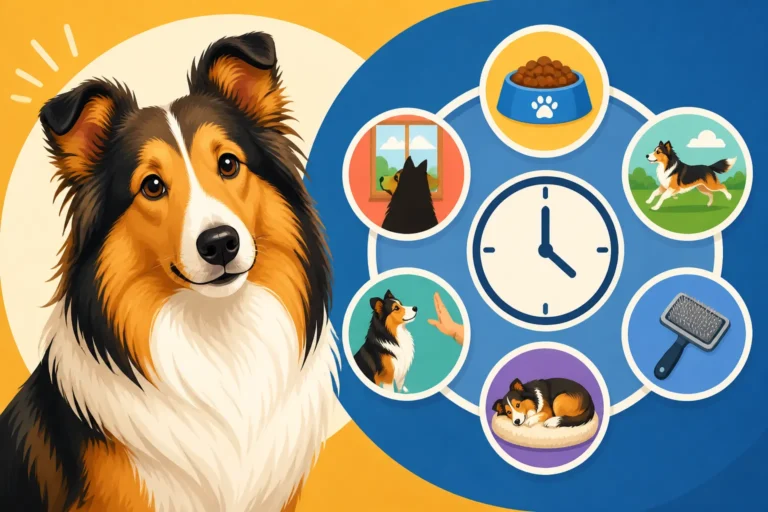
Beyond house training, routines like meal times, settling down for the evening, or even greeting guests can be subtly taught through observation. If the older dog patiently waits for its bowl, the puppy quickly learns that frantic barking doesn't speed up dinner. If the older dog goes to its crate happily at night, the puppy might be more inclined to see the crate as a safe, comfortable space. Crate Training a Collie Puppy can be made much smoother with a good canine role model. This isn't to say you, the human, are off the hook for training, but having a dog "mentor" certainly gives your Collie a head start.
Learning Commands and Tricks
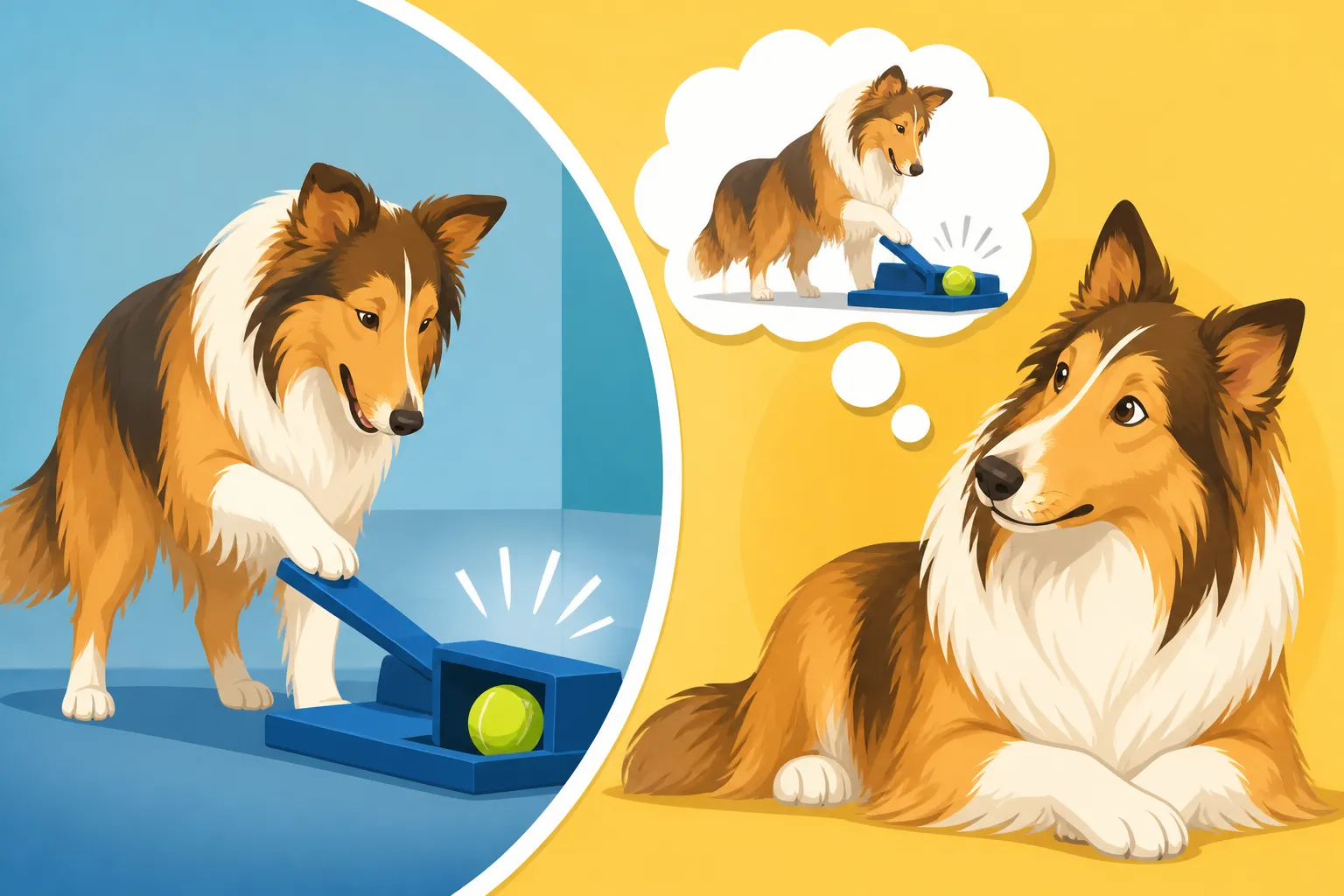
While direct, positive reinforcement training is paramount for teaching specific commands, observational learning can definitely accelerate the process for your Collie. If you're teaching a new trick, like "shake a paw" or "roll over," and your older dog already knows it, letting your Collie observe the older dog perform the action and receive a reward can pique their interest and understanding. They see the desired outcome and the reward that follows.
A smart Collie will often try to replicate the behavior they've just witnessed, especially if they are motivated by the same treats or praise. It's almost as if they think, "Hey, if they get a cookie for doing that, I should try it too!" This can be incredibly useful in group training classes where dogs are observing each other, or even just at home during family training sessions. You might find your Collie picking up on the verbal cues or hand signals more quickly because they've seen another dog respond to them. It reinforces What Motivates a Collie and how powerful positive association can be.
Overcoming Fears and Building Confidence
This is where observational learning truly shines for sensitive breeds like the Collie. If you have a nervous young Collie, or perhaps a rescue who is shy about new experiences, a confident, calm older dog can be a lifeline. A fearful Collie might be hesitant to explore a new room, walk on a strange surface, or approach an unfamiliar object. But if they see their canine companion confidently investigate, sniff, and show no alarm, the Collie's own apprehension can significantly decrease.
For instance, if your Collie is wary of thunderstorms, watching another dog remain calm and unbothered might help mitigate their anxiety over time. Similarly, a dog that is initially shy around new people or other dogs might gain courage by seeing their trusted companion happily interacting. This "social referencing" is a powerful tool for How to Build Confidence in a Nervous Collie. It's not a quick fix, but consistent exposure to positive modeling can gradually reshape a Collie's perception of potentially scary situations, building their resilience and comfort in the world.
Social Cues and Play Etiquette
Dogs communicate through a complex language of body postures, facial expressions, and vocalizations. A young Collie puppy, especially if separated from its littermates early, might not fully grasp the nuances of dog-to-dog communication. This is where an older, well-socialized dog can be an excellent teacher of play etiquette and social boundaries.
A puppy might initially play too rough, not understanding when another dog is signaling "enough." An older dog, through gentle corrections (a growl, a brief snap, or simply walking away), can teach the puppy appropriate play behavior. The Collie learns how to invite play politely, how to respect personal space, and when to back off. They also learn to differentiate between playful nips and real aggression. Observing Whether a Collie Gets On With Other Dogs in a structured, positive way can prevent many future behavioral issues, teaching them to be polite and confident members of the canine community.
Limitations and Considerations of Observational Learning
While the power of a good canine role model for your Collie is undeniable, it's important to understand that observational learning isn't a magic bullet. There are limitations, and sometimes, even drawbacks that responsible Collie owners need to consider.
Not a Substitute for Direct Training
It’s tempting to think that if you have a well-behaved older dog, your new Collie will just "figure it out" without much effort from you. While observational learning provides a fantastic head start and certainly complements formal training, it can never entirely replace direct, consistent, and positive reinforcement training from their human companion.
Think of it this way: your Collie might learn what to do by watching, but they still need you to teach them the cue for that behavior. For example, they might learn to sit when the older dog sits, but they still need to learn that "Sit!" means they should sit, even when the older dog isn't there. Direct training allows you to build a strong communication bond, generalize behaviors to different environments, and ensure your Collie understands commands independently. Relying solely on observation can lead to a dog who only performs behaviors when their canine mentor is present, or only in specific contexts. For a highly intelligent breed like the Collie, direct engagement and mental stimulation through training are crucial for their overall well-being.
Learning Bad Habits Too
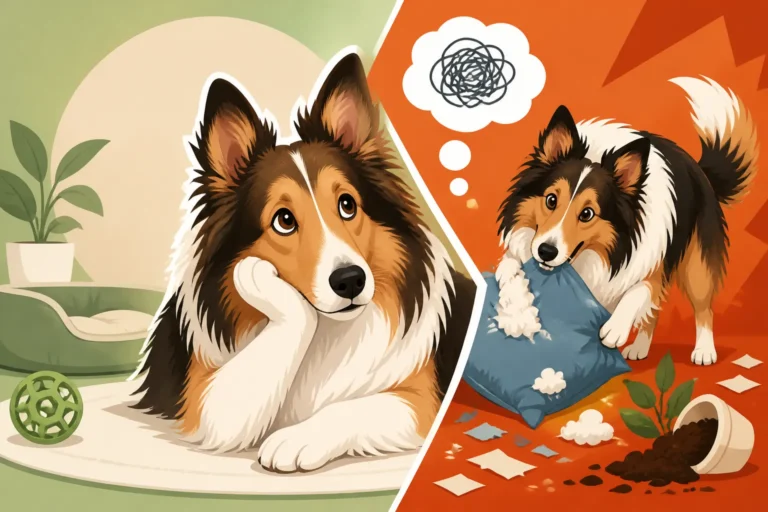
The flip side of the coin is that if your older dog has some less-than-desirable habits, your impressionable Collie might pick those up just as easily as the good ones. Does your resident dog bark incessantly at the mailman? Your Collie might soon join in the chorus. Does the older dog counter-surf or beg at the table? Your Collie might learn these opportunistic behaviors.
This is a very real frustration for many multi-dog owners. You've worked hard to train one dog, only to have a new puppy quickly adopt the older dog's naughty quirks. This emphasizes the importance of managing the environment and proactively addressing any undesirable behaviors in all your dogs. If your older dog has a habit of Why a Collie Barks at everything that moves, you'll need to work on desensitizing and counter-conditioning that behavior, not just for the older dog, but to prevent your Collie from inheriting the habit. Consistency from you, the human, across all your dogs is key.
Individual Personality and Prior Experiences
Every Collie is an individual, shaped by genetics, early experiences, and personality. While some Collies are natural mimics, others might be more independent learners. A confident, curious puppy might be very open to observational learning, quickly latching onto what their older companion does. However, a more reserved or anxious Collie might be slower to pick up on cues, or might interpret the older dog's actions differently.
For a rescue Collie, their prior experiences weigh heavily. If they've come from a background of neglect or trauma, they might be hesitant to trust or emulate another dog, especially initially. Building trust with you, their human, and then slowly introducing them to a calm, stable canine companion will be essential. How a Rescue Collie Learns to Trust can be a long process, and while an older dog can help, it needs to be carefully managed. Some Collies might also have a natural predisposition for certain behaviors that override observational learning, regardless of the role model.
The "What's In It For Me?" Factor
Dogs, much like humans, are ultimately driven by consequences. While a Collie might observe another dog performing an action, they won't necessarily adopt that behavior unless there's a perceived benefit for them. If the older dog gets a treat for sitting, and the Collie tries to sit but gets no reward, the motivation to continue that observed behavior will quickly fade.
This is why positive reinforcement remains the cornerstone of effective training. Even when your Collie seems to learn something by watching, you still need to step in and reward their attempt at the behavior. This reinforces the action directly for your Collie and builds a stronger association in their mind. Observing another dog can show them what to do, but your timely praise or a tasty treat confirms that it's a desirable action for them to perform.
Maximizing Observational Learning for Your Collie
Understanding that your Collie can learn by watching is a powerful tool in your training arsenal. By being intentional about the environment and the role models you provide, you can harness this natural ability for positive outcomes.
Choosing a Good Canine Role Model
If you're planning to introduce a new Collie puppy to your home, or even if you're looking for dog-socialization opportunities, the choice of canine role model is crucial. An older dog who is calm, confident, well-trained, and friendly will be an invaluable asset. They should ideally have:
- Solid obedience: A dog who reliably responds to basic commands.
- Good house manners: No counter-surfing, excessive barking, or destructive chewing.
- Balanced temperament: Not overly anxious, aggressive, or prone to resource guarding.
- Positive social skills: Able to interact appropriately and politely with other dogs.
If your resident dog has behavioral quirks you'd prefer your Collie not pick up, consider how you can manage their interactions or work on those specific issues with the older dog before the Collie arrives or during their early weeks together. Remember, your Collie is watching and absorbing everything!
Structured Observation Opportunities
You can actively set up situations for your Collie to learn by observation. This isn't just passive exposure; it's creating purposeful scenarios. For instance:
- During training sessions: When teaching a new command, have your older, well-trained dog perform the action first. Let your Collie watch, then immediately encourage and reward your Collie for their attempt. You can use positive reinforcement techniques found in programs like BAXTER & Bella, which often incorporate visual learning.
- Controlled social interactions: If your Collie is shy around new people or dogs, let them observe a confident dog greeting calmly from a safe distance before asking your Collie to engage.
- Routine reinforcement: Explicitly make the older dog perform a routine action (e.g., waiting at the door before going out, going to their bed on command) while your Collie is present and attentive.
By structuring these opportunities, you increase the likelihood that your Collie will make the desired associations and internalize the observed behaviors.
Reinforcing Learned Behaviors
Even when your Collie appears to learn something by watching, your active involvement in reinforcing that behavior is essential. When you see your Collie mimic a desirable action, immediately praise them enthusiastically, offer a treat, or provide a favorite toy. This direct positive reinforcement helps solidify the learning in their mind. They need to understand that their action, even if observed, leads to a reward.
For example, if your older dog goes to the kitchen and sits politely for a treat, and your Collie follows suit and sits too, immediately reward the Collie! This helps them connect their action to the positive outcome. It also strengthens your bond and shows them that you are an active part of their learning process, not just a bystander.
Incorporating Training Tools
While observational learning is largely about social interaction, certain tools can make your training sessions, and therefore observational opportunities, more effective.
- Long lines and leashes: For outdoor walks, using a long line (perhaps from Amazon) on your young Collie can allow them to safely observe an older dog's leash manners without the risk of darting off.
- Clickers: If your older dog is clicker-trained, using a clicker for their behaviors can signal to your Collie that something precise and good is happening, making them more attentive.
- Treat pouches: Keeping treats readily available means you can quickly reward both dogs for desired behaviors, reinforcing the observational learning on the spot.
- Puzzle toys: If your older dog enjoys puzzle toys, your Collie might observe how they manipulate them to get treats, inspiring them to try themselves.
These tools support the overall training environment, making it easier for your Collie to learn, whether directly from you or through their canine companions.
Avoiding Negative Influences
Just as important as providing good role models is preventing exposure to bad ones. If your older dog has a habit you don't want your Collie to adopt, you need to manage the environment to prevent your Collie from observing and internalizing it.
- Supervise interactions: Don't leave your Collie unsupervised with a dog that exhibits undesirable behaviors.
- Separate when necessary: If the older dog barks excessively at the window, consider crating or separating them when you know the trigger (like the mailman) will pass, until you've addressed the older dog's barking. Whether a Collie Needs a Predictable Routine helps manage these situations.
- Proactive training: Work diligently on correcting any bad habits in your older dog, using positive reinforcement. It’s a win-win: the older dog improves, and the Collie has a better model.
By carefully curating the experiences and interactions your Collie has with other dogs, you can ensure they are learning the best possible behaviors, setting them up for a happy, well-adjusted life.
| Aspect of Learning | Benefits of Observational Learning | Potential Drawbacks |
|---|---|---|
| Pace of Learning | Can accelerate learning of routines and social cues. | May lead to superficial understanding without direct reinforcement. |
| Behavioral Range | Helps with house training, manners, and social etiquette. | Can inadvertently teach undesirable habits (e.g., barking, begging). |
| Confidence Building | A confident role model can reduce fear and build courage. | An anxious role model can instill fear or reactivity. |
| Social Skills | Teaches appropriate play and communication with other dogs. | Can reinforce inappropriate play or aggression if role model lacks skills. |
| Relationship Building | Fosters a stronger bond between dogs and a sense of belonging. | May create over-reliance on the role model for decision-making. |
| Human Effort | Reduces initial human effort in some areas (e.g., potty training). | Requires human vigilance to prevent learning bad habits. |
Disclaimer
This article is for general informational purposes only and does not constitute professional advice. Laws, prices and regulations vary by location and change over time. Consult a qualified professional for guidance on your specific situation.