Whether a Collie Copes at a Busy Event
Bringing your beloved Collie to a bustling farmer's market or a lively outdoor festival sounds like a dream, doesn't it? A picture of canine companionship amidst cheerful chaos. But the reality can often be far from that idyllic image, leaving both you and your sensitive companion stressed and overwhelmed. This guide is here to unravel the complexities of taking your Collie to busy events, offering realistic advice and strategies to ensure their comfort and your peace of mind, because nobody wants a lovely day out to end in canine anxiety.
Is Your Collie Cut Out for Crowds? Understanding Their Temperament
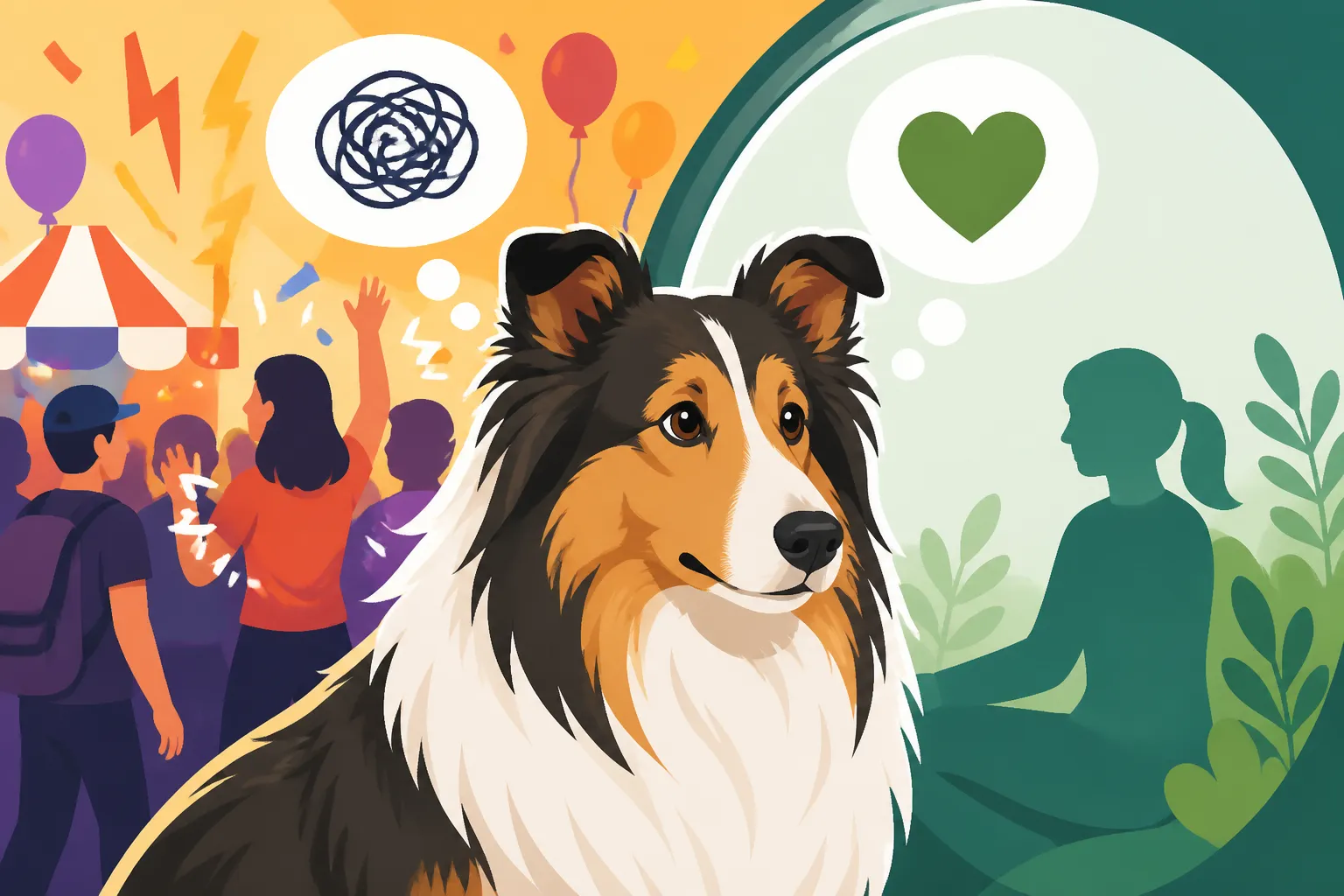
Collies are magnificent dogs, known for their intelligence, loyalty, and often, a gentle sensitivity. This sensitivity is a double-edged sword when it comes to busy, noisy environments. On one hand, it makes them incredibly attuned to their family and surroundings, often reading your mood better than any human. On the other hand, it means they can be easily overwhelmed by sensory input that other breeds might simply shrug off. Think about it: a bustling street fair is a cacophony of strange smells, loud voices, sudden movements, and countless unfamiliar faces, all perceived through your Collie's acute senses.
The question of whether your Collie will cope at a busy event isn't a simple yes or no; it's a nuanced exploration of individual personality, early socialization, and the specific nature of the event itself. Some Collies, thanks to extensive positive exposure as puppies, possess a robust confidence that allows them to navigate such settings with grace, observing from a calm distance. These are the dogs who might enjoy a leisurely stroll through a park during a family picnic, taking in the sights without becoming agitated. However, many Collies, by their very nature as herding dogs, are predisposed to being watchful and somewhat reserved, making them more susceptible to feeling anxious or overwhelmed when faced with unpredictable stimuli.
It's also worth considering the breed's historical role. The Collie was bred to work alongside humans, guiding sheep with intelligence and a keen awareness of their surroundings, not to be the life of a crowded party. This inherent watchfulness can translate into vigilance in a busy urban setting, where every passing stroller, bike, or loud laugh becomes something to monitor. For some Collies, this constant vigilance is mentally exhausting and anxiety-inducing. If you've ever wondered Whether a Collie Is Sensitive to Household Tension, you'll understand how deeply they absorb environmental cues, and a busy event is like a household full of tension amplified by a thousand.
Furthermore, individual Collies vary wildly. You might have one who, even with minimal early socialization, is naturally outgoing and curious, viewing new experiences as exciting adventures. Then there's the Collie who, despite all your best efforts, is just naturally timid. For these dogs, any environment that removes their sense of control or predictability can be a source of immense stress. It's vital to be honest about your own dog's baseline personality. Pushing a naturally shy Collie into a crowded street festival is not "exposure therapy"; it's often a recipe for a bad experience that can actually set back their confidence. If you suspect your Collie is Whether a Collie Is Naturally Timid, then busy events require even more careful consideration and preparation.
Reading Your Collie's Cues: Signs of Stress at Busy Events
One of the most critical skills a Collie owner can develop is the ability to read their dog's body language. Our Collies are masters of subtle communication, and they often give us clear signals that they're uncomfortable long before they resort to barking, lunging, or trying to bolt. Ignoring these early signs can lead to escalating anxiety, making future outings even more challenging. You might think your dog is "fine" because they're not overtly misbehaving, but a closer look at their demeanor can tell a very different story.
Look for a constellation of behaviors rather than just one. A single yawn might mean nothing, but a series of yawns combined with lip licking, averted eyes, and a tucked tail is a huge red flag. Excessive panting, even when it's not particularly warm, can be a sign of stress, as can drooling. Your Collie might start pacing restlessly, unable to settle, or actively try to pull away from the crowd, perhaps trying to get behind your legs or hide under a table. Some will even shake or tremble, or adopt a stiff, rigid posture, making them appear frozen in place. This "freeze" response is a strong indication of fear or overwhelm, not calm attentiveness.
Another common stress signal, especially in herding breeds, is "whale eye," where the whites of their eyes become visible, usually at the inner or outer corners. This is often accompanied by a hard stare or rapidly darting eyes, indicating vigilance and apprehension. Their ears might be pinned flat against their head, or they might try to turn their head away, avoiding direct eye contact with people or other dogs. If your Collie suddenly becomes intensely focused on sniffing the ground, almost frantically, it can be a displacement behavior, a way for them to cope with stress by engaging in a neutral activity.
Knowing these signals is paramount. Far too often, owners accidentally push their dogs past their comfort zone because they don't recognize the subtle requests for help. When you see these signs, it's not about forcing your dog to "get over it." It's about respecting their boundaries and taking action. Just like a bad training session can lead to your Collie remembering it for a long time—How Long a Collie Remembers a Bad Session—a negative experience at a crowded event can create lasting aversions, making it harder to introduce them to similar situations in the future.
Here's a quick guide to some common stress signals:
| Sign of Stress | Description | What it Means |
|---|---|---|
| Lip Licking | Rapid licking of the nose or air, not related to food or thirst. | Mild anxiety, attempting to self-soothe. |
| Yawning | Wide yawn, not due to tiredness, often accompanied by averted eyes. | Stress, discomfort, appeasement signal. |
| Pacing/Restlessness | Inability to settle, moving constantly, often with wide eyes. | Escalating anxiety, seeking an escape. |
| Tail Tucked | Tail held low between the legs, often combined with a hunched posture. | Fear, submission, extreme discomfort. |
| Excessive Panting | Panting heavily without recent physical exertion or heat. | Anxiety, overheating (can be stress-induced). |
| Ears Pinned Back | Ears flattened tightly against the head. | Fear, submission, discomfort. |
| Shaking/Trembling | Shivering, even if not cold. | High fear or anxiety. |
| Hiding/Seeking Cover | Attempting to get behind legs, under benches, or away from the crowd. | Overwhelm, trying to find a safe space. |
| Whale Eye | The whites of the eyes are visible, usually at the inner or outer corners. | Discomfort, fear, potential aggression if pushed too far. |
| Stiff Body | Tense muscles, rigid posture, reluctance to move. | Fear, readiness to flee or defend (if cornered). |
Strategies for Success: Preparing Your Collie for Public Outings
If you dream of having a Collie companion who can comfortably join you for a quiet afternoon on an outdoor patio or a stroll through a local craft fair, preparation is absolutely key. This isn't about throwing your dog into the deep end; it's a gradual, thoughtful process of desensitization and positive association.
Start Small and Build Up
You wouldn't expect a child who's never seen the ocean to immediately swim across it, right? The same logic applies to your Collie. Begin with low-key, mildly stimulating environments. Think a quiet park during off-peak hours, a stroll down a residential street, or sitting just outside the perimeter of a bustling area, far enough away that your Collie notices the activity but isn't overwhelmed. Reward calm behavior with high-value treats and praise. The goal is for your Collie to associate these mildly stimulating environments with positive experiences.
As they become comfortable, gradually increase the level of activity. Perhaps move closer to the park entrance where more people are passing by, or walk past an outdoor cafe rather than through it. Pay close attention to their body language. The moment you see any of those stress signals, you've gone too far, too fast. Retreat to a comfortable distance and end the session on a positive note, affirming that you are their protector and advocate. For puppies, it’s crucial to know Where to Socialize a Collie Puppy to set a good foundation, but remember that socialization isn't just about exposure; it's about positive exposure.
Foundational Training and Predictability
A well-trained Collie is often a more confident Collie. Knowing basic commands like "sit," "stay," "heel," and "leave it" provides both of you with tools to navigate potentially tricky situations. A solid "stay" can keep your Collie safely by your side while a large group passes, and a reliable "heel" helps you move through crowded areas without your dog weaving into people's paths. Consider utilizing online training platforms like BAXTER & Bella, which offer comprehensive programs that can help build these foundational skills in a structured, positive reinforcement manner. Their lessons often emphasize real-world scenarios, making it easier to apply what you learn to public outings.
Collies thrive on routine and predictability. If your Collie is accustomed to a predictable routine, new environments can be less jarring. Think about Whether a Collie Needs a Predictable Routine. When you take them to a new place, maintain as much predictability as possible: familiar leash, familiar treats, perhaps even a familiar toy. This sense of routine helps anchor them in the unfamiliar.
Equip Yourself for Success
The right gear makes a huge difference. A comfortable, well-fitting harness (rather than just a collar) can give you better control without putting pressure on your Collie's neck, which can be particularly important in crowded spaces. Look for harnesses available through retailers like Amazon that are escape-proof and allow for easy, non-restrictive movement. Always use a sturdy leash, and consider a hands-free leash if you need to manage bags or a coffee.
A treat pouch filled with high-value treats is non-negotiable. These aren't just for training; they're for continuous positive reinforcement and distraction. Every time someone walks by calmly, or your Collie observes a new sight without reacting, a treat reinforces that positive experience. A portable water bowl is also essential to keep your Collie hydrated and offer a moment of calm. For those Collies who are noise sensitive, a comfortable snood or even gentle earplugs designed for dogs could be something to explore, especially if Whether a Collie Is Noise Sensitive is a concern for your furry friend.
Essential Gear and Training Tips for Event Navigation
Once you've done the groundwork, and if your Collie shows potential for handling moderately busy environments, it's time to refine your strategy for event navigation. Remember, the goal isn't necessarily for your Collie to love every single bustling event, but to feel safe and comfortable in appropriate situations.
Choosing the Right Events
Not all "busy events" are created equal. A quiet farmers' market on a weekday morning is vastly different from a weekend music festival. Start with places that offer space, fresh air, and predictable noise levels. Outdoor cafes with ample seating, quiet park paths, or local community gardens can be great starting points. Avoid loud concerts, crowded parades, or anything with fireworks or sudden loud noises, especially if your Collie startles easily at sounds. Remember, their hearing is incredibly acute.
Consider events with natural "escape routes" or quiet zones where you can retreat if your Collie becomes overwhelmed. A pet-friendly outdoor mall might have quiet corners or grassy areas you can duck into. Always have a plan B: a car close by where your Collie can relax if the environment proves too much.
Active Management During the Event
Once you're at an event, you need to be your Collie's advocate and shield.
- Create Space: Whenever possible, try to walk on the periphery of the crowd rather than plunging into the thick of it. Give other people and dogs a wide berth. If you see a particularly boisterous child or an off-leash dog approaching, step aside or change direction.
- Constant Observation: Keep your eyes on your Collie. Are they showing any early stress signals? Be ready to act immediately.
- Engage and Distract: Keep your Collie's attention on you. Use small, frequent treats to reward calm focus. Play quick games of "find it" with treats on the ground to divert their attention from potential triggers. A favorite durable chew toy from Amazon can also provide a comforting distraction if you stop for a break.
- Polite Communication: Be prepared to politely tell well-meaning strangers not to pet your dog, especially if your Collie is nervous or you're working on their comfort in public. A simple "Please don't pet, we're training" or "She's a little shy" works wonders.
- Short and Sweet: Keep initial outings very brief. Five to ten minutes of calm exposure and positive reinforcement is far more beneficial than an hour of increasing anxiety. End on a good note, even if it means cutting your own plans short.
Continuing the Training Journey
Exposure to busy environments shouldn't be a one-off event. It's an ongoing process. Enroll in an obedience class or a specialized "real-world readiness" class that practices in various settings. Resources like the BAXTER & Bella online puppy school often have sections dedicated to public manners and desensitization, providing structured guidance for these scenarios. Regular, positive exposure to new sights and sounds in controlled ways will build their confidence over time.
Remember that a successful outing isn't about your Collie interacting with everyone or seeing everything. It's about your Collie feeling safe, secure, and happy in your presence, even amidst mild chaos. And sometimes, the most loving thing you can do for your sensitive Collie is to leave them comfortably at home, enjoying their quiet space, while you brave the crowds solo. Because at the end of the day, their well-being is always the top priority.
Disclaimer
This article is for general informational purposes only and does not constitute professional advice. Laws, prices and regulations vary by location and change over time. Consult a qualified professional for guidance on your specific situation.