Whether a Collie Grips or Only Stares
It's a common question for anyone who shares their life with a Collie, or is considering bringing one of these magnificent dogs home: just how do they manage their famous herding instincts in a home environment? Many people picture intense stares and physical nudges, but the truth about a Collie's herding style is far more nuanced. This guide will delve into the specific behaviors Collies exhibit when their herding drive comes into play, exploring whether they use an intimidating "grip" or a more subtle approach, and how you can understand and manage these innate traits.
The Collie's Unique Herding Heritage and Style
When we talk about herding dogs, it’s easy to paint them all with the same brush, imagining every breed as a lightning-fast, intense worker. However, the world of herding is incredibly diverse, with different breeds developed for distinct roles and styles. The Collie, with its elegant appearance and gentle nature, often surprises people with its deep-seated herding roots, which manifest very differently from some of its more well-known counterparts.
A Brief Look at Herding Styles
Not all herding dogs operate in the same way, and understanding these differences is crucial to appreciating your Collie's particular quirks. You might envision a Border Collie, low to the ground, eyes fixed on the flock, moving with an almost predatory intensity. This "strong-eyed" approach is incredibly effective for managing stubborn sheep, but it's just one method. Other breeds, like Australian Cattle Dogs, might be known as "heelers," using nips and bumps to drive livestock from behind, especially cattle. The Collie's style, however, developed in a different environment and for different purposes.
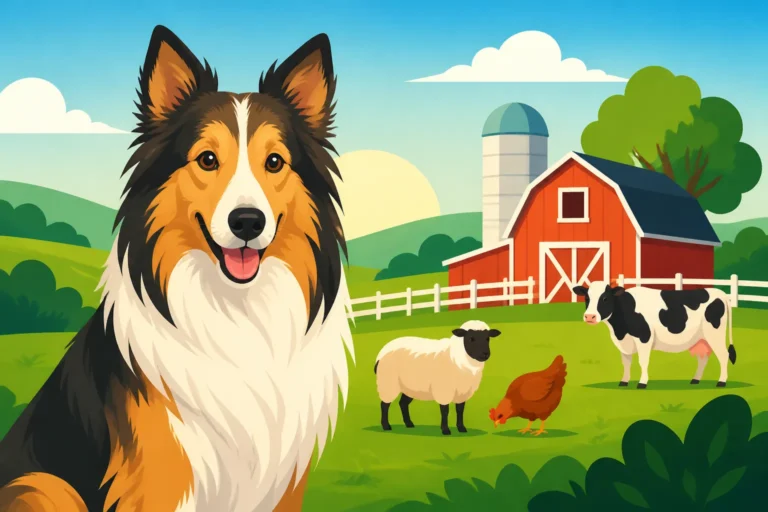
Historically, Collies were working dogs in the rugged Scottish Highlands, responsible for gathering and driving sheep over vast distances to market. Their role wasn't primarily about close-quarter, high-intensity control of individual animals, but rather about the calm, efficient movement of an entire flock. This required a different set of skills and a temperament that could handle long hours without becoming overly aggressive or stressed. They needed to be resilient, intelligent, and capable of making independent decisions while remaining attuned to their shepherd's commands.
The Collie as a "Loose-Eyed" Herder
So, where does the Collie fit into this spectrum? They are primarily what's known as "loose-eyed" or "gathering" herders. What does "loose-eyed" mean, exactly? It means they don't typically employ that intense, unblinking stare that some breeds use to freeze and dominate sheep. Instead, a Collie relies more on its presence, body language, and strategic movement in broad arcs to guide and gather the flock. Think of it less as a direct confrontation and more as a sophisticated dance of persuasion.
Their method involves moving wide around the flock, keeping the sheep together, and using their imposing (but not aggressive) presence to encourage movement in the desired direction. They might bark to encourage reluctant sheep or use their body to block an escape route, but it’s rarely about direct intimidation. This less confrontational style was perfect for moving sheep through open country, often without much direct supervision. It allowed the sheep to move calmly, reducing stress and injury during long drives. This historical role also contributes to why many people find the Collie to be a generally calmer companion indoors compared to some other high-drive herding breeds. If you're curious about their overall demeanor, you might enjoy reading Whether a Collie Is Calmer Than a Border Collie.
The Power of the Collie Stare (or Lack Thereof)
When people talk about a herding dog's "stare," they're usually referring to a very specific, intense behavior. It’s a powerful tool in the right paws, but it’s not universally applied across all herding breeds, and certainly not with the same intensity by a Collie. Let’s break down what this "eye" truly means and how the Collie approaches control in their unique way.
What is "The Eye" in Herding?
"The eye" is a term used to describe the fixed, piercing gaze some herding dogs, most notably Border Collies, use to influence livestock. Imagine a dog dropping low, almost belly to the ground, and locking its gaze onto a sheep. This isn't just looking; it's an intense psychological tool designed to exert control. This powerful stare can actually cause sheep to freeze in place, or move precisely in the direction the dog dictates, simply from the sheer pressure of the dog's focus. It's an incredible display of mental prowess, allowing a dog to manipulate a flock with minimal physical contact.
This type of eye is all about intimidation and precise control over individual animals within a group. It’s a very high-drive trait, developed in breeds where precision and immediate response from livestock are paramount. For owners, understanding this concept helps appreciate the wide spectrum of herding behaviors and why one breed might be completely different from another, even if both are called "herding dogs."
The Collie's Approach to Control
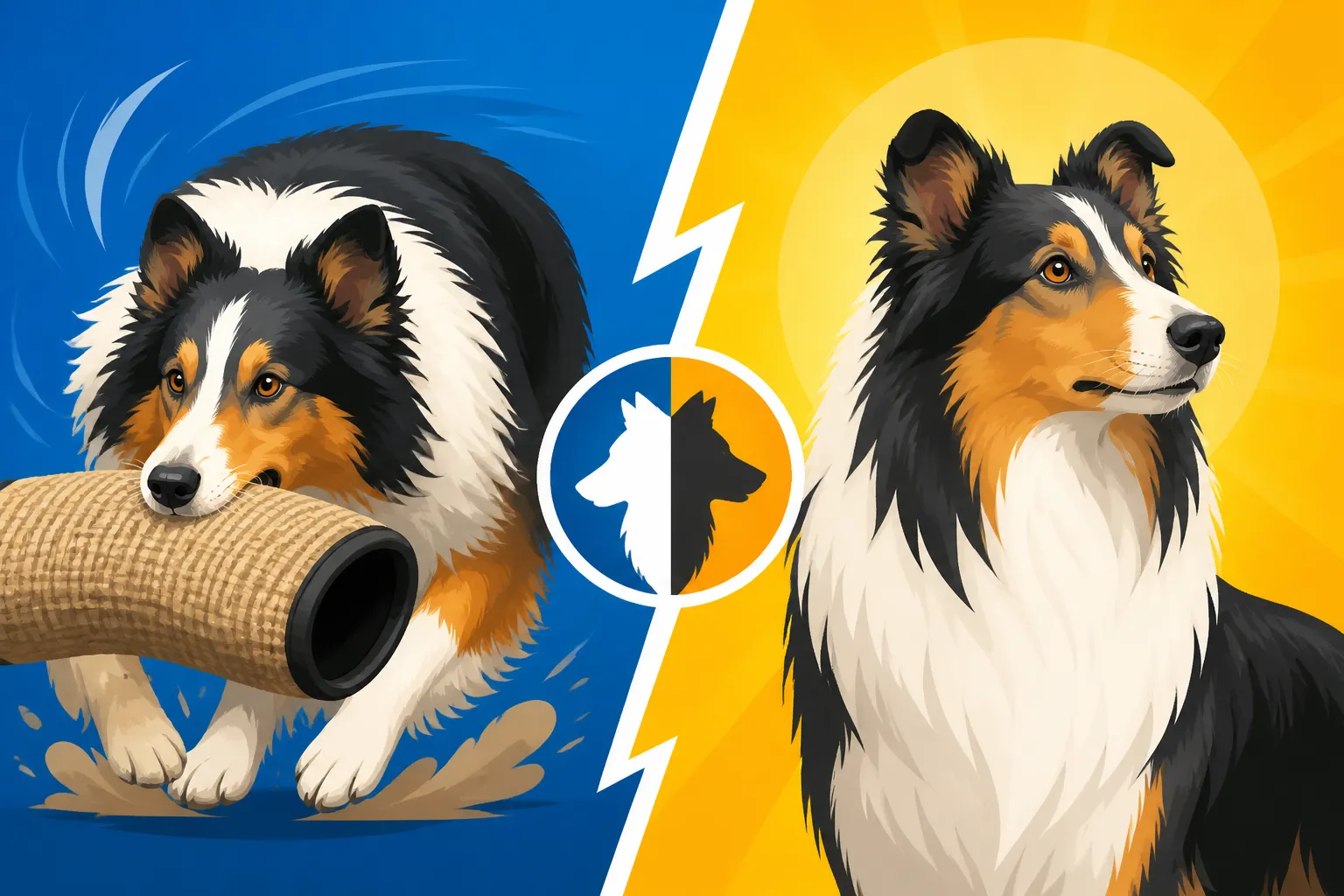
Now, for the direct answer to our core question: do Collies use an intense, gripping stare? Generally speaking, no, Collies do not typically use the intense, fixed "eye" characteristic of breeds like the Border Collie. Their gaze is far more about observation, awareness, and gentle guidance than it is about intimidation or freezing livestock. When a Collie focuses on something, whether it's a person, another animal, or a toy, their gaze is usually attentive and engaged, but it lacks that predatory, locking intensity.
Instead of a gripping stare, a Collie exerts control through their presence, their movements, and sometimes their voice. They might use broad, sweeping arcs to gather scattered sheep, barking to encourage movement, or strategically positioning themselves to block an unwanted path. Their goal is to move the flock as a unit, smoothly and calmly, without causing panic or injury. This "stare" isn't meant to dominate an animal into submission, but rather to maintain their position relative to the flock, ensuring they are aware of every animal's movement and can respond appropriately. It's a more collaborative, less confrontational approach, reflecting their historical role in moving sheep over long distances rather than performing intricate maneuvers in a small pen. You might observe your Collie reading your intentions or the mood of a room with their attentive eyes, demonstrating their intelligence and sensitivity, which you can learn more about in A Collie Reads a Room Better Than It Reads a Command.
Understanding "Gripping" and Its Rarity in Collies
Beyond the intense stare, another physical behavior often associated with herding is "gripping." This term can sound quite intimidating, and it's important to understand precisely what it means in the context of herding, and why it's something you'll rarely, if ever, see your Collie do in a true herding sense.
Defining "Gripping" in Herding
"Gripping" refers to the physical contact a herding dog might make with livestock, typically a nip or a bite, to force a stubborn animal to move. This contact is usually directed at the hocks (ankles) or the flanks of an animal. Breeds known as "heelers," such as Australian Cattle Dogs or some Corgis, were specifically developed to use this technique when working cattle, which are much larger and more resistant than sheep. For these breeds, a quick nip can be an effective way to get a reluctant cow moving. It's a last resort, or a characteristic of a "driving" style, to keep livestock moving forward, often in tight situations where a stare alone wouldn't be enough.
It's crucial to understand that gripping is a forceful action. If not controlled, it can injure livestock, and it speaks to a very specific, assertive herding style. Breeders of such dogs focus on developing a "hard mouth" that can exert pressure without causing severe damage, or a "soft mouth" where the nip is just enough to sting and encourage movement. This is a far cry from the Collie's gentle gathering approach.
Why Collies Don't Typically Grip
Collies, by and large, are not gripping dogs. Their historical function was to gather and drive sheep without causing them harm, especially when moving them long distances to market. Injuring a sheep meant economic loss for the shepherd, so a dog that bit or physically forced livestock would not have been desirable. The Collie's working style is about persuasion, presence, and strategic movement, not confrontation or physical coercion.
Now, does this mean a pet Collie will never put its mouth on anything? Of course not. A young, exuberant Collie puppy might playfully nip at moving feet or clothes, especially when excited. This is usually a soft, exploratory contact, a natural puppy behavior that needs to be gently redirected, not an aggressive bite. In a pet setting, when a Collie tries to "herd" children or other pets, they might exhibit behaviors like circling, nudging, or even a very soft nip at the heels. This "nipping at heels" is a common manifestation of their herding instinct, but it's typically an attempt to gather or move, rather than a forceful grip. You can delve deeper into this specific behavior in Whether a Collie Nips at Heels.
If a Collie were to truly grip, it would be an extremely unusual and concerning behavior, often indicative of extreme frustration, fear, or a severe lack of proper training and socialization, rather than an inherent part of their breed's working style. It's a sign that something is amiss, and intervention would be necessary. Such behavior is quite rare for the breed, which is known for its gentle disposition. It's why Harsh Handling Breaks a Collie and It Does Not Come Back is so critical to remember with this sensitive breed; their trust is easily lost, and forceful methods are counterproductive.
Managing Herding Instincts in Your Pet Collie
Understanding your Collie's natural herding instincts is the first step toward living harmoniously with these intelligent and sensitive dogs. While your pet Collie likely won't be rounding up sheep, their innate drive to gather and organize will still manifest in everyday life. The key is recognizing these behaviors and providing appropriate outlets.
Recognizing Herding Behaviors in a Pet Setting
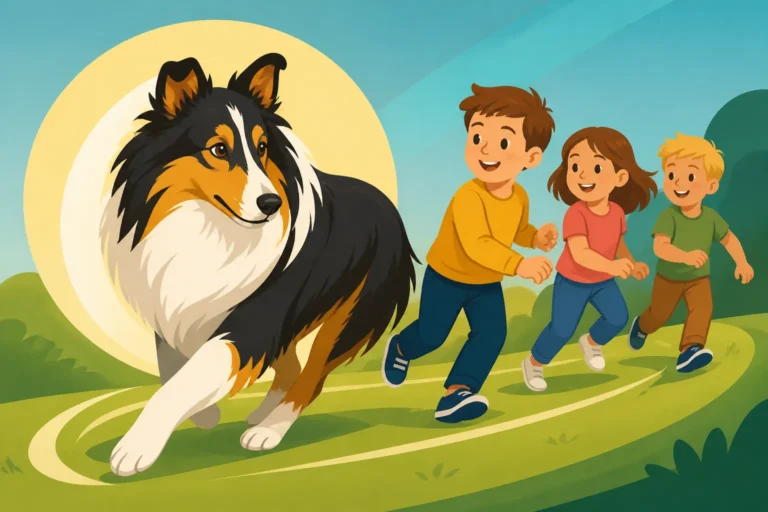
In a domestic environment, a Collie's herding instincts often translate into some very recognizable, and sometimes amusing, behaviors. You might notice your Collie trying to "gather" family members, especially children or guests, by circling them, nudging them with their nose, or even gently blocking doorways. They might try to keep everyone in one room, or move people from one area to another. Running children are a particular trigger, prompting the Collie to circle and perhaps even attempt those soft heel nips we discussed. Why a Collie Herds Your Children is a great resource if you find your Collie focusing their herding drive on the little ones.
These aren't "bad" behaviors; they are deeply ingrained natural instincts. Your Collie isn't trying to be naughty; they're simply trying to do their job, as their ancestors did for centuries. The challenge for us as modern owners is to acknowledge these instincts without letting them become problematic or overwhelming for the household. Early socialization, starting in puppyhood, and consistent, positive training are paramount to guiding these behaviors. Remember that even though they have a strong drive, their innate nature is to be a companion, so balancing their needs with family life is key.
Redirecting and Channeling Instincts
The good news is that a Collie's herding instincts can be wonderfully redirected and channeled into appropriate activities. Providing mental and physical stimulation is crucial. Think about activities that mimic the "work" of herding without involving actual livestock or people as "sheep":
- Structured Play: Games of fetch, especially with multiple toys where your Collie has to "gather" them, can be fantastic. A flirt pole (you can find various options on Amazon) allows them to chase and "catch" a lure, satisfying their prey drive and herding urges in a controlled manner.
- Puzzle Toys and Scent Work: Collies are intelligent and enjoy thinking. Puzzle feeders or scent work (where they have to find hidden treats) engage their minds and help tire them out mentally. This can be just as effective as physical exercise in satisfying their need to "work." For more ideas on mental stimulation, consider that Forty Five Minutes a Day, and Half of It in Its Head really highlights their need for intellectual engagement.
- Formal Training: Obedience classes, rally, or even intro-level agility can be excellent ways to channel their energy and intelligence. These activities provide structure, teach self-control, and strengthen your bond. Some Collies even excel at beginner herding tests, offering a safe and controlled environment to explore their natural talents. You might wonder Whether a Pet Collie Should Try Herding, and for many, it's a rewarding experience.
- Consistent Cues and Boundaries: Teach your Collie a strong "leave it" command to discourage nipping or unwanted herding of family members. Establish clear boundaries, such as "place" or "bed" commands, so they know when it's time to settle and not "work." Utilizing online training resources like those from BAXTER & Bella can provide structured guidance for these commands and help you consistently apply positive reinforcement techniques.
By understanding that your Collie is driven by ancient instincts and providing constructive outlets, you can help them be a happy, well-adjusted member of your family, rather than a frustrated herding dog in a no-sheep zone.
Here's a quick overview of common herding behaviors in pets and how to manage them:
| Behavior Manifestation in Pet Collie | Underlying Herding Instinct | Management Strategy |
|---|---|---|
| Circling children/pets | Gathering/Boundary setting | Redirection to toys, structured fetch, "place" command |
| Nipping at heels | Driving/Moving stubborn flock | Leash training, positive reinforcement for calm behavior, provide appropriate chew toys |
| Nose-poking/Nudging | Guiding/Moving livestock | Teach "leave it," engage with puzzle toys, scent work |
| Barking at movement | Alerting/Controlling direction | Teach a "quiet" cue, desensitize to triggers, reinforce calm observation |
| Blocking doorways | Containing/Holding flock | Practice "stay" and "come" commands, teach polite waiting at thresholds |
Disclaimer
This article is for general informational purposes only and does not constitute professional advice. Laws, prices and regulations vary by location and change over time. Consult a qualified professional for guidance on your specific situation.