Why a Prong Collar Is Wrong for a Collie
One of the most common frustrations for any dog owner is a dog that pulls on the leash, making walks a strenuous chore rather than a joy. You might feel at your wit's end, especially when you see other owners using certain tools that promise a quick fix. However, when it comes to our beloved Collies, some of these seemingly simple solutions, like a prong collar, can actually do far more harm than good. This guide is dedicated to explaining why these tools are detrimental to Collies and offering gentle, effective alternatives that protect your dog's sensitive nature and build a stronger bond.
Understanding the Collie Temperament
Collies are magnificent dogs, known for their striking beauty, keen intelligence, and gentle disposition. But beneath that beautiful coat and alert expression lies a deeply sensitive soul. They aren't the kind of dog you can push around or intimidate; they thrive on cooperation and understanding.
The Collie's Sensitive Nature
If you live with a Collie, you already know they're not built like some other working breeds. They are incredibly attuned to human emotion and atmosphere, often picking up on subtle cues you might not even realize you're giving off. This sensitivity is part of their charm, making them excellent family companions and highly intuitive partners. They want to please you, truly, and they respond best to kindness and positive affirmation. A harsh word or a sharp tug can shatter their confidence in an instant, leading to a breakdown in communication and trust. They're not being stubborn when they react negatively to force; they're genuinely distressed and confused. It's like trying to teach a shy child through yelling – it might get a temporary compliance born of fear, but it won't foster genuine learning or a loving relationship.
How a Collie Responds to Pressure
When faced with pressure, whether physical or emotional, a Collie's typical response is not to "toughen up" or comply out of brute force. Instead, they often shut down, becoming withdrawn, anxious, or even fearful. Imagine being corrected repeatedly with discomfort or pain; wouldn't you start to associate that feeling with the person delivering it, or with the environment where it happens? Collies are no different. They may stop offering behaviors altogether, fearing they will be wrong. Some might even develop defensive aggression, trying to protect themselves from perceived threats. This isn't learning; it's suppressing natural behavior out of fear, and it can manifest as shyness, avoidance, or an inability to relax in situations that should be enjoyable, like a walk around the neighborhood. You might see a subtle shift in their eyes, a slight lowering of their head, or a reluctance to meet your gaze – these are all signs that your sensitive Collie is feeling overwhelmed and misunderstood. How a Collie Responds to a Raised Voice speaks volumes about their delicate nature.
What a Prong Collar Is and How It Works
Before we dive deeper into why these collars are a poor choice for our Collies, let's make sure we're all on the same page about what a prong collar actually is and how it's designed to function. It's often misunderstood, with some believing it to be a harmless tool.
Anatomy and Mechanism of the Prong Collar
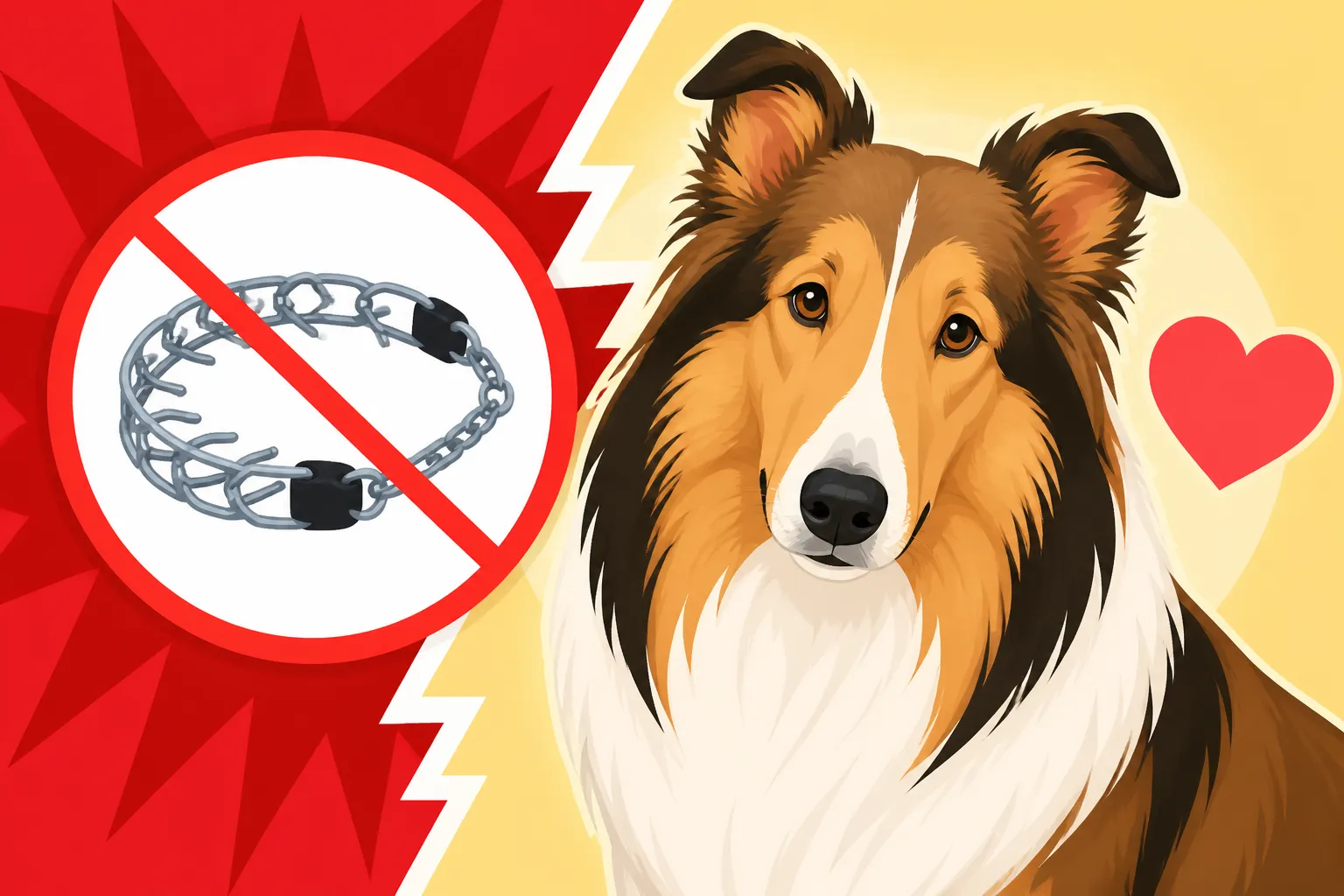
A prong collar, also known as a "pinch collar," is a training device made of metal links that have blunted, inward-facing prongs. When tension is applied to the leash, these prongs pinch the loose skin around the dog's neck. The design is intended to distribute pressure evenly around the neck, unlike a choke chain which can constrict the trachea directly. The idea is that this pressure mimics the corrective bite a mother dog might give a puppy, creating a discomfort that discourages pulling. They come in various sizes, and the number and size of the prongs vary. Some collars even feature a small ring where a tag can be attached, but their primary design is for pressure. It's important to differentiate it from a traditional flat buckle collar or even a martingale, which uses fabric and has a limited tightening mechanism.
The Intended Purpose vs. Actual Impact
Proponents of prong collars often claim that the distributed pressure is less harmful than a regular choke chain and that the sensation is akin to a natural correction from a mother dog. They suggest it provides clear, immediate feedback that discourages pulling, thereby making walks more manageable. The idea is to create an aversive stimulus that stops the unwanted behavior. However, modern animal behavior science has largely debunked the "mother dog correction" theory. Dogs learn from associations, and an aversive stimulus creates negative associations. What a prong collar actually does is create discomfort or pain when the dog pulls or when the handler corrects them. This pain might stop the pulling in the moment, but it doesn't teach the dog what to do instead. Instead, it teaches them to associate the walk, other dogs, people, or even their owner, with pain and fear. For a Collie, whose natural inclination is to cooperate and connect, this can be incredibly damaging.
The Risks of Using a Prong Collar on a Collie
Given their unique physical and emotional makeup, Collies are particularly susceptible to the negative consequences of prong collar use. The potential for harm, both visible and invisible, is significant.
Physical Dangers and Injury
While the prongs are blunted, they are still designed to create pressure and discomfort. A Collie's neck, while strong, is not impervious to injury. Their delicate thyroid gland sits right in the area where a prong collar would exert pressure. Repeated or strong corrections can lead to:
- Thyroid Damage: The thyroid gland is crucial for metabolism and overall health. Trauma to this area can lead to inflammation or dysfunction, potentially contributing to conditions like hypothyroidism. This is a subtle injury that might not be immediately obvious but can have long-term health implications.
- Tracheal Damage: Despite claims of distributed pressure, a sudden jerk can still impact the trachea, especially if the collar is not fitted perfectly or if the dog lunges unexpectedly. This can cause coughing, gagging, or even permanent damage to the windpipe, making breathing difficult.
- Nerve Damage: The neck area is a complex network of nerves. Constant pressure or sudden forceful jerks can damage nerves, leading to pain, numbness, or even loss of function in the front legs or other areas.
- Esophageal Injury: While less common, extreme pressure can potentially affect the esophagus, leading to difficulties in swallowing or other internal issues.
- Increased Intraocular Pressure: Studies have shown that collars that put pressure on the neck can increase intraocular pressure in dogs, which is a risk factor for glaucoma and can be particularly concerning for breeds already predisposed to eye conditions, even if a Collie isn't typically top of that list, it's still a risk to consider.
Considering their relatively refined neck structure compared to some heavier-boned breeds, a Collie is not designed to withstand such localized, sharp pressure. Using a prong collar introduces unnecessary physical risks that could impact their health for years.
Psychological and Behavioral Damage
Beyond the physical, the psychological damage to a sensitive Collie can be profound and lasting. A dog doesn't understand why the pain is happening; it simply knows that discomfort occurs in certain situations or around certain things.
- Fear and Anxiety: Imagine your Collie walking happily, only to experience a sharp pinch every time they get excited and pull slightly to sniff a bush or greet another dog. They will quickly learn to associate those previously enjoyable activities with pain. This can lead to generalized anxiety, a reluctance to walk, or even fear of other dogs or people they encounter on walks.
- Aggression: When dogs are repeatedly subjected to pain or fear, they may develop reactive or defensive aggression. A Collie might start growling or snapping at other dogs, not because they are inherently aggressive, but because they have learned that these encounters often precede pain from the collar. They are trying to create distance to protect themselves. This completely undermines the Collie's natural desire to be a calm, social companion. Harsh Handling Breaks a Collie and It Does Not Come Back is a truth every Collie owner must understand. A broken spirit is far harder to mend than any pulling habit.
- Breakdown of Trust: A trusting relationship is the cornerstone of effective training and a happy life with your Collie. When you are the source of discomfort or pain, that trust erodes. Your Collie may become wary of your hands, avoid eye contact, or be less responsive to your cues because they no longer see you as a benevolent guide, but as a potential source of punishment. This makes all future training more difficult and fundamentally alters the loving bond you share.
- Suppression vs. Learning: A prong collar might stop the pulling, but it doesn't teach your Collie how to walk politely. It merely suppresses the unwanted behavior through aversion. As soon as the collar is removed, or the dog is in a novel situation, the pulling can return with a vengeance because the underlying behavior hasn't been addressed or replaced with a positive alternative. It's like putting a band-aid on a gaping wound – it doesn't solve the real problem.
Why Positive Reinforcement is Superior for Collies
For a breed as intelligent and sensitive as the Collie, positive reinforcement isn't just a gentle option; it's the most effective and humane approach to training. It builds a cooperative relationship based on trust and mutual respect, which is exactly what a Collie thrives on.
Building Trust and Cooperation
Collies are inherently eager to please and form strong bonds with their families. When you use positive reinforcement, you capitalize on this natural desire. Instead of forcing compliance through discomfort, you reward desirable behaviors, making them more likely to happen again. This creates a positive feedback loop: your Collie offers a behavior, you reward it, and they feel good about it and about you. This strengthens their confidence and their trust in you as their leader and protector.
Imagine your Collie looking up at you, tail wagging, truly understanding what you're asking and happily complying because they know it leads to a reward – whether that's a tasty treat, a favorite toy, or just your heartfelt praise. This deepens your bond, fostering a happy, willing partner rather than a cowed subordinate. What Motivates a Collie is often praise and affection, far more than fear. This method respects their keen intelligence and ensures they remain the joyful, confident companions they are meant to be. This approach teaches them to think, rather than just react to pain, leading to more resilient and reliable behaviors in the long run.
Effective Training Tools and Techniques
The good news is that there are many excellent, humane tools and techniques available that are far more appropriate for a Collie.
- Front-Clip Harnesses: These are wonderful alternatives. A harness that clips at the front of the chest redirects your dog's momentum back towards you when they pull, making it physically harder for them to forge ahead. Brands like Blue-9 Balance Harness or the Easy Walk Harness (widely available on platforms like Amazon) are popular choices. They don't put pressure on the neck or throat and allow your Collie to walk comfortably.
- Head Halters (Haltis or Gentle Leaders): For serious pullers, a head halter can be incredibly effective. It works much like a horse halter, giving you control over the dog's head, and where the head goes, the body follows. Again, no pressure on the throat or trachea. It takes some time for dogs to adjust to wearing them, but with positive introduction, many Collies accept them readily.
- Flat Collars: These are perfectly fine for identification and attaching leashes when your Collie is already walking politely. However, they aren't the primary solution for teaching loose-leash walking if pulling is a major issue, as they can still cause discomfort to the throat if the dog pulls hard.
- Lure-and-Reward Training: This technique involves using a treat to lure your Collie into the desired position or behavior, then rewarding them generously when they perform it. For loose leash walking, you can lure them into position beside you, take a few steps, reward, and repeat.
- Clicker Training: A clicker acts as a precise marker for good behavior. When your Collie does something right (like walking with a slack leash), you click and then immediately give a treat. The click tells them exactly what they did to earn the reward. This is incredibly effective for intelligent breeds like Collies.
- Engagement Games: Making yourself more interesting than the environment is key. Use treats, toys, and enthusiastic praise to keep your Collie's attention on you during walks. Playing short games of "find it" with treats scattered in the grass or quick rounds of "touch" (where they touch your hand with their nose for a reward) can keep them engaged and focused on you. You can find excellent resources and online courses, such as those offered by BAXTER & Bella, that teach these positive techniques step-by-step. They offer comprehensive online programs designed to help owners train their dogs using kind, effective methods, perfect for the sensitive Collie. How Long a Collie Takes to Learn a New Cue varies, but positive methods ensure deeper understanding.
Addressing Common Leash Pulling with Collies
Leash pulling is a common issue, and it's frustrating. But understanding why your Collie pulls is the first step toward a lasting solution. It's rarely out of defiance and almost always stems from unmet needs or a lack of clear communication.
Understanding the Root Cause of Pulling
Most Collies pull on the leash for very understandable reasons, not because they are trying to be difficult.
- Excitement and Curiosity: Collies are intelligent and observant. The world is a fascinating place filled with smells, sights, and sounds! They want to explore, investigate, and move at a pace that matches their enthusiasm. When they pull, they're often just trying to get to that interesting lamp post, greet that friendly squirrel, or catch up with the exciting scent on the breeze. They aren't consciously trying to drag you down the street; they simply haven't learned that polite walking gets them to their destination faster and more comfortably.
- Lack of Clear Communication: It’s easy for us humans to inadvertently teach our dogs to pull. If pulling gets them to where they want to go, even if it's uncomfortable for us, they've learned it's an effective strategy. We might allow them to pull for a few steps, then correct them, sending mixed signals. A clear, consistent training approach is vital for your Collie to understand what you expect. They are smart, but we need to speak their language.
- Insufficient Exercise or Mental Stimulation: While Collies don't need to run marathons, they do need consistent physical activity and, critically, mental engagement. A bored or under-stimulated Collie will have a lot of pent-up energy, which can easily translate into pulling on walks. Forty-five minutes of physical activity, with half of it involving mental engagement, can make a huge difference in their overall demeanor. Forty Five Minutes a Day, and Half of It in Its Head is a good rule of thumb.
Practical Solutions for a Better Walk
With patience and consistent effort, you can transform your Collie into a delightful walking companion.
- Loose Leash Walking Techniques:
- Stop-Start Method: This is simple yet effective. The moment your Collie puts tension on the leash, you stop dead in your tracks. Don't move forward again until the leash goes slack. As soon as it slackens, even for a second, praise them and take a step forward. If they pull again, stop. This teaches them that pulling gets them nowhere, but a loose leash keeps the walk going.
- Change Direction: Before your Collie even has a chance to pull, subtly change direction. If they're forging ahead to the left, suddenly turn right. When they reorient themselves to follow you and the leash is slack, reward them. This keeps them paying attention to you and prevents them from consistently pulling in one direction.
- "Watch Me" Command: Teach your Collie to make eye contact with you on command. Practice this at home first, then integrate it into your walks. When they look at you, reward them. This is a fantastic way to regain their focus in distracting environments.
- Engagement on Walks: Make yourself the most interesting thing on the walk. Bring high-value treats (small pieces of cooked chicken or cheese work wonders). Every few steps, reward your Collie for walking nicely beside you. Praise them frequently. Play short, engaging games. A Collie Reads a Room Better Than It Reads a Command, and they read your enthusiasm too!
- Consistency is Key: Everyone in the household needs to use the same tools and techniques. Inconsistency will only confuse your intelligent Collie. If one person allows pulling and another corrects it, your dog won't understand what's expected.
- Patience and Empathy: Remember that learning takes time. There will be good days and bad days. Celebrate the small victories and don't get discouraged by setbacks. Your Collie isn't trying to be difficult; they are learning a complex skill in a distracting environment. With your gentle guidance, they will get there. Remember, a walk should be a shared experience, not a battle of wills.
Here's a quick comparison of common training collars and harnesses:
| Collar/Harness Type | Mechanism | Pros | Cons | Suitable for Collies? |
|---|---|---|---|---|
| Prong Collar | Inward-facing prongs pinch skin | Stops pulling (via discomfort) | Risk of physical injury, psychological harm, erodes trust | No |
| Choke Chain | Metal chain tightens around throat | Stops pulling (via constriction) | High risk of tracheal damage, severe injury, very aversive | No |
| Flat Collar | Standard buckle collar, for ID/leash attachment | Comfortable for polite walkers, good for ID | Ineffective for strong pullers, can cause choking if dog pulls hard | Yes (for ID/polite walks) |
| Martingale Collar | Loop tightens moderately, prevents slipping | Good for "escape artists," gentle correction | Can still cause discomfort if dog pulls constantly | Yes |
| Front-Clip Harness | Leash attaches at chest, redirects momentum | Reduces pulling without pain, comfortable, protects throat | Can sometimes tangle legs (less common with proper fit) | Yes |
| Head Halter | Loops over muzzle and behind ears, controls head | Excellent control for strong pullers, no neck pressure | Requires positive conditioning to accept, can be initially irritating | Yes |
Disclaimer
This article is for general informational purposes only and does not constitute professional advice. Laws, prices and regulations vary by location and change over time. Consult a qualified professional for guidance on your specific situation.