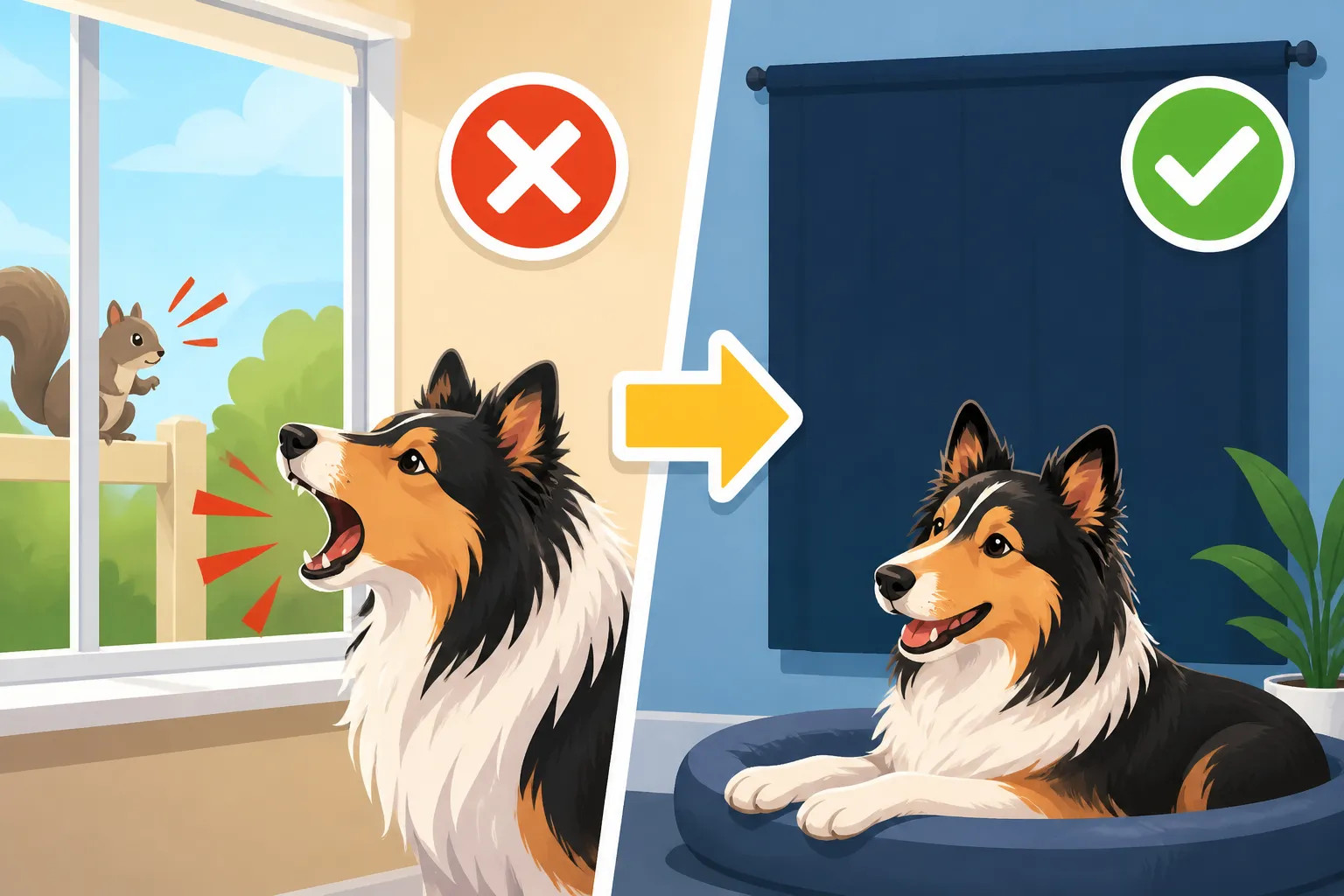
Whether Blocking the Window Stops a Collie Barking
One of the most enduring and, let's be honest, trying challenges of living with a Collie is their penchant for sounding the alarm. Whether it's the mail carrier, a squirrel, or a leaf blowing across the yard, that piercing bark can quickly wear down your patience and test your neighbor's goodwill. Many of us have peered out the window, wondering if simply blocking that tempting view would bring blessed silence. This guide dives deep into why your Collie barks at the world outside the window and explores whether simply removing the visual stimulus is a genuine solution or just a temporary band-aid.
The Deep-Rooted Reasons Your Collie Barks at Windows
It's easy to feel frustrated when your Collie launches into a barking frenzy at what seems like nothing to you. But for your Collie, that "nothing" is often a very real perceived threat, or at least a situation that triggers their innate instincts. Understanding why they bark is the first step toward managing it, and Collies, with their unique heritage, have some distinct reasons.
Hardwired Herding Instincts and Vigilance
Collies were originally bred to be vigilant guardians of their flocks. They needed to be keenly aware of their surroundings, quick to notice anything out of place, and ready to alert their human companions. That same drive to observe and protect still runs deep in their veins, even if their "flock" is now your family and their "pasture" is your living room. When they see something moving outside the window – a person walking by, another dog on a leash, or even a blowing branch – their instinct kicks in. They perceive it as something that needs to be "managed" or reported. This isn't just a casual glance; it's an intense focus, often accompanied by body language that screams "I see you!"
This constant vigilance is a double-edged sword for us owners. We love that our Collies are alert and protective, but the modern suburban or urban environment provides an endless parade of "threats" for them to announce. The world outside is a dynamic, ever-changing landscape full of novel stimuli, and each new sight can trigger their deeply ingrained alert system. For more on this, consider reading The Bark Is the Trait Collie Owners Underestimate.
The Thrill of the Chase and Frustration
Another major component of window barking for Collies stems from a potent mix of their herding drive and sheer frustration. Imagine seeing a delicious steak just out of reach, every single day. That's a bit like what a window can be for a Collie. They see movement, their herding instincts are ignited, and they want to go investigate, to circle, to gather, or at least to interact. But they can't. The window, while offering a view, is also a barrier.
This creates a high level of arousal and frustration. The barking becomes an outlet for this pent-up energy and unfulfilled instinct. It's their way of saying, "I see it! I want to engage! Why can't I get to it?!" This isn't necessarily aggressive behavior, but rather an intense, sometimes desperate, attempt to fulfill a natural drive that is constantly being thwarted. This frustration can build up over time, making each subsequent sighting even more likely to elicit a bark.
Self-Reinforcing Behavior and Accidental Rewards
Here's the kicker: window barking is often a self-reinforcing behavior. Think about it from your Collie's perspective. They bark at the mail carrier, and what happens? The mail carrier eventually walks away. To your Collie, they have successfully "chased off" the intruder. Victory! The behavior worked, and so it's more likely to happen again. Even if the mail carrier was just doing their job and leaving anyway, the Collie doesn't make that distinction.
Beyond that, we often inadvertently reinforce the barking. When your Collie starts barking, what's your first reaction? You might go to the window, tell them "no," or try to distract them. While your intention is to stop the barking, from your Collie's point of view, they just got your attention. Even negative attention is attention, and for a dog that thrives on interaction and being part of the family, that can be a powerful reward. So, every time you respond to the bark, you might be accidentally teaching your Collie that barking is an effective way to get you to engage with them, even if it's to tell them off.
The Immediate Impact of Blocking Windows
So, with all these complex reasons behind the barking, does simply covering the window actually work? The short answer is: sometimes, but it's rarely a complete or long-term solution on its own. It's a management strategy, not a training solution.
Reducing Visual Stimuli
The most obvious and immediate benefit of blocking windows is that it removes the visual triggers. If your Collie can't see the squirrel, the neighbor, or the delivery truck, they can't react to them, right? In many cases, this significantly reduces the frequency and intensity of window barking. For Collies that are primarily triggered by sight, this can bring a noticeable sense of calm to the household almost instantly. Imagine a dog who previously spent hours pacing and barking, now calmly napping in the living room because the outside world is no longer an irresistible magnet. This immediate relief can be a lifesaver for owners on the brink of despair.
This is particularly effective for dogs who are very visually oriented. If your Collie is truly reacting to every flicker of movement, every passing car, then removing that constant stream of visual data can indeed make a big difference. It gives both you and your dog a much-needed break from the constant tension.
Addressing the Symptom, Not the Cause
Here's where the "not a complete solution" part comes in. Blocking the window is like putting a bandage on a cut without cleaning the wound. It stops the bleeding for now, but it doesn't address the underlying issue. Your Collie's vigilance, their frustration, their herding instincts, and their potential anxiety don't magically disappear because they can't see out the window.
What often happens is that the dog's drive to monitor their environment finds new outlets. They might shift their attention to other windows they can see out of, or they might start barking at auditory cues they ignored before (the sound of the mail truck approaching, the neighbor's dog barking down the street). Some Collies might even become more anxious because their ability to "patrol" and "protect" has been removed, leaving them feeling vulnerable or unsure. If the barking was rooted in boredom or under-stimulation, blocking the window only exacerbates that problem by removing one form of engagement, however frustrating it was. It's crucial to remember that a Collie needs mental exercise just as much as physical, as detailed in Forty Five Minutes a Day, and Half of It in Its Head.
Potential Downsides and Unintended Consequences
While the immediate quiet can be blissful, relying solely on window blocking can have some unintended consequences. For one, it limits your Collie's exposure to the world, which can hinder their socialization. A dog that never sees anything outside might become more reactive when they do encounter something on a walk. They haven't learned how to process those stimuli calmly.
Secondly, it can create a false sense of security for owners. You might think the barking problem is solved, only to find it resurfaces with a vengeance in a new context or when the barrier is removed. It doesn't teach your dog any coping mechanisms or alternative behaviors. It's simply removed the opportunity for the undesired behavior, which isn't the same as teaching a desired behavior. The internal state of the dog, whether it's anxiety or over-arousal, remains unaddressed.
Practical Approaches to Blocking Windows
If you've decided to give window blocking a try as part of a broader strategy, there are several practical ways to go about it. The goal here is to manage the environment effectively without making your home feel like a fortress.
Choosing Your Weapon: From Temporary to Permanent
The type of window covering you choose will depend on your home, your aesthetic preferences, and how permanent you want the solution to be.
- Temporary Barriers: For a quick test or a short-term solution, consider using sturdy cardboard, privacy screens, or even well-placed furniture. While not pretty, they'll give you an immediate indication of whether visual blockage makes a difference. You can purchase inexpensive foam boards or opaque films from retailers like Amazon for these experimental stages.
- Opaque Blinds or Curtains: Heavy blinds or thick, lined curtains are a popular and visually appealing option. They allow you to control when the view is blocked. You can keep them closed during peak "trigger times" (like the mail delivery schedule) and open them when the outside world is calmer. Ensure they're robust enough that your Collie can't easily peek around or pull them down.
- Frosted or Decorative Window Film: This is a more permanent and aesthetically pleasing option. Frosted film allows light to enter the room while blurring the view, so your Collie can't make out specific objects or movements. There are also decorative films with patterns that can obscure the view while adding a touch of style. These are generally easy to apply and remove without damaging the window.
- Strategic Furniture Placement: Sometimes, simply rearranging your living room can help. If your Collie has a favorite "perch" or window they always guard, placing a large piece of furniture, like a bookshelf or a tall plant stand, in front of that window can naturally block their access and view.
| Method | Pros | Cons | Effectiveness (Visual Triggers) | Ease of Implementation |
|---|---|---|---|---|
| Cardboard/Temporary | Inexpensive, quick to test | Unsightly, not durable, easily moved by dog | High | Very Easy |
| Opaque Blinds/Curtains | Aesthetically pleasing, adjustable, light control | Can be chewed, dog might push aside, can be costly | High | Moderate |
| Frosted/Decorative Film | Allows light, permanent aesthetic, durable | Can't open/close, some dogs might try to scratch off | High | Moderate |
| Strategic Furniture | Blends into decor, no installation required | Limited by room layout, not always fully blocking | Variable | Easy |
Gradual Introduction vs. Immediate Blockade
For some Collies, a sudden, complete blocking of their favorite "viewing station" can be unsettling. They might become more agitated, feeling like their territory is no longer secure. If your Collie is particularly sensitive, consider a gradual approach:
- Partial Blocking: Start by blocking only the bottom half of the window, or just one window if you have several. See how your Collie reacts.
- Increased Opacity: If you're using film, start with a semi-transparent one and move to a fully opaque one if needed.
- Positive Association: When you block a window, immediately engage your Collie in a positive activity elsewhere in the room. Offer a high-value chew toy or a food puzzle. Make the blocked window a non-event, or even better, a signal for something good to happen.
Remember to consider other family members and their needs, too. You don't want to make your home feel like a dungeon, so finding a balance between functionality and aesthetics is key.
Moving Beyond the Window: Comprehensive Solutions
While blocking windows can provide much-needed immediate relief, it's crucial to integrate it into a broader training and management plan if you want long-term success. Your Collie's mental well-being and your peace of mind depend on addressing the root causes.
Management and Training: A Two-Pronged Approach
Think of window blocking as a management tool, a way to prevent the problem behavior from occurring in the first place, or at least reduce its frequency. But management alone won't teach your Collie new skills or change their emotional response to triggers. That's where training comes in.
- Desensitization and Counter-Conditioning: This is the gold standard for reducing reactivity. It involves gradually exposing your Collie to their triggers (people walking by, other dogs) at a distance or intensity where they don't react, and then pairing that exposure with something wonderful (tasty treats, calm praise).
- Start with a partially blocked window, or view from a much greater distance.
- As soon as your Collie notices a trigger (but before they bark), offer a treat.
- The goal is to change their emotional association from "intruder!" to "yay, a treat!" every time they see something outside.
- Gradually decrease the distance or increase the visibility as your Collie becomes more comfortable and consistently looks at you for a treat instead of barking.
- Teach a "Quiet" Cue: This is invaluable for any barking issue. Whether a Collie Can Be Taught a Quiet Cue explains how to teach your dog to be quiet on command. You can start by getting them to bark (e.g., knocking on a door), then, as soon as they bark once or twice, hold a treat to their nose. The moment they stop barking to sniff the treat, say "Quiet" and give the treat. Practice this repeatedly, gradually increasing the duration of silence before the treat.
- Redirection and Alternative Behaviors: When your Collie does notice something and starts to focus, redirect their attention to an appropriate activity. This could be a game of fetch in another room, a puzzle toy, or a training session. The key is to intervene before the barking escalates.
Enriching Your Collie's Life: Mental and Physical Exercise
A bored or under-stimulated Collie is far more likely to engage in problem behaviors like excessive barking. Collies are intelligent dogs that need both physical and mental stimulation.
- Physical Exercise: Ensure your Collie gets adequate physical activity every day. This doesn't just mean a quick walk around the block. Think brisk walks, controlled runs, or playtime in a secure yard. A tired Collie is often a quiet Collie.
- Mental Stimulation: This is often overlooked but is crucial for a breed like the Collie.
- Puzzle Toys: Toys that dispense treats as your dog manipulates them can keep their minds engaged. Brands available on Amazon offer a wide variety of interactive feeders and puzzle toys.
- Training Sessions: Even 10-15 minutes of positive reinforcement training a few times a day can be incredibly stimulating. Teach new tricks, refine basic obedience, or practice impulse control exercises.
- Scent Work: Collies have excellent noses! Hide treats around the house or yard and let them sniff them out. This is a wonderfully calming and mentally fatiguing activity.
- Interactive Play: Engage in games that mimic their natural drives, like gentle tug or fetch, but always with clear rules and boundaries.
- Socialization: Controlled, positive interactions with other dogs and people outside the home can help normalize their presence and reduce the "alert" response.
When to Seek Professional Guidance
Sometimes, despite your best efforts, the barking persists or seems to be rooted in deeper anxiety or fear. This is when it's absolutely okay – and recommended – to seek help from a professional.
- Certified Professional Dog Trainer (CPDT): A good trainer can observe your Collie's behavior, help identify specific triggers and motivations, and create a tailored training plan. They can teach you effective techniques for desensitization, counter-conditioning, and teaching alternative behaviors.
- Veterinary Behaviorist (Dip ACVB): If the barking is severe, accompanied by other anxiety behaviors (pacing, destructive chewing, house-soiling), or seems unresponsive to conventional training, a veterinary behaviorist might be needed. These are veterinarians with specialized training in animal behavior, who can diagnose behavioral conditions and, if appropriate, prescribe medication in conjunction with behavior modification. Online resources from reputable organizations, or even platforms like BAXTER & Bella, can offer foundational advice and a starting point for understanding behavior, but severe cases need in-person professional assessment.
Remember, blocking the window is a tool, not the entire toolbox. Used wisely, as part of a comprehensive strategy that includes training, mental and physical enrichment, and sometimes professional guidance, it can be a valuable part of helping your Collie find more peace and quiet in their home.
Disclaimer
This article is for general informational purposes only and does not constitute professional advice. Laws, prices and regulations vary by location and change over time. Consult a qualified professional for guidance on your specific situation.