How a Collie Treats a Cat
One of the most common worries for any dog owner considering bringing a cat into their home, or vice versa, is how these two distinct species will truly coexist. While many imagine idyllic scenes of dogs and cats curled up together, the reality can be a minefield of chasing, hissing, and general household chaos if not managed correctly. This guide will delve deep into the Collie's inherent nature and provide comprehensive, empathetic advice on fostering a harmonious relationship between your beloved Collie and a feline friend, addressing the real frustrations and challenges owners face.
Understanding the Collie's Natural Instincts with Other Animals
Collies are magnificent dogs, known for their striking appearance, intelligence, and generally gentle disposition. However, beneath that beautiful coat and keen mind lie centuries of instincts that shape their interactions, especially with other animals. When it comes to cats, understanding these drives is your first step toward building a peaceful multi-species home.
The Herding Drive and Prey Drive Distinction
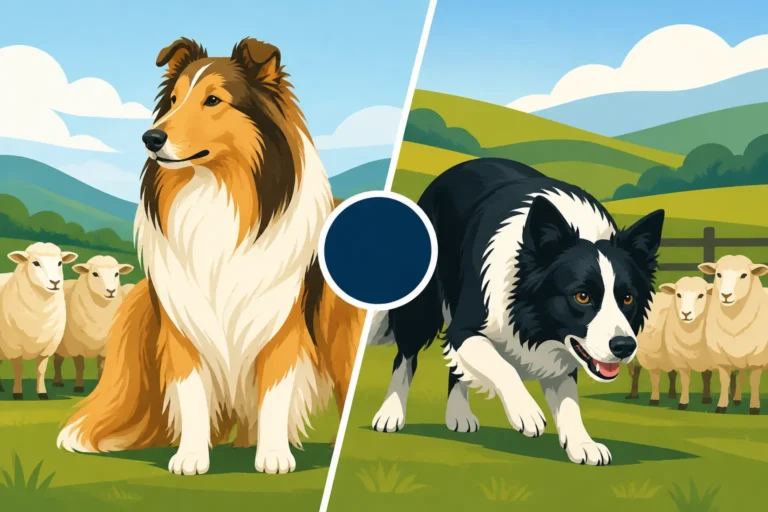
Many people conflate a dog's chasing behavior with pure prey drive, but for a Collie, it’s often far more nuanced. Collies were bred to gather and control livestock, moving them from one place to another using their presence, stare, and sometimes a gentle nudge or nip. This isn't about killing; it's about control.
A Collie's herding drive is incredibly strong. When a cat darts across a room, especially a fluffy one, it can trigger this instinct. The Collie isn't necessarily trying to harm the cat, but rather to "collect" or "contain" it. They might circle, stare intensely, or even try to block the cat's path. This can be terrifying for a cat, who perceives this as a threat, even if the dog has no malicious intent. Imagine being herded by a much larger creature – it's naturally going to induce fear. This drive is different from prey drive, which is the instinct to hunt, catch, and kill. While Collies certainly can have a prey drive, it's typically less pronounced towards small, fast-moving animals than in some other breeds specifically bred for hunting vermin or game. The challenge is that a cat's quick movements can blur the lines between herding and prey drive, making careful management crucial. Understanding Why a Collie Herds Your Children can offer further insight into this inherent behavior.
Collie Temperament: Generally Gentle and Responsive
Despite their strong herding instincts, Collies are renowned for their gentle and sensitive nature. They are intelligent dogs who form deep bonds with their families and are eager to please. This temperament is a huge advantage when introducing them to cats. A Collie is less likely to be aggressively predatory than some other breeds, and more likely to respond positively to consistent, calm guidance.
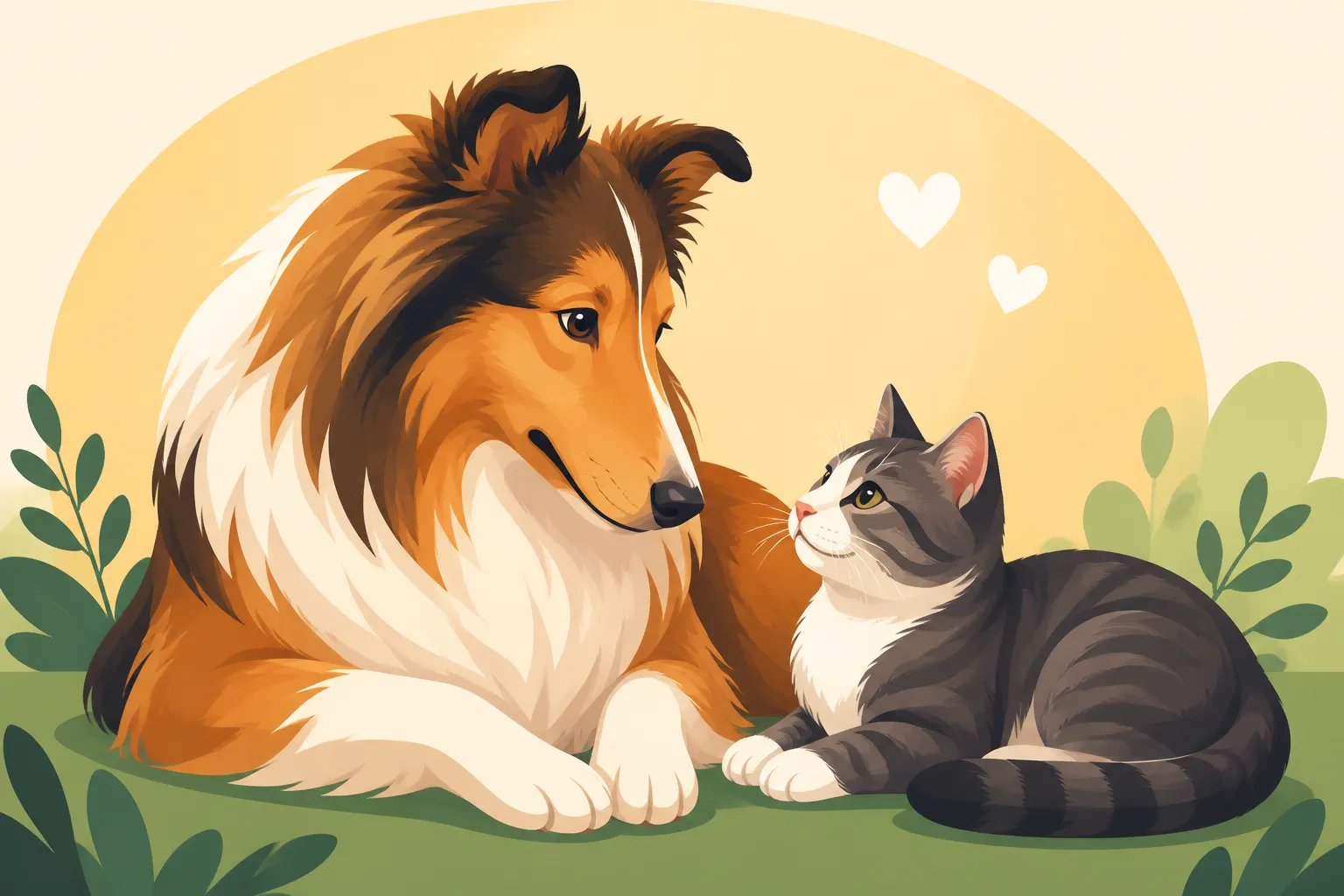
Their sensitivity means they can pick up on human emotions easily, so your calm demeanor during introductions is paramount. If you're stressed, they'll feel it. This willingness to please also means they are highly trainable, making it possible to teach them appropriate behavior around a cat. They thrive on routine and clear expectations, which is precisely what you'll need to establish for a successful interspecies relationship. This gentle nature means that with the right approach, many Collies can become the best of friends with their feline housemates, often displaying a protective instinct once a bond is formed.
Introducing a Collie to a Cat: Best Practices for Harmony
Bringing a new pet into a home that already has one, or introducing two new pets simultaneously, requires a thoughtful, gradual approach. Rushing introductions can lead to negative associations and make long-term harmony much harder to achieve. Patience truly is a virtue here, and it will save you a lot of stress in the long run.
Slow and Controlled First Encounters
The golden rule for introductions is "slow and steady wins the race." Never just throw them into a room together and hope for the best. Initial encounters should be controlled and positive. Start by scent swapping – rub a cloth on your Collie and let the cat sniff it, and vice versa. This allows them to become familiar with each other's scent without the pressure of a face-to-face meeting.
When you do move to visual introductions, use barriers. A baby gate across a doorway is excellent, allowing them to see each other from a safe distance without direct contact. You can also use a crate for one animal, ensuring the other can approach and investigate without fear. During these sessions, keep them short and always end on a positive note. Distract them with treats or praise if they remain calm. Watch their body language intently: a stiff posture, staring, growling, hissing, or puffed fur are all signs they are uncomfortable and you should increase the distance or end the session. Even what seems like playful chasing from the Collie's side can be highly stressful for the cat. A positive approach is key, as Harsh Handling Breaks a Collie and It Does Not Come Back.
Creating Safe Spaces and Boundaries for Both
Both your Collie and your cat need to feel safe and secure in their environment. For cats, this means vertical space and escape routes. Cats inherently feel safer when they can observe from a height or quickly retreat. Investing in cat trees, shelves, or even just clearing off a high bookshelf can provide essential "safe zones" where your cat can escape the dog's attention.
For your Collie, boundaries are crucial. They need to understand that certain areas or interactions with the cat are off-limits. This might mean teaching them to "leave it" when the cat walks by, or not allowing them to chase the cat up a tree. Use baby gates to create separate living areas, especially during feeding times or when you can't actively supervise. This prevents resource guarding and gives both animals a chance to relax without constant vigilance. For instance, you might feed the cat in a room with a gate that the Collie cannot jump over, or on a high surface. Products found on platforms like Amazon, such as tall pet gates or cat trees, can be incredibly helpful in establishing these crucial safe zones.
Positive Reinforcement and Desensitization
Positive reinforcement is your best friend when training a Collie to live harmoniously with a cat. Every calm interaction, every moment of ignoring the cat, every time the Collie looks at the cat and then back at you for guidance – these are all opportunities for praise and high-value treats. You want both animals to associate each other with good things.
Desensitization involves gradually increasing their exposure to one another in controlled, positive ways. Start with brief glimpses, then progress to longer periods of shared space, always rewarding calm behavior. If your Collie offers a polite sniff, or the cat tolerates the Collie's presence nearby, a treat for both is in order. This isn't just about training the Collie; it's also about helping your cat feel safe and confident around the dog. You can apply the same positive reinforcement principles that are useful for other training aspects, such as How to Teach a Collie Puppy to Lie Still for Grooming.
Common Challenges and How to Address Them
Even with the best intentions and careful introductions, living with a Collie and a cat isn't always smooth sailing. There will be hiccups, frustrations, and moments when you wonder if peace will ever truly descend. Understanding common challenges and having strategies ready will make all the difference.
When the Herding Instinct Kicks In
As discussed, a Collie's herding instinct can be misinterpreted by a cat as aggression. If your Collie starts circling, nudging, or blocking the cat, it’s a clear sign their herding drive has been activated. The key is to redirect this instinct before it escalates.
One effective strategy is to interrupt the behavior with a verbal cue like "leave it" or "come," and then immediately redirect your Collie's attention to an appropriate activity. This could be a puzzle toy, a short training session, or a game of fetch in another room. The goal is to teach your Collie that while herding is natural, it's not appropriate for the household cat. Consistency is vital. Every time you see that intense stare or subtle circling begin, intervene. You might also find that providing your Collie with appropriate outlets for their herding instinct, such as herding balls or supervised time with livestock if available, can reduce their need to "herd" the cat. For training support, online programs like those from BAXTER & Bella often cover impulse control and redirection techniques that are perfectly applicable here.
Managing Chasing and Over-Excitement
Chasing, even if playful from the Collie's perspective, is a major source of stress for cats and can quickly damage their relationship. Whether it's the cat darting away that triggers the chase, or the Collie initiating it out of exuberance, it needs to be managed.
Initially, keep your Collie on a leash during supervised interactions. This gives you immediate control to prevent chasing. If the Collie starts to fixate on the cat, a gentle leash correction and a "leave it" command can break the focus. Reward them heavily for not chasing, especially when the cat moves. Regular, structured exercise is paramount. A tired Collie is less likely to be over-excited and prone to chasing. Ensure they get their Forty Five Minutes a Day, and Half of It in Its Head of physical and mental stimulation. Teach strong recall and "stay" commands so you can call your Collie away from the cat at any moment. Never allow the Collie to "practice" chasing the cat, as this reinforces the behavior.
Preventing Resource Guarding and Jealousy
Resource guarding can manifest over food, toys, beds, or even your attention. While Collies are generally not known for intense resource guarding, any dog can develop it, especially when a new pet enters the home. Jealousy, on the other hand, is often about competing for your affection and attention.
To prevent resource guarding, feed your animals in separate, secure locations. This might mean the cat on a counter or in a room with a closed door, and the Collie in their designated eating spot. Ensure each animal has their own dedicated resting spaces and toys. High perches for cats and comfortable beds for Collies in different parts of the room can help. When it comes to attention, make sure to give both your Collie and your cat individual, quality time with you. Don't make the new pet the sole focus, especially initially. Rotate toys and share affection equitably to minimize feelings of competition. This goes for cuddle time too; ensure both get their share of pets and praise, reinforcing that there’s enough love to go around.
| Behavior | Collie Motivation (Likely) | Cat Interpretation (Likely) | Recommended Action |
|---|---|---|---|
| Staring | Herding, Curiosity | Threat, Predation | Interrupt, Redirect, Reward Calm |
| Circling | Herding, Attempt to "gather" | Trapped, Scared | "Leave it," Call away, Play with toy |
| Nudging/Paw Taps | Herding, Attempt to move | Annoyance, Harassment | Block with body, "Off," Redirect |
| Chasing | Herding, Play, Excitement | Escape, Fear, Danger | Leash control, Strong recall, Exercise Collie |
| Low growl/Sniffing | Investigation, Uncertainty | Warning, Threat | Supervise closely, Allow space, Reward calm |
| Intense focus | Interest, Herding drive | Preparing to pounce | Interrupt immediately, Use physical barrier |
Factors Influencing a Collie-Cat Relationship
The success of a Collie-cat relationship isn't solely dependent on your training methods. Several other factors play a significant role in how well these two distinct animals will adapt to sharing a home. Recognizing these can help you tailor your approach and set realistic expectations.
Age and Prior Experience of Both Animals
The age at which a Collie and a cat are introduced, and their prior experiences with the opposite species, are hugely influential. A Collie puppy raised with a confident, cat-savvy kitten often forms a strong, positive bond from a very young age. Puppies are generally more malleable and open to new experiences, and kittens can be less intimidating than a full-grown cat. Conversely, an adult Collie with no prior cat experience might have a stronger, more pronounced herding or prey drive response to a cat.
Similarly, a cat's history matters. A kitten who grows up with a gentle dog is more likely to be comfortable and confident. An adult cat who has had negative experiences with dogs (e.g., being chased relentlessly) will likely be fearful and defensive, requiring an even more patient and hands-off introduction process. If you’re bringing an adult rescue Collie into a home with a cat, investigating its history with smaller animals is paramount. Even if the shelter says "good with cats," always proceed with extreme caution and the assumption that you need to start from scratch with introductions. Knowing The First Year With a Collie Puppy can also help in understanding the critical developmental stages for socialization.
Socialization and Training from a Young Age
Early and thorough socialization for your Collie puppy is one of the greatest gifts you can give them for a harmonious life, especially one that includes other species. A well-socialized Collie puppy has been exposed to a wide variety of sights, sounds, people, and appropriate interactions with other animals from a young age. This helps them develop into a confident, stable adult who is less likely to react fearfully or aggressively to novel situations, including the presence of a cat.
Formal training also plays a critical role. A Collie that understands basic obedience commands like "sit," "stay," "come," and "leave it" is much easier to manage around a cat. These commands give you the tools to interrupt undesirable behaviors and redirect their focus. A strong foundation in training from reputable sources, like the positive reinforcement-based programs offered by BAXTER & Bella, can significantly improve your chances of a peaceful coexistence.
Owner Consistency and Patience
Ultimately, you are the architect of the relationship between your Collie and your cat. Your consistency in enforcing rules, your patience during setbacks, and your ability to remain calm and reassuring are vital. If you're inconsistent, allowing chasing one day and correcting it the next, your Collie will become confused, and the cat will remain anxious.
Building trust between different species takes time, often weeks or even months. There will be days when you feel like you're taking two steps forward and one step back. It's easy to get frustrated, but remember that your animals are looking to you for guidance and security. Being a calm, fair, and predictable leader will create an environment where both your Collie and your cat can eventually relax and form their own unique bond. Remember that A Collie Reads a Room Better Than It Reads a Command, so your emotional state directly impacts their behavior.
Living in Harmony: Long-Term Strategies
Achieving initial peace is a fantastic milestone, but maintaining a harmonious household with a Collie and a cat requires ongoing effort. It's a bit like tending a garden; you can't just plant the seeds and walk away. Consistent care and attention will ensure your multi-species family continues to thrive.
Continued Supervision and Reinforcement
Even after your Collie and cat appear to be best friends, don't drop your guard entirely. Continued supervision, especially during times of high excitement (like feeding time or when visitors arrive), is always a good idea. Your animals might have an occasional spat, or a surge of instinct might momentarily override good manners. Being present allows you to intervene before small incidents become larger problems.
Keep reinforcing positive interactions. A quick "good boy/girl" and a treat for both when you see them relaxing together, or the Collie ignoring the cat, helps to solidify those good habits. It reminds them that calm coexistence is always the desired behavior. Think of it as periodic check-ins rather than constant vigilance; you're just making sure everyone is still on the same page.
Providing Ample Exercise and Mental Stimulation for Your Collie
A tired Collie is a happy Collie, and crucially, a less troublesome Collie. Collies are intelligent, active dogs who need both physical exercise and mental engagement to prevent boredom and pent-up energy. If their needs aren't met, they might invent their own "jobs," which could include trying to herd the cat, excessive barking, or destructive chewing. While A Collie Is the Rare Herding Dog That Does Not Need a Job, they certainly need stimulation.
Ensure your Collie gets at least two good walks a day, playtime in the yard, and regular mental challenges. Puzzle feeders are excellent for this, turning mealtime into a brain game, and Puzzle Feeders Tire a Collie can be sourced easily from sites like Amazon. Engaging in training sessions, learning new tricks, or even participating in dog sports like Rally or Obedience can help channel their energy and intelligence in productive ways. A Collie whose physical and mental needs are adequately met is far less likely to bother the cat out of boredom or excess energy.
Knowing When to Seek Professional Help
Despite all your best efforts, sometimes the challenges are too great to tackle alone. If you're seeing persistent aggression, fear, or a complete inability for your Collie and cat to coexist peacefully, it's time to bring in the professionals. Don't feel like a failure; some situations simply require expert guidance.
A certified professional dog trainer or a veterinary behaviorist can assess the specific dynamics of your household, identify underlying issues, and develop a tailored behavior modification plan. They can observe behaviors you might be missing and offer strategies you haven't considered. Signs that you might need professional help include:
- Consistent, unprovoked aggression from either animal.
- Injuries occurring between the pets.
- One animal constantly living in fear or hiding.
- Extreme resource guarding that you cannot manage.
- Persistent anxiety or stress in either animal.
Early intervention is always best, so don't wait until the situation becomes severe. A professional can help mediate and guide you toward a solution that ensures the safety and well-being of all your furry family members.
Disclaimer
This article is for general informational purposes only and does not constitute professional advice. Laws, prices and regulations vary by location and change over time. Consult a qualified professional for guidance on your specific situation.