Why a Collie Circles Rather Than Chases
It can be incredibly confusing and sometimes even frustrating when your Collie doesn't seem to chase a ball or a squirrel in a straight line like other dogs, but instead insists on circling around it. This distinct behavior isn't a sign of indecision or lack of interest; it's a deep-seated instinct unique to their herding heritage. This guide will help you understand why your Collie circles rather than chases and how this ancient working trait influences their everyday actions, offering insights into managing and appreciating this fascinating characteristic.
The Instinctual Roots of Herding Behavior in Collies
The charming, intelligent Collie we know today was originally bred for a very specific and demanding job: herding sheep in the rugged Scottish Highlands. This wasn't a job for a dog that simply sprinted after animals; it required finesse, strategy, and an innate understanding of livestock movement. The way your Collie interacts with moving objects, be it a thrown toy, a child, or even a vacuum cleaner, is a direct echo of generations spent controlling flocks.
The Collie's Herding Heritage
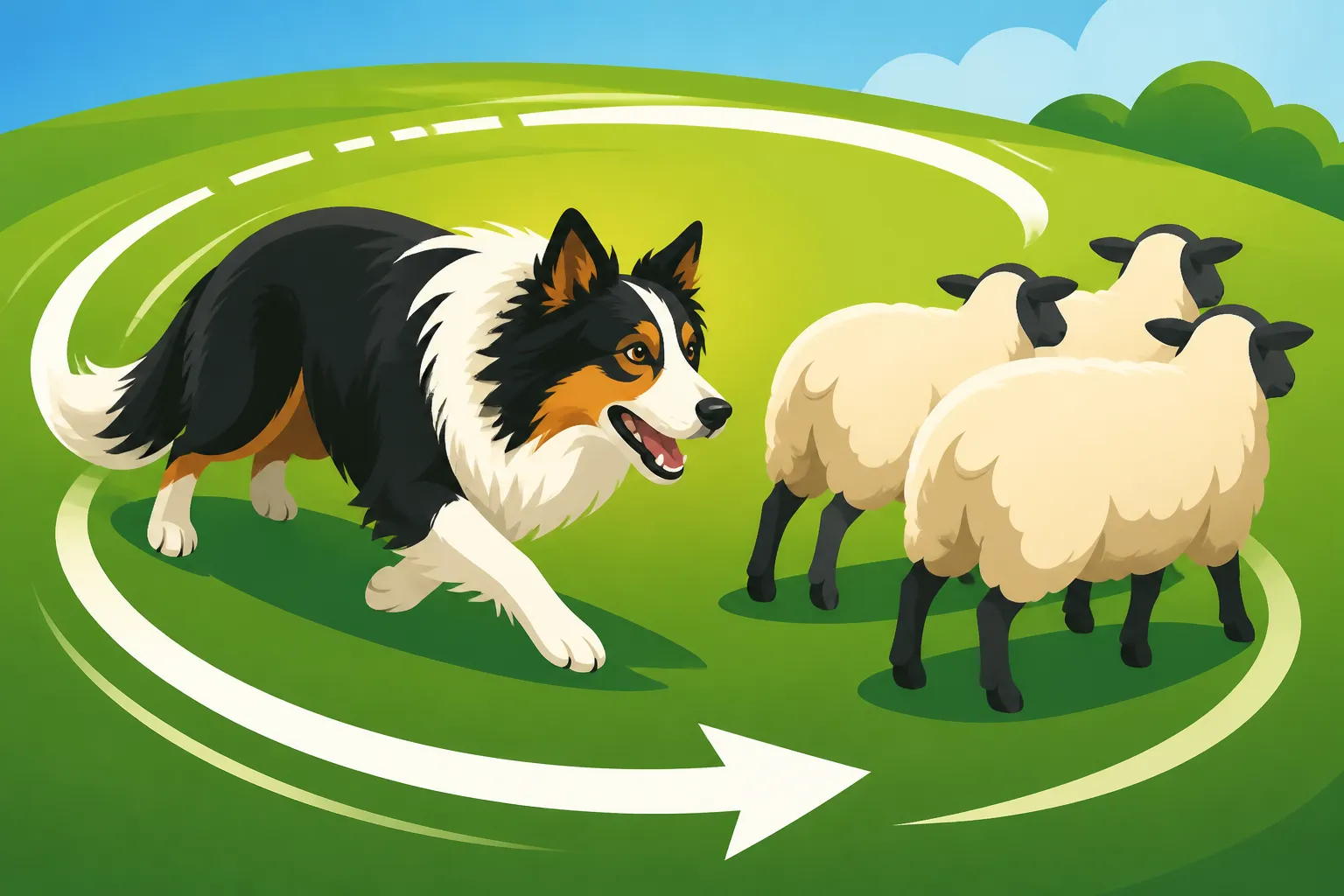
Imagine a vast, open field with a hundred stubborn sheep. A dog that simply bolts into the flock, chasing individual sheep, would scatter them in every direction, making the shepherd's job impossible. Instead, the Collie's role was to gather, to control, and to guide. This required them to move around the periphery of the flock, applying pressure from different angles to encourage the sheep to move as a cohesive unit. Their circling motion is a masterclass in psychological warfare, a way of saying, "I'm here, I'm watching, and I can cut off any escape." It's not about catching; it's about influencing. This sophisticated dance is far removed from the simple chase of a sighthound or terrier, which is often purely predatory in nature. Collies needed to keep the flock together, not tear it apart.
This ingrained instinct means that even if your Collie has never seen a sheep in its life, that fundamental programming is still there. When a ball rolls away, or a child runs across the yard, the Collie's brain doesn't just register "prey to catch." It registers "something to gather" or "something to control." It's an important distinction that helps us understand their unique approach. It's why they might try to "herd" you away from the kitchen or around the garden. It's all part of their deep-seated desire to manage movement and keep their "flock" (which is now your family) together.
Understanding the Prey Drive Spectrum
It's helpful to think of a dog's "prey drive" not as a single, uniform instinct, but as a spectrum of behaviors that can be broken down into different components. These components include searching, stalking, chasing, gripping, killing, and dissecting. Most dogs exhibit some parts of this sequence. Terriers, for instance, often have strong chasing, gripping, and killing instincts, designed to dispatch vermin. Sighthounds excel at chasing and catching. Collies, however, are geared towards the initial stages of this sequence, particularly stalking and chasing with a purpose – the purpose of gathering.
Their chase instinct is strong, but it's refined. They don't typically chase with the intent to catch and hold in the way a retriever might, or to capture and kill like a hunting dog. Instead, their chase culminates in a strategic maneuver: the circle. This circling is a form of "containment" and "pressure," designed to direct the movement of the object or animal they are focusing on. It's why they might run wide around a group of running children, rather than darting in between them. They're trying to influence the whole group, not just one individual. This specific manifestation of prey drive is what makes Collies such remarkable herding dogs, and also explains their sometimes perplexing behaviors in a pet home. Understanding this spectrum also helps us realize why positive reinforcement training is so crucial for Collies; Harsh Handling Breaks a Collie and It Does Not Come Back.
Why Circling is Preferred Over Direct Chase in a Herding Context
The act of circling is not arbitrary; it is a highly effective, non-confrontational, and energy-efficient method of controlling and moving livestock. For a Collie, it's the most logical and effective way to accomplish their deeply ingrained mission.
Control and Containment: The Herder's Goal
When a shepherd needs to move a flock of sheep, the goal isn't to simply make one sheep run faster than another. The goal is to move all the sheep from point A to point B, or to keep them contained within a certain area. A dog that directly chases and scatters the flock would be counterproductive. The circling motion allows the Collie to exert control over a wider area and influence the movement of multiple animals simultaneously. By running wide, they present themselves as a barrier, signaling to the sheep which direction they cannot go.
Consider a Collie working a small flock. They'll sweep around the back of the sheep, creating a semicircle, pushing them forward. If a sheep tries to break away, the Collie will quickly intercept by widening their circle, getting ahead of the escapee, and turning them back into the group. This constant adjustment and peripheral movement is far more effective for gathering and containment than a straight-line pursuit. It's a subtle but powerful way to manipulate the flow and direction of movement without causing panic or injury to the livestock. This sophisticated method highlights why a strong bond and clear communication are vital between a Collie and their owner, as discussed in A Collie Reads a Room Better Than It Reads a Command.
Avoiding Confrontation: A Smart Strategy
Direct, head-on confrontation with livestock can be dangerous for a dog. Sheep, while generally docile, can kick, and larger animals like cattle pose an even greater threat. By circling, Collies maintain a safe distance while still exerting pressure. It's a strategic move that minimizes the risk of injury to both the dog and the animals being herded. This non-confrontational approach is also part of their temperament; Collies are generally sensitive dogs who prefer to work cooperatively rather than through aggression.
Furthermore, a direct, aggressive chase can cause fear and stress in the animals, making them harder to manage in the long run. The Collie's circling method relies on consistent, calm pressure. It communicates "move" without necessarily communicating "I'm going to attack you." This preserves the working relationship between the dog and the stock, allowing for more effective and less stressful herding over time. This gentle yet firm influence is why Collies are often so good with children, though their herding instincts still need careful management, especially if Why a Collie Herds Your Children is a concern. The circling is their way of being effective without being harsh, reflecting their innate nature to gather and protect rather than to prey aggressively.
Managing and Redirecting Herding Behavior in Pet Collies
While fascinating, a Collie's herding instincts can sometimes be a challenge in a home environment. Circling children, nipping at heels, or attempting to "gather" other pets can be problematic. The key isn't to suppress the instinct entirely, which is often impossible and unfair to the dog, but to redirect it into appropriate and constructive outlets.
Early Intervention and Socialization
The foundations for managing herding instincts are laid in puppyhood. Early, positive exposure to various people, places, sounds, and other animals is crucial. A well-socialized Collie puppy is less likely to feel overwhelmed or resort to excessive herding behaviors out of anxiety or lack of understanding. Enroll in puppy classes that emphasize positive reinforcement and expose your Collie to children (under strict supervision), other calm dogs, and different environments. The goal is to teach them that the world isn't a flock to be managed, but a place to explore safely.
When you see signs of nascent herding—a puppy trying to circle a running child or nip at a moving pant leg—gently interrupt and redirect. Offer an appropriate toy, engage them in a structured play session, or practice a known command like "sit" or "down." The First Year With a Collie Puppy is a critical time for shaping these behaviors. Consistent, calm guidance from an early age helps your Collie learn impulse control and understand what is and isn't acceptable in a domestic setting. Consider an online training program like BAXTER & Bella, which offers comprehensive guidance for puppy raising and helps owners establish good habits from the start, often touching on managing natural breed instincts.
Providing Appropriate Outlets
Since the herding instinct is so strong, simply telling a Collie "no" won't make it disappear. You need to give them a job to do, something that engages their intelligence and physical abilities in a way that satisfies their innate drives. Structured play is vital. Instead of just throwing a ball for a straight chase, try games that mimic herding patterns. Roll the ball, then hide it, encouraging your Collie to "find" and "gather" it back to you. Use multiple balls and ask your dog to bring them all into a designated area. This taps into their gathering instinct without requiring live animals.
Mental stimulation is just as important as physical exercise. Collies are incredibly smart, and a bored Collie is a creative Collie—often creating its own "jobs" that might not align with your household rules. Puzzle toys, scent work, and learning new tricks can be fantastic ways to channel their mental energy. Enrolling in dog sports like Rally Obedience, Agility, or even actual herding lessons (if available and suitable) can be incredibly rewarding. What a Herding Instinct Test Shows in in a Collie can be a great first step to gauge their potential and provide an appropriate outlet.
Here's a quick comparison of behaviors and their underlying motivations:
| Behavior | Primary Motivation | Typical Breed Expression | How to Redirect/Manage |
|---|---|---|---|
| Circling | Gathering, containing, guiding (herding) | Collie, Border Collie, Sheltie, Australian Shepherd | Structured retrieve, dog sports, puzzle toys, "find it" |
| Direct Chase | Predation, capture, pursuit | Sighthounds (Greyhound), Terriers, Retrievers | Fast fetch, flirt pole, lure coursing |
| Nipping/Mouthiness | Herding pressure, exploration, play, attention-seeking | Collie, Border Collie, Malamute (sometimes as play) | Chew toys, bitter apple spray, "leave it," redirect to toy |
| Staring/Fixating | Herding focus, intense concentration, anticipation | Collie, Border Collie, Malinois, German Shepherd | "Look at me" command, interruption, redirection to tasks |
Practical Solutions for Common Circling Scenarios
Once you understand why your Collie circles, you can implement specific strategies to manage these behaviors in everyday life. It's all about proactive management and consistent training.
Addressing Herding of Children and Pets
One of the most common concerns for Collie owners is their dog's tendency to herd children or other household pets. It usually starts innocently enough – a gentle nudge, a low circle, but can escalate to nipping at heels if unchecked. The first step is constant supervision, especially when young children are involved. Never leave a Collie unsupervised with toddlers or very young children who might run and trigger the herding instinct. You'll want to teach both your dog and your children appropriate ways to interact.
For your Collie, teach a solid "leave it" command and a reliable recall. If you see them starting to circle or fixate on a child, call them to you and reward them for disengaging. Redirect their attention to a game with a toy, preferably one that involves "gathering" like retrieving multiple balls. You might also use a baby gate or crate to create safe spaces for both the dog and the children/other pets when you can't actively supervise. Consistency is key here. Every time they successfully disengage from herding and choose a desired behavior, reinforce it heavily. This will reduce Whether a Collie Herds Running Children in a problematic way.
For other pets, particularly smaller, faster ones like cats, the same principles apply. Many Collies can live harmoniously with cats, but it often requires careful introduction and supervision. Use leashes and gates during initial introductions, ensuring the cat always has an escape route. Reward your Collie for calm, non-herding interactions. Over time, as trust builds and your Collie learns impulse control, supervision can lessen.
Dealing with Circling of Vehicles or Moving Objects
The sight of a bicycle, a skateboard, a car, or even a vacuum cleaner can sometimes trigger a Collie's instinct to circle and "gather." This can be dangerous, especially with vehicles near roads. The best approach is a combination of desensitization, counter-conditioning, and management.
Start by working in a controlled environment, far from actual traffic. Have someone slowly move a bicycle or skateboard at a distance. As soon as your Collie notices it but before they start to react by fixating or circling, reward them with a high-value treat and praise. Gradually decrease the distance over many sessions, always keeping your dog under their threshold (the point at which they start reacting negatively). The goal is to change their emotional response from "I need to herd that!" to "Oh, a bicycle means treats!" This is a key principle in positive reinforcement training.
Management is equally important. When near roads, always keep your Collie on a leash. Consider a sturdy, non-retractable leash and a comfortable harness. If you know you'll be encountering a lot of triggers, plan your walks for quieter times or routes. If your Collie gets overstimulated by the vacuum cleaner, put them in another room with a long-lasting chew or a puzzle toy before you start cleaning. Companies like Amazon offer a wide array of excellent interactive dog toys and puzzle feeders that can keep your Collie mentally engaged while you handle household chores, diverting their attention from the "moving object" of the vacuum. This kind of proactive approach helps your Collie learn to cope with these stimuli without resorting to their herding instincts. Understanding Whether a Collie Can Be Taught to Stop Herding is vital, as while the instinct won't disappear, the behavior can be modified.
Training Strategies to Channel Herding Energy
Collies thrive on purpose and mental engagement. Structured training that plays to their strengths can transform their intense herding drive into positive, shared activities.
Engagement Through Focused Play and Sports
Focused play can be an incredibly powerful tool for channeling a Collie's herding energy. Think beyond just throwing a ball. Engage in games that encourage them to think and maneuver. For instance, instead of a simple retrieve, try "boundary games" where they learn to keep toys within a certain area, or "send-outs" where you direct them to a specific object and then back to you. These activities engage their natural desire to control and direct movement. Flirt poles can be fantastic for safe, controlled chasing and circling, allowing them to exert that energy in a directed way without actually interacting with something inappropriate.
Beyond simple games, consider dog sports. Collies excel in a variety of disciplines that tap into their intelligence and agility. Obedience and Rally Obedience are natural fits, as they love to learn and work closely with their handlers. Agility can be fantastic for their physical and mental exercise, requiring them to navigate obstacles with precision and speed. Even canine freestyle (dog dancing) or disc dog can be fun ways to channel their energy. The key is finding an activity that challenges their mind and body, providing an acceptable outlet for their inherent drive. Whether a Pet Collie Should Try Herding is a question many owners ponder, and for some, it's a wonderfully fulfilling option.
Impulse Control and "Off" Switches
Teaching your Collie strong impulse control is paramount for managing any high-drive behavior, including herding. Commands like "leave it," "wait," and "stay" are foundational. Practice these commands in various environments with increasing distractions. For example, instead of letting your Collie immediately chase a rolling toy, ask them to "wait" for a few seconds, then release them with a "go fetch!" This teaches them that waiting for your cue leads to the reward of engaging with the object.
Another crucial concept is teaching an "off switch." Collies can become intensely focused, almost obsessively so, when their herding instinct kicks in. You need a reliable way to break that focus and bring them back to you. A strong "come" or "here" command is essential. Practice it frequently, rewarding generously every time they respond, even if they're in the middle of a self-appointed "herding" task. Gradually, they'll learn that disengaging when you ask is always more rewarding than continuing their activity. This helps foster their natural cooperative spirit, reinforcing that they work with you, not independently. Many online dog training platforms, like BAXTER & Bella, offer structured modules on impulse control and recall that can be invaluable for Collie owners.
Environmental Management and Enrichment
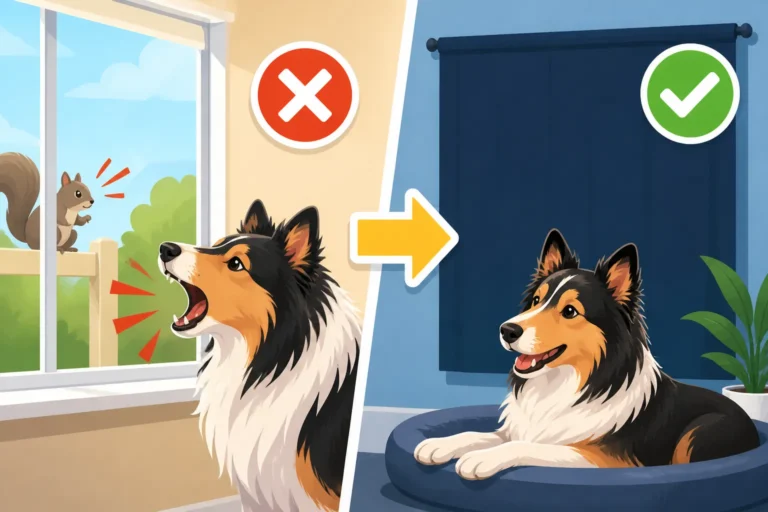
Beyond direct training, think about how you can manage your Collie's environment to minimize triggers and maximize appropriate outlets. A secure yard is crucial. Collies can become focused on things moving outside the fence line, so a solid, opaque fence can reduce visual stimulation. If your yard has open views, consider privacy screening.
Inside the home, provide plenty of enrichment. A variety of appropriate chew toys, puzzle feeders, and opportunities for Forty Five Minutes a Day, and Half of It in Its Head of mental work are essential. Rotating toys keeps them novel and interesting. Having designated "safe zones" like a comfortable crate or a dog bed in a quiet room can give your Collie a place to decompress and relax, especially after a stimulating walk or a visit from energetic children. Remember, a tired Collie (both physically and mentally) is a good Collie. While they don't necessarily need a "job" in the traditional sense, they do need engagement, as explored in A Collie Is the Rare Herding Dog That Does Not Need a Job. Providing these varied outlets will help redirect their innate desire to circle and gather into productive and enjoyable activities for everyone.
Disclaimer
This article is for general informational purposes only and does not constitute professional advice. Laws, prices and regulations vary by location and change over time. Consult a qualified professional for guidance on your specific situation.