Whether a Collie Chases Livestock
It’s a common scenario for many Collie owners, whether you live right next door to a sprawling farm or just have friends with a few backyard chickens: that little flicker of concern when your dog locks eyes on a grazing sheep or a scampering goat. You know your Collie has those herding instincts, but how far do they really go? This comprehensive guide will explore the truth about Collies and livestock, helping you understand their natural drives and, most importantly, how to manage them safely and responsibly.
Understanding the Collie's Herding Roots
When we talk about Collies, we're talking about a breed steeped in centuries of working alongside humans, specifically with livestock. It’s written into their very DNA, a deep-seated programming that goes back generations. But understanding how they herded is crucial to knowing what to expect from your modern companion.
The Original Purpose of the Breed
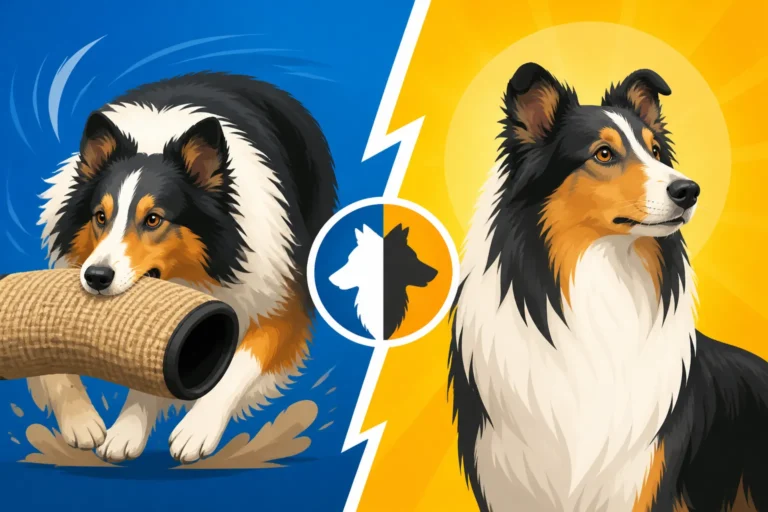
The Collie, particularly the ancestors of our modern Rough and Smooth Collies, was primarily developed in the Scottish Highlands as a droving dog. Their job wasn't just to guard sheep but to move them, often over long distances, to market. This wasn't the frenetic, intense style of herding you might see from a high-energy Border Collie, which often involves a powerful "eye" and a low, predatory stalk designed to control movement with force. Instead, the Collie's method was generally gentler, more about gathering the flock, influencing their direction with calm presence, a quiet stare, and strategic positioning. They were valued for their intelligence and their ability to work somewhat independently, making decisions on their own without constant human commands, but always with the intention of keeping the flock together and moving forward.
This historical role highlights a key difference: Collies were herders of sheep and cattle, yes, but their technique prioritized a low-stress, cooperative approach. They were often tasked with keeping the herd together, preventing strays, and guiding, rather than aggressively driving or biting. This makes them remarkably sensitive and responsive partners, traits that modern Collie owners cherish.
Instinct Versus Training in Modern Collies
While that innate herding instinct is certainly still present in most Collies, the reality for many modern dogs is that generations of selective breeding have softened the raw, intense drive required for constant, daily farm work. Many Collies today are primarily bred for companionship, conformation showing, or performance sports like obedience and agility, which emphasize biddability and a calmer demeanor. This doesn't mean the instinct is gone; it simply means its manifestation can vary wildly from dog to dog.
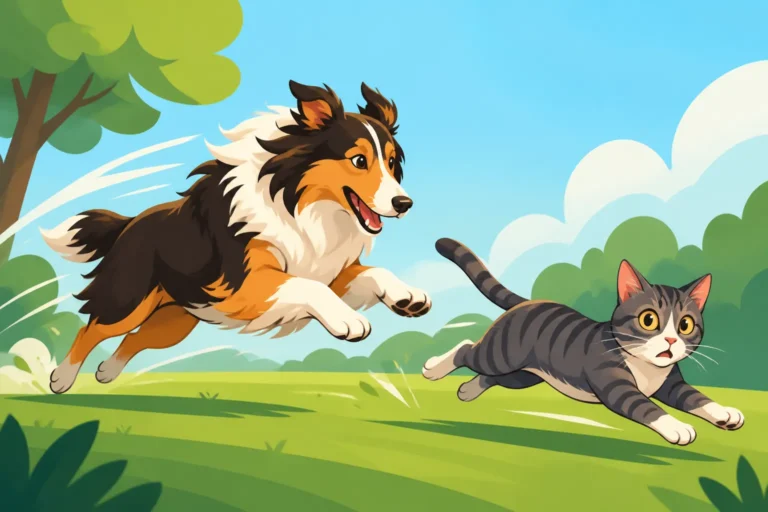
You might have a Collie who, if presented with a flock of sheep, would instantly switch into "work mode," displaying classic herding behaviors. Others might just look at the sheep with mild curiosity, or perhaps even a little fear, having no idea what to do. The key is that even a softened instinct needs an outlet or careful management. If your Collie has a stronger prey drive, it might translate into chasing squirrels or bunnies, which is a different impulse than true herding but shares some behavioral overlap. However, for many Collies, the instinct is more about "gathering" and "controlling movement" than it is about "chasing to harm." They might want to keep everything in a neat little package, including your children, other pets, or even you! Providing appropriate mental stimulation through training and puzzle games can help satisfy this intelligent breed's need to "work" its brain, even if it's not actually moving sheep. Forty Five Minutes a Day, and Half of It in Its Head is a concept well understood by Collie owners, emphasizing the need for mental engagement.
Recognizing the Signs of Herding Instinct Around Livestock
If you're unsure whether your Collie possesses a strong herding instinct or how it might manifest around actual livestock, watching their body language and behaviors can provide some clear clues. It’s not always about outright aggression; often, it’s a subtle shift in focus and posture.
The "Eye" and Stalking Behavior
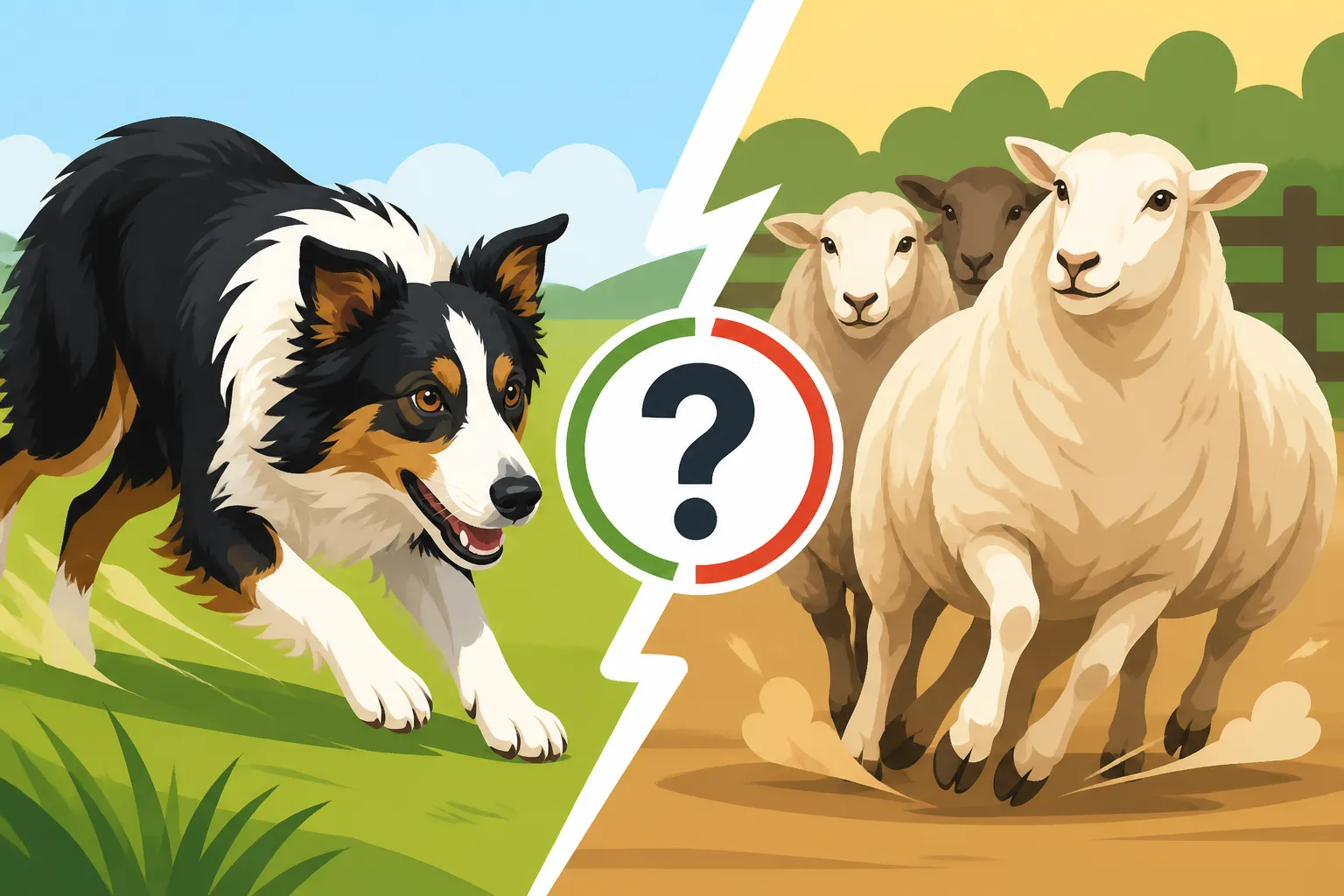
One of the most defining characteristics of a herding dog, including many Collies, is the "eye." This isn't just a casual glance; it's an intense, fixed stare, often accompanied by a low-crouching posture, sometimes called "the Collie crouch." Your dog might drop their head, lower their body, and fix their gaze intently on the perceived "flock" – be it a herd of goats, a group of chickens, or even just people moving quickly. This "eye" is a powerful tool in herding, designed to intimidate and control the movement of animals without physical contact. It's a precursor to action, a signal that your Collie is assessing, planning, and preparing to move whatever they're focused on.
You might see them slowly stalk, creeping forward with a deliberate, almost cat-like grace, trying to get into position to influence the "herd." For instance, if you're walking past a field of cows, your Collie might flatten themselves to the ground, watching intently, perhaps even trying to circle to get behind them. This isn't usually aggressive in the sense of wanting to attack, but rather a display of their intrinsic desire to gather and control. It's a focused, driven behavior that can quickly escalate if the "flock" moves or attempts to scatter.
Nipping and Bumping
While some high-drive herding breeds might nip with more force, a Collie's instinctual nip around livestock is typically an attempt to direct movement rather than to inflict harm. They might gently mouth at the heels or flanks of an animal that isn't moving in the desired direction. Think of it as a subtle nudge, a physical suggestion, rather than an attack. This is directly related to their historical role as drovers, where a nip at the heels of a stubborn cow or sheep could encourage it to move along without causing injury.
However, even a "gentle" nip or bump from a dog, regardless of breed, can be incredibly startling and stressful for livestock. A frightened sheep might bolt, potentially injuring itself on a fence, or a sensitive goat could react defensively. While your Collie's intention might be benign, the outcome can still be problematic for the animals involved. This behavior is similar to how some Collies might try to "herd" children by nudging or circling them. Understanding Whether a Collie Nips at Heels in the context of human children gives you insight into this instinctual behavior with animals. It's vital to remember that animals react differently to being "herded" than humans, and their flight or fight response can be immediate and dangerous.
Barking and Penning
Collies are known for their voices, and barking is another tool in their herding repertoire. The Bark Is the Trait Collie Owners Underestimate because while they might not be as notoriously vocal as some other breeds, their bark can be quite impactful. Around livestock, a Collie's bark isn't usually a frantic, uncontrolled outburst. Instead, it's often a directed, purposeful sound, used to influence the movement of the animals. They might bark once or twice to get attention, to startle a wandering animal back into the group, or to signal their presence. This can sometimes be followed by attempts to "pen" the animals, gently guiding them towards a fence or into a corner, effectively corralling them.
Imagine your Collie patiently working to move a small group of sheep across a pasture, using their body to block escape routes and a controlled bark to keep them together. This is a display of innate herding intelligence. However, even this controlled barking can be perceived as a threat by livestock, especially those not accustomed to dogs. A sustained bark, even if it's meant to direct, can cause significant stress, leading to panic or aggression in the animals. The noise itself, combined with the dog's presence, can create a high-tension situation that needs careful management.
The Risks of an Untrained Collie Around Livestock
It's tempting to think that a Collie, with its generally gentle nature, wouldn't cause much harm, even if it did try to "herd" a neighbor's goat. However, underestimating the potential for trouble can lead to devastating consequences, not just for the livestock but for your dog and your wallet.
Stress and Injury to Livestock
Even the most well-meaning Collie, if untrained or left unsupervised, can inflict immense stress on livestock. Imagine a flock of chickens, calmly pecking in a yard, suddenly confronted by a large dog staring intently and trying to "gather" them. Their natural instinct is to flee, to scatter, and this panic can have serious repercussions. For pregnant ewes or cows, the stress of being chased or even just persistently eyed by a dog can lead to miscarriages or premature births. Older animals might suffer heart attacks. Smaller animals, like poultry or young lambs, can be physically injured simply by trying to escape – flying into fences, trampling each other, or getting caught in machinery.
While a Collie's herding style is typically less physically aggressive than some breeds, their sheer size and presence are enough to trigger a primal fear response in prey animals. A dog running loose in a pasture, even if it never lays a tooth on an animal, can cause severe economic losses and untold suffering to the livestock. It's not just about direct physical contact; the psychological impact can be just as damaging.
Legal and Financial Consequences
The legal ramifications of a dog harassing or injuring livestock are incredibly serious and often swift. Many rural areas and states have specific "dog bite laws" for livestock, which can hold dog owners strictly liable for any damage or injury caused by their animal, regardless of whether the dog had a prior history of aggression. In some jurisdictions, a farmer or rancher is legally permitted to protect their livestock, even to the point of shooting a dog caught in the act of worrying or attacking animals. This is a heartbreaking scenario for any dog owner, but it's a stark reality in agricultural communities.
Beyond potential legal action, the financial costs can be crippling. You could be liable for the market value of any injured or killed animals, veterinary bills for those that survive, and even loss of future earnings from breeding stock. Imagine the cost of replacing several valuable breeding ewes or the medical care for an injured calf. These figures can quickly escalate into thousands of dollars. The impact on your relationship with neighbors, particularly those who rely on their livestock for their livelihood, can also be irreparable. It's a painful lesson that can be avoided with proper prevention.
Danger to the Collie Itself
It’s easy to focus on the potential harm to livestock, but an untrained Collie trying to herd farm animals is also putting itself in grave danger. A large, protective mother cow, a ram with a strong headbutt, or even a frightened goat can easily injure or kill a dog. These animals are often much larger and stronger than a Collie, and their defensive instincts can be formidable. A horse might kick, a pig might bite, and even a flock of angry geese can inflict painful pecks and bruises.
Beyond direct confrontation, there are other hazards. Your Collie could become entangled in fencing while chasing or maneuvering, leading to cuts, abrasions, or even broken bones. They could stumble into hidden holes, fall into water troughs, or be exposed to farm chemicals or machinery. The instinct to herd can override a dog's sense of self-preservation, driving them into dangerous situations without fully understanding the risks. Ensuring your Collie's safety means keeping them securely separated from livestock, respecting the power and unpredictability of farm animals.
Managing and Training Your Collie Around Livestock
The good news is that with proper management and consistent training, you can enjoy your Collie's wonderful companionship even if you live near farms or have occasional contact with livestock. It's all about channeling their natural intelligence and instinct into appropriate behaviors.
Early Socialization and Exposure (Controlled!)
If you anticipate your Collie might encounter livestock, controlled exposure from a young age can be incredibly beneficial. This doesn't mean letting your puppy run free in a field of sheep! Instead, it means very carefully managed introductions, always on a secure leash or long line, from a safe distance. The goal is not to encourage herding, but to allow your puppy to observe and become accustomed to the presence of these animals without developing an intense chasing or herding fixation.
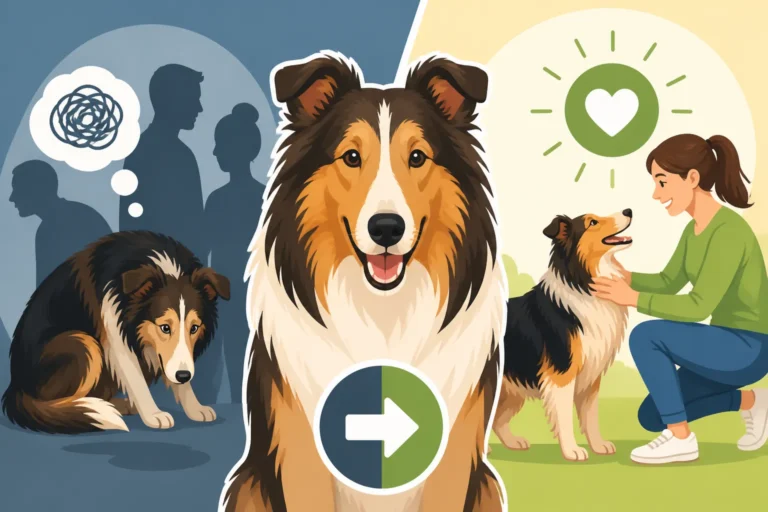
Focus heavily on foundational commands like "leave it" and a rock-solid recall, making them highly rewarding. You want your Collie to choose to disengage from the exciting livestock and return to you. Start this training in low-distraction environments and gradually build up to more challenging scenarios. This early training is part of The First Year With a Collie Puppy and sets the stage for a well-behaved adult dog. Positive reinforcement during these early exposures helps create positive associations with ignoring livestock, rather than seeing them as a tempting target for their instincts.
Leash Control and Boundary Training
When you are anywhere near areas where livestock might be present, strong leash control is absolutely non-negotiable. This means using a sturdy leash and collar or harness, and being prepared to maintain control even if your Collie becomes intensely focused. A long line, available on platforms like Amazon, can be an excellent training tool for practicing recall and "leave it" commands in a larger, but still controlled, open space. It allows your dog more freedom to explore while giving you the ability to intervene instantly if they show too much interest in something inappropriate.
Beyond physical control, teaching strong boundary training is also crucial. This involves teaching your Collie that certain areas are off-limits, whether it's a specific field, a neighbor's property line, or even a designated area within your own yard. Consistent reinforcement of these boundaries means your Collie learns that those tempting animals are simply not for them to engage with. Consider the general advice on Whether a Collie Can Be Off Leash Safely, and apply even stricter caution around livestock. Regularly inspect your own fencing and gates for any weak spots or potential escape routes, reinforcing them as needed.
Redirection and Mental Stimulation
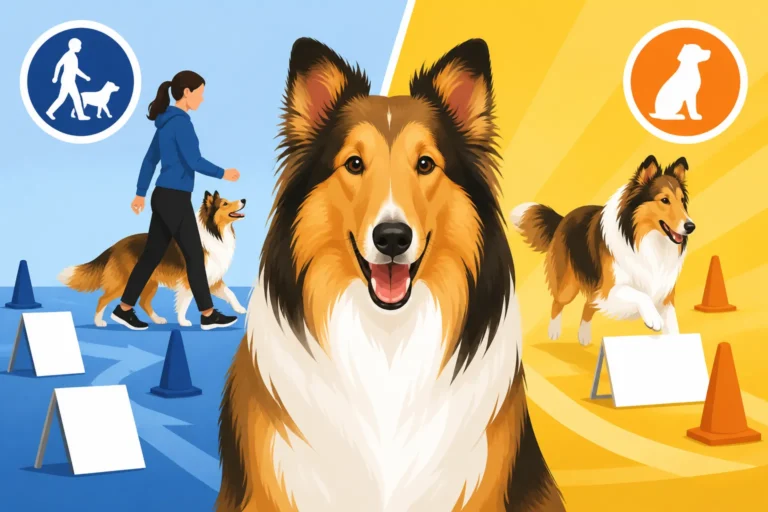
Collies are highly intelligent and often need a job to do, even if it’s not traditional herding. Their intelligence means they learn quickly, both good habits and bad. Instead of allowing their herding instincts to be directed at livestock, channel that energy into appropriate activities. Sports like obedience, rally, and agility are excellent outlets, engaging both their minds and bodies. Even complex trick training or scent work can provide the mental challenge they crave. Many owners find that puzzle feeders and interactive toys are invaluable for keeping their Collie's brain engaged throughout the day.
If you suspect your Collie has a strong herding drive that needs an outlet, exploring What Herding Instinct Testing Costs a Collie Owner could be an option. This testing often occurs in controlled environments with experienced handlers and stock, allowing you to see your dog's natural abilities and discuss appropriate outlets. Online training resources, like those offered by BAXTER & Bella, can also provide structured programs that focus on impulse control, advanced obedience, and mental games, all of which help to redirect that innate intelligence. A Collie who is regularly stimulated mentally and physically is far less likely to seek out undesirable outlets for their energy.
Living Peacefully Near Farms or With Livestock
Sharing your life with a Collie in an area where livestock are present requires diligence, foresight, and a commitment to responsible pet ownership. It’s about building a lifestyle that supports both your dog’s well-being and the safety of the surrounding animals.
Secure Fencing and Supervision
The absolute cornerstone of peaceful coexistence with livestock is secure containment. If you live adjacent to fields with animals, your property's fencing needs to be robust, escape-proof, and regularly maintained. Think about the "flight path" of a motivated Collie; they can be surprisingly agile and determined if a strong instinct takes over. Sometimes, a double-fence system or even an invisible fence (in conjunction with a physical barrier) might be considered for extra peace of mind, although invisible fences should never be the sole barrier to livestock.
But even the best fence is no substitute for supervision. Never, ever leave your Collie unsupervised in a yard if there's any chance they could get to livestock, or if livestock could come close to your property line. Accidents happen, and a lapse in supervision can have devastating consequences. When you're out walking, assume livestock might be around the next bend and keep your Collie on a leash. This constant vigilance is critical for preventing incidents.
Communication with Neighbors and Professional Help
Open, honest communication with your farming neighbors is incredibly important. Let them know you are aware of your Collie’s instincts and are taking proactive steps to manage them. This builds trust and can prevent misunderstandings or escalations if an incident were to occur. It’s far better to have a neighbor who knows you’re responsible than one who views your dog as a potential threat.
If you find that your Collie's herding instinct around livestock is overwhelming, or if you're struggling to implement effective training, don't hesitate to seek professional help. A certified professional dog trainer, particularly one with experience in herding breeds or working with livestock, can provide invaluable guidance. They can help you understand your specific Collie's drive, develop a tailored training plan, and even offer options for safely channeling that instinct into appropriate activities, such as controlled herding lessons with professional supervision. Remember, A Collie Reads a Room Better Than It Reads a Command, so understanding their nuanced behavior is key.
Understanding "No Contact"
In many cases, the safest and most responsible approach for a Collie living near livestock is to enforce a strict "no contact" rule. This means your Collie should never be allowed to interact directly with sheep, cows, goats, chickens, or any other farm animals. Even if your Collie seems "gentle," the potential for stress to the livestock, accidental injury, or the escalation of herding behaviors is simply too high. It's not worth the risk.
This approach requires consistent reinforcement from you. Teach your Collie that livestock are to be ignored, just like you would teach them to ignore squirrels on a walk. This might mean crossing the street to avoid a field with horses or keeping your dog on a very short leash when passing a farm. It's about respecting the animals, the farmers, and ultimately, ensuring your beloved Collie stays safe and out of trouble. While it can feel restrictive, it's the kind of responsible ownership that ensures a long, happy life for your Collie without incident. Remember, Harsh Handling Breaks a Collie and It Does Not Come Back, so positive reinforcement for avoiding livestock is always the best approach.
Disclaimer
This article is for general informational purposes only and does not constitute professional advice. Laws, prices and regulations vary by location and change over time. Consult a qualified professional for guidance on your specific situation.