Whether a Collie Can Be Off Leash Safely
Oh, the dream, isn't it? The vision of your beautiful Collie gracefully trotting through a meadow, ears flying, coming instantly when called, a picture of perfect freedom and obedience. It's a desire many Collie owners share, and it’s completely understandable. But the reality of letting a Collie off-leash, while sometimes achievable, comes with a whole host of considerations that aren't always obvious until you're living with one of these intelligent, yet sometimes independent, herding dogs. This guide is all about helping you understand the nuances of off-leash safety for your Collie, delving into their instincts, the crucial training involved, and when it's simply not worth the risk.
Understanding the Collie's Herding Instinct: Friend or Foe to Off-Leash Freedom?
The Collie, at its heart, is a herding dog. This isn't just a fun fact from history; it's a fundamental part of their genetic makeup and behavior that profoundly impacts their suitability for off-leash adventures. While they might not be as intensely driven as, say, a Border Collie, that instinct is still very much there, simmering just beneath the surface, waiting for the right (or wrong!) stimulus to ignite.
The Lure of Movement: Why Your Collie Might Bolt
Imagine your Collie calmly walking beside you. Suddenly, a jogger passes, a child on a bike zips by, or even a flock of pigeons takes flight. For many Collies, any fast, erratic movement can trigger that ancient herding impulse. It's not about being disobedient; it's about an innate drive to gather and control. They see movement, and their brain says, "Go! Bring it back!" This often manifests as a chase, a wide circle, or a gentle nip at the heels – behaviors that are perfectly natural in a working context but downright dangerous in a park near a road or a busy hiking trail.
This instinct is so powerful because it's self-rewarding. The thrill of the chase, the feeling of "working," even if it's just a squirrel, can be far more enticing than any treat you have in your pocket. This is why a simple "come" command, which might work flawlessly in your backyard, can fall apart spectacularly when a deer bounds across a field. It’s a frustration many owners face, feeling like their dog knows the command but chooses to ignore it. Really, it's often their instincts taking over, and it's a powerful force to contend with. Understanding Why a Collie Herds Your Children or other moving objects is key to managing this behavior.
When "Soft" Herding Becomes a Liability
Collies are known for their "loose-eyed" or "soft" herding style compared to the intense stare of some other breeds. This means they often rely more on their presence, their barks, and their body language to direct livestock, rather than a strong, fixed gaze. While this can make them less intimidating in a family setting, it doesn't diminish their underlying drive. In an off-leash scenario, this "softness" might translate into a wider range of movement, circling and sweeping to gather, rather than a direct, contained chase.
This wider range means they can cover ground incredibly quickly, putting distance between you and them before you even realize what's happening. A Collie might decide a group of distant hikers needs "rounding up," or that the neighbor's barking dog requires a closer inspection. It’s important to acknowledge that they aren't being malicious; they're simply following their internal compass. For owners, this means that even a seemingly calm Collie can suddenly transform into a driven herding machine when the right trigger presents itself, making consistent recall paramount.
Building a Rock-Solid Recall: Your Collie's Lifeline
If you're ever going to contemplate off-leash time for your Collie, a recall that is 100% reliable, 100% of the time, is non-negotiable. This isn't just about yelling "come" and hoping for the best; it's about building a deeply ingrained, positive association with returning to you, even when the world offers more exciting distractions.
Starting Early and Making It Fun
The foundation of a reliable recall begins in puppyhood, in a controlled, low-distraction environment like your living room or a securely fenced yard. Make coming to you the most exciting thing in the world! Use high-value treats (think cooked chicken, cheese, or hot dogs), enthusiastic praise, and playful gestures. Don't just save "come" for when you're leaving the park. Call your puppy throughout the day, reward them lavishly, and then immediately release them to play again. This teaches them that coming to you doesn't mean the fun stops; it often means even more fun and rewards.
Consistency is key here. Every single time you call your Collie, they need to respond, and you need to reward them. If you call them ten times and they only come five, you're teaching them that "come" is optional. Many online puppy training programs, like those offered by BAXTER & Bella, emphasize building this kind of positive foundation for recall, showing you how to make it a game your dog genuinely enjoys. Remember, Collies are intelligent and sensitive; they pick up on your tone and intentions quickly. How Long a Collie Remembers a Bad Session emphasizes why positive reinforcement is so critical for this breed.
Proofing in Distracting Environments
Once your Collie has a fantastic recall indoors, it's time to gradually introduce distractions. This is where many owners falter, thinking their dog is "trained" after a few successful backyard sessions. Start with mild distractions in a secure area – perhaps a friend walking by, or a ball gently rolling. Slowly increase the level of distraction and the environment. Go to quiet parks, then busier ones, always keeping your dog on a long line (a 20-30 foot leash) so you can physically enforce the recall if needed. This prevents them from practicing ignoring you.
Always carry those high-value treats, and be prepared to reward every single time they come, even if it's not perfect. The goal is to make coming to you a deeply ingrained habit, a reflex, rather than a choice they weigh against the squirrel darting into the woods. Some owners find using a clicker helps mark the exact moment their Collie turns to respond, enhancing the training process. A treat pouch from Amazon can be a lifesaver for keeping rewards handy and motivating during these sessions. It's about building confidence in your dog that you are the source of all good things, even when tempting alternatives appear.
Tools and Techniques for Safety
Beyond treats and praise, several tools and techniques can aid in building and maintaining a safe off-leash experience.
- Long Lines: As mentioned, a long line is invaluable for proofing recall. It allows your Collie to explore while still giving you control if they decide to chase something. Make sure it's a sturdy line appropriate for their size.
- Whistle Recall: A dog whistle can cut through distractions more effectively than your voice, especially over distance or in noisy environments. Teach your Collie to associate the whistle with coming back and a fantastic reward, just like your verbal cue.
- GPS Trackers: For peace of mind, especially in the early stages of off-leash training or in unfamiliar areas, a GPS tracker can be a smart investment. While it won't prevent your dog from running off, it drastically increases your chances of finding them quickly if they do. There are many options available on platforms like Amazon.
- "Emergency" Recall: Have a special, extremely high-value cue (a specific word, a series of claps) that you only use when your Collie absolutely must come back, and for which the reward is truly extraordinary. Never use this casually. This is for the deer, the car, the unexpected danger.
- Focus Exercises: Practice exercises that build your Collie's focus on you, even when distractions are present. "Watch me," heel work, and engaging games like hide-and-seek can strengthen your bond and make you more interesting than the environment. Forty Five Minutes a Day, and Half of It in Its Head speaks to the need for mental stimulation that also strengthens your bond and control.
Here’s a quick overview of recall training stages:
| Training Stage | Environment | Distraction Level | Primary Goal | Key Tools |
|---|---|---|---|---|
| Foundation | Indoors / Small, secure yard | None / Very Low | Build positive association with "come" | High-value treats, praise, toys |
| Proofing (Level 1) | Secure, quiet park | Low | Introduce minor distractions, ensure response | Long line, treats, whistle |
| Proofing (Level 2) | Moderately busy park | Medium | Generalize recall across various scenarios | Long line, varied treats, GPS tracker |
| Advanced | Controlled off-leash areas | High (supervised) | Instant, enthusiastic return in any situation | Emergency recall cue, consistent rewards |
Environmental Considerations: Where and When Off-Leash Might Work
Even with a perfectly trained Collie, the environment plays a massive role in whether off-leash is a safe and responsible choice. Not all spaces are created equal, and understanding local regulations and potential hazards is just as important as your dog's training.
Securely Fenced Areas are Your Best Friend
For true, worry-free off-leash fun, nothing beats a securely fenced area. This could be your own backyard, a friend's property, or a private dog park that you know is fully enclosed. In these spaces, your Collie can run, sniff, and explore to their heart's content without the immediate risk of encountering traffic, unknown hazards, or chasing wildlife into dangerous territory.
When evaluating a fenced area, always double-check the perimeter for gaps, weak spots, or gates that don't latch properly. Collies are intelligent and can be surprisingly agile if motivated. Even a small opening could be an invitation for an unexpected adventure. Some dog daycare facilities or boarding kennels offer supervised off-leash play in large, secure yards, which can be a great option for your Collie to burn off energy safely.
Low-Stimulus Environments: Proceed with Caution
Some natural areas might seem ideal for off-leash romping – quiet hiking trails, secluded beaches during off-peak hours, or large, open fields far from roads. These can be wonderful opportunities for your Collie to enjoy true freedom. However, it's crucial to assess the "stimulus level" constantly. What looks quiet can quickly change.
Before allowing off-leash time in such an area:
- Scout Ahead: Walk the area on-leash first to check for potential hazards, wildlife trails, or unexpected changes in terrain.
- Time of Day/Week: Consider when the area is least likely to be busy with other people, dogs, or cyclists. Early mornings or late evenings are often best.
- Visibility: Can you see your dog clearly at all times? Collies can blend into natural surroundings, especially if they are sable or tricolor.
- Your Dog's Temperament: Is your Collie generally calm and focused on you, or are they easily distracted by scents and sounds? Whether a Collie Is Naturally Timid or prone to startling might affect their behavior in new environments. A Collie who struggles with Whether a Collie Is Dog Reactive on Leash certainly shouldn't be off-leash.
Even in these low-stimulus environments, it's wise to have your long line easily accessible, or even keep it dragging for immediate control if an unexpected distraction appears.
Understanding Local Leash Laws and Etiquette
Local regulations regarding off-leash dogs vary dramatically. What's perfectly acceptable in a rural national forest might be illegal in a city park, even if that park feels quiet and safe. Always research and respect the leash laws of any area you visit. Fines for off-leash violations can be steep, but more importantly, you could inadvertently put your dog or others at risk.
Beyond the law, consider common courtesy and canine etiquette. Not every person or dog wants to be greeted by an off-leash Collie, no matter how friendly yours is. Some people are afraid of dogs, and some dogs are reactive or shy. An off-leash dog approaching can cause stress or even altercations. Being a responsible owner means ensuring your Collie isn't just safe, but also respectful of the space and those sharing it. If you see another person or dog, it's always best to call your Collie back and leash them until you've passed.
Recognizing the Risks: When Off-Leash Is Never Worth It
There are simply some situations where the risks of an off-leash Collie far outweigh any benefits of freedom, no matter how well-trained your dog is. Recognizing these "never-go-off-leash" scenarios is crucial for your Collie's safety and your peace of mind.
High-Traffic Areas and Roadsides
This might seem obvious, but it bears repeating: never allow your Collie off-leash near roads, busy parking lots, or any area with moving vehicles. A Collie's herding instinct can easily be triggered by cars, bicycles, or even skateboards, leading them to dart into traffic in an attempt to "gather" or "control" the moving object. The consequences are, of course, catastrophic. Even if your Collie has a perfect recall, a sudden loud noise, an unexpected human action, or another animal could cause them to panic and bolt.
The fleeting joy of off-leash freedom is simply not worth the immense danger posed by vehicles. Your Collie relies on you to make smart, safety-first decisions for them. This means keeping them securely on a leash in any area where vehicular traffic is a possibility.
Unknown Dogs, Wildlife, and People
The outside world is unpredictable. You never know what kind of dogs you might encounter. While your Collie might be friendly, not all dogs are, and an off-leash approach from your dog could lead to a fight or a stressful encounter. Similarly, wildlife such as deer, rabbits, or even birds can trigger a strong chase response in your Collie, leading them far afield and potentially into danger, like getting lost or injured. Whether a Collie Runs Off is a genuine concern, especially if their prey drive kicks in.
Unfamiliar people, particularly children, can also be a concern. While Collies are generally gentle, not everyone is comfortable with an approaching dog. If your Collie's herding instinct causes them to circle or nip at a running child, even playfully, it can be a terrifying experience for the child and a liability for you. It's always best to err on the side of caution and keep your Collie leashed in areas where you might encounter unfamiliar dogs, people, or tempting wildlife. How a Collie Greets a Stranger can be polite, but it's best to control the interaction.
The MDR1 Factor: An Extra Layer of Caution
For many Collie owners, the MDR1 gene mutation adds another layer of concern to off-leash safety. This genetic condition makes Collies highly sensitive to certain common medications, and an accidental ingestion of a drug (left on the ground, dropped by another dog owner) could have serious consequences. While this isn't directly related to getting off-leash, it's a vital consideration for the risks involved with unsupervised exploration.
Imagine your Collie, off-leash, sniffing the ground and inadvertently consuming a discarded pill. If that pill contains a drug toxic to MDR1-affected Collies, you could be facing a life-threatening emergency. This means that even in seemingly safe, low-distraction areas, the ground itself can pose a hidden danger. For this reason, many Collie owners with MDR1-affected dogs choose to keep them on-leash almost exclusively, as an extra precaution against accidental poisoning. Knowing Whether One Copy of MDR1 Is Enough to Harm a Collie or what drugs are on The Drug List That Can Kill a Collie is crucial for all Collie owners. It's a sobering thought, but one that underscores the importance of thoughtful decision-making about off-leash freedom.
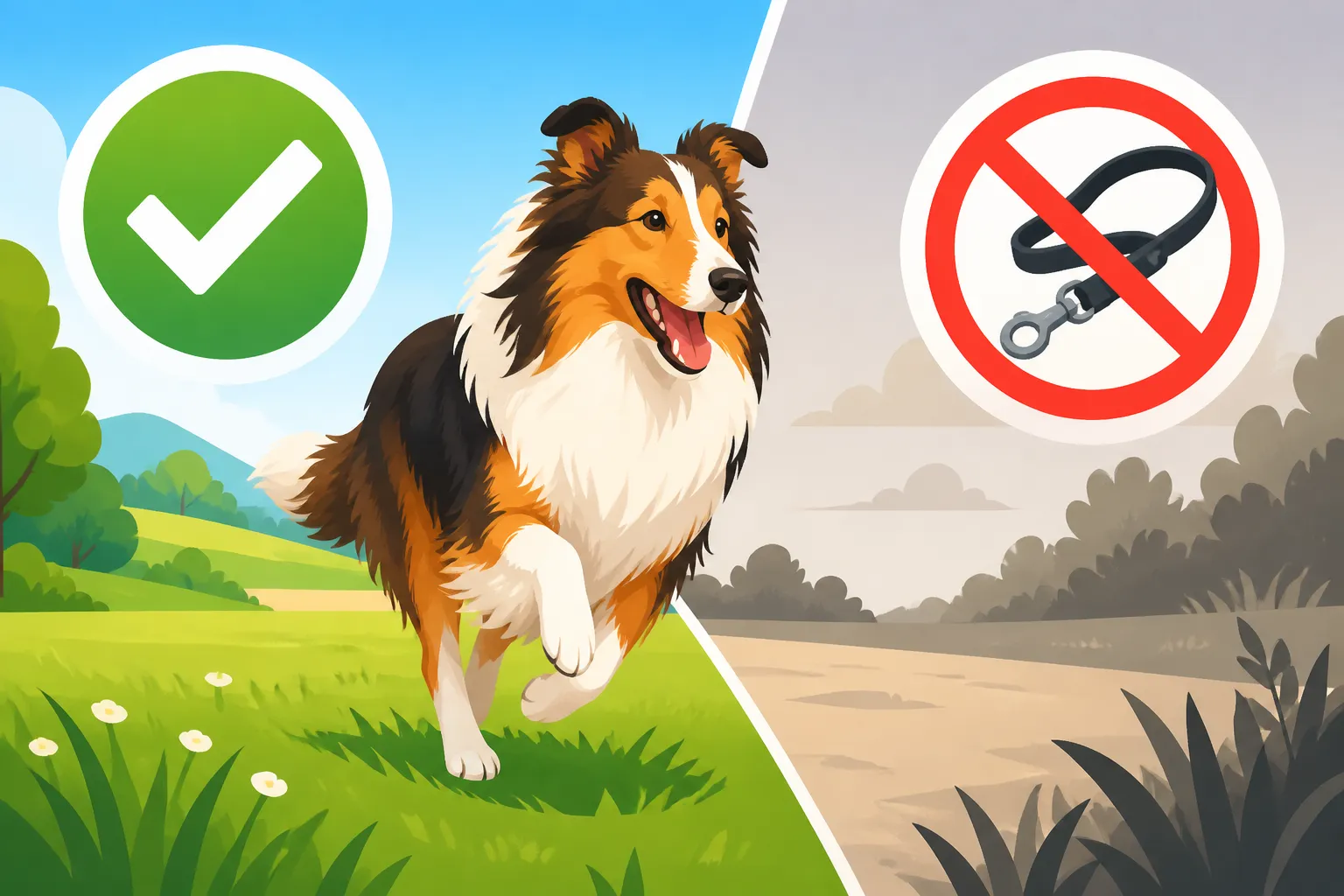
Ultimately, whether a Collie can be off-leash safely isn't a simple yes or no answer. It's a nuanced equation involving their individual temperament, your dedicated training, the specific environment, and an honest assessment of the potential risks. For most Collies, safe off-leash experiences will be limited to securely fenced areas or highly controlled, low-distraction environments where their recall is absolutely foolproof and the owner is hyper-vigilant. It’s about prioritizing your Collie’s safety above all else, even if it means sacrificing that picture-perfect, wind-in-their-mane moment for a secure leash and a happy, healthy dog by your side.
Disclaimer
This article is for general informational purposes only and does not constitute professional advice. Laws, prices and regulations vary by location and change over time. Consult a qualified professional for guidance on your specific situation.