Whether a Collie Runs Off
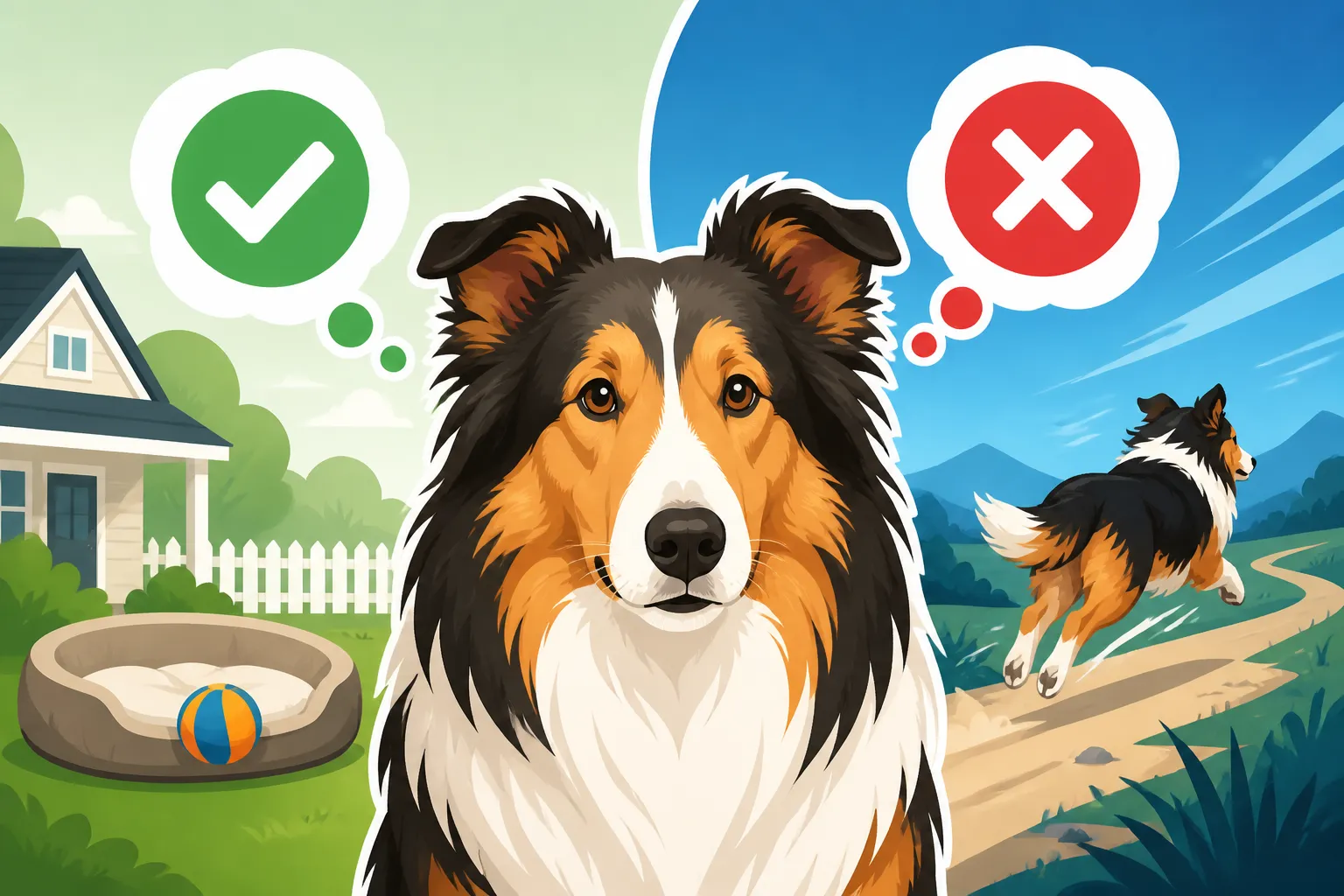
It’s a scenario that strikes fear into the heart of any dog owner: you turn your back for a second, a gate is ajar, or perhaps you're out on a trail, and suddenly, your beloved Collie is gone, vanished in pursuit of a scent or a fleeting movement. Despite their reputation for loyalty and close companionship, the thought of a Collie running off is a very real, very stressful concern. This guide is here to shed light on why a Collie might decide to go on an unscheduled adventure, what drives that instinct, and most importantly, how you can build a stronger bond and safer boundaries to keep your furry family member happily and securely by your side.
Understanding the Collie's Instinct to Roam
Collies are remarkable dogs, known for their intelligence, sensitivity, and deep devotion to their families. However, underneath that beautiful coat and gentle demeanor lies a strong heritage as a herding dog. This history, while making them excellent companions, also instills certain instincts that can, unfortunately, lead to a tendency to roam if not properly managed. It's not usually about disobedience; it's about ancient programming kicking in.
Herding Drive and Environmental Curiosity
Imagine a Collie in its ancestral role: scanning the landscape, alert to any movement, ready to gather and direct a flock. While most modern Collies don't herd sheep on a daily basis, that innate drive is still very much present. When you're in your backyard or out on a walk, this instinct can translate into an irresistible urge to investigate anything that moves – a squirrel darting across the lawn, a rabbit hopping through a field, or even a distant jogger. They aren't trying to be naughty; they're simply responding to that powerful, ancient call to "work" and control their environment.
This means that what looks like them "ignoring" your frantic calls might actually be them hyper-focused on a perceived task, their senses completely tuned into the chase. It's incredibly frustrating for us, as we see a dangerous situation unfolding, while they are, in their minds, just doing what Collies do best: observing, reacting, and moving. Understanding this deep-seated drive is the first step in addressing it, because it helps us remember it's not personal; it's instinctual.
The Lure of Novelty and Scent Trails
Collies have incredible noses, far more sensitive than ours, and their world is rich with olfactory information. Every sniff is like reading a new chapter in a thrilling book. A fascinating scent, perhaps left by a deer, a stray cat, or another dog, can be an overwhelming temptation. These "scent trails" can pull a Collie away with astonishing speed and focus, drawing them further and further from familiar territory as they follow the intriguing narrative of a forgotten paw print.
This intense focus on scent can easily override even the most solid training, especially if a Collie is young, has not been thoroughly proofed on recall in high-distraction environments, or is simply overwhelmed by a particularly pungent trail. It’s like us trying to ignore a truly captivating movie while someone is calling our name from another room – sometimes, the pull of the story is just too strong. This is particularly relevant if your yard isn't entirely secure, as even a small gap or an unlatched gate can become an irresistible invitation to explore the "neighborhood newspaper" of scents just beyond your property lines.
Common Scenarios Where Collies Run Off
Understanding the underlying instincts is one thing, but knowing when those instincts are most likely to take over can help you be proactive in preventing escapes. Collies, like many intelligent and active breeds, often find themselves in similar predicaments when they decide to go on an unexpected adventure.
The Open Gate or Unsecured Yard
This is perhaps the most common and terrifying scenario for many Collie owners. You step outside for a moment, distracted, leaving the gate ajar, or perhaps a visitor isn't aware of the "always close the gate" rule. One minute your Collie is happily sniffing around the garden, the next they've spotted an opportunity – a gap, a momentary lapse in vigilance – and they're off, a blur of fur chasing the thrill of freedom. It happens so fast. The "freedom rush" is real, and once they're out, the familiar boundaries disappear, replaced by a world full of new sights, sounds, and, most importantly, smells.
Even a seemingly secure yard can have vulnerabilities. A determined Collie might find a weak spot in a fence, dig under it, or even jump over if the motivation is strong enough. Many owners have been surprised to discover their usually well-behaved Collie has transformed into an escape artist when presented with an open door. This highlights the critical importance of constant vigilance and regular checks of your property's perimeter. Don't assume your Collie won't try; assume they will if the opportunity arises.
Ignoring the Recall Off-Leash
Picture this: you're at a beautiful, wide-open park or a hiking trail, and your Collie is enjoying some well-deserved off-leash time, confidently romping nearby. Then, a deer appears at the edge of the woods, or another dog bounds into view. Suddenly, your recall, which was rock-solid just moments before, is completely forgotten. Your Collie, tail flagging, is off like a shot, seemingly deaf to your increasingly frantic calls. It's a heartbreaking moment, a feeling of betrayal when your trusted companion seemingly abandons you for a more exciting pursuit.
This isn't necessarily a sign of a poorly trained dog, but rather a testament to the power of instinct and external distractions. The immediate reward of chasing that deer or playing with the new dog often outweighs the learned behavior of returning to you, especially if the recall hasn't been "proofed" extensively in highly distracting environments. The mental battle for your Collie is real: the primal urge to pursue versus the desire to please you. When the stakes are high, instinct can often win out, leaving you feeling helpless and worried sick. This is why Whether a Collie Is Easy to Recall can be a surprisingly complex question for owners in real-world scenarios.
Fear, Anxiety, and Bolting
Sometimes, a Collie's sudden departure isn't about chasing something exciting, but fleeing something frightening. Loud, unexpected noises like fireworks, thunderstorms, backfiring cars, or even unfamiliar machinery can trigger a strong flight response in a sensitive Collie. In a moment of panic, they might bolt, running blindly in an attempt to escape the perceived threat. This kind of bolting is particularly dangerous because a frightened dog is often disoriented and less likely to respond to commands.
This highlights the absolute necessity of ensuring your Collie is always wearing secure identification, even if you just step outside for a moment. A comfortable, well-fitting collar or harness, along with up-to-date ID tags and a microchip, are your Collie's best chance of being safely returned if they get lost due to fear. A stressed or anxious Collie can make irrational decisions, and their usual calm demeanor can vanish in an instant when overwhelmed. This scenario underscores that even the most well-behaved Collie can be vulnerable to running off when their emotional security is compromised.
Preventing Your Collie From Running Off
While a Collie's instincts are strong, they are also incredibly intelligent and eager to please, making them highly trainable. Proactive prevention through consistent training and a secure environment is key to keeping your beloved companion safe. It’s all about setting them up for success and minimizing the opportunities for them to stray.
Training a Rock-Solid Recall and Impulse Control
A reliable recall is your most powerful tool in preventing your Collie from running off, especially in off-leash situations. This isn't just about teaching them to come when called; it's about making coming back to you the most rewarding thing in their world, regardless of distractions. Start in a low-distraction environment, like your quiet backyard, using high-value treats and enthusiastic praise. Practice frequently, even when they're already close. When they come, make it a huge celebration!
Gradually increase the difficulty. Introduce mild distractions, then move to busier parks or open fields, always using a long line (a lightweight leash, 30-50 feet long) for safety. This allows them to feel some freedom while giving you control to prevent bolting. Brands like Amazon offer a wide variety of long lines perfect for this kind of practice. Remember, every successful recall builds positive reinforcement. Additionally, work on impulse control exercises like "leave it" and "stay." These teach your Collie to override their initial instincts, crucial for when that squirrel darts by. For a comprehensive program that really helps build these foundational skills, look into resources like BAXTER & Bella's online training, which often provides structured approaches to impulse control and recall. The goal is that when you call, your Collie doesn't even consider the distraction; they just know that coming back to you is the best possible choice.
Securing Your Environment
Your home environment is the first line of defense. Regularly inspect your fences for any loose boards, holes, or spots where a determined digger might tunnel under. Consider adding dig guards or burying a line of chicken wire at the base of your fence if your Collie is an escape artist. Ensure all gates have secure, self-latching mechanisms that even the most clever Collie can't nudge open. Teach everyone in your household and any visitors the critical importance of keeping gates and doors securely closed.
When you're out and about, never underestimate your Collie's ability to get loose. Always ensure they are wearing a properly fitted collar or harness and that their leash is securely attached to you, perhaps even with a carabiner. For an added layer of peace of mind, especially if you spend time in open areas or have a Collie prone to exploration, consider investing in a GPS tracking collar. These devices, available from various brands online, including through retailers like Amazon, can provide real-time location updates if your dog ever gets away. While they shouldn't replace training and secure measures, they offer invaluable assistance in a crisis. It's also wise to remember How Much Yard a Collie Actually Uses and ensure that even if they're just running laps, the space is entirely secure.
Enriching Their Lives to Reduce Wanderlust
A bored Collie is a Collie looking for something to do, and sometimes, that "something" can involve exploring beyond your property lines. Providing ample mental and physical exercise can significantly reduce their desire to seek excitement elsewhere. Collies need more than just a quick walk around the block; they thrive on activity that engages both their bodies and their brilliant minds.
Aim for at least Forty Five Minutes a Day, and Half of It in Its Head of dedicated activity. This could include long walks or hikes, playing fetch, or engaging in dog sports like obedience, rally, or even beginner agility. Mental stimulation is just as crucial. Puzzle toys, KONGs stuffed with treats, and regular training sessions that teach new tricks or reinforce commands can be incredibly satisfying for them. Scent work, where they use their powerful noses to find hidden treats or toys, is another fantastic way to tire them out mentally. Remember that Whether a Collie Needs a Job to Be Content is often true; giving them a "job" to do, even if it's just finding their breakfast in a puzzle feeder, can make a huge difference in their overall contentment and reduce their urge to wander.
| Prevention Strategy | Description | Best For | Considerations |
|---|---|---|---|
| Solid Recall Training | Consistent, positive reinforcement training to return to owner on command, regardless of distraction. | All scenarios, especially off-leash. | Requires patience, high-value rewards; starts in low-distraction environments. |
| Secure Fencing/Gates | Physically preventing escape from the yard with sturdy fences, self-latching gates, and dig guards. | Home environment, supervised yard time. | Regular inspection needed; doesn't prevent escapes if gates are left open by accident. |
| Long Line Usage | Practicing off-leash recall and freedom on a very long leash (e.g., 30-50ft) in safe, open areas. | Building confidence and proofing recall outdoors. | Requires open space and careful leash management skills from the owner. |
| GPS Tracking Collar | A device worn by the dog that allows real-time location tracking via a smartphone app. | High-risk scenarios, peace of mind, highly reactive dogs. | Requires battery charging; subscription fees may apply; should supplement, not replace, training. |
| Mental Stimulation | Engaging the Collie's mind with puzzle toys, scent work, obedience, and interactive play sessions. | Reducing boredom-driven wandering and destructive behaviors. | Needs daily commitment; may not prevent instinct-driven bolting on its own. |
| Microchipping | Permanent identification implant that links your dog to your contact information. | Essential for identification if found and turned into a shelter or vet. | Does not prevent escape; requires a scanner to read; contact information must be kept current. |
What to Do If Your Collie Does Run Off
Despite all your best efforts, sometimes the unthinkable happens, and your Collie gets loose. Panic is a natural reaction, but it’s crucial to act quickly and calmly. Knowing what to do in those terrifying first moments can significantly increase the chances of a happy reunion.
Immediate Action Steps
The most important thing to remember if your Collie bolts is: do not chase them! Chasing can often trigger their herding or prey drive, making them think you're playing a game, or worse, scaring them further away. Instead, drop to the ground, act excited, and call their name in a happy, high-pitched voice. Make yourself appear less threatening and more inviting. This often works better than shouting or running after them.
Have some incredibly high-value treats (think cooked chicken, cheese, or hot dogs – something they rarely get) and a favorite squeaky toy ready. If you can get their attention, even briefly, present these irresistible items. If they hesitate, try running away from them for a short distance, still calling them excitedly. This can sometimes trigger their natural instinct to follow or "herd" you back. Your calmness and positive demeanor can be surprisingly effective. Don't forget that What a Collie Owner Should Carry to an Emergency Visit should always include proof of ownership and a clear, recent photo, just in case.
Search Strategies and Community Support
If your immediate efforts aren't successful, it's time to widen your search. First, contact your local animal shelters, animal control, and veterinary clinics immediately. Provide a detailed description and a clear photo of your Collie. Many lost dogs end up at these facilities. Next, leverage the power of social media. Post clear photos and details about your lost Collie on local lost pet groups, community pages, and even your own profile. Ask friends and family to share.
Print flyers with a large, clear picture of your Collie, your contact information, and the date and location they were last seen. Post these in the area where they went missing, at local businesses, and near parks. Check daily with shelters and vets, as new dogs arrive constantly. And this cannot be stressed enough: ensure your Collie is microchipped and that your contact information associated with the chip is always current. While a visible ID tag is great, collars can come off. A microchip is a permanent form of identification and a true lifesaver for lost pets. For more peace of mind, consider Whether a Collie Should Wear a Medical Tag in addition to standard ID, especially if they have any specific health needs.
Disclaimer
This article is for general informational purposes only and does not constitute professional advice. Laws, prices and regulations vary by location and change over time. Consult a qualified professional for guidance on your specific situation.