Whether a Collie Barks at Other Dogs on Leash
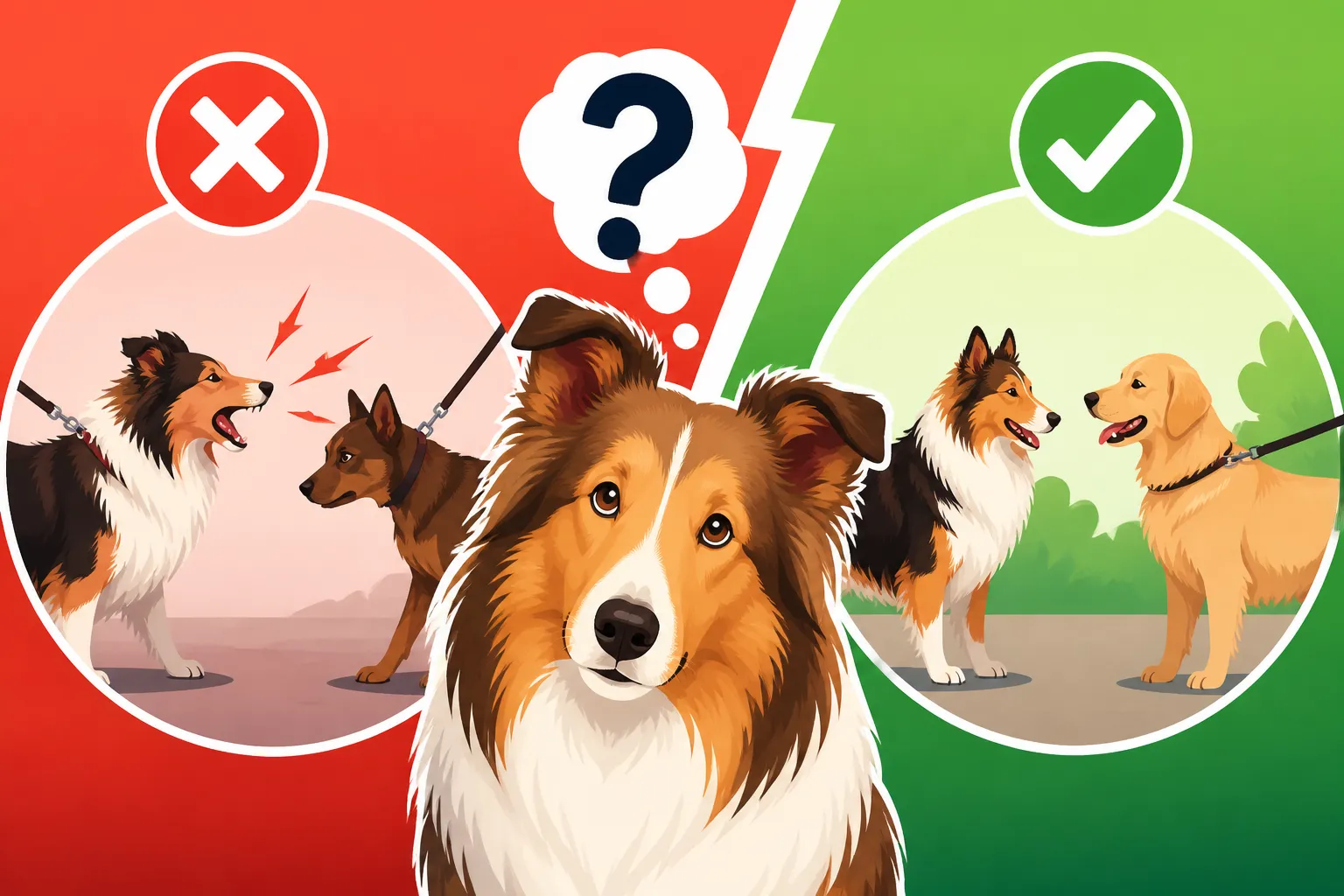
It's incredibly frustrating when your sweet, usually calm Collie suddenly erupts into a barking frenzy at the sight of another dog while on a leash. You just want to enjoy a peaceful walk with your beloved companion, but these moments can make you feel anxious, embarrassed, and even a bit helpless. This guide is here to walk you through why your Collie might be exhibiting this behavior, how to recognize the subtle cues leading up to it, and, most importantly, provide you with practical, empathetic strategies to help your dog feel more comfortable and confident on walks, transforming those stressful encounters into manageable, even pleasant, experiences.
Understanding Why Your Collie Barks on Leash
It’s easy to feel like your Collie is just being "naughty" or "aggressive" when they bark and lunge on leash, but that’s rarely the full story. For a breed as intelligent and sensitive as the Collie, leash reactivity is almost always rooted in a deeper emotional state. They're not trying to be difficult; they're trying to communicate, however loudly, that they're feeling overwhelmed, frustrated, or even scared. Unpacking these underlying reasons is the first step toward helping them.
The Herding Instinct and Frustration
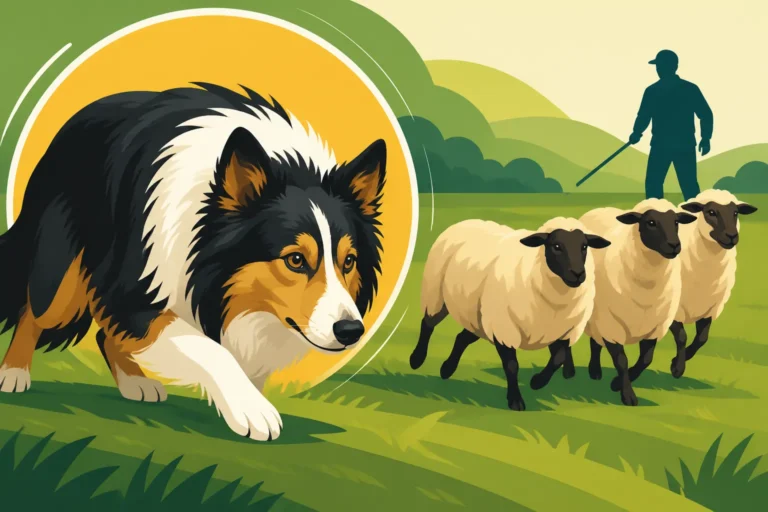
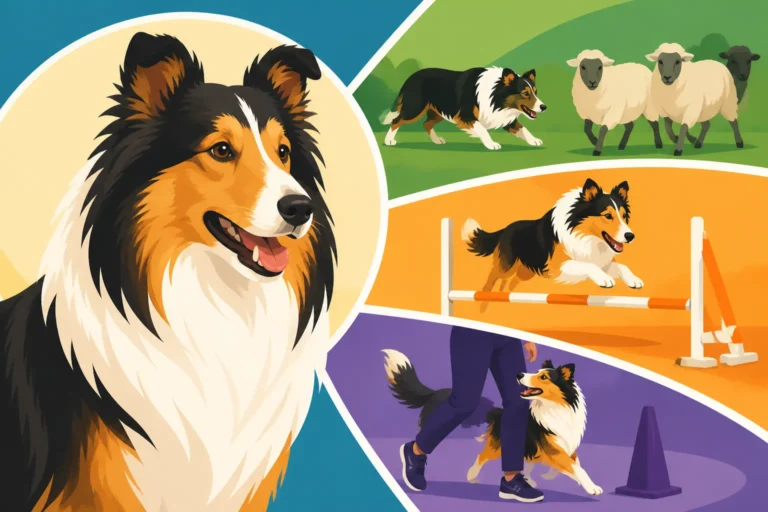
Your Collie carries centuries of genetic programming to herd. This instinct involves controlling movement, gathering, and sometimes even a bit of bossiness! When your Collie sees another dog approaching on a leash, especially if that dog is moving quickly, making eye contact, or otherwise stimulating their herding drive, their instincts might kick in. They want to do something—approach, circle, move the other dog along—but they are physically restrained by the leash. This creates immense frustration, a deep, internal conflict where their brain is telling them to act, but their body can't follow through.
Imagine being strapped into a chair, seeing something you desperately want to influence, but being unable to move. That knot of thwarted intention, that build-up of energy with no outlet, can explode into barking and lunging. It's not about being mean to the other dog; it's a frantic, often misdirected, attempt to manage a situation their instincts deem important, all while feeling completely helpless. This intense emotional state can be incredibly stressful for a sensitive Collie, leading to repeated outbursts if not addressed.
A Lack of Socialization or Negative Experiences
While some reactivity is rooted in instinct, a significant portion can be attributed to past experiences, or a lack thereof. Collies are generally gentle and social, but like any dog, early socialization is critical. If your Collie didn't have enough positive, varied experiences with other dogs and environments during their crucial puppy development window, they might lack the social fluency to handle novel or close encounters calmly. A missed opportunity to learn appropriate greetings can manifest as anxiety later on. Where to Socialize a Collie Puppy is a good topic to understand preventative measures.
Beyond a simple lack of exposure, a single negative experience can profoundly impact a Collie. Perhaps they were rushed by an off-leash dog, had a bad interaction with an aggressive dog, or even experienced an overly boisterous greeting that scared them. Because Collies are so attuned to their environment and their human's emotions, they can internalize these scary moments deeply. What might be a minor incident for another breed could become a lasting source of fear or apprehension for a sensitive Collie, leading them to react defensively when they anticipate a repeat of the unpleasant situation. This memory of a bad encounter can make them wary of every approaching dog.
Barrier Frustration and the Leash Itself
It might seem counterintuitive, but the very tool you use for safety—the leash—can actually contribute to or even cause leash reactivity. This is known as "barrier frustration." When dogs meet off-leash, they have a wide range of natural behaviors they use for greeting: circling, sniffing, playing distance games, or even simply moving away if they don't like the vibe. The leash, however, prevents all of this. It forces dogs into a direct, often head-on approach, which can be perceived as confrontational or rude in dog language.
The tension on the leash itself can become a conditioned stimulus. If every time your Collie feels a tightening of the leash, it's followed by a stressful encounter, the leash itself can become a trigger. Your dog learns that leash tension signals an impending, uncomfortable interaction, making them anxious before they even see the other dog clearly. For a sensitive breed like a Collie, this constant pressure and lack of agency can be incredibly frustrating and lead to reactive outbursts. It's a cruel irony that the very thing meant to keep them safe can also become a source of their stress.
Recognizing the Signs Before the Bark Starts
One of the biggest hurdles for Collie owners dealing with leash reactivity is often missing the subtle signals their dog gives before the barking and lunging begins. Your Collie isn't just spontaneously exploding; they're trying to communicate their discomfort long before they resort to such a dramatic display. Learning to read these early warning signs is absolutely crucial, as it gives you the power to intervene and manage the situation proactively, rather than constantly reacting to an outburst.
Subtle Body Language Cues
Collies are incredibly intelligent and often quite stoic, which means their early signs of discomfort can be very subtle. You might notice a stiffening of their body, a sudden halt in their sniffing, or a "hard stare" fixed on the approaching dog. Their tail, which might usually be held in a relaxed curl, could suddenly go rigid, tucked, or start flicking quickly from side to side with no accompanying relaxed body language. You might see their hackles (the hair along their spine) raise slightly, indicating arousal or fear.
Other less obvious stress signals include lip licking, yawning (when not tired), repetitive sniffing of the ground, or turning their head away as if trying to disengage. Some Collies might even "freeze," becoming completely still, which is often a precursor to a fight or flight response. Learning How Long a Collie Remembers a Bad Session emphasizes why these early cues are so important; early intervention can prevent the situation from becoming another negative memory. Paying close attention to these quiet signals allows you to understand your Collie's emotional state and act before they feel the need to bark.
The "Threshold" and Distance Management
Every dog has a "threshold"—a point at which they can no longer cope with a trigger and react. For a Collie reacting to other dogs on leash, their threshold is the distance at which they can still see another dog but remain calm and responsive to you. Beyond that point, they become overstimulated, anxious, or frustrated, and the barking begins. The key to successful management and training is to keep your Collie below this threshold.
This means actively managing distance. If your Collie's threshold is 50 feet, then you never allow another dog to approach closer than 50 feet while you are training or managing a situation. If another dog is 60 feet away and your Collie notices them but remains calm, you're golden! That's your working distance. If the same dog at 40 feet causes an outburst, you've gone past the threshold. This approach helps you maintain a positive and calm experience for your Collie, reinforcing that seeing other dogs doesn't always lead to stress. It also builds How to Build Confidence in a Nervous Collie by allowing them to observe without feeling threatened or overwhelmed.
Environmental Triggers Beyond Other Dogs
It's tempting to think that leash reactivity is only about other dogs, but often, the environment plays a huge role. Collies, with their sensitive nature, can be easily overwhelmed by sensory input. A busy street with lots of traffic noise, crowded sidewalks, narrow paths, or even certain smells can elevate their stress levels. When they are already on edge from the general hustle and bustle, the appearance of another dog can be the tipping point that sends them over their threshold.
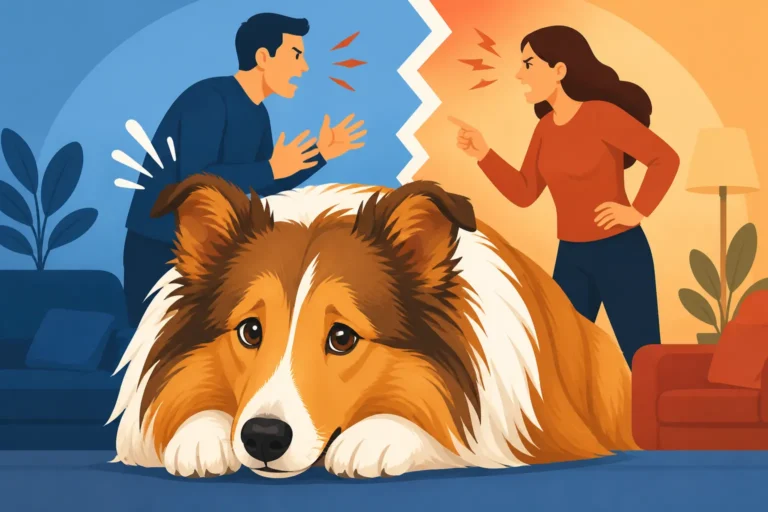
Consider the context: Is your Collie more reactive on a familiar quiet street or in a bustling downtown area? Do they react more when confined to a narrow sidewalk with no escape route, versus an open park where you can easily create space? Sometimes, it's not the other dog itself, but the inability to cope with the combination of the dog and the challenging environment. Whether a Collie Is Sensitive to Household Tension can extend to environmental tension as well; they pick up on everything. Understanding these environmental influences helps you choose less triggering routes and settings for walks, giving your Collie a better chance at success.
Practical Strategies for Managing Leash Reactivity
Dealing with leash reactivity in your Collie requires patience, consistency, and a shift in perspective. Instead of seeing the barking as defiant behavior, view it as a cry for help. Your goal isn't to punish the barking away, but to change your Collie's underlying emotional response to other dogs. This involves a combination of smart equipment choices, positive reinforcement, and careful management of their environment. Remember, you're teaching your Collie a new way to feel about seeing other dogs, and that takes time.
Equipment Choices and Handling Techniques
The right equipment can make a significant difference in managing leash reactivity, both for your Collie's comfort and your control. A well-fitting, comfortable harness (such as a Y-front or H-back style that doesn't restrict shoulder movement) is often preferable to a collar, as it distributes pressure evenly and reduces the risk of neck injury if your Collie lunges. Front-clip harnesses can be particularly helpful, as they redirect your dog's momentum back towards you when they pull, making it harder for them to lunge forward effectively. You can find a wide variety of these harnesses on Amazon, allowing you to compare options and read reviews to ensure a good fit.
Equally important are your handling techniques. Avoid using harsh corrections, leash pops, or tools like prong collars or choke chains, especially with a sensitive Collie. These methods often increase fear, pain, and anxiety, which can worsen reactivity over time. Harsh Handling Breaks a Collie and It Does Not Come Back is a truth every Collie owner needs to understand. Instead, focus on a loose leash and gentle guidance. If your Collie starts to get tense, gently guide them away from the trigger, creating more space. Your calm demeanor and consistent, gentle handling communicate safety and reassurance, which is paramount for a nervous Collie.
Counter-Conditioning and Positive Reinforcement
Counter-conditioning is the cornerstone of resolving leash reactivity. The basic idea is to change your Collie's emotional association with other dogs from negative (fear, frustration) to positive (excitement for a reward). This is done by pairing the sight of another dog with something highly valuable to your Collie, like high-value treats or a favorite toy. The key is to do this below their threshold, meaning they notice the other dog but are still calm enough to take the treat and acknowledge you.
Start with your Collie at a distance where they can see another dog without reacting. The moment they spot the other dog, immediately offer a stream of delicious, pea-sized treats. Continue treating until the other dog is out of sight. The goal is for your Collie to eventually think, "Oh, another dog! That means treats are coming!" not "Oh no, another dog!" Consistency is vital here. Every time they see a dog at a non-reactive distance, they get a reward. This positive association slowly but surely reshapes their emotional response. Think of it as rebranding the appearance of other dogs from a threat to a treat dispenser. This taps into What Motivates a Collie in a positive way.
Creating a "Look at That" Game
A powerful technique that combines counter-conditioning and redirection is the "Look at That" (LAT) game, sometimes also called "Engage-Disengage." This game teaches your Collie to calmly observe another dog and then voluntarily disengage and look at you for a reward. It helps them build self-control and shift their focus. Online training programs, such as those offered by BAXTER & Bella, often incorporate structured approaches like LAT, providing step-by-step guidance and support.
Here's how to play the "Look at That" game:
- Spot a Trigger (Far Away): Be vigilant and spot another dog at a distance where your Collie is aware but not reacting. This is critical.
- "Look at That!": As soon as your Collie notices the other dog, mark the behavior by saying "Look at that!" (or a similar calm cue).
- Reward for Disengagement: The very instant your Collie turns their head even slightly away from the other dog and towards you, offer a high-value treat right at their nose.
- Repeat and Move On: Continue this pattern. They see the dog, you say "Look at that," they look at you, they get a treat. As the other dog passes, you can gradually increase the challenge by decreasing distance, but always staying below the threshold.
This process transforms the sight of another dog into a cue for your Collie to check in with you, creating a new, desirable behavior pattern.
| Step | Action for Owner | Collie's Learned Response | Goal |
|---|---|---|---|
| 1. Spot the Trigger | Identify another dog at a safe, non-reactive distance. | Notices the other dog, remains calm. | Prevent overstimulation and reactive outburst. |
| 2. Cue & Mark | Calmly say "Look at that!" as Collie spots dog. | Acknowledges the other dog, hears your cue. | Associate cue with trigger, prepare for next step. |
| 3. Reward Disengagement | Immediately give high-value treat when Collie looks at you. | Shifts gaze from dog to owner, eats treat. | Change emotional association: Other dog = reward from owner. |
| 4. Repeat & Progress | Consistently practice; gradually reduce distance over time. | Sees other dog, chooses to look at owner. | Build confidence and create a reliable "check-in" behavior. |
Management and Avoiding Setbacks
While you're actively training, management is your best friend. Every reactive outburst is not just unpleasant, it's also a rehearsal of the unwanted behavior and can set your training back. Your goal is to prevent these rehearsals as much as possible. This means becoming a master strategist on your walks. Whether a Collie Needs a Predictable Routine can extend to predictable, low-stress walks, which are highly beneficial.
Walk at off-peak hours when fewer dogs are out. Choose quieter routes, perhaps through industrial parks or open fields, rather than busy neighborhood sidewalks. If you see another dog approaching, don't hesitate to cross the street, duck behind a parked car, or turn around and walk in the opposite direction, creating as much distance as possible. It's not about avoiding the problem forever, but about building your Collie's confidence in controlled, successful increments. Think of it as setting your Collie up for success, ensuring they have more positive, calm experiences than stressful ones. This careful management protects their emotional state and allows the counter-conditioning to truly take hold.
When to Seek Professional Help and Why It's Worth It
It's completely normal to feel overwhelmed when tackling leash reactivity, especially with a sensitive and intelligent breed like a Collie. Sometimes, despite your best efforts, you might feel like you're not making progress, or the behavior is simply too intense for you to manage on your own. This is not a failure on your part; it's a sign that it's time to bring in the big guns. Seeking professional help isn't admitting defeat; it's making a smart investment in your Collie's well-being and your shared future.
Recognizing When You Need More Than DIY
There are several indicators that your Collie's leash reactivity might be beyond what you can reasonably address through self-guided training. If your Collie's reactions are very intense, involving aggressive lunging, growling, or sustained barking that you can't interrupt, it's a strong signal. If the behavior is worsening despite consistent positive reinforcement efforts, or if you find yourself feeling increasingly anxious about walks, making you avoid them altogether, then professional intervention is crucial.
Additionally, if your Collie has a history of trauma, or if their reactivity seems to stem from deep-seated fear rather than just frustration, an expert's eye can be invaluable. Collies are so tuned into their owners' emotions that your own stress during walks can inadvertently feed into their anxiety. If you're feeling lost, frustrated, or even scared yourself, a professional can provide the objective guidance and emotional support needed to break the cycle.
What a Professional Trainer Can Offer
A certified professional dog trainer (CPDT) or, for more severe cases, a veterinary behaviorist, offers a wealth of expertise tailored specifically to your Collie's needs. Unlike generic advice, a professional will observe your Collie directly, assessing their body language, the intensity of their reactions, and identifying the specific triggers and underlying emotions. They can pinpoint nuances you might have missed and develop a customized training plan that directly addresses your dog's unique challenges.
They can teach you advanced handling skills, improve your timing with rewards, and introduce specialized exercises. Crucially, they act as a coach, guiding you through the process, celebrating your successes, and troubleshooting when you hit a roadblock. For a Collie, finding a trainer who prioritizes positive, force-free methods is essential, as Shouting at a Collie Sets Training Back and harsh methods can permanently damage their trust and willingness to work with you. A good professional will empower you with the knowledge and confidence to truly help your Collie.
The Long-Term Benefits of Addressing Reactivity
Investing in professional help for leash reactivity isn't just about stopping the barking; it's about profoundly improving your Collie's quality of life and strengthening your bond. When a dog is constantly anxious or frustrated on walks, their overall stress levels increase, potentially impacting their health and general happiness. By teaching them to cope calmly, you reduce their daily stress and allow them to experience the world more positively.
Imagine being able to enjoy quiet walks through your neighborhood, visiting a pet-friendly store, or even just relaxing on a park bench without the constant vigilance and dread of another dog appearing. Whether a Collie Can Be Off Leash Safely becomes a more realistic goal once on-leash reactivity is managed. Successfully addressing reactivity frees both you and your Collie from a cycle of stress and allows you to truly enjoy your time together. It builds a foundation of trust and understanding, transforming you into a more effective leader and your Collie into a more confident, relaxed companion who can comfortably navigate the world around them. Ultimately, it's about giving your loyal Collie the peace of mind they deserve. Whether a Collie Copes at a Busy Event can even improve once they have a solid foundation of confidence.
Disclaimer
This article is for general informational purposes only and does not constitute professional advice. Laws, prices and regulations vary by location and change over time. Consult a qualified professional for guidance on your specific situation.