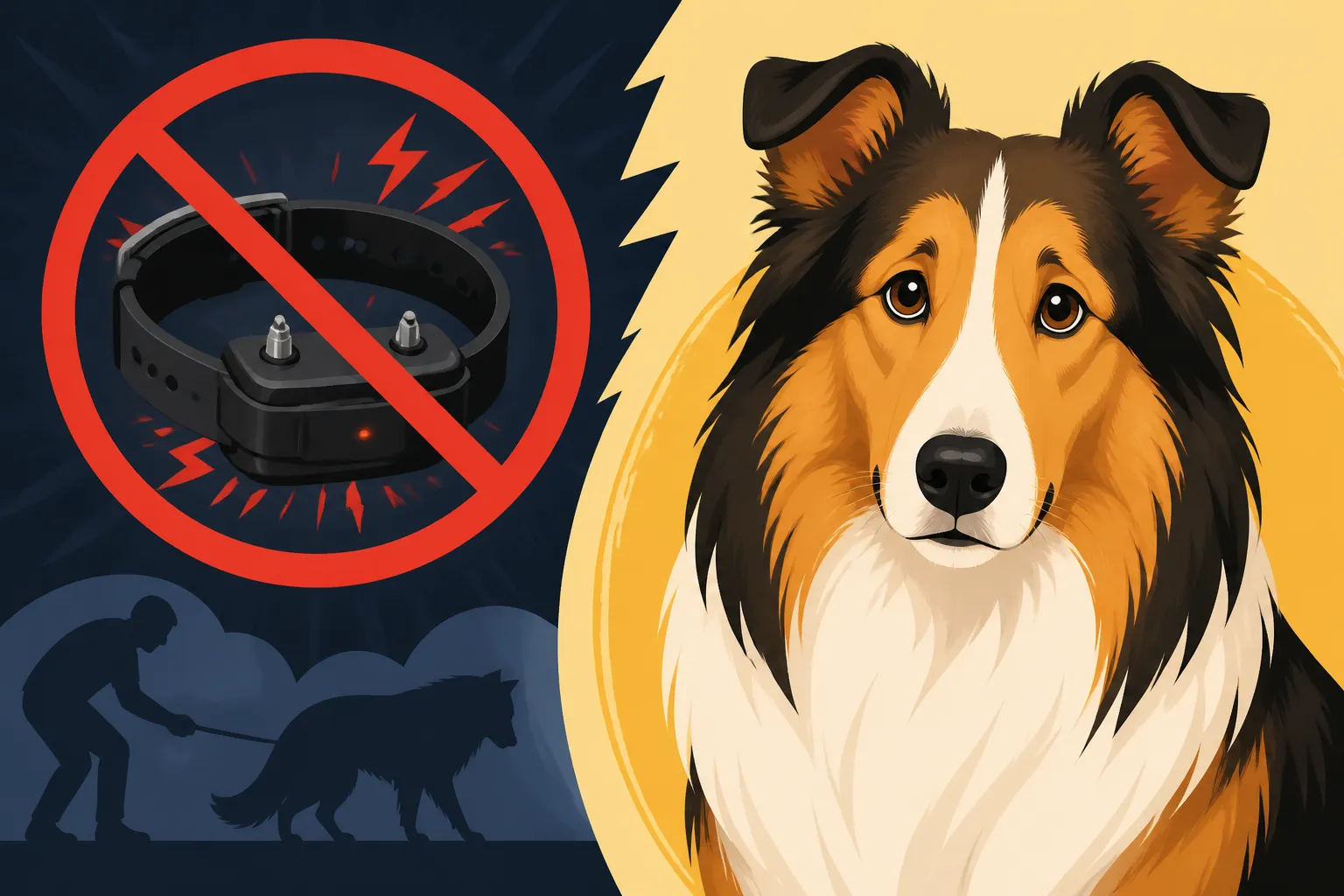
Why an Electric Collar Is Wrong for a Collie
It's incredibly frustrating when you're doing your absolute best for your beloved Collie, but a particular behavior just isn't budging. You've tried everything you can think of, and perhaps someone, perhaps even a well-meaning acquaintance or an older-school trainer, has suggested an "electric collar" as the ultimate solution. This guide is here to tell you, with empathy and deep understanding, why these devices are not just ineffective, but actively detrimental for a Collie, and what humane, lasting alternatives you truly have.
Understanding Electric Collars and Their Appeal (and Misconceptions)
Before we dive into why electric collars are so wrong for our beautiful, sensitive Collies, let's first clarify what we're actually talking about. There's a lot of misunderstanding, and even rebranding, around these tools, which can make it confusing for a well-intentioned owner trying to do right by their dog. You might hear terms like "e-collar," "remote trainer," "stim collar," or even "gentle collar," but make no mistake: at their core, these devices deliver an electric stimulus to your dog.
What an Electric Collar Claims to Do
In essence, an electric collar is designed to deliver a jolt, pulse, or vibration (often with the vibration being a prelude to the "correction") to a dog's neck, controlled by a remote held by the owner. The marketing often positions these as ways to get your dog's attention, to stop unwanted behaviors like barking or running off, or to enforce commands when your dog is distracted. The idea is that the dog associates the unpleasant sensation with their undesirable action, thus learning to stop it. For instance, if your Collie is barking excessively, the idea is you press the button, the dog feels the "stim," and they stop barking. The proponents argue it's merely a "tap" or a "tickle," akin to a static shock from a carpet. However, the reality for a dog, especially one as sensitive as a Collie, is far from a tickle. It's a startling, confusing, and often painful interruption that has profound psychological consequences.
The Allure of a "Quick Fix" for Frustrated Owners
Let's be honest, we've all been there. You're standing in your yard, yelling for your Collie to come back, and they're happily sniffing something fascinating, seemingly deaf to your pleas. Or perhaps your sweet, fluffy companion transforms into a barking machine every time a leaf blows past the window. It's exhausting, embarrassing, and truly makes you question your training skills. In these moments of pure frustration, the idea of a device that could instantly stop the unwanted behavior is incredibly tempting. Marketing often highlights testimonials from owners who saw "instant results." They promise off-leash reliability and an end to nuisance barking with a simple press of a button. When you're at your wit's end, seeking any solution, these promises can sound like a miracle. However, as many Collie owners have found, the "quick fix" often creates far bigger, more complex problems in the long run, eroding trust and creating new anxieties.
The Spectrum of Aversive Collars
It's important to understand that electric collars aren't the only type of aversive tool disguised with "training" labels. Beyond the traditional shock collar, you'll also find citronella spray collars, ultrasonic collars, and even prong collars or choke chains. While they might use different mechanisms – a noxious smell, an irritating sound, or physical pain from pressure – they all operate on the same principle: creating an unpleasant sensation to stop a behavior. This is fundamentally different from positive reinforcement, which focuses on rewarding desired behaviors to make them more likely to occur. For a Collie, whose nature is to please and to seek connection, these aversive methods are particularly damaging because they punish, confuse, and often shut down a dog who simply doesn't understand why they're being hurt or startled. This can lead to serious behavioral fallout, making the initial problem even harder to address.
The Collie Temperament: A Recipe for Disaster with Aversive Tools
If you've spent any time with a Collie, you know they are magnificent, intelligent, and deeply sensitive creatures. Their temperament is a huge part of what makes them such wonderful companions. However, this very sensitivity is precisely why an electric collar, or any other harsh training method, is profoundly inappropriate and detrimental for the breed. What might be dismissed as a "mild correction" for a less sensitive dog can be a deeply traumatic event for a Collie, leaving lasting emotional scars. Harsh Handling Breaks a Collie and It Does Not Come Back is more than just a saying; it's a stark reality for this breed.
Sensitivity and Softness: A Collie's Core Trait
Collies are renowned for their gentle, perceptive, and highly responsive nature. They aren't the kind of dog that needs a heavy hand or a firm reprimand to understand what's expected. In fact, just a sharp tone of voice can often be enough to make a Collie wilt, retreating into themselves, their bright, intelligent eyes losing their sparkle. They thrive on positive interaction, praise, and a clear, consistent, and kind approach to training. They are partners, not automatons to be commanded by force. A Collie is acutely aware of its owner's moods and intentions. They aim to please, but if they feel misunderstood or unjustly punished, their trust can shatter very quickly. They internalize discomfort and confusion, often leading to a dog who becomes withdrawn, anxious, or even fearful.
Imagine your Collie, who looks to you for guidance and reassurance, suddenly experiencing an inexplicable jolt or painful pinch from something attached to their neck. Their world is suddenly unpredictable and potentially threatening. Instead of associating the unpleasant feeling with their behavior (which they might not even realize is "wrong"), they often associate it with their environment, with you, or with whatever else was happening at that moment. This means they might become afraid of the park where they were "corrected" for chasing squirrels, or wary of other dogs if a jolt was applied when they pulled on the leash during an excited greeting.
How a Collie Responds to Pressure
Unlike some breeds that might "tough out" a harsh correction or even become more defiant, a Collie typically responds to pressure by shutting down. They freeze, they cower, they become withdrawn, or they try to escape the perceived threat. This isn't learning; it's a primal fear response. When you apply an electric shock, what you're seeing isn't compliance born of understanding, but rather a desperate attempt to avoid pain or discomfort. The dog isn't learning what to do; they're learning what not to do to avoid pain, and often, they're not even sure what that "not to do" actually is.
Consider a Collie who barks at the mail carrier. You apply a shock. The barking stops, momentarily. But the Collie doesn't understand "don't bark at the mail carrier." Instead, they might associate the pain with the mail carrier, leading to a deeper fear or even aggression towards delivery people. Or worse, they might become generally anxious about the front door, or even about your presence, if you are the one delivering the shock. This kind of training creates a dog who is hesitant, unsure, and constantly scanning for potential punishment, rather than a confident, happy companion. You can see how a dog like this would respond poorly to How a Collie Responds to a Raised Voice, let alone an electric shock.
The Long-Term Emotional Scars of Harsh Correction
The damage inflicted by electric collars on a sensitive breed like the Collie isn't just immediate; it's long-lasting. Trust, once broken, is incredibly difficult to rebuild. A Collie who has been trained with aversive methods may become clingy and anxious, constantly seeking reassurance, or conversely, become avoidant and withdrawn. They might start to display new, problematic behaviors out of stress and fear, such as excessive licking, pacing, or even aggression as a desperate attempt to create distance from something they perceive as threatening.
Think about the bond you share with your Collie. It's built on mutual respect, love, and understanding. When you introduce a tool that causes pain or fear, you are actively undermining that bond. Your Collie learns to fear your hand, or the remote you hold, or even your presence if you are the one associated with the unpleasant sensation. This isn't the relationship any Collie owner dreams of. A study of dogs trained with shock collars showed increased stress behaviors, including yawning, lip-licking, and whining, even when the collar was not actively being used. The emotional toll is undeniable, creating a dog that is less joyful and less connected. How Long a Collie Remembers a Bad Session emphasizes just how deeply these negative experiences can impact a Collie's psyche.
Why Electric Collars Fail (and Often Worsen) Collie Behavior
Many people are drawn to electric collars because they appear to offer a quick and decisive solution to frustrating behaviors. But the truth is, while they might suppress a behavior in the short term, they rarely solve the underlying issue. In the case of a sensitive Collie, these tools often create a cascade of new, more complex problems that leave both dog and owner more stressed than before.
Suppressing Behavior vs. Solving the Problem
When a behavior is suppressed with an electric collar, the dog learns to stop performing that specific action to avoid the unpleasant sensation. However, the motivation for the behavior often remains untouched. For example, if your Collie barks out of anxiety or territoriality, shocking them for barking doesn't resolve the anxiety or address their territorial instincts. It merely teaches them that barking leads to pain. What often happens is that the dog finds another outlet for that underlying emotion. They might stop barking but start pacing, destroying furniture, or showing reactivity in other ways.
Consider a Collie who is leash reactive, barking and lunging at other dogs on walks. This behavior often stems from fear, overstimulation, or frustration. If you use an electric collar to stop the lunging and barking, the Collie learns that seeing other dogs and lunging/barking leads to pain. They might stop the outward display, but inside, the fear and frustration are still boiling. This could lead to a dog who freezes when they see other dogs, or who suddenly becomes aggressive without warning because their previous warning signals (barking, lunging) were suppressed. The root cause, the discomfort around other dogs, has not been addressed, and in many cases, it's been intensified by the negative association.
Creating Fear, Anxiety, and Aggression
Instead of building a more confident and well-behaved dog, electric collars are far more likely to instill fear, anxiety, and even aggression, especially in a breed as emotionally delicate as a Collie. The unpredictable nature of the shock, or the direct association of pain with an otherwise neutral stimulus, can be profoundly unsettling. A dog experiencing repeated shocks can become generally anxious about their environment, anticipating punishment at any moment.
Imagine your Collie is off-leash in a field, joyfully running and exploring, when you decide to use the collar because they're not "checking in" frequently enough. If the shock comes out of the blue, your Collie doesn't associate it with not checking in, but perhaps with the joy of running, or with the sound of a distant bird, or even with you. This can lead to a dog who is hesitant to explore, who seems "shut down" outdoors, or who avoids eye contact and interaction with you because you've become a source of unpredictable pain. This fear can then escalate into anxiety, and in severe cases, a dog who is constantly on edge may lash out defensively, developing fear-based aggression. This is the opposite of How to Build Confidence in a Nervous Collie.
The Risk of Collateral Damage and Association
One of the most insidious problems with electric collars is the risk of "collateral damage." Dogs don't understand complex cause-and-effect relationships the way humans do. If a shock is delivered while a certain person, object, or sound is present, the dog is very likely to associate the pain with that person, object, or sound, rather than their own behavior. This creates profound and often dangerous misassociations.
Let's say your Collie is barking at the neighbor's child who is playing in their yard. You zap them. Your Collie doesn't necessarily learn "don't bark at the child." Instead, they might learn that children equal pain, or that the specific neighbor's child equals pain. This can lead to fear or aggression towards children in general, or that specific child, a far more dangerous problem than the original barking. Similarly, if a shock is applied when your Collie is distracted by another dog, they might start to associate all other dogs with pain, leading to severe dog-on-dog reactivity. The fallout can be unpredictable and devastating, turning a minor training challenge into a serious behavioral issue that requires extensive, positive-only rehabilitation.
Ethical Considerations: Beyond "Does It Work?"
When discussing training methods, it's easy to get caught up in the pragmatic question of "does it work?" However, for many Collie owners and professional trainers, the conversation goes much deeper, touching on our ethical responsibilities to our canine companions. Our dogs are not just pets; they are family members who deserve our respect, understanding, and a training approach that prioritizes their well-being and strengthens our bond, not one that relies on pain or fear.
The Argument for Humane Training
The shift towards humane, force-free training methods is not just a trend; it's a movement rooted in scientific understanding of canine behavior and learning. Modern ethology and animal welfare science overwhelmingly support positive reinforcement as the most effective, ethical, and lasting way to train dogs. Humane training means teaching a dog what we do want them to do, rather than punishing them for what we don't want. It involves creating an environment where the dog feels safe to learn, where mistakes are opportunities for guidance, and where the human-dog relationship is one of mutual trust and joy.
For a breed like the Collie, who is naturally eager to please and highly intelligent, positive reinforcement is not just "nice to have," it's essential for their emotional health and optimal learning. They thrive on clear communication, gentle encouragement, and positive feedback. Using humane methods ensures that your Collie remains confident, resilient, and connected to you, rather than becoming a fearful or withdrawn shadow of their potential. It's about empowering your dog to make good choices because they want to, not because they're afraid not to.
The Impact on the Human-Collie Bond
The relationship you build with your Collie is one of the most rewarding aspects of dog ownership. They are incredibly loyal, intuitive, and deeply attached to their people. This bond is fragile, however, and can be irreparably damaged by the use of aversive tools like electric collars. When you rely on pain or discomfort to control your Collie, you introduce an element of fear and unpredictability into the relationship. Your Collie learns that you, or the tools you use, can cause them distress.
Think about how Whether a Collie Reads Its Owner's Mood and responds to even subtle cues. Now imagine the confusion and betrayal when the person they trust most becomes a source of pain. This can lead to a breakdown in communication, where your Collie becomes hesitant to approach you, less willing to engage in training, and generally more guarded. A strong bond is built on positive experiences, clear communication, and consistent kindness. Every time you choose a positive training method, you are strengthening that bond, reinforcing trust, and nurturing a relationship based on love and understanding. This is far more profound and lasting than any temporary cessation of behavior achieved through fear.
Why Force-Free Training Isn't Just for "Soft" Dogs
There's a persistent misconception that force-free, positive reinforcement training is only suitable for "easy" or "soft" dogs, and that "stubborn" or "difficult" dogs require harsher methods to get results. This couldn't be further from the truth. The science of animal learning applies universally across all breeds and temperaments. While a particularly sensitive dog like a Collie will show the negative effects of aversive training more dramatically, force-free methods are effective for all dogs, regardless of their perceived "stubbornness" or past issues.
In fact, for a dog who is genuinely "stubborn," often what's being perceived as stubbornness is actually confusion, fear, or a lack of motivation. Positive reinforcement addresses these issues by making learning enjoyable, motivating the dog with rewards, and breaking down complex behaviors into manageable steps. Even for challenging behaviors, a skilled positive reinforcement trainer can design a plan that builds confidence and clearly communicates expectations without resorting to pain. Companies like BAXTER & Bella offer online resources and puppy training programs that are entirely rooted in positive reinforcement, demonstrating that complex training can be achieved humanely and effectively, even for puppies. The question isn't whether force-free works; it's about finding the right positive strategies for your individual Collie.
Positive Reinforcement: The Collie's Language of Learning
When it comes to training a Collie, positive reinforcement isn't just a good option; it's the best option. It aligns perfectly with their intelligent, sensitive nature, fostering a willing desire to learn and strengthen the bond between you. Forget the scary gadgets; think treats, praise, games, and anything else your Collie loves! This method works wonders because it makes learning a fun, rewarding experience, not a fearful one.
Building Motivation Through Rewards
Collies are smart cookies, and like most intelligent beings, they're more likely to repeat actions that bring them a benefit. This is the core of positive reinforcement: when your Collie does something you like, they get a reward. This reward could be a tasty treat, enthusiastic praise, a favorite toy, or even access to something they want, like going out the door. The key is that the reward is something your Collie values. What Motivates a Collie is often a combination of food, attention, and opportunities to engage in activities they enjoy.
For example, if you want your Collie to come when called, every single time they respond, even if it's a slow trot at first, you shower them with their absolute favorite high-value treat and effusive praise. They quickly learn that "come" equals fantastic things happening! This isn't bribing; it's teaching. You're building a strong, positive association with the command. With enough repetitions and consistency, the behavior becomes ingrained and reliable, even without constant treats, because the desire to please you and the internal reward of performing the action are powerful motivators for a Collie. This method builds a foundation of enthusiasm and cooperation that electric collars can only dream of.
Teaching Clear Communication and Expectations
One of the greatest benefits of positive reinforcement is its clarity. Instead of creating confusion and fear by punishing an unwanted behavior, positive methods focus on clearly communicating what is desired. This means breaking down behaviors into small, achievable steps and rewarding each successful step along the way. Your Collie isn't left guessing; they understand precisely what action will earn them a reward.
Let's say you're working on loose-leash walking. Instead of yanking or shocking your Collie when they pull, you reward them lavishly every time the leash is loose. You stop walking the instant they pull, only resuming when the leash slackens. This teaches them that pulling gets them nowhere, but walking nicely gets them forward progress and treats. It’s a transparent system. When your Collie isn't sure what to do, you can guide them into the correct position or action and then reward them. This builds confidence and understanding. They learn that engaging with you is always a good thing, even when they're confused, because you're a source of positive guidance, not unpredictable pain. This contrasts sharply with the approach that makes Why a Prong Collar Is Wrong for a Collie, as it relies on clear, positive communication rather than physical discomfort.
Addressing Common Collie Behaviors with Kindness
Many behaviors that lead owners to consider aversive tools, such as excessive barking, jumping, or not coming when called, can be effectively and kindly addressed with positive reinforcement. It just takes patience, consistency, and a willingness to understand why your Collie is performing the behavior.
- Barking: Instead of shocking for barking, identify the trigger. Is it boredom? Anxiety? Alerting to passersby? Then, teach an incompatible behavior. For instance, if they bark at the window, teach them to go to their mat and lie down for a treat when someone passes. Reward calm behavior. You might find useful tools on Amazon like window film or white noise machines to reduce triggers while you train. Whether a Collie Barks While You Are Out or at the doorbell can be managed by teaching them to reorient to you for a treat instead.
- Jumping: When your Collie jumps, turn your back. The moment all four paws are on the floor, turn around and give them attention and a treat. They quickly learn that jumping makes you disappear, but calmness brings rewards.
- Recall: This is crucial for a Collie's safety. Make coming to you the most exciting thing in the world. Practice in low-distraction environments first, using high-value treats and enthusiastic praise. Gradually introduce distractions as they become more reliable. Never punish your Collie when they finally come to you, even if it took a while, as this will poison the recall cue.
Remember, a Collie wants to please you. When you provide clear, positive pathways to success, they will eagerly follow.
Practical Alternatives to Electric Collars for Collie Owners
You're a Collie owner, which means you're already predisposed to care deeply for your dog. The good news is, there are so many effective, humane, and proven methods for training and managing your Collie's behavior without ever resorting to electric collars or other aversive tools. It just requires a shift in perspective, a little education, and often, an investment in the right resources.
Investing in Proper Tools and Equipment
While electric collars are definitely not on the list, there are plenty of excellent, humane tools that can make a huge difference in managing and training your Collie. These tools focus on communication and gentle guidance, not pain or fear.
- Well-fitted Harnesses: For walks, a front-clip harness can be a game-changer for Collies who pull. Instead of putting pressure on their throat, it redirects their momentum towards you, making pulling less effective and more uncomfortable for them (in a harmless way), thereby encouraging loose-leash walking. Look for brands known for comfortable, well-designed harnesses that don't restrict shoulder movement, many of which are readily available on Amazon.
- Long Lines: For practicing recall or giving your Collie more freedom in a safe way, a long line (a leash 15-50 feet long) is invaluable. It allows them to explore while you maintain control, and you can gently guide them back without having to resort to a shock.
- Treat Pouches and High-Value Treats: Keep your rewards readily accessible! A treat pouch ensures you can mark and reward desired behaviors instantly. Experiment to find what treats your Collie absolutely goes wild for – cheese, cooked chicken, or specialized training treats.
- Puzzle Toys and Enrichment: A mentally stimulated Collie is a happy Collie. Puzzle feeders, snuffle mats, and interactive toys can provide hours of engaging mental work, reducing boredom-driven behaviors like excessive barking or destructive chewing.
Seeking Professional, Positive-Only Guidance
Sometimes, despite our best efforts, we encounter a behavioral challenge that feels overwhelming. This is when professional help is not just beneficial but essential. However, it's crucial to seek out trainers who are committed to positive reinforcement and force-free methods. A good trainer will teach you how to communicate effectively with your Collie, understand their motivations, and build a stronger bond.
When looking for a trainer, ask questions:
- What methods do you use? (Look for answers like "positive reinforcement," "force-free," "rewards-based.")
- What tools do you use and recommend? (Avoid anyone who suggests electric collars, prong collars, or choke chains.)
- Can I observe a class or a session?
- What are your certifications? (Look for certifications from reputable organizations that emphasize ethical and humane training practices.)
Many trainers offer online courses or virtual consultations, making expertise more accessible. BAXTER & Bella, for example, offers an online puppy school that uses positive reinforcement techniques to help owners navigate common puppy challenges from the comfort of their home. Investing in a knowledgeable, positive trainer is an investment in your Collie's happiness and your peace of mind. They can help with everything from Whether an Undersocialized Collie Can Be Fixed to How a Rescue Collie Learns to Trust.
Enrichment, Exercise, and Mental Stimulation
Often, "bad" behaviors in Collies (and dogs in general) stem from unmet needs for physical exercise and mental stimulation. Collies are intelligent working dogs, and even if they're not herding sheep daily, their brains and bodies need purposeful engagement.
- Consistent Exercise: Collies need regular, moderate exercise. This doesn't necessarily mean running marathons, but consistent walks, playtime in a secure yard, or even fetch sessions are vital. Whether Forty Five Minutes a Day Is Really Enough for a Collie often depends on the individual dog, but regular physical exertion helps burn off excess energy that might otherwise manifest as barking or restlessness.
- Mental Games: Engage your Collie's keen intelligence with games. Scent work (hiding treats for them to find), learning new tricks, or even just regular training sessions count as mental stimulation. They thrive on having a "job" to do, even if that job is just finding their breakfast hidden in a puzzle toy.
- Socialization: Appropriate and positive socialization experiences are crucial throughout a Collie's life. This means controlled, positive interactions with other well-behaved dogs and exposure to various sights, sounds, and people in a way that builds confidence, not fear. This is essential for preventing reactivity and building a well-adjusted companion.
By focusing on these positive, humane alternatives, you'll not only resolve behavioral issues but also deepen the incredible bond you share with your Collie, fostering a happy, confident, and well-adjusted companion for life.
Disclaimer
This article is for general informational purposes only and does not constitute professional advice. Laws, prices and regulations vary by location and change over time. Consult a qualified professional for guidance on your specific situation.