Whether a Collie Takes to Scent Work
One common misconception about Collies is that they are content with just a leisurely stroll around the block and an occasional belly rub. While they certainly appreciate those things, many Collie owners find themselves with a dog that seems restless, even after physical exercise, often leading to destructive behaviors or excessive barking. This guide is here to tell you that your Collie's brilliant mind is yearning for more, and scent work, also known as nose work, might just be the perfect outlet to tap into their incredible natural abilities and transform that restless energy into focused, joyful engagement.
Understanding the Collie's Natural Aptitudes for Scent Work
When you think of a Collie, the image of a majestic, intelligent herding dog probably comes to mind. But beyond their striking looks and keen intelligence in managing livestock, Collies possess a suite of sensory and cognitive abilities that make them surprisingly adept at activities like scent work. It’s not just about what they can do, but what they are inherently built to do, even if it’s a different kind of "work" than their ancestors performed.
Their Herding Ancestry and Sensory Intelligence
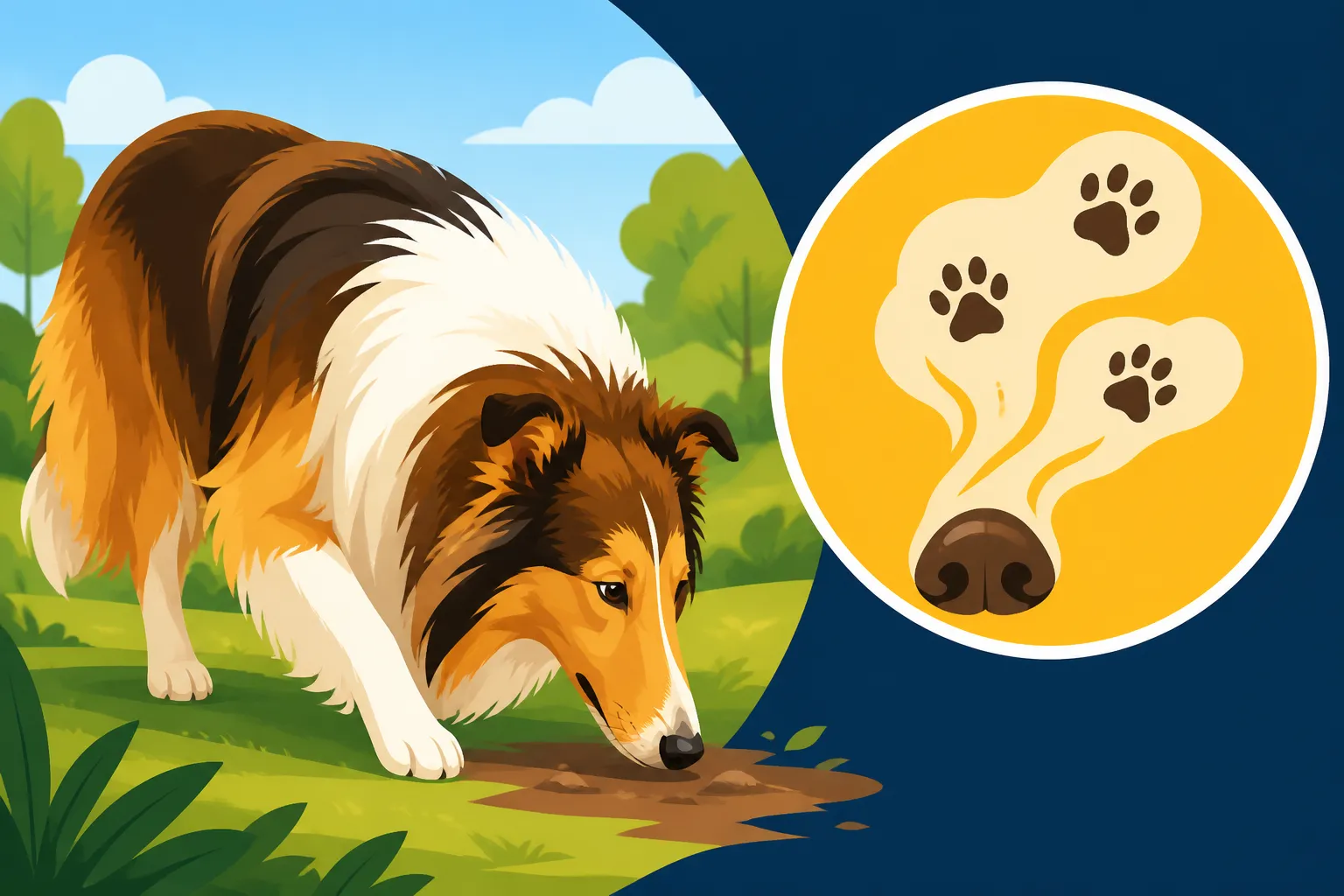
Collies originated as working dogs, primarily tasked with gathering and driving sheep in the rugged landscapes of Scotland and northern England. This job required not just speed and agility, but an acute awareness of their environment, including the subtle shifts in wind, terrain, and the presence of their flock. While we often focus on their visual cues and body language in herding, their sense of smell and hearing were equally crucial. A shepherd’s dog needed to pick up faint scents carried on the breeze, distinguishing their flock from wild animals, or finding strays hidden in dense fog or over hills. This inherent sensory intelligence, developed over centuries, translates beautifully into scent work. They are accustomed to processing complex environmental information, and scent work simply channels this natural aptitude into a new, engaging puzzle.
Imagine a Collie working a vast pasture, needing to locate a lost lamb. They wouldn't just rely on sight; they'd drop their nose, track faint trails, and use every bit of sensory input to find their charge. This instinctual drive to locate and problem-solve using their nose is a latent superpower in every Collie, just waiting to be awakened. When we provide a structured activity like scent work, we're not teaching them a new skill from scratch, but rather giving them permission and direction to use a sense they already possess in abundance, something that provides deep satisfaction.
The Collie's Problem-Solving Mindset
Collies are not just about following commands; they are intelligent problem-solvers. Their herding role demanded independent thinking – making decisions in the absence of direct commands when working far from their handler, adapting to unpredictable livestock, and navigating challenging terrain. This cognitive flexibility means they thrive on mental challenges where they get to figure things out for themselves. Scent work is precisely that: a series of puzzles where the dog is the primary agent in discovering the solution, with the handler acting more as a supportive guide rather than a dictatorial instructor.
Think about the classic "find the treat" game. A Border Collie might try to outsmart you with speed, but a Collie often approaches it with a methodical, almost thoughtful strategy, carefully working the area, processing the information, and building a mental map of the scent. This isn't just a physical exercise; it's a deep dive into their cognitive abilities. This inherent drive to understand and solve is what makes scent work so incredibly rewarding for them, and for you as an owner witnessing their brilliance. It respects their intelligence and gives them agency, which is often far more satisfying for a Collie than endless repetitions of basic obedience commands.
Dispelling Myths: Collies and High-Drive Activities
It's easy to fall into stereotypes when it comes to dog breeds. For Collies, the "Lassie" image often paints them as serene, gentle, and perhaps a little too dignified for anything that seems overly "active" or "high-drive." But this perception often undersells their true capabilities and their deep need for engaging activities. Many owners struggle to find an outlet that genuinely tires their Collie's mind, leading to frustration for both dog and human.
More Than Just a "Lassie" Stereotype
The popular image of Lassie, while endearing, has sometimes inadvertently created a misunderstanding of the breed's full potential. People often expect a calm, elegant companion, which Collies certainly can be, but they overlook the underlying working drive and intelligence that makes them such remarkable dogs. They aren't just pretty faces with a beautiful coat; they are intelligent, adaptable working animals whose mental needs are as significant, if not more so, than their physical ones. If you've ever owned a Collie who constantly paces, mouths at your clothes, or barks at every leaf blowing by, you've experienced the challenge of an understimulated mind.
Scent work offers a fantastic way to engage that mind in a constructive, breed-appropriate manner. It doesn't require the intense physical demands of some high-impact sports, which might not be suitable for all Collies as they age or if they have joint considerations like Hip Dysplasia in a Collie. Instead, it uses their natural senses and intellect, providing a quiet, focused activity that builds confidence and tires them out in a profoundly satisfying way. It’s about channeling their innate curiosity and their ancestral drive to locate and process information, rather than trying to fit them into a box defined by outdated media portrayals.
Matching Drive with Mental Engagement
Collies, while not always exhibiting the frantic energy of some other herding breeds, definitely possess a drive that needs an outlet. If that drive isn't channeled, it can manifest as nuisance behaviors. Scent work perfectly matches this drive with mental engagement. It's not about running miles or performing acrobatic feats; it's about meticulous searching, discriminating between odors, and solving a puzzle that only they can solve with their superior sense of smell. This kind of intense mental effort is incredibly tiring, in the best possible way.
Consider a rainy day when a long walk isn't feasible. Instead of a bored Collie staring out the window, a twenty-minute scent work session indoors can leave them happily snoozing for hours. It satisfies their inherent need to "work" and engage their brains, providing a sense of purpose that a simple walk or a game of fetch often doesn't. Programs like those offered by BAXTER & Bella can be particularly helpful for new owners looking to understand how to channel this drive effectively, offering structured guidance for various activities, including scent work principles. This is the kind of activity that truly makes a Collie feel fulfilled, honoring their heritage without requiring a flock of sheep.
Getting Started with Scent Work: The Basics
Embarking on the journey of scent work with your Collie is an exciting prospect, and the beauty of it is that you don't need a huge investment in specialized equipment or a vast open field. Many of the initial steps can be taken right in your own home, making it accessible for almost any Collie owner.
Introduction to Nose Work Games at Home
You can start introducing your Collie to the concepts of scent work with simple "find it" games using high-value treats. Begin by letting your Collie watch you hide a treat in an easy-to-find spot, then give them a release cue like "find it!" and let them go. Praise and reward them enthusiastically when they succeed. As they get the hang of it, gradually increase the difficulty: hide the treat when they're out of the room, use more challenging hiding spots (under a cup, behind a curtain, in a crumpled paper bag), and eventually move to multiple hides. The goal here is to build their confidence and their understanding of the game.
Once they're proficient with finding visible treats, you can introduce a specific target odor. Many scent work kits start with birch, anise, or clove essential oils. You'll want to get a small amount of the essential oil on a cotton swab and place it in a scent tin or a small container with holes. Begin by pairing the new odor with a treat, letting them associate the specific smell with a reward. Place the treat directly on or next to the scent tin. Repeat this several times. Then, gradually separate the treat from the tin, so they learn to alert to the odor itself, even if the treat isn't immediately visible. Simple supplies like scent tins, essential oils, and even a variety of dog-safe boxes for hiding can be easily found on Amazon. Remember, the key is to make it fun, keep sessions short, and always end on a high note.
Finding a Good Instructor or Program
While you can certainly get a great start at home, eventually, you might want to consider professional guidance. A good instructor or a structured online program can provide invaluable support, teach you proper handling techniques, and help you progress more efficiently. They can also introduce you to the rules of competitive scent work if that's a direction you wish to explore. Look for trainers who use positive reinforcement methods, as Collies are highly sensitive and respond best to encouragement and reward-based training. Harsh Handling Breaks a Collie and It Does Not Come Back, and this holds especially true for subtle, confidence-building activities like scent work.
Many local dog clubs offer "Nose Work" or "K9 Detection" classes. These classes often have various levels, from beginner to advanced. An instructor can help you read your Collie's subtle "alert" signals – the way they might freeze, paw, or stare at a hide – which can be tricky to interpret on your own. If in-person classes aren't available or convenient, many online platforms and programs offer comprehensive scent work curricula. Some dog training services, like BAXTER & Bella, might offer modules or guidance that can integrate scent work into your general training routine, ensuring you have a solid foundation for engaging your Collie's mind. The right guidance can make all the difference in unlocking your Collie's full scenting potential and building a deeper partnership.
Benefits of Scent Work for Collies
The advantages of engaging your Collie in scent work extend far beyond simply keeping them occupied. It's a holistic activity that nourishes their mental well-being, builds confidence, and strengthens the incredible bond you share.
Mental Stimulation and Confidence Building
Collies are intelligent dogs that require significant mental exercise to be truly content. A lack of mental stimulation can lead to boredom, anxiety, and unwanted behaviors like excessive barking or destructive chewing. Scent work provides an unparalleled level of mental engagement, challenging their brains in a way that physical exercise alone cannot. When a Collie is actively working to locate a hidden scent, they are using complex problem-solving skills, concentration, and their powerful olfactory senses. This intense focus is incredibly taxing in a positive way, often leaving them happily tired and settled afterward.
Moreover, scent work is a fantastic confidence builder. In this activity, the dog is the expert. The handler is there to guide and facilitate, but the dog is the one with the superior sense of smell and the innate ability to find the target. This empowers the Collie, giving them a job where they are always right, where their natural talents are celebrated and rewarded. This can be particularly beneficial for Collies who might be a bit shy, reserved, or anxious, helping them to come out of their shell and develop a greater sense of self-assurance. Watching your Collie proudly alert to a hide, knowing they've solved the puzzle, is an incredibly rewarding experience for both of you. It's a quiet victory that resonates deeply with their intelligent nature.
Strengthening the Bond
Any activity you share with your dog can strengthen your bond, but scent work has a unique way of fostering a deep connection. Because your Collie is the primary "detective," you, as the handler, learn to observe and trust their signals implicitly. You learn to interpret their subtle body language – the slight head turn, the focused sniff, the change in breathing – that indicates they are on scent. This deep observation cultivates a profound understanding of your dog and how their mind works. It teaches you patience and the importance of allowing your dog to lead the way in solving the puzzle.
The shared experience of discovery, the reliance on each other (your guidance, their nose), and the joy of success create a powerful partnership. You become a team, working towards a common goal. This kind of collaborative activity builds trust and mutual respect, deepening the emotional connection between you and your Collie. It’s not just about commands and obedience; it's about a conversation, a shared adventure where you both contribute your unique strengths. This strengthened bond can carry over into other aspects of your daily life, making your Collie more attentive, responsive, and connected to you overall. For ideas on other enriching activities, consider Forty Five Minutes a Day, and Half of It in Its Head.
Common Challenges and How to Overcome Them
While scent work is incredibly rewarding for Collies, it's not always a perfectly smooth journey. Like any new skill, there can be some bumps along the way. Understanding these common challenges and having strategies to overcome them can help both you and your Collie stay motivated and progress.
Initial Distractions and Focus
One of the first hurdles many Collie owners face when starting scent work is managing distractions and maintaining their dog's focus. Collies are observant dogs, and in a new environment or even within their own home, every sound, sight, or novel smell can initially pull their attention away from the task at hand. You might find your Collie sniffing the floor for crumbs from breakfast, looking out the window, or checking in with you constantly instead of focusing on the target odor. This isn't a sign of disinterest, but often just their natural curiosity or a lack of understanding of what's truly important in this new game.
To overcome this, start in a very quiet, low-distraction environment. Your living room with the TV off and no other people or pets around is ideal. Keep initial sessions very short, perhaps just 2-5 minutes, and always end before your Collie loses interest or gets frustrated. Use incredibly high-value, irresistible treats that your Collie rarely gets otherwise – small pieces of cheese, cooked chicken, or hot dogs often work wonders. Make the first few hides incredibly easy, practically showing them the treat on the scent. As they gain confidence and understand the game, gradually introduce more distractions. You might start by placing a familiar toy nearby, then move to a slightly busier room, then outdoors in a quiet yard. Remember, consistency and patience are key. If they get distracted, gently guide them back to the search area without scolding, and make the next hide even easier to rebuild their success.
Building Stamina and Drive
Another challenge can be building up your Collie's stamina and sustained drive for searching. Some Collies might start with enthusiasm but quickly lose interest if the search takes too long or becomes too difficult. This isn't laziness; it might be because they're not yet conditioned to prolonged mental effort in this specific context, or perhaps the rewards aren't compelling enough to sustain their motivation. Just like physical exercise, mental exercise builds stamina over time.
To build stamina, focus on a high rate of reinforcement in the beginning. This means making sure your Collie finds the hide and gets a reward frequently. Don't make the searches too hard or too long initially. As they get better, you can gradually increase the search area or the number of hides, but still ensure they are successful. Vary the rewards – sometimes it's a treat, sometimes it's a quick game of tug with a favorite toy. Keep the energy high and praise lavishly when they're working well. If you notice their intensity dropping, it's a good time to end the session. Consider using a specific "search" leash and harness during training that only comes out for scent work; this helps them get into a "work mode" mindset. Over time, your Collie will learn that perseverance leads to great rewards, and their drive to search will become more robust. If you're struggling to motivate a less driven Collie, resources from a company like BAXTER & Bella might offer tailored motivational techniques to spark that internal desire to work.
Beyond the Basics: Competitive Scent Work
For many Collie owners, scent work starts as a fun hobby at home but quickly blossoms into a passion. Once your Collie has mastered the basics and truly enjoys finding odors, you might find yourself eyeing the competitive world of Nose Work. This offers a structured path for continued learning and achievement, providing new challenges and a sense of accomplishment for both you and your canine partner.
Understanding the Different Levels and Organizations
Competitive scent work, often called Nose Work or Scent Work, is organized by several different clubs and associations, each with their own set of rules and trial structures. The most prominent organizations in North America include the National Association of Canine Scent Work (NACSW), the American Kennel Club (AKC) Scent Work, and United States Canine Scent Sports (USCSS). While the core concept remains the same – finding specific target odors hidden in various environments – the specifics of how trials are structured, the odors used, and the types of searches can vary.
Typically, competition starts at the Novice or Introductory level, where dogs search for a single target odor (like birch) in relatively small, controlled environments. These environments are usually categorized into four elements: Container (boxes, luggage), Interior (rooms), Exterior (outdoor areas), and Vehicle searches (cars, trucks). As your Collie progresses, they move through Advanced, Excellent, and Master levels, which introduce more odors, more complex hide placements, larger search areas, and varying distractions. Some organizations also offer specialty challenges like Handler Discrimination, where the dog finds their handler's specific scent. Researching the different organizations will help you decide which one aligns best with your goals and your Collie's temperament. Many of these organizations host local trials, offering a supportive community for handlers and their dogs.
The Journey to Advanced Titles
The path to earning advanced titles in competitive scent work is a journey of dedication, consistent training, and celebrating every small success. It's not about being the fastest, but about thoroughness, accuracy, and the amazing partnership you build with your Collie. As you move up the levels, you and your dog will encounter increasingly difficult challenges. Hides might be placed higher, in more obscure spots, or in areas with strong environmental distractions. Your Collie will need to demonstrate greater independence and problem-solving skills, and you, as the handler, will need to learn to trust your dog's nose even more implicitly, resisting the urge to micromanage.
This journey often involves continued training with experienced instructors, attending workshops, and practicing regularly in a variety of locations. You might start using different target odors (anise, clove) and learning to identify when your dog is working a "non-source" odor versus the target. The mental demands on both of you intensify, but so does the satisfaction of watching your Collie expertly clear a complex search area. Earning a title, especially at the higher levels, is a testament to the incredible olfactory abilities of your Collie and the strong, communicative partnership you've forged. It’s a wonderful way to honor their heritage as intelligent, discerning working dogs and enjoy a unique sport together. You might also find your Collie excels at other activities like Whether a Collie Excels at Rally and Obedience or Whether a Collie Can Do Agility, but scent work offers a distinctive mental engagement that is hard to beat.
| Scent Work Element | Description | Typical Environment | Collie Aptitude Match |
|---|---|---|---|
| Containers | Locating target odor in a series of identical containers (boxes, luggage). | Indoor or outdoor, often sterile | Focus, discrimination, methodical searching |
| Interiors | Finding odor hidden within an indoor room or building. | Homes, offices, public buildings | Environmental awareness, problem-solving, detailed search |
| Exteriors | Locating odor in an outdoor area, subject to weather and wind conditions. | Yards, parks, open spaces | Wind detection, natural tracking instinct, endurance |
| Vehicles | Identifying odor hidden on or within various types of vehicles. | Parking lots, driveways | Novel environments, close-up searching, handling new textures |
Disclaimer
This article is for general informational purposes only and does not constitute professional advice. Laws, prices and regulations vary by location and change over time. Consult a qualified professional for guidance on your specific situation.