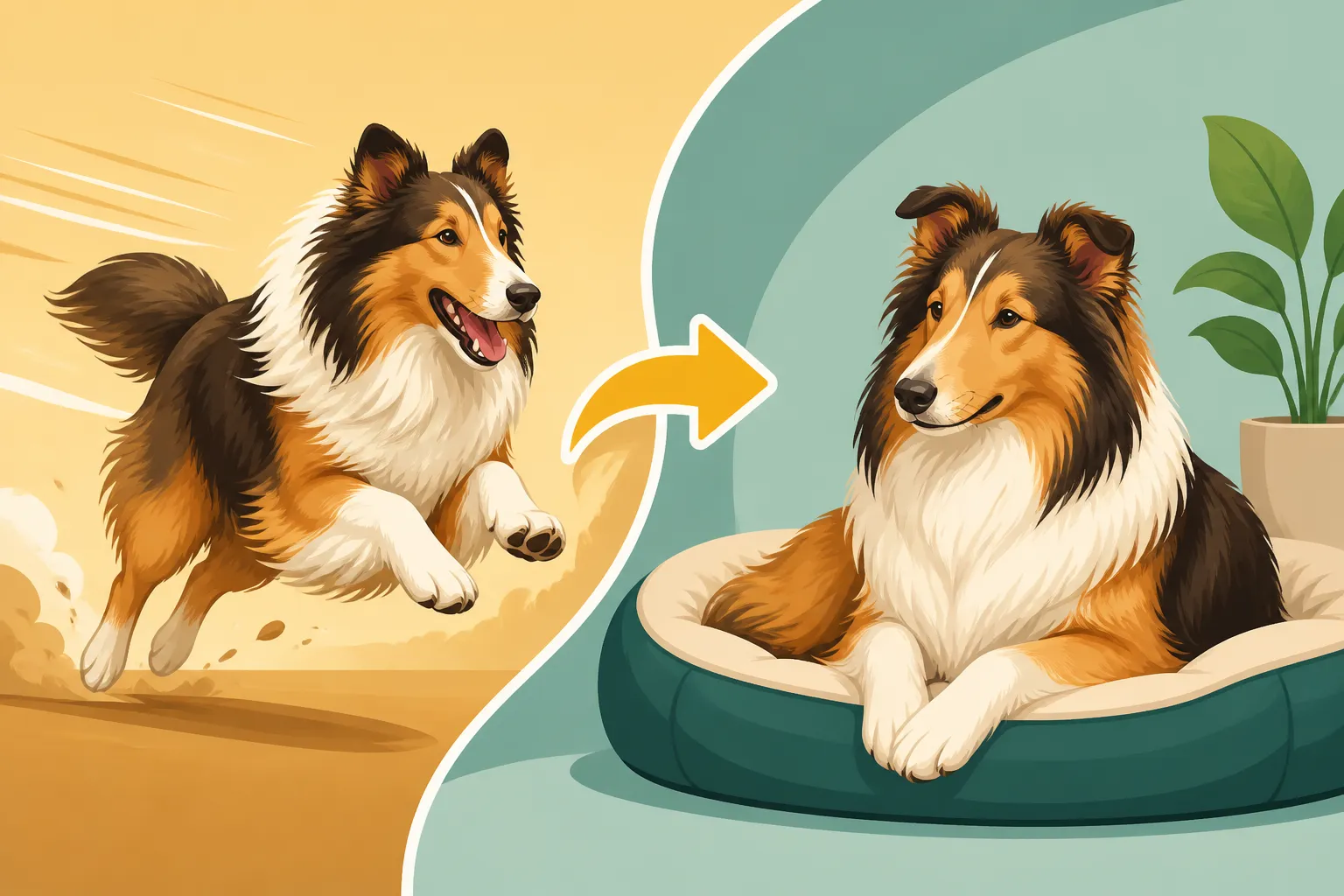
The Age a Collie Finally Settles
Bringing a Collie puppy home is a whirlwind of fluffy joy and boundless energy. Many new owners, completely smitten by their adorable bundles, soon find themselves wondering when, exactly, this magnificent creature will transition from an enthusiastic whirlwind to the serene, thoughtful companion they envisioned. It's a question often whispered in moments of exhaustion: "When will my Collie finally settle down?" This guide will delve into the nuances of Collie development, exploring what "settled" truly means for this intelligent herding breed and offering realistic insights into their journey to calm maturity.
Understanding the Collie's Developmental Journey
It's easy to look at a fluffy Collie puppy and project all your dreams of a calm, serene adult onto them. But like all dogs, and indeed like humans, Collies go through distinct developmental stages, each with its own quirks and challenges. The journey from playful pup to settled adult isn't a straight line, and it certainly doesn't happen overnight or even within the first year for many.
Puppy Energy vs. Adolescent Drive
Those first few months are a blur of puppy shenanigans. Your Collie puppy, typically from about 8 weeks to 6 months, is a sponge, absorbing everything around them. They're exploring with their mouths, learning about boundaries (or pushing them!), and generally being adorable, albeit sometimes exhausting, little creatures. Their energy bursts are often followed by equally impressive crashes into deep sleep. This isn't the kind of "settled" we often talk about; it's just puppyhood. They're still growing, both physically and mentally.
Then comes adolescence, often kicking in around 6-8 months and lasting well into their second year, sometimes even closer to three years old. This is often when owners start to really feel the challenge. That cute puppy energy can morph into what feels like a boundless, sometimes unfocused, adolescent drive. This stage is akin to human teenagers: they're pushing boundaries, testing their independence, and often seem to forget everything they ever learned. You might find your Collie suddenly "deaf" to commands they knew perfectly a month ago, or they might develop new anxieties or a sudden surge in their vocal tendencies. During this period, it's easy to feel frustrated and question if your dog will ever settle down. Remember, consistency is key during this phase. Training programs, even online ones like those offered by BAXTER & Bella, can provide invaluable structure and support during this challenging but crucial time.
The "Teenage" Years: A Test of Patience
The adolescent phase is often the most demanding. Your Collie might look like an adult, but inside, their brain is still very much under construction. Their hormones are raging, their attention span can be fleeting, and they're often brimming with confidence (or sometimes, surprising insecurity). This is the time when many Collie owners experience the most barking, the most mischievous chewing, or the most intense displays of herding instinct, whether it's nipping at heels or circling family members. If you're seeing new behaviors you don't love, it's not a sign you have a "bad" dog; it's a sign you have a normal, developing Collie who needs guidance and a calm, consistent hand.
This stage is also critical for continuing socialization and training. What feels like endless repetition to you is how your Collie learns to navigate the world and, eventually, to regulate their own energy. Skipping this period, hoping they'll just "grow out of it," often leads to a less settled, more challenging adult dog. Building a strong foundation now will pay dividends in their later years. For more on their early life, check out The First Year With a Collie Puppy.
Physical Maturity Versus Mental Maturity
It's important to differentiate between physical maturity and mental maturity. Most Collies reach their full physical height and weight between 12 and 18 months, though some males might continue to fill out until they're two or even three years old. Their beautiful coats will have fully come in, and they'll look like the majestic dogs you often see in pictures.
However, mental maturity, the true "settling" that owners often yearn for, typically takes much longer. While some individual Collies might be naturally calmer and seem to settle earlier, it's quite common for them to not fully mature mentally until they are between two and three years old. For some, especially highly driven lines, it can even take until four years. This means that while your Collie might be a physically imposing adult, they can still have the mind of a boisterous teenager for quite some time. It's during this extended period that continued, positive reinforcement training, mental exercise, and consistent routines really shine.
What "Settled" Truly Means for a Collie
When we talk about a Collie finally "settling," it's easy to imagine a dog lying quietly by your feet all day, rarely barking, and never getting into mischief. While that might be the dream for some, it's crucial to understand what "settled" realistically means for a Collie. They are, after all, a herding breed with a long history of active work and keen intelligence.
More Than Just Less Zoomies
Settling for a Collie isn't just about the absence of high-energy bursts. It's about a dog who has learned to self-regulate their energy, who can differentiate between appropriate times for play and appropriate times for calm. A truly settled Collie will still enjoy a good romp in the yard, a brisk walk, or an engaging training session, but they won't demand constant activity. They'll be able to transition smoothly from an exciting outdoor adventure to a quiet evening at home.
This self-regulation is a learned skill, not something they're born with or automatically acquire with age. It comes from consistent training, clear boundaries, and sufficient mental and physical enrichment. It means they can relax in the house without constantly pacing, seeking attention, or finding their own (often destructive) entertainment. They understand the rhythm of your household and can adjust their behavior accordingly.
The Nuances of Calmness in a Herding Breed
Collies were bred to be attentive, intelligent, and responsive working dogs. This means they are inherently observant and often quite sensitive to their environment. A "calm" Collie isn't necessarily a completely passive one. They'll still be alert to sounds outside, a new visitor at the door, or changes in your routine. Their historical role was to watch and react, and that instinct remains.
What shifts with maturity and good training is how they react. Instead of explosive barking at every leaf that blows by, a settled Collie might give a soft "woof" to alert you, then settle back down when they see you've acknowledged it. They learn that they don't have to manage every perceived threat or herd every moving object themselves. This discerning calm, where they observe but don't overreact, is a hallmark of a well-adjusted adult Collie. For more about their vocal nature, you might find Why a Collie Barks helpful.
Managing Expectations for a Lifetime Companion
It’s important to manage your expectations. A Collie, even a settled one, is not a decorative rug. They are intelligent, sentient beings who thrive on companionship and purpose. "Settled" doesn't mean "boring" or "lazy." It means they've integrated into your life in a harmonious way, where their energy is directed positively, and their sharp minds are engaged appropriately.
A settled Collie will still thrive on their daily Forty Five Minutes a Day, and Half of It in Its Head of activity, which includes physical exercise and mental challenges. They’ll still follow you from room to room, seeking to be near you, embodying their deep desire for connection. What changes is the frantic urgency of their demands. They become partners rather than perpetual projects, able to relax with you instead of constantly needing from you.
Factors Influencing When Your Collie Finds Its Zen
While there's a general age range for when Collies start to truly settle, it's far from a guarantee. Several key factors play a significant role in how quickly and effectively your individual Collie transitions into a calm, mature companion. It’s a combination of genetics, environment, and your consistent efforts as an owner.
The Role of Consistent Training and Structure
This cannot be stressed enough: consistency is paramount. From the moment you bring your Collie puppy home, establishing clear rules, boundaries, and expectations is vital. A dog that knows what's expected of them, and understands the predictable routines of their day, is generally a more secure and, therefore, calmer dog. Inconsistent training or a chaotic home environment can prolong the adolescent phase and make it harder for a Collie to truly settle.
Positive reinforcement training, focused on rewarding desired behaviors, is incredibly effective for Collies. They are sensitive dogs and do not respond well to harsh corrections or punishment; in fact, it can often make them more anxious or shut down. Short, frequent training sessions throughout the day, reinforcing basic obedience, good house manners, and calmness, build a foundation for a settled adult. Don't underestimate the power of simply rewarding your Collie for lying quietly at your feet or settling on their bed. Even giving them a long-lasting chew or a puzzle toy (you can find a great selection on Amazon) to enjoy while you're busy can reinforce calm behavior. For tips on managing their behavior, consider exploring Harsh Handling Breaks a Collie and It Does Not Come Back.
Exercise: Quality Over Quantity (and the Right Kind)
It's a common misconception that if a dog is hyper, you just need to exercise them more. While physical exercise is crucial for a Collie's well-being and helps burn off excess energy, it’s the quality and type of exercise that often makes the biggest difference in promoting a settled demeanor. A Collie needs a good balance of physical activity and mental stimulation.
Chasing a ball endlessly might tire their body, but it often revs up their mind, making them more excited, not calmer. Think about walks where they can sniff and explore, off-leash play in a secure area (if appropriate for your dog), or structured games that involve thinking, like fetch with a "wait" command. Consider activities like canine freestyle, obedience, or rally. These types of activities engage their intelligent brains and their bodies, leading to a more holistic sense of satisfaction and calm. Just going for a walk isn't always enough; How Much Exercise a Collie Needs Daily elaborates on this. A tired mind often leads to a more settled body.
Genetics and Individual Personality
Just like people, every Collie is an individual. While the breed generally shares common traits, there's a spectrum of personalities. Some Collies are naturally more laid-back and seem to hit that "settled" stage earlier, while others are more high-strung, sensitive, or intense, and may take longer to mature.
The genetic background of your Collie also plays a role. Collies from working lines, even if destined for pet homes, might retain a stronger drive and higher energy levels than those from show lines, which are sometimes bred for a more sedate temperament. If you got your Collie from a reputable breeder, they should have been able to give you some insight into the general temperament of the parents and the specific litter. While you can't change genetics, understanding your individual dog's inherent personality can help you tailor your training and management strategies to best suit them.
Nurturing Calm: Practical Strategies for Encouraging a Settled Collie
Waiting for your Collie to "just settle" can feel like an eternity, especially when you're in the thick of their energetic adolescence. Fortunately, you don't have to simply wait it out. There are proactive steps you can take to guide your Collie towards a more settled, calm existence. It's about building good habits and fostering a sense of security and purpose.
Mental Stimulation as a Key Ingredient
For a highly intelligent breed like the Collie, mental exercise is just as important, if not more so, than physical exercise when it comes to encouraging calmness. A physically tired Collie might still be mentally overstimulated, leading to restless behavior. A mentally tired Collie, however, is often a truly calm one. Think of it like sending a child to school – they come home tired not just from recess, but from thinking and learning.
Here are some ways to provide mental stimulation:
- Puzzle Toys and Treat-Dispensing Toys: These are fantastic for keeping their minds engaged. Instead of simply putting their food in a bowl, make them "work" for it by using a slow feeder or a Kong filled with kibble and peanut butter. You can find a wide variety of these on Amazon.
- Nose Work/Scent Games: Collies have excellent noses! Hide treats around the house or yard and encourage your Collie to sniff them out. This is a naturally calming and confidence-building activity.
- Training Sessions: Even short, 5-10 minute training sessions a few times a day can be incredibly mentally tiring. Work on new tricks, reinforce known commands, or practice impulse control exercises like "leave it" or "stay." Remember, Training Sessions Count as a Collie's Exercise.
- Interactive Play: Instead of just throwing a ball, incorporate commands like "sit," "stay," and "fetch," making it a brain game as much as a physical one.
Creating a Predictable and Safe Environment
Dogs thrive on routine and predictability. A consistent daily schedule helps your Collie anticipate what's coming next, which reduces anxiety and promotes a sense of security. This means feeding times, walk times, playtime, and quiet times should be fairly consistent.
- Designated "Relax" Zones: Teach your Collie to relax in specific areas, like their bed or a crate. Reward them heavily for calm behavior in these spots. Start with short durations and gradually increase the time. Use a consistent cue like "go to your place" or "settle."
- Manage Triggers: If your Collie barks excessively at things outside the window, consider using privacy film or drawing the curtains during certain times of the day. If visitors over-stimulate them, manage greetings calmly.
- Safe Spaces: Every Collie needs a safe, comfortable space where they can retreat when feeling overwhelmed. This could be their crate, a cozy bed in a quiet corner, or even just a designated spot in the living room where they know they won't be bothered. This space should be associated with positive, calm experiences.
Seeking Professional Guidance
If you've implemented these strategies consistently and are still struggling with your Collie's energy levels or disruptive behaviors, don't hesitate to seek professional help. A certified professional dog trainer or a veterinary behaviorist can provide invaluable guidance. They can assess your individual Collie, identify potential underlying issues, and develop a customized training plan.
Sometimes, what appears to be boundless energy might actually be anxiety, stress, or a lack of understanding on the dog's part. A professional can help you decipher your Collie's behavior and equip you with the tools to guide them more effectively towards that settled state. There are many excellent resources available, and reputable trainers can make a world of difference. For further support on behavioral challenges, exploring resources like How to Build Confidence in a Nervous Collie or even Whether a Collie Gets Separation Anxiety could be beneficial.
Remember, the journey to a truly settled Collie is a marathon, not a sprint. It requires patience, consistency, understanding, and a deep bond with your magnificent companion. They will get there, and the reward of their calm, intelligent companionship is truly worth every effort.
Disclaimer
This article is for general informational purposes only and does not constitute professional advice. Laws, prices and regulations vary by location and change over time. Consult a qualified professional for guidance on your specific situation.