What the Collie Herded in Scotland
Many people today know the Collie primarily as a beautiful show dog, or perhaps as the beloved star, Lassie. They see the flowing coat, the dignified expression, and picture a gentle family companion. But to truly understand the Collie, we have to look back to the rugged, windswept hills of Scotland, to a time when their purpose was not beauty pageants or Hollywood fame, but hard, honest work. This guide will take you on a journey to explore the true origins of this remarkable breed, revealing the challenging environment and demanding tasks that forged the Collie into the intelligent, sensitive, and capable dog we know today.
The Unforgiving Scottish Landscape and its Demands
Imagine a land where the weather changes on a dime, where mist rolls in thick and fast, and where the terrain can shift from boggy moorland to steep, rocky inclines in the blink of an eye. This wasn't just a picturesque backdrop; it was the very classroom and proving ground for the early Collie. Their physical and mental attributes were honed by the harsh realities of working in this environment.
The Terrain and Climate They Mastered
The Scottish Highlands and Lowlands presented an incredible array of challenges for both shepherd and dog. There were vast open moorlands, often treeless and exposed to biting winds and incessant rain. Then came the rolling hills, crisscrossed by streams and dotted with hidden gullies, perfect for a stray lamb to get lost in. The climate wasn't just cold; it was damp, unpredictable, and often outright miserable for humans. A dog working in these conditions needed incredible stamina, a dense, protective coat, and keen senses.
These early Collies weren't just working in a manicured field; they were navigating thick heather that could hide small animals, rocky outcrops that demanded agility, and marshy ground that could swallow a careless step. They had to be sure-footed, able to cover immense distances day after day, and resilient enough to withstand driving rain, sleet, and even snow. Their keen eyesight and hearing were critical in the low light of dawn or dusk, or when thick fog descended, making it impossible for a human shepherd to see their flock.
The Hardy Livestock They Managed
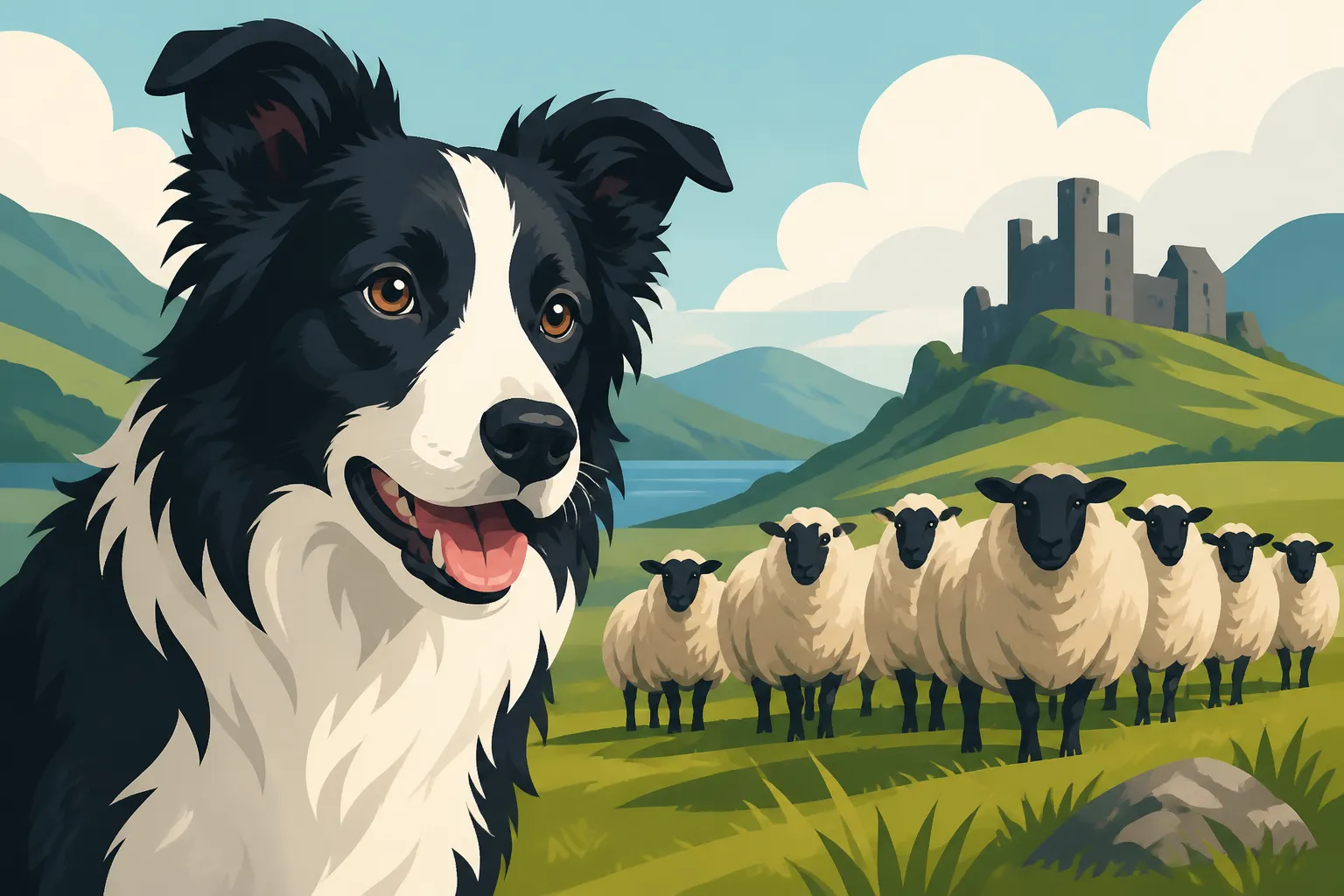
The sheep that Collies herded in Scotland were not the docile, plump breeds often seen today. These were hardy, independent creatures like the Scottish Blackface and Cheviot, breeds accustomed to fending for themselves in harsh conditions. They were often semi-feral, less inclined to stick together, and far more likely to bolt, hide, or even stand their ground against a perceived threat. Managing these animals required a dog with both courage and intelligence, one that could anticipate their movements and assert control without causing panic or harm.
Beyond sheep, Collies also played a role in managing cattle, particularly in the droving operations that moved livestock across vast distances to markets. Imagine a small dog, often weighing less than a hundred pounds, facing down a stubborn, long-horned Highland cow. This demanded immense bravery, strategic thinking, and the ability to work in close cooperation with the shepherd. The dog couldn't simply chase; it had to influence, guide, and, when necessary, firmly persuade these powerful animals to move in the desired direction.
Beyond the Flock: The Collie's Diverse Responsibilities
The term "herding" barely scratches the surface of what these dogs did. They were integral members of the shepherd's team, taking on tasks that ranged from long-distance travel to acting as a vital early warning system for danger. Their roles were far more varied and demanding than just rounding up sheep.
Droving and Driving Livestock
While daily herding involved managing flocks on the immediate pastures, droving was an entirely different beast. This involved moving large numbers of sheep and cattle, sometimes hundreds or even thousands, over hundreds of miles to distant markets like those in Edinburgh or Carlisle. These journeys could take weeks, often through hostile territory, across rivers, and over mountain passes. The drover relied almost entirely on their dogs to keep the massive flock together, prevent strays, and deter rustlers.
During these arduous journeys, a Collie might work dawn till dusk, constantly circling, nudging, and keeping the livestock on course. They had to navigate busy roads, negotiate narrow paths, and ensure no animal broke away and was lost or stolen. This wasn't just about physical endurance; it required incredible focus, problem-solving skills, and the ability to adapt to ever-changing circumstances. A stray animal meant lost income, so the Collie's diligence was directly tied to the shepherd's livelihood. Why Smooth Collies Drove and Rough Collies Stayed delves deeper into how certain Collie varieties were particularly suited for these long hauls.
Shepherd's Companion and Protector
The Collie was more than just a working tool; it was the shepherd's most trusted companion, often spending lonely days and nights together on the hills. They were crucial in lambing season, helping locate ewes and their newborn lambs, and gently moving them to safer areas. If a lamb went astray or got stuck, the Collie might be the one to find it and alert the shepherd. In the vastness of the Scottish landscape, the dog was literally an extra pair of eyes and ears.
Their protective instincts extended to the flock itself. While large predators like wolves were mostly gone by the time Collies came into prominence, foxes and wild dogs were still a threat. The Collie served as an early warning system, barking to alert the shepherd to any potential danger. They were also protectors of the shepherd's solitary existence, offering comfort and companionship in an often isolated life. This deep bond forged through shared adversity is still a hallmark of the breed today.
The "Catch Dog" Role
Sometimes, herding wasn't just about gentle persuasion. When an animal was injured, needed veterinary attention, or became particularly stubborn, the Collie might have to act as a "catch dog." This meant carefully holding a specific animal by its leg or neck, without causing injury, to allow the shepherd to secure it. This required immense control, a firm but not aggressive grip, and an understanding of how much pressure was too much.
This delicate balance of power and restraint highlights the Collie's intelligent nature. They weren't just brute force; they were nuanced workers who understood the value of the livestock and the importance of not harming it. This aspect of their work contributed to their reputation as dogs that could think for themselves and make appropriate decisions under pressure.
The Collie's Unique Herding Style
If you've ever seen a Border Collie work, you might have a certain image of herding in mind – intense staring, low crouches, and silent, swift movements. The Collie's style, while equally effective, had its own distinct characteristics, shaped by their environment and the types of animals they managed.
"Loose-Eyed" Influence vs. "Strong-Eyed" Intensity
Traditional Collies are often described as having a "loose-eyed" herding style, in contrast to the "strong-eyed" intensity seen in many Border Collies. What does this mean? A "strong-eyed" dog uses a deep, fixed stare, often accompanied by a low crouch, to intimidate and control the livestock. It's a very direct, almost hypnotic method.
A "loose-eyed" Collie, on the other hand, typically works more upright, relying less on the intense stare and more on its physical presence, quick movements, and controlled vocalizations. They might weave more, use broader sweeps, and generally interact with the flock in a less confrontational, more persuasive manner. This style was particularly effective with the semi-wild Scottish sheep, who might have panicked under the relentless stare of a strong-eyed dog. The Collie's approach was about partnership and guidance, allowing the sheep to feel directed rather than cornered.
Independent Problem Solvers
Working vast, open lands with often absent or distant shepherds meant that Collies frequently had to make decisions on their own. There was no one there to give them constant cues. If a portion of the flock broke away over a ridge, the Collie couldn't wait for instructions; it had to assess the situation, formulate a plan, and execute it independently. This fostered incredible intelligence and initiative in the breed.
This strong sense of independence and problem-solving is still present in modern Collies. They are not mindless followers; they are thinkers. This is why Forty Five Minutes a Day, and Half of It in Its Head suggests that mental stimulation is just as vital as physical exercise for a Collie. They thrive when given tasks that engage their minds, allowing them to use their innate intelligence.
Voice and Presence as Tools
While some herding breeds are known for their silent work, the traditional Collie often utilized its voice as part of its herding repertoire. This wasn't indiscriminate barking, but a controlled, directional bark used to move stubborn animals, gather strays, or warn the shepherd of an issue. The judicious use of voice was another tool in their kit, alongside their physical presence and quick movements.
The Collie's impressive size and powerful presence also played a significant role. Even without an intense stare, a seventy-pound dog moving with purpose and confidence could command respect from livestock. Their agility allowed them to quickly change direction, head off strays, and keep the flock flowing. Understanding this history helps us appreciate why The Bark Is the Trait Collie Owners Underestimate can be such a challenge for modern Collie owners, as it's a deeply ingrained historical trait, though often misdirected in a pet home.
Here's a quick look at how the Collie's herding style compares to some other well-known herding breeds:
| Aspect of Herding | Traditional Scottish Collie | Border Collie | Australian Shepherd |
|---|---|---|---|
| Eye Style | Loose-eyed | Strong-eyed | Medium-to-strong |
| Working Distance | Often wide, distant drives | Close, intense | Variable, often close |
| Vocalization | Used judiciously | Minimal | Can be vocal |
| Body Posture | More upright | Low, crouching | Medium crouch |
| Independence | High, problem-solver | High, takes cues | High |
| Stock Type Suited | Hardy, semi-feral sheep & cattle | Easily managed sheep | Diverse livestock |
Different Collies, Different Jobs
It's easy to think of "the Collie" as one uniform type, but even within the Scottish working environment, there were subtle distinctions and preferences based on the specific tasks at hand. The development of the Rough and Smooth varieties, while visually distinct, also had practical implications for their working roles.
Rough Collies and Smooth Collies in Action
While both Rough and Smooth Collies were used for herding in Scotland, there were practical reasons why one might be preferred over the other for certain jobs. The Smooth Collie, with its short, dense coat, was often favored for the long, arduous droving journeys. Their coats were less likely to pick up burrs, mud, and debris, and they dried more quickly, making them more comfortable and less prone to matting in the constant wet weather. This made them highly efficient for covering vast distances with minimal fuss.
The Rough Collie, with its magnificent long coat, certainly possessed the same herding instincts and intelligence. However, their longer coats would require more upkeep, especially in the field, and could become heavy and waterlogged during extended periods of rain. They were likely more suited to general farm work and managing flocks closer to home, where a shepherd could maintain their coat more easily. Both varieties, however, shared the core Collie temperament and working drive, proving that underneath the fur, they were the same incredibly capable dog.
The Evolution of the Working Collie
As agricultural practices changed and the need for long-distance droving declined with the advent of rail transport, the role of the working Collie began to shift. Shepherds still needed dogs, but the emphasis moved more towards managing flocks on fenced pastures rather than open ranges. This change allowed for the development of herding trials and competitions, where dogs could demonstrate their skills in a more controlled environment.
This period also saw a divergence in breeding. Some lines continued to focus purely on working ability, leading to dogs that became known as Border Collies, selected for their intense "eye" and speed. Other lines, while retaining working ability, began to be selected for appearance, eventually leading to the show Collie we recognize today. However, even in modern times, many Collies retain that innate herding instinct, making activities like Whether a Pet Collie Should Try Herding a fantastic way to engage them.
Why This History Matters for Today's Collie Owner
Understanding the Collie's origins isn't just a fascinating historical exercise; it's absolutely crucial for any modern owner. The instincts and behaviors that were essential for their survival and work in Scotland are still very much alive in your family pet. Ignoring this heritage can lead to frustration for both dog and owner.
Understanding Those Enduring Instincts
That urge to circle your children, to gently nudge them, or even to give a little bark when they run? That's the ancient herding instinct bubbling to the surface. Your Collie isn't trying to be naughty; it's trying to manage its "flock" – your family! Why a Collie Herds Your Children delves into this common behavior. The desire to keep everyone together, to observe from a slight distance, and to be highly attuned to the environment are all direct legacies of their working past.
Even their protective nature, that watchful eye they keep over the household, stems from their days as companions and guardians of the flock and shepherd. They were bred to be alert and to communicate potential threats, which is why a Collie's bark can sometimes be a surprise to new owners who aren't used to such an enthusiastic alarm system.
Tailoring Activities to Fulfill Their Drive
Since modern Collies rarely get to herd sheep, it's up to us as owners to find constructive outlets for their intelligence and instincts. This means more than just a walk around the block. They thrive on mental challenges – puzzle toys, training new cues, and engaging in structured activities. Toys from places like Chewy that encourage thinking and problem-solving, or durable chew toys for when they're working out a problem, can be a great investment.
Modern dog sports like Rally, Obedience, and even Scent Work are fantastic ways to tap into their historical strengths. Herding, Rally and the Sports a Collie Was Made For offers a great overview of activities that will truly resonate with your Collie's innate desire to work and problem-solve. Even a simple game of hide-and-seek with their favorite treats or kibble can be incredibly stimulating. Remember, a tired mind is often as important as a tired body for a Collie.
Temperament and Trainability: Honoring Their Legacy
The sensitive nature of the Collie, their strong desire to please, and their deep bond with their human family are all products of their close partnership with shepherds. These dogs were not commanded from afar; they worked with their people. This means they respond best to positive reinforcement, gentle guidance, and consistency. Harsh Handling Breaks a Collie and It Does Not Come Back is a critical reminder of this. Their intelligence means they learn quickly, but their sensitivity means they can also shut down or become withdrawn if treated harshly.
When choosing food for your active and intelligent Collie, remember their need for good nutrition. Chewy offers a wide selection of high-quality dog foods, including options specifically formulated for large breeds or those with higher energy needs, which can support their brain function and overall vitality. Providing good quality nutrition is another way to support their physical and mental well-being, allowing them to truly shine.
Your Collie might not be guiding sheep across the Scottish moors anymore, but the spirit of that working dog lives on. By understanding their incredible history, you can provide a richer, more fulfilling life for your modern Collie, celebrating the intelligence, loyalty, and partnership that defined their ancestors.
Disclaimer
This article is for general informational purposes only and does not constitute professional advice. Laws, prices and regulations vary by location and change over time. Consult a qualified professional for guidance on your specific situation.