Whether Breeding Only Clear Collies Would Shrink the Gene Pool
It’s a truly agonizing dilemma for responsible Collie breeders: you want to produce the healthiest puppies possible, free from inherited diseases, but you also worry constantly about inadvertently narrowing the breed’s gene pool. The push to breed only "clear" Collies, while well-intentioned, raises valid concerns about losing genetic diversity, which can lead to new, unforeseen health problems down the road or even impact the breed's overall vitality. This guide will delve into this complex issue, exploring the nuances of genetic health, the true meaning of "clear," and how thoughtful breeders navigate this challenging landscape to ensure a healthy future for our beloved Collies.
Understanding the Collie Gene Pool and Genetic Health Challenges
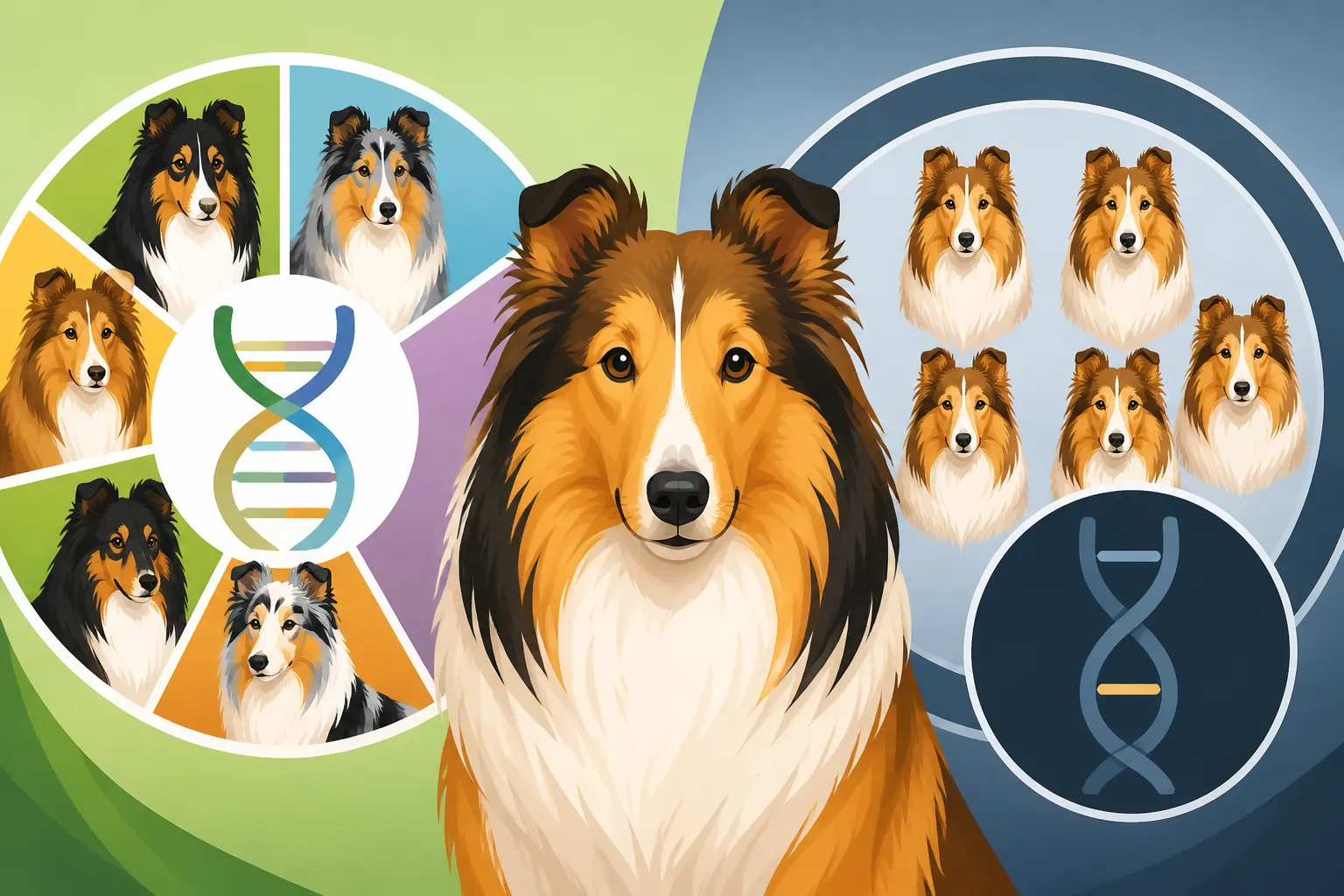
When we talk about the "gene pool," we're essentially referring to the total genetic variation available within a population – in our case, the Collie breed. A diverse gene pool is like a robust ecosystem; it allows for adaptability and resilience. If the gene pool becomes too shallow, the breed can become more vulnerable to diseases, lose desirable traits, or even struggle with fertility and vigor.
The Importance of Genetic Diversity
Imagine a small, isolated village. If everyone in the village is related, and a new illness sweeps through, it could devastate the entire population because everyone shares similar genetic susceptibilities. The same principle applies to dog breeds. Genetic diversity acts as a buffer against disease, enabling the breed to adapt to environmental changes and helping to prevent an accumulation of undesirable traits. When diversity is lost, the remaining genes become more common, including those that might carry hidden risks for future health issues, even if they aren't currently recognized. It's a subtle, slow creep that can be incredibly hard to reverse once it's gone too far, affecting everything from immune system strength to structural soundness.
Common Genetic Conditions in Collies
Collies, like many purebred dogs, are predisposed to a handful of genetic conditions that ethical breeders work tirelessly to mitigate. The most well-known, and often the first thing new owners learn about, is the MDR1 mutation. This gene mutation affects how a Collie processes certain medications, and administering the wrong drug can lead to severe neurological symptoms or even death. Understanding what the MDR1 mutation actually does to a Collie is crucial for every owner and veterinarian.
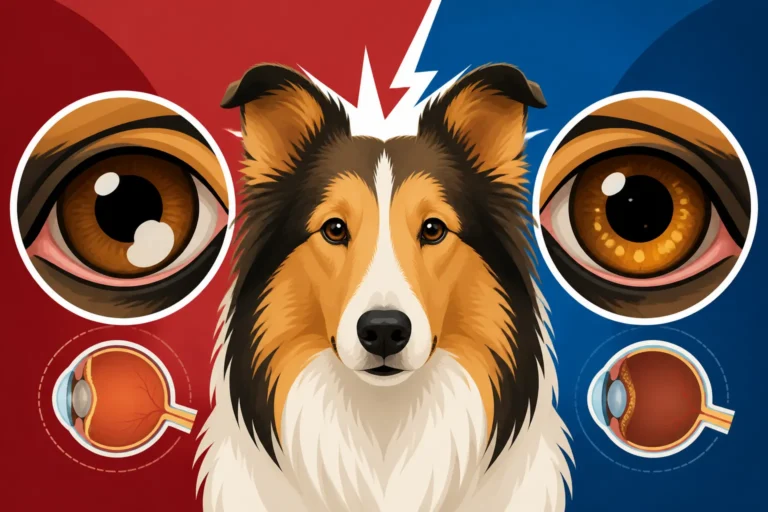
Beyond MDR1, we also contend with Collie Eye Anomaly (CEA), a hereditary eye disease that can range from a mild, non-impairing condition to severe colobomas that can lead to blindness or retinal detachment. While a puppy might get a "go normal" result on its eye exam, understanding what Collie Eye Anomaly does to the back of the eye helps breeders make informed decisions. Other serious, though less common, conditions include Gray Collie Syndrome, a devastating immune disorder in puppies, and Dermatomyositis (DMS), an autoimmune skin and muscle disease where the severity can vary widely. The three genetic tests a Collie breeder owes you, typically including MDR1, CEA, and sometimes DMS, are foundational to a healthy breeding program.
The Impact of Breeding Only "Clear" Collies
The desire to eliminate these health issues from the breed is admirable, and genetic testing has provided invaluable tools. However, the blanket approach of breeding only individuals that test "clear" for all known genetic conditions can inadvertently create new problems by overly restricting the gene pool.
Defining "Clear" and Its Implications
When a breeder or owner says their Collie is "clear," it means one of two things for a specific genetic test. A dog can be "clear by parentage," meaning both parents tested clear, and therefore the offspring is assumed clear without direct testing. More robustly, a dog is "clear by test," meaning a DNA sample (often a cheek swab, a perfectly sufficient and non-invasive method) was sent to a lab like those used by Embark or Optigen, and the results confirmed the absence of the specific mutated gene.
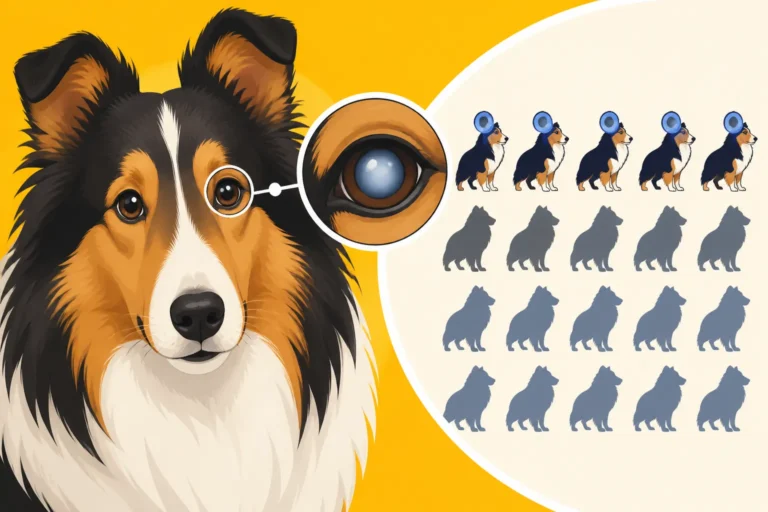
The problem arises when "clear" becomes the only criterion. Imagine a hypothetical scenario where 70% of Collies carry the MDR1 mutation, a figure not far off from some studies regarding what share of Collies carry MDR1. If breeders decided to only use the 30% that are clear, and then only breed those that are also clear for CEA, and then clear for DMS, and so on, the number of available breeding dogs shrinks dramatically. Suddenly, a breeder might find themselves looking at a very small pool of dogs, all sharing more distant ancestry than they realize, and potentially losing other valuable traits like temperament, structure, or working ability, just because they didn't happen to be "clear" on every single test.
The Argument for Narrowing the Gene Pool
The concern that breeding only "clear" Collies will shrink the gene pool isn't just theoretical; it's a very real danger that breed clubs and geneticists actively discuss. If breeders only select for the absence of known disease genes, they might inadvertently increase the prevalence of unknown genes or genes for conditions that aren't yet testable. Genetic diversity is a protective measure. When you reduce it, you increase homozygosity – meaning more genes become identical across the population. While this can eliminate some bad genes, it also increases the chances of doubling up on other recessive genes that could be detrimental.
For instance, a particular Collie might be a carrier for a very mild form of CEA, but otherwise has an exceptional temperament, robust health, and perfect structure. If that dog is removed from the breeding program solely because of its carrier status for CEA, the entire breed loses access to its many positive attributes. Over several generations, if this practice is widespread, the breed's overall genetic health could actually decline in other areas, making them more susceptible to things like autoimmune diseases or even reducing their lifespan. This is where Whether a Collie's Dermatomyositis Risk Can Be Bred Down becomes a complex question, as focusing too narrowly on one condition could impact the genetic resources for another.
Practical Scenarios of Restrictive Breeding
Let's consider a practical example. A breeder has a fantastic female Collie with a stellar temperament, beautiful structure, and an excellent pedigree. She’s tested and found to be a carrier (one copy of the mutation) for MDR1. Her sire was clear, her dam was a carrier. If the breeder only used "clear" dogs, this wonderful female would be excluded from breeding, along with any of her clear siblings who might also carry other valuable genes.
Now, imagine another scenario. A young male Collie has tested clear for MDR1, CEA, and the various markers for DMS. He's also quite handsome. Because he's "clear" across the board, every breeder wants to use him. Suddenly, this one dog is siring many litters. While his puppies will be clear of those specific conditions, his widespread use creates a "popular sire" effect, reducing genetic diversity as too many puppies in the next generation are related to him. This hyper-focus on one "perfect" dog can lead to what’s known as a genetic bottleneck. While some owners might feel reassured by a comprehensive policy from their pet insurance like Healthy Paws, which covers hereditary conditions, the goal of a breeder is to prevent these conditions in the first place, not just to manage them.
Balancing Health and Genetic Diversity in Collie Breeding
The good news is that responsible breeders can prioritize health and genetic diversity simultaneously. It requires a nuanced understanding of genetics, strategic planning, and a commitment to transparency.
The Role of Responsible Genetic Testing
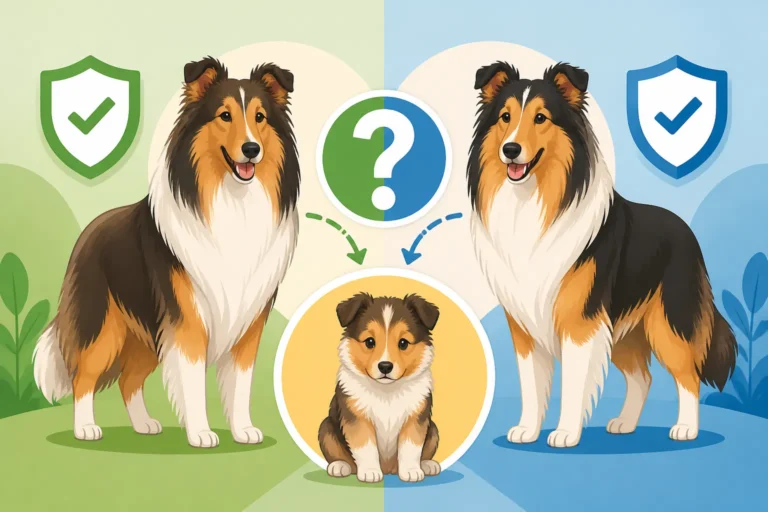
Genetic testing is an indispensable tool, but it's just one piece of the puzzle. It should inform breeding decisions, not dictate them absolutely. For conditions like MDR1, where two copies of the gene can be highly dangerous, it's generally advised that at least one parent be clear. This means a carrier can safely be bred to a clear dog, producing a litter where some puppies will be clear and some will be carriers, but none will be "affected" (having two copies of the mutation). This approach allows valuable genetics from a carrier dog to remain in the gene pool. Owners of new puppies should ensure their breeder provides clear documentation, and understanding What the Collie DNA Health Panel Covers is a great start. If a rescue Collie should be MDR1 tested first, then certainly a breeding dog should be.
For conditions like CEA, the situation is different. While severe CEA can be very problematic, many Collies are only mildly affected, or "go normal" after their puppy eye exam, and lead perfectly healthy lives without vision impairment. Breeding away from mild CEA too aggressively might also restrict diversity unnecessarily, especially if the dog has many other desirable qualities. How Dermatomyositis Risk Is Scored in a Collie also involves a nuanced approach, as it's often polygenic (influenced by multiple genes), making simple "clear/affected" classifications less straightforward.
Strategic Mating and Understanding Carrier Status
The key to preserving genetic diversity while improving health is intelligent mate selection. This means:
- Never breed two affected dogs together for recessive conditions: This significantly increases the risk of producing affected offspring. For instance, two MDR1 carriers should not be bred together.
- Utilize carriers wisely: A carrier of a recessive gene (like MDR1) can be bred to a dog that is clear for that gene. All puppies born from this pairing will either be clear or carriers, but none will be affected. This allows the carrier's positive attributes to contribute to the gene pool without producing sick puppies. This is particularly relevant when considering Whether one copy of MDR1 is enough to harm a Collie, as carriers are typically healthy but can pass the gene on.
- Consider the whole dog: Temperament, structure, working ability, longevity, and overall health (beyond just genetic tests) are all critical factors in a breeding decision. A dog that is "clear" but has structural faults or a poor temperament is not a suitable breeding candidate.
- Balance known risks with unknown benefits: Sometimes, a dog that is a carrier for a specific condition might bring in much-needed genetic diversity from a less-represented line. Its careful inclusion, paired with a clear mate, can be a net positive for the breed.
Breeders who participate in health programs or utilize sophisticated pet insurance like Healthy Paws understand the comprehensive nature of canine health. They know that a dog's value extends far beyond a single genetic marker.
Utilizing Health Registries and Collaborating with Breed Clubs
Responsible breeders don't operate in a vacuum. They actively participate in their breed community and utilize available resources. Health registries like the Orthopedic Foundation for Animals (OFA) are invaluable tools for tracking genetic health results, including those for MDR1, CEA, and sometimes even less common conditions. These databases allow breeders to research potential mates' health backgrounds, beyond just what a single breeder might share.
Breed clubs, such as the Collie Club of America, often play a crucial role in promoting responsible breeding practices. They might host educational seminars, encourage genetic testing, and even establish health committees to guide breeders on best practices for maintaining both health and genetic diversity. Transparency is key here; a breeder who is willing to publish results, even if a dog is a carrier, demonstrates a commitment to the breed's long-term health. Knowing Whether a Collie breeder should publish results is a hallmark of an ethical program.
Here's a simplified table illustrating breeding outcomes based on MDR1 status, which applies to many simple recessive genetic conditions:
| Sire's MDR1 Status | Dam's MDR1 Status | Potential Offspring Status (MDR1) | Risk of Affected Offspring | Impact on Gene Pool |
|---|---|---|---|---|
| Clear | Clear | 100% Clear | None | Reduces diversity |
| Clear | Carrier | 50% Clear, 50% Carrier | None | Maintains diversity |
| Clear | Affected | 100% Carrier | None | Maintains diversity |
| Carrier | Carrier | 25% Clear, 50% Carrier, 25% Affected | High | Reduces diversity (if affected culled) |
| Carrier | Affected | 50% Carrier, 50% Affected | High | Reduces diversity (if affected culled) |
| Affected | Affected | 100% Affected | Very High | Not recommended |
Note: "Affected" here means homozygous for the mutation (m/m), "Carrier" means heterozygous (N/m), and "Clear" means homozygous normal (N/N).
Long-Term Strategies for a Healthy Collie Future
Ensuring the long-term health of the Collie breed requires a holistic and forward-thinking approach that goes beyond simply checking boxes for "clear" tests. It's about maintaining a robust and resilient population for generations to come.
Expanding the Focus Beyond Individual Clear Status
While individual health tests are vital, truly responsible breeding considers the bigger picture of population health. This means looking at Coefficient of Inbreeding (COI) to understand the degree of relatedness in a pedigree and actively seeking to keep it at a healthy level. A low COI suggests greater genetic diversity. Breeders might consider using dogs from less common lines, even if they aren't "perfectly clear" on every test, as long as careful, informed breeding decisions are made. For example, if a line has shown excellent longevity or resistance to other health issues, those genes are valuable, and a well-researched pairing with a clear mate for a specific known disease might be beneficial overall. This broader perspective helps avoid what some call "tunnel vision" in breeding, where focusing on one or two issues can make the breed vulnerable in other, unanticipated ways.
It’s also crucial to remember that not all health conditions are genetic, or at least not solely genetic. Environmental factors, nutrition, and general care play significant roles in a Collie’s overall health and How long a Collie lives and what ends it. A balanced approach ensures that we don’t attribute every ailment to genetics alone, and that we provide excellent care for our Collies throughout their lives, even when they reach The age a Collie is considered senior.
The Value of Outcrossing and Linebreeding Judiciously
"Outcrossing" involves breeding two unrelated individuals within the same breed. This is often used to bring in new genes, increase genetic diversity, and reduce the prevalence of certain inherited conditions that have become widespread within specific lines. While it might introduce a few less desirable traits temporarily, a well-planned outcross can inject much-needed vigor and resilience into a population.
Conversely, "linebreeding" involves breeding related individuals, but typically not as closely as inbreeding. It’s a tool used to concentrate desirable traits within a line, but it also concentrates undesirable recessive genes. Ethical breeders use linebreeding very judiciously, often balancing it with outcrosses, and always with a deep understanding of the health status of all dogs in the pedigree. The key is balance and avoiding extremes. A diverse array of Collies, each bringing something unique to the table, is healthier for the breed as a whole.
Educating New Owners and Supporting Research
Ultimately, the future of the Collie breed rests on informed decisions made by both breeders and prospective owners. New Collie owners need to be educated not just about grooming and training, but also about the breed's specific health considerations. Understanding Assume your Collie has the MDR1 mutation is a non-negotiable part of Collie ownership. They should be encouraged to ask breeders tough questions, to seek out genetic test results, and to support breeders who are open and transparent about their dogs’ health. This also includes understanding costs, such as What a full Collie health panel costs per dog.
Furthermore, continued support for canine health research is paramount. Organizations like the Collie Health Foundation actively fund studies into various Collie-specific diseases, helping scientists identify new genetic markers and better understand complex conditions. As new tests become available, breeders can integrate them into their programs, always keeping the delicate balance of health and diversity in mind. It's an ongoing journey, but one we embark on with passion for these magnificent dogs.
Disclaimer
The information provided in this article is for educational purposes only and should not replace professional veterinary advice. Always consult with a qualified veterinarian regarding any health concerns for your Collie. Breeding decisions should be made in consultation with experienced mentors, breed clubs, and canine geneticists.