How Often a Collie Needs a Full Bath
It’s a common dilemma for Collie owners, isn't it? You adore their magnificent, flowing coats, but you also know that such beauty comes with responsibilities, and sometimes, a little mud or an unfortunate roll in something smelly can leave you wondering just how often you really need to put your furry friend through a full bath. You want your Collie to be clean and smell fresh, but you also worry about stripping their natural oils or damaging that gorgeous double coat. This guide aims to demystify Collie bathing frequency, helping you keep your beloved companion comfortable, clean, and healthy without overdoing it.
Factors Influencing How Often Your Collie Needs a Bath
There’s no universal answer to how often a Collie needs a full bath, and anyone who tells you there is probably doesn't own a Collie! The truth is, it depends on a multitude of factors, all unique to your dog's lifestyle and coat condition. It's about finding that sweet spot between cleanliness and maintaining their natural coat health.
Your Collie's Lifestyle and Environment
Think about what your Collie gets up to on an average day. Is your home a bustling farm where your Collie is genuinely herding sheep, or is your pup a pampered city dweller whose biggest adventure is a stroll around the block? A Collie who spends a lot of time outdoors, particularly in muddy fields, dusty trails, or damp wooded areas, will naturally get dirtier much faster than one who primarily enjoys indoor comfort and short, leash walks on pavement.
For instance, if your Collie is an active outdoorsy type, frequently visiting dog parks, swimming in lakes, or exploring muddy trails, you'll likely find yourself reaching for the shampoo more often. They might pick up burrs, get a nice layer of pond scum, or simply accumulate the general grime of an adventurous life. On the other hand, a Collie whose daily routine is more sedate, sticking to manicured parks and a clean backyard, might stay presentable for much longer. Consideration also needs to be given to allergy season; pollen can cling to their coats, potentially causing skin irritation for sensitive dogs or their human companions, making more frequent baths a necessity to rinse away allergens.
Coat Type and Condition
Both Rough and Smooth Collies require different considerations when it comes to bathing. While the Smooth Collie certainly has less "fluff," both varieties have a double coat designed for protection. The Rough Collie, with its dense undercoat and long, flowing outer coat, tends to trap dirt, debris, and odors more readily. Mats can form, particularly behind the ears, in the "frill" around the neck, and on the "petticoats" (the feathering on their legs and britches). These areas especially tend to collect grime and become tangled, often being the reason a bath becomes necessary.
A Smooth Collie's shorter, denser coat is generally easier to keep clean and dry, making them less prone to trapping environmental debris, though they still shed and can get quite dirty. For both, the condition of their skin and coat is paramount. A healthy coat, supported by good nutrition (brands like Ollie offer high-quality options that can contribute to overall skin and coat health) and regular brushing, is more resistant to dirt and can go longer between baths. Conversely, a Collie with dry, flaky skin or a dull coat might be telling you that something isn't quite right, and while bathing is a part of the solution, addressing the underlying cause (diet, supplements, or veterinary care) is crucial. Whether a Collie's Diet Affects Its Shedding is a good read on this.
Seasonal Changes and Shedding Cycles
Collies, particularly Rough Collies, "blow" their coats twice a year, usually in spring and fall. This period, known as "blowing coat," involves shedding vast amounts of undercoat. The Three Weeks Twice a Year When a Collie Buries Your House describes this phenomenon perfectly. During these times, more frequent brushing is essential to remove dead hair, but a bath can also be incredibly helpful. A good bath, followed by a thorough blow-dry with a high-velocity dryer, can significantly aid in loosening and removing all that dead undercoat, reducing shedding in your home and making your Collie feel much more comfortable.
Outside of these intense shedding periods, their coat is generally more stable. In drier winter months, you might find you need to bathe less, whereas in humid summer weather, they might get stickier or simply feel dirtier faster. Always consider the climate and how it impacts both their outdoor activities and their coat's ability to stay clean and dry.
Medical or Skin Conditions
Sometimes, bathing isn't just about cleanliness; it's a therapeutic necessity. Collies can be prone to certain skin sensitivities or conditions that require specific bathing routines. For example, if your Collie has allergies, a prescribed medicated shampoo might need to be used at a frequency recommended by your vet, sometimes as often as once a week or every few days, to manage symptoms and keep skin infections at bay. Dogs with oily skin, yeast infections, or other dermatological issues might also benefit from more frequent bathing with specialized products.
In these cases, the bathing schedule is dictated by medical necessity rather than general cleanliness. It’s vital to follow your veterinarian's advice closely, as improper bathing or using the wrong products could exacerbate existing conditions. Always discuss any unusual skin issues, itching, or odors with your vet to rule out underlying health problems.
The Risks of Over-Bathing Your Collie
While it might seem counterintuitive, bathing your Collie too frequently can actually do more harm than good. Their magnificent double coat and sensitive skin are designed to be self-regulating, and stripping away natural protections can lead to a host of problems.
Stripping Natural Oils and Drying the Skin
A Collie's coat produces natural oils that are essential for keeping their skin moisturized, their fur healthy, and providing a protective barrier against the elements. These oils give their coat its characteristic sheen and help repel dirt and water. When you bathe your Collie too often, especially with harsh shampoos not formulated for dogs, you risk stripping these vital oils. This can lead to dry, flaky, itchy skin, which is uncomfortable for your dog and can even result in secondary skin infections from excessive scratching.
Imagine washing your own hair daily with a strong detergent – it wouldn't feel great, would it? The same principle applies to your Collie. Their skin needs those natural lipids to stay supple and protected. Regularly removing them leaves the skin vulnerable and can disrupt the natural balance of their skin microbiome.
Irritation and Allergic Reactions
Frequent bathing can also irritate sensitive skin, even if you're using a mild shampoo. The constant exposure to water, shampoo ingredients, and friction from scrubbing can cause redness, inflammation, and discomfort. For Collies with underlying skin sensitivities or allergies, this can be particularly problematic, potentially triggering flare-ups or exacerbating existing conditions.
It’s crucial to use shampoos specifically designed for dogs, ideally pH-balanced and free from harsh chemicals, dyes, or strong perfumes. Some Collies might even react to certain ingredients, so always be on the lookout for signs of irritation like excessive licking, redness, or bumps after a bath. Online retailers like Chewy and Amazon offer a wide selection of gentle, hypoallergenic dog shampoos, making it easier to find one that suits your Collie's needs.
Damaging the Coat and Increasing Matting
While a bath can help with shedding, over-bathing can actually damage the texture of the coat. Stripping the natural oils can make the individual hairs brittle, leading to breakage and a dull appearance. Furthermore, if a Rough Collie's coat isn't thoroughly dried after a bath, especially the dense undercoat, it creates a prime environment for mats to form. Damp hair clumps together easily, and as it dries, these clumps can tighten into painful mats that pull on the skin. How to Dry a Collie Properly is essential reading here.
These mats not only look unsightly but can also cause skin irritation, restrict movement, and hide parasites or skin issues. Removing them can be a painful and time-consuming process, sometimes even requiring professional intervention or shaving.
When to Give Your Collie a Full Bath
So, if there's no set rule, how do you know when it's genuinely time for a full bath? It often comes down to a combination of smell, visible dirt, and a careful assessment of their coat.
The Smell Test: Your Nose Knows Best
Let's be honest, sometimes our Collies just… stink. They roll in something questionable, get wet and develop that infamous "wet dog" smell, or simply accumulate a general doggy odor over time. Your nose is often the best indicator. If your Collie's natural scent becomes overwhelming or unpleasant, despite regular brushing, it’s probably time for a bath.
This is especially true if they've had an encounter with a skunk or rolled in something truly offensive. In those cases, waiting isn't an option. For less dramatic odors, try a thorough brushing first to see if that helps air out the coat and remove any superficial smells. If the odor persists, a bath is the way to go.
Visible Dirt and Grime
This one is a no-brainer. If your Collie has visible mud caked on their legs, debris tangled in their feathering, or dirt embedded in their beautiful white markings, it’s time for a wash. While spot cleaning can handle minor issues, widespread dirt usually warrants a full bath to ensure all areas are clean and to prevent dirt from becoming impacted in their dense undercoat.
Think about the sheer volume of fur on a Rough Collie; a quick rinse might get the surface, but a proper bath ensures the skin underneath is clean too. This is particularly important for dogs who love to dig or explore muddy areas.
Coat Condition and Mat Prevention
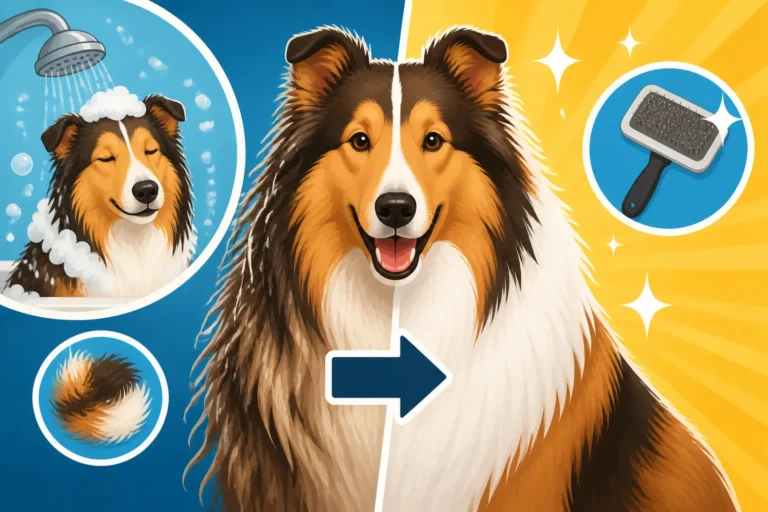
Regular brushing is the first line of defense against mats and keeps the coat healthy. How Often a Rough Collie Should Be Brushed details the importance of this. However, a bath can significantly help in managing shedding and preventing mats, especially during coat blows. A good soak and gentle lathering can loosen dead hair, making it easier to brush out after drying.
If you notice the coat feeling greasy, heavy, or starting to clump together even after brushing, a bath can help restore its natural texture and lightness. Always remember to thoroughly brush out any mats before bathing. Water can tighten existing mats, making them nearly impossible to remove without cutting.
A General Guideline for Most Collies
For most pet Collies with a relatively clean lifestyle, a full bath every 6-8 weeks is often a good starting point. This frequency usually allows enough time for natural oils to replenish while keeping them fresh and clean. However, this is just a guideline.
Here’s a simple table to help you gauge:
| Factor | Recommendation for Bathing Frequency | Notes |
|---|---|---|
| Indoor, Clean Life | Every 8-12 weeks | For Collies primarily indoors, short walks on clean surfaces. Regular brushing is key to extending time between baths. |
| Moderate Activity | Every 4-6 weeks | For Collies with regular outdoor play, park visits, or light trail walking. May need more frequent spot cleaning. |
| Active/Outdoorsy | Every 2-4 weeks | For Collies who frequently get muddy, swim, or have active outdoor lifestyles. Pay close attention to skin health to avoid dryness. |
| During Coat Blow | Every 3-4 weeks | To help loosen and remove dead undercoat, reducing shedding. Follow with thorough high-velocity drying. |
| Medical Conditions | As Vet Prescribes | Could be weekly or more frequent with medicated shampoos. Always follow professional advice. |
| Show Collies | As Needed for Ring Prep | Handlers will have specific routines leading up to shows, often involving frequent baths and conditioning to optimize coat appearance. This is a special case and typically not for the average pet owner. What Grooming for the Show Ring Costs a Collie Owner |
Ultimately, the best approach is to observe your individual Collie. Pay attention to their coat, their scent, and their skin health. If in doubt, err on the side of less frequent bathing, and always prioritize thorough brushing between washes.
Best Practices for Bathing Your Collie
When it is time for a bath, approaching it correctly can make all the difference for your Collie’s comfort and the health of their coat. Remember, it’s not just about getting them wet; it’s about a mindful process.
Pre-Bath Brushing and Dematting
Before you even think about turning on the water, a thorough pre-bath brushing is non-negotiable, especially for a Rough Collie. Water will tighten any existing mats, making them incredibly difficult, if not impossible, to remove without resorting to cutting them out. Use a slicker brush and a good steel comb to work through the coat, focusing on areas prone to matting like behind the ears, the armpits, the "frill" (ruff), and the "petticoats" (feathering on legs and britches).
If you encounter mats, gently work them out with a dematting tool or your fingers, using a detangling spray if necessary. It’s far less stressful for your Collie to deal with mats when their coat is dry. This pre-bath ritual also helps to remove loose hair and dirt, making the washing process more effective. You can find excellent quality brushes and dematting tools on sites like Amazon or Chewy.
Choosing the Right Shampoo and Conditioner
Selecting the right products is crucial for your Collie’s sensitive skin and coat. Always opt for a high-quality, pH-balanced shampoo specifically formulated for dogs. Avoid human shampoos, which can be too harsh and strip essential oils. If your Collie has sensitive skin or allergies, look for hypoallergenic, soap-free, or oatmeal-based shampoos. Your vet might also recommend a medicated shampoo if there's a specific skin issue.
A good conditioner is equally important, especially for Rough Collies. It helps to rehydrate the skin and coat, makes brushing easier, and can add a protective layer to the fur. Apply conditioner generously, particularly to the longer hair, and let it sit for a few minutes before rinsing thoroughly. Which Shampoo Suits a Collie's Coat can help you decide.
The Washing Process: Gentle and Thorough
Start by thoroughly wetting your Collie's entire coat with lukewarm water. This can take some time due to their dense undercoat. Make sure the water penetrates all the way down to the skin. Apply shampoo, starting from the neck and working your way down to the tail, paying special attention to dirty areas like paws and legs. Gently massage the shampoo into the coat and skin, but avoid harsh scrubbing, which can tangle the hair.
Be very careful around their eyes, ears, and nose. Many owners use cotton balls in the ears to prevent water from entering the ear canal, which can lead to infections. For the face, a damp cloth or a tearless facial shampoo can be used. Rinse, rinse, and rinse again! It's surprising how much shampoo can hide in a Collie's dense coat. Any residue left behind can cause skin irritation or make the coat feel sticky and attract dirt faster.
Drying: The Most Important Step
Proper drying is arguably the most critical step in bathing a Collie, particularly a Rough Collie. Never let a Rough Collie air dry. The dense undercoat will trap moisture against the skin, creating a breeding ground for bacteria and yeast, potentially leading to hot spots or skin infections. It also guarantees severe matting.
After rinsing, gently squeeze excess water from the coat. You can blot with highly absorbent towels. The next step is a high-velocity dryer (also known as a force dryer). This tool is essential for pushing water out of the coat and separating the hairs, ensuring the undercoat dries completely. Start on a low setting and get your Collie accustomed to the noise and sensation. Work section by section, brushing as you dry to fluff the coat and prevent tangles. If you don't have a force dryer, a regular human hairdryer on a cool or low heat setting can work, but it will take much longer. For safety, avoid high heat settings, as they can burn your Collie's skin. How Long a Collie Takes to Dry is a testament to how crucial this step is.
Taking the time to dry your Collie thoroughly will make their coat soft, fluffy, and much less prone to matting, ensuring all your bathing efforts truly pay off.
Alternative Cleaning Solutions Between Baths
Sometimes, a full bath isn't necessary, or you simply don't have the time or energy for the full production. Thankfully, there are several ways to keep your Collie fresh and clean between those deeper cleaning sessions.
Regular Brushing
We can’t say it enough: regular brushing is your best friend when it comes to Collie coat care. It removes loose hair, dirt, debris, and helps distribute natural oils, keeping the coat healthy and shiny. For Rough Collies, this should be a daily or every-other-day ritual, especially focusing on areas prone to matting. Even for Smooth Collies, a good brush several times a week can significantly reduce shedding and keep their coat looking its best.
Brushing can also help to "air out" the coat, reducing odors. It’s an excellent way to bond with your Collie and to do a quick check for any skin issues, bumps, or parasites. A wide-toothed comb followed by a slicker brush and a pin brush will be your primary tools. Four Tools and Twenty Minutes: Brushing a Rough Collie provides excellent guidance on this.
Spot Cleaning and Paw Wipes
For localized messes – muddy paws, a dirty muzzle, or a little spill on their "frill" – spot cleaning is a lifesaver. Keep a towel near the door for quick paw wipes after outdoor adventures. Hypoallergenic dog wipes (readily available on Chewy or Amazon) are fantastic for cleaning paws, muzzles, and even wiping down their body if they've had a minor messy encounter.
For more stubborn spots, a damp cloth with a tiny bit of dog-safe shampoo can work wonders. Just make sure to rinse the area thoroughly with another damp cloth and dry it well to prevent skin irritation. This saves you the trouble of a full bath when only a small area is actually dirty.
Waterless Shampoos and Deodorizing Sprays
Waterless shampoos (foams or sprays that don't require rinsing) and deodorizing sprays can be great for a quick refresh. These products are designed to absorb oils and odors, leaving your Collie smelling cleaner and feeling fresher without the need for a full wash and dry. They are particularly useful for senior Collies who might find traditional baths too stressful or for quick clean-ups when you’re short on time.
To use, simply apply the product as directed, usually by spraying or foaming onto the coat, massaging it in, and then brushing it out. They won't replace a full bath for deep cleaning, but they can certainly extend the time between washes and keep your Collie feeling more pleasant to be around. Just be mindful of any residues that might build up over time and opt for products with natural, gentle ingredients.
Disclaimer
This article is for general informational purposes only and does not constitute professional advice. Laws, prices and regulations vary by location and change over time. Consult a qualified professional for guidance on your specific situation.