How to Dry a Collie Properly
Ah, the post-bath chaos! If you’ve ever found yourself with a sopping wet Collie, a damp towel that quickly became useless, and a dog that seemed to absorb water like a sponge, you know the struggle is real. Drying that magnificent double coat isn't just about getting your house back to normal; it’s crucial for your Collie's skin health and the integrity of their beautiful fur. This guide is here to walk you through the proper way to dry your Collie, turning what can feel like a wrestling match into a manageable, even bonding, experience.
Why Proper Drying Isn't Just for Looks
When you have a dog with a coat as dense and luxurious as a Collie's, you quickly learn that superficial drying simply won't cut it. It’s not just about aesthetics; leaving a Collie damp can lead to a whole host of uncomfortable and even painful issues. Many owners, especially those new to the breed, underestimate just how much moisture that undercoat can hold and what kind of problems that lingering dampness can cause. Trust me, I’ve seen enough Collies with skin woes to know that getting them truly dry is paramount.
The Hidden Risks of Damp Undercoat
Imagine wearing a thick, wool sweater that never quite dries after being soaked – that's essentially what your Collie's skin is experiencing under a damp coat. The thick, insulating undercoat, which is so wonderful for keeping them warm, can trap moisture against the skin for extended periods. This creates a warm, humid environment that is absolutely ideal for bacteria and yeast to flourish. We're talking about hot spots, skin infections, and general irritation that can make your sweet Collie miserable. These conditions often manifest as itchy, red patches, sometimes with a foul odor, and can quickly escalate into something requiring a costly vet visit. It's a truly uncomfortable situation for your dog, and one that's largely preventable with diligent drying. Many of these issues begin deep down where you can't see them easily, making prevention through proper drying techniques the best line of defense. Whether a Collie Gets Skin Infections Under Its Coat is a common concern directly linked to this problem.
Beyond direct infections, prolonged dampness can also lead to matting, especially in those dense areas like behind the ears, the 'frill' around their neck, and the 'petticoat' on their thighs. These mats aren't just unsightly; they pull on the skin, causing pain and further trapping moisture and debris. What starts as a small tangle can quickly become a solid slab of felted fur, making grooming almost impossible without shaving or painfully cutting them out.
Protecting That Luxurious Collie Coat
Your Collie's coat is their crowning glory, and proper drying plays a huge role in maintaining its health and beauty. Air drying, while seemingly natural, can actually damage the coat. As the coat air-dries, the hair shafts can become brittle and break, leading to a duller appearance and more shedding. It also contributes to more tangles and mats because the individual hairs don't dry smoothly and neatly. Think of trying to style your own hair after letting it air dry in a messy clump – it's just not the same as a proper blow-dry.
A powerful dryer, used correctly, helps to smooth the cuticle of each hair, giving it that characteristic Collie sheen and bounce. It also helps to "fluff" the undercoat, separating the hairs to prevent matting and allowing air to circulate, which is vital for skin health. When you properly dry your Collie, you're not just preventing problems; you're actively promoting a healthy, vibrant coat that feels soft to the touch and looks absolutely stunning. This dedication to coat care is part of the joy and responsibility of owning such a magnificent breed.
Essential Tools for a Successful Drying Session
Let's be honest, drying a Collie isn't a job for a hairdryer designed for human heads. You need specialized tools to tackle that incredible volume of fur effectively and safely. Trying to make do with inadequate equipment will only lead to frustration for both you and your dog, and often results in a partially dried dog and potential problems down the line. Investing in the right gear upfront will save you countless headaches and ensure your Collie stays happy and healthy.
The Non-Negotiable: High-Velocity Dryer
If there's one tool that will revolutionize your Collie drying process, it's a high-velocity force dryer. This isn't just a fancy blow-dryer; it's a powerful machine designed to blast water off the coat, not just blow warm air through it. The sheer force of the air separates the hair shafts, allowing the undercoat to dry thoroughly and quickly, without excessive heat. Many owners often ask, Whether a Collie Needs a High Velocity Dryer, and my answer is always a resounding yes. It's truly a game-changer.
When choosing one, look for a model with adjustable speed and heat settings. While you want force, you rarely need high heat, especially for a double-coated breed like a Collie, as excessive heat can dry out their skin and damage their coat. A good quality dryer can be an investment, but it pays for itself in preventing vet bills for skin issues and saving you hours of drying time. You can find excellent options on Amazon with various nozzles, which are incredibly useful for directing the airflow precisely where you need it. Start your Collie on the lowest setting and gradually increase the force as they become accustomed to the noise and sensation.
Brushes and Combs: Your Allies in the Fur Battle
While the dryer does most of the heavy lifting, brushes and combs are indispensable for ensuring a tangle-free, smooth finish. You'll be using these tools while drying to help separate the hair and make sure every strand gets touched by the air. Think of it as a coordinated effort between the dryer and your hands.
A good quality pin brush is essential for working through the longer topcoat and gently lifting the undercoat. Look for one with rounded pins to avoid scratching your Collie's skin. A slicker brush can be useful for stubborn tangles, but use it with a very light hand on a Collie's delicate skin, as too much pressure can cause brush burn. Finally, a sturdy metal greyhound comb with both wide and narrow teeth is your ultimate detector for any missed mats or damp spots. You'll use this for line brushing, ensuring you get right down to the skin. Which Four Brushes a Collie Owner Needs is a great reference for building your grooming toolkit. These tools, along with a good detangling spray, can often be found at pet supply retailers like Chewy, making it easy to stock up on all your grooming essentials.
Shampoos, Conditioners, and Sprays: The Prep Work
The drying process actually begins in the bath. Choosing the right shampoo and conditioner can make a significant difference in how easily and quickly your Collie dries. A good quality dog shampoo will cleanse effectively without stripping the natural oils, and a conditioner will help to detangle and smooth the coat, making it easier for the water to be blown out.
Look for shampoos specifically formulated for double-coated breeds or those that are moisturizing. Follow up with a good conditioner, allowing it to sit for a few minutes before rinsing thoroughly. A well-conditioned coat repels water better and dries faster. After the bath and before drying, a leave-in detangling spray can be a lifesaver, especially in areas prone to matting. It lubricates the hair, making it easier for the force dryer to separate the strands and for your brush to glide through. These preparatory steps, including a proper bath, really lay the groundwork for effective drying. Bathing a Collie Without Wrecking the Coat provides more in-depth advice on this initial stage.
The Step-by-Step Guide to Drying Your Collie
Alright, you've bathed your Collie, you've got your tools ready, and you're feeling a mix of determination and perhaps a little dread. Don't worry, we're going to break this down into manageable steps. The key is to be systematic and thorough. Rushing through the process or just aiming the dryer generally at your dog will leave you with a damp, frizzy, and potentially matted mess. Patience and technique are your best friends here.
Towel Drying: The First Attack
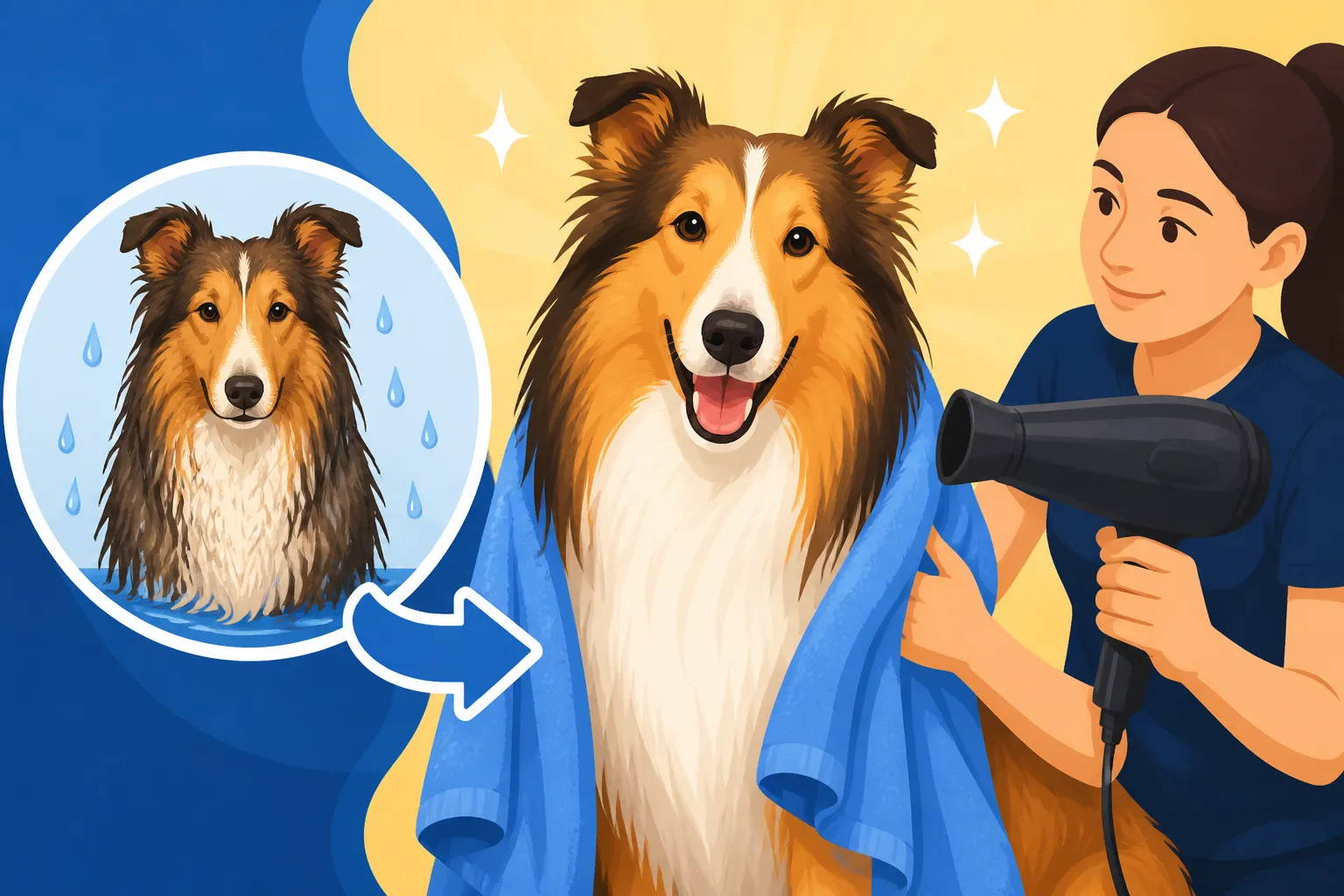
As soon as your Collie steps out of the bath, the first thing you want to do is get as much standing water off their coat as possible. This isn't about rubbing vigorously, which can actually create tangles and static. Instead, use large, absorbent towels to blot and squeeze the water out of the coat. Wrap a towel around sections of fur and gently squeeze, almost wringing the water out. Don't rub back and forth like you're scrubbing a floor; this will just make mats.
For their legs and tail, you can literally gently squeeze downwards to encourage water runoff. You can even use several towels during this stage. The goal here is to remove the bulk of the water, making the high-velocity dryer's job much easier and cutting down on your overall drying time. Some people even use highly absorbent microfiber towels designed for dogs, which can wick away an impressive amount of moisture. The drier your Collie is before you even turn on the force dryer, the faster and more efficient the rest of the process will be.
Line Drying with the Force of Air
Now for the main event: the high-velocity dryer. The technique here is called "line drying" or "line brushing," and it's absolutely crucial for a Collie. You want to work in small sections, exposing the skin and drying the hair from root to tip.
Start at the back of your Collie and work your way forward, or start with a leg and tackle it completely before moving on. Use one hand to hold the nozzle of the force dryer a few inches from the coat, and your other hand with a brush or comb. Point the nozzle in the direction of hair growth, or slightly against it to really lift the undercoat. As you blast the air, use your pin brush to gently brush the hair outwards, creating a "line" from the skin up. You'll see the hair literally lift and separate as it dries. You should be able to see the skin underneath the hair you are working on. Once that section is completely dry, you move up an inch and repeat the process, overlapping slightly, until the entire section is dry. This methodical approach is the only way to ensure every bit of that dense undercoat is dry. How to Line Brush a Collie goes into more detail on this specific technique.
Focusing on Problem Areas
Certain areas on a Collie are notorious for holding moisture and developing mats, so they require extra attention during the drying process. These include the dense fur behind their ears, under their "frill" (the long fur around their neck), in their "petticoat" (the long fur on their hindquarters and abdomen), and their feathering on the legs and tail. These are areas where the coat is particularly thick and often has finer, more delicate hair that is prone to tangling.
Don't neglect these spots. They might take a little longer, but it's far better than dealing with painful mats or skin irritations later. When working on these areas, you might want to switch to a finer comb to ensure you're getting right down to the skin. Be particularly gentle behind the ears, as the skin there can be quite sensitive. It’s also wise to check these areas even after you think your Collie is dry, just to be absolutely sure. Run your fingers deep into the fur to feel for any lingering dampness.
Techniques for Different Coat Sections
Not all parts of a Collie's coat are created equal when it comes to drying. Their magnificent mane and flowing feathering require different approaches than their head or ears. Understanding these nuances will help you achieve a truly dry, beautiful coat without causing discomfort or damage. It's about adapting your technique to the specific needs of each area, much like an artist uses different brushes for different parts of a painting.
The Mane, Frill, and Petticoat: Where Mats Lurk
These are the showstopping areas of a Rough Collie's coat, but also the most prone to matting and holding water. The mane and frill around their neck and chest, and the "petticoat" of long hair on their rear and belly, are incredibly dense. As you work on these sections, remember your line drying technique. For the frill, you'll need to lift sections of hair and direct the force dryer air right down to the skin, brushing outwards. Work your way around the neck, ensuring you don't miss any spots, particularly under the chin where hair can be especially thick.
The petticoat is similar – it's a huge area of dense fur that requires diligent sectioning. Use your comb to create a clear line, and then systematically dry and brush each layer. Pay extra attention to the "armpits" and groin areas where friction can cause mats to form very quickly. These parts might take longer than you anticipate, but thoroughness here is critical. Any skipped spot is a potential mat waiting to happen, or a damp patch that could lead to skin irritation.
Legs and Tail: Feathering Finesse
The beautiful feathering on a Collie's legs and tail adds so much elegance, but it also means more hair to dry! For the legs, ensure you get all the way around, lifting the feathering so that the air can reach the denser fur underneath. Work from the foot upwards, section by section. The hair on the legs can be finer and more prone to static, so using a detangling spray or a light conditioning spray as you go can be helpful.
The tail, especially a well-plumed one, is another area that can hold a surprising amount of water. Hold the tail out and away from the body, and work the dryer from the base to the tip, again, making sure to get deep into the undercoat. Use your brush to keep the hairs separated and flowing nicely. Remember to be gentle; the tail is quite flexible, and you don't want to pull too hard. A thoroughly dried tail will fan out beautifully and feel wonderfully soft.
Head and Ears: Gentle Does It
Drying a Collie's head and ears requires a delicate touch. Many dogs are sensitive to air near their face, and the sound of the dryer can be more intense close to their ears. Start with the dryer on a very low setting and hold it further away, gradually bringing it closer and increasing the force as your Collie tolerates it. Praise them frequently and offer treats for cooperation.
For the ears, lift them up to dry the hair on the underside and behind them. This area is a prime spot for mats if left damp. Be extremely careful not to direct air directly into the ear canal. You can use your fingers to gently separate the fur on the face and around the eyes, ensuring it dries without becoming frizzy or tangled. If your Collie is particularly sensitive to the dryer on their head, you can finish these areas with a regular human hairdryer on a cool or low-heat setting, or even a soft towel, just making sure the hair is completely dry. The aim is to make it a positive experience, not a traumatic one.
Troubleshooting Common Drying Challenges
Even with the right tools and techniques, drying a Collie can present its unique set of challenges. It's not always a smooth sail, and you're bound to encounter some resistance or unexpected issues. But don't despair! Most common problems have straightforward solutions that just require a bit of patience and understanding of your Collie's temperament and coat. We've all been there, staring at a slightly damp spot, wondering if we'll ever be truly done.
When Your Collie Hates the Dryer
This is probably the most common hurdle for new Collie owners. The noise and sensation of a high-velocity dryer can be intimidating. The key is desensitization and positive reinforcement. Start early with a puppy, or introduce it gradually to an older dog. First, just let the dryer run in a different room while your Collie enjoys treats or a favorite toy. Then, move it closer, still running, but not pointing at them. Reward calm behavior.
Next, turn it on briefly near them, then off, immediately giving a treat. Slowly increase the duration and gently introduce the air stream to areas they are less sensitive about, like their rear or legs, always with praise and treats. Never force it or punish them for being scared. You can also use a "Happy Hoodie" or cotton balls in their ears to muffle the sound. With patience, most Collies will learn to tolerate, or even enjoy, the attention. Consistency is key here; short, positive sessions are far better than infrequent, stressful ones. Remember, How Long a Collie Remembers a Bad Session means positive experiences are vital for future cooperation.
Dealing with Lingering Dampness
You’ve dried, and dried, and dried, and yet… you still find a damp patch deep in the undercoat. This usually comes down to not sectioning properly or not using enough force to penetrate the dense fur. Don't fall into the trap of thinking it will "air dry" from there – that's a recipe for skin problems.
If you find a damp spot, go back to your line drying technique. Use a metal comb to part the hair right down to the skin and direct the dryer's nozzle specifically at that area. You might need to adjust the angle of the dryer or the type of nozzle you're using. A concentrator nozzle can be very effective for pinpointing damp spots. Feel the skin, not just the topcoat. If the skin feels cool, it's still damp. It should feel warm and dry to the touch. This meticulous attention to detail is what separates a truly dry Collie from one that looks dry.
Avoiding Heat Damage and Static
While a high-velocity dryer uses air force more than heat, it can still generate warmth, especially if held too close for too long. Always be mindful of the heat. Keep the dryer moving, never holding it stationary on one spot. Periodically touch the area you are drying to ensure it isn't getting too hot. Your Collie’s skin can burn just like yours.
Static electricity can also be an issue, especially in dry environments or with fine fur. This often manifests as flyaway hair or a slight crackling sensation when you brush. To combat static, ensure you've used a good conditioner in the bath. During drying, a light spritz of a canine-safe detangling or anti-static spray can work wonders. Some groomers even use dryer sheets (unscented and dog-safe) on their brushes. Always make sure your hands and tools are clean and free of excessive oil or product residue, which can exacerbate static. A healthy, well-conditioned coat is less prone to static.
When to Call in the Professionals
While drying your Collie at home can be incredibly rewarding and cost-effective, there are times when it makes perfect sense to hand over the leash to a professional groomer. Recognizing these moments isn't a sign of failure; it's a sign of a responsible and loving pet parent who prioritizes their Collie's well-being and their own sanity! Sometimes, that sheer volume of coat, or a particularly challenging situation, just calls for an expert touch.
Recognizing When It's Too Much
Let's be real: drying a full-coated Rough Collie can take a good hour or more, even with the right equipment and technique. If you find yourself consistently overwhelmed, struggling with painful mats, or your Collie simply despises the process no matter what you try, it might be time to consider professional help. Maybe you have physical limitations that make bending and lifting difficult, or perhaps your schedule simply doesn't allow for such a time-consuming grooming ritual every few weeks.
Another sign it's too much is if you consistently find damp spots or new mats appearing shortly after you've dried them. This indicates that despite your best efforts, you're not quite getting the coat thoroughly dry. Leaving residual dampness, especially deep in the undercoat, can lead to serious skin issues like hot spots or fungal infections. These aren't just uncomfortable; they can be costly to treat. A professional groomer has specialized tools, techniques, and often a dedicated space that can make the drying process far more efficient and effective. What a Professional Groom Costs on a Rough Collie is a fair consideration against the time and effort you're spending.
The Benefits of a Professional Groomer
Professional groomers are experts in handling dense, double coats like a Collie's. They have powerful, industrial-strength dryers, a vast array of specialized brushes and combs, and years of experience in techniques like line drying. They can often dry a Collie thoroughly in a fraction of the time it might take an owner, getting right down to the skin and ensuring every hair is perfectly dry and fluffed. Many groomers use bathing systems that ensure deep penetration of shampoo and conditioner, which also aids in a faster, more effective drying process.
Beyond just drying, a professional groomer can also address other grooming needs, such as nail trims, ear cleaning, and sanitary trims. They can spot potential skin issues or developing mats that you might miss. Regular professional grooming, perhaps every 6-8 weeks, can complement your at-home maintenance routine. It ensures a deep clean and thorough dry, making your daily or weekly brushing sessions much easier. Think of it as a reset button for your Collie's coat, ensuring it stays in pristine condition and your dog stays comfortable and healthy. It's a fantastic option to consider, especially during those heavy shedding seasons. Whether a Groomer Should Handle a Collie's Coat Blow is a question many Collie owners wrestle with, and often, the answer is a resounding yes!
Disclaimer
This article is for general informational purposes only and does not constitute professional advice. Laws, prices and regulations vary by location and change over time. Consult a qualified professional for guidance on your specific situation.