Whether the Lassie Boom Hurt Collie Health
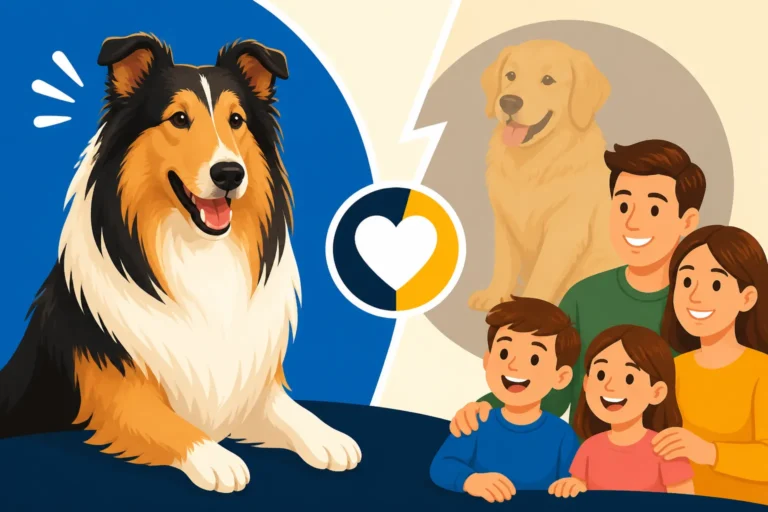
A famous dog can make a breed suddenly desirable, but popularity is a mixed blessing: more families discover Collies, while breeders may feel pressure to produce puppies quickly. The Lassie films and television series helped put the Rough Collie in the spotlight. Here’s what that boom may have meant for Collie health—and what the historical record can and cannot tell us.
What the Lassie boom changed for Collies
From working dog to household favorite
The Collie existed long before Lassie became a household name. The breed developed as a working sheepdog in Scotland, and its popularity as a companion and show dog had already been shaped by changing ideas about dogs, breeding, and fashion. Lassie brought a particular kind of Collie into the public imagination: beautiful, devoted, brave, and seemingly able to understand exactly what a person needed.
That image had enormous emotional pull. Families who had never considered a herding breed could suddenly picture a Collie as the perfect family dog. The dog in Lassie Come Home, released in the 1940s, was Pal, a male Rough Collie. The television series that followed kept the character in view for years. For more on the dogs and films behind that image, see A Dog Named Pal Played Lassie and Changed the Breed Forever and What Lassie Did to Collie Registrations.
A sudden wave of interest can be difficult for any breed to absorb. Some established breeders may welcome new, informed homes. Others may face pressure to meet demand, while less careful sellers see an opportunity to make money. That doesn’t mean every puppy produced during the Lassie era came from an irresponsible breeder, or that the breed’s health declined uniformly. It does mean popularity can create conditions in which quantity is rewarded more readily than careful planning.
Why popularity can put pressure on breeding
When demand rises quickly, the responsible breeding process can be at odds with the market’s appetite for immediate availability. Thoughtful breeders may plan litters around the health, temperament, and compatibility of the parent dogs, and may ask prospective owners to wait. A seller focused on volume may instead prioritize producing more puppies or matching a popular appearance with a buyer’s expectations.
The risks are not unique to Collies or to the Lassie era. A fast-growing market can encourage poor record-keeping, insufficient health screening, and breeding choices made without enough attention to inherited conditions. It can also leave families with unrealistic expectations. A dog who looks like Lassie is still an individual with a herding-dog history, daily care needs, and the possibility of health problems.
The breed’s public image also may have encouraged people to focus on appearance and the famous character rather than the less glamorous parts of ownership: training, exercise, coat care, veterinary visits, and the dog’s own temperament. That mismatch can contribute to unsuitable placements and, in some cases, rehoming. Popularity is not itself a disease, but it can affect how dogs are bred, sold, and understood.
Did the Lassie boom directly damage Collie health
A boom can expose problems without creating them
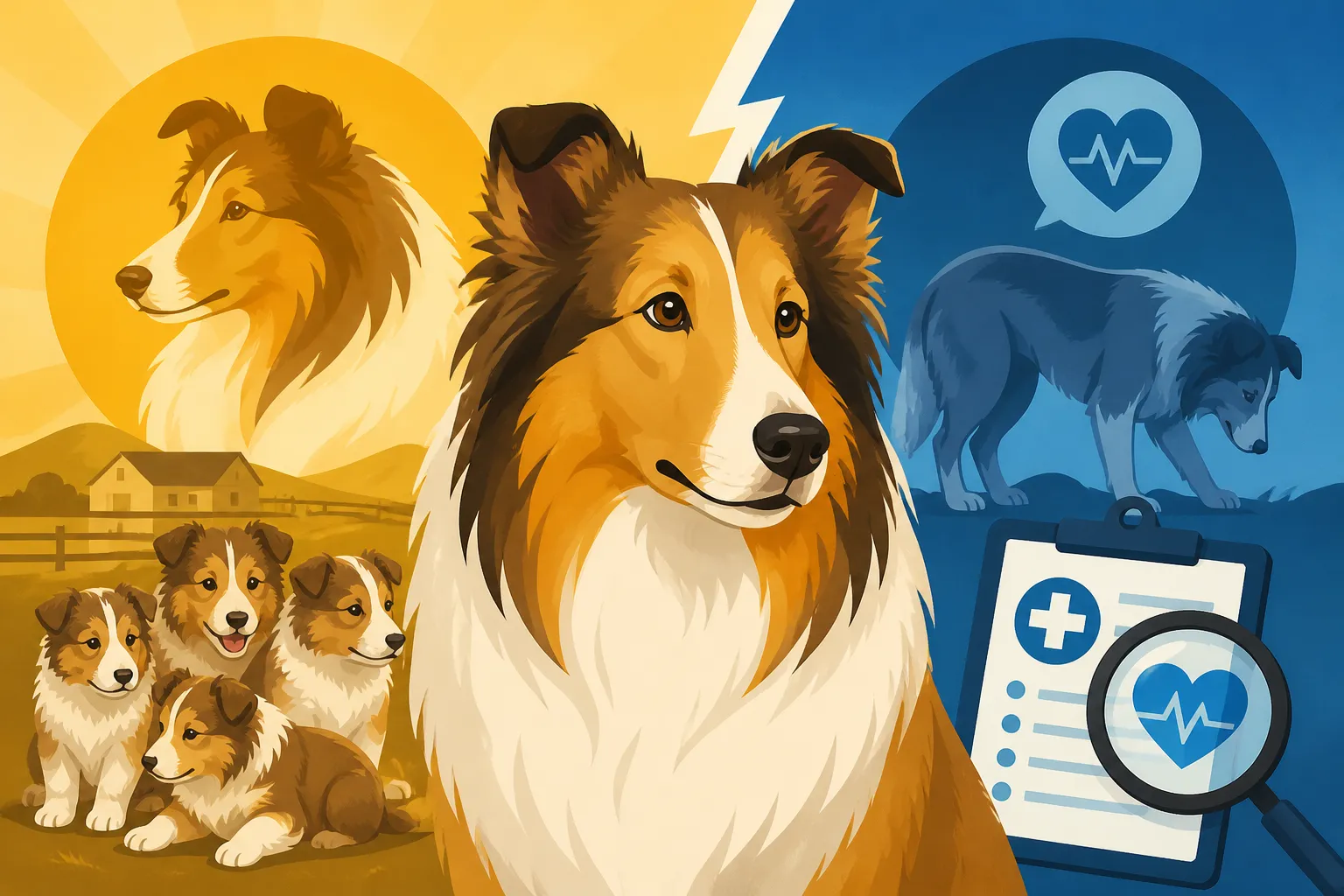
The careful answer is: the Lassie boom may have increased the number of Collies bred in response to demand, and that can put dogs at risk when breeding is poorly managed. But it is harder to prove that the boom itself caused a specific, lasting decline in the health of the breed as a whole. A popular image can shape the market; it does not by itself show what happened to disease rates across generations.
Inherited conditions do not appear simply because a breed becomes famous. Collies have known health concerns, including Collie Eye Anomaly, MDR1 drug sensitivity, and dermatomyositis. Their causes and inheritance patterns differ. For example, MDR1 is a genetic drug-sensitivity issue; it is not a consequence of a dog being bred for the screen. The relevant question is whether breeding decisions and testing practices affected how often a condition was passed on—not whether Lassie made the condition exist.
It also helps to distinguish more puppies being born from a higher percentage of puppies being affected by a disease. If a breed’s population grows, the number of dogs with a condition could rise even if the proportion affected stays similar. Without comparable health records across the relevant generations, raw counts and anecdotes cannot settle whether the breed became less healthy. Whether the Lassie Boom Hurt Collie Health is a question worth asking, but it should not be answered with a confident claim that the films caused a particular genetic disorder.
What is known and what remains uncertain
| Question | What can reasonably be said | What the question does not prove |
|---|---|---|
| Did Lassie make more people interested in Collies? | The films and television character gave the breed widespread visibility and appeal. | The size of the effect on every region or breeding population. |
| Could increased demand encourage careless breeding? | Yes. High demand can reward sellers who produce puppies quickly rather than prioritize health and temperament. | That all Collie breeders during the boom were careless. |
| Did the boom create Collie genetic conditions? | No. A popularity wave does not create an inherited mutation by itself. | Whether breeding choices changed the frequency of a condition over time. |
| Can we say Collie health worsened because of Lassie? | Not confidently without comparable, long-term health data. | That every concern about breeding practices is unfounded. |
The uncertainty is important, but it shouldn’t be used to dismiss the risks of commercial breeding. Poor breeding practices can harm individual dogs even when there is no evidence that an entire breed’s health changed. Nor should a lack of complete historical records be mistaken for proof that no harm occurred. A balanced account recognizes both the plausible pressure created by sudden demand and the limits of what can be established.
How popularity can affect a breed’s health over time
More breeding is not automatically worse breeding
A larger population can have benefits. If more Collies are responsibly bred and carefully selected, there may be more opportunities to preserve healthy, well-tempered lines. A larger population may also offer breeders more potential choices, rather than forcing every decision through a very small group of dogs.
The risk comes when popularity encourages repeated use of a small number of fashionable dogs, or when breeding choices emphasize looks, speed of sale, or a famous image over health and temperament. If the same popular lines are used heavily, genetic diversity can become a concern. That is a general breeding risk; it should not be treated as a proven description of every Lassie-era program.
A responsible breeding conversation therefore involves more than asking whether a puppy resembles the screen star. Buyers can ask what health testing was done, how results were interpreted, and what the breeder knows about health in related dogs. The guide The Three Genetic Tests a Collie Breeder Owes You explains why specific screening matters, while Whether the Collie Is Bred for Health Now looks at the broader question of modern breeding priorities.
The famous image can distort expectations
Lassie’s fictional life made Collies seem exceptionally intuitive and endlessly capable. Real Collies can be responsive, observant dogs, but no breed comes with a guarantee of perfect behavior. A puppy may be sensitive, vocal, reserved with strangers, or more energetic than a family expected. A movie image can set people up to interpret ordinary training needs as a failing of the dog.
Appearance can distort expectations too. A long-coated Collie needs regular coat care, and a healthy dog still needs routine veterinary attention, exercise, and training. People shopping for food or grooming supplies on Chewy or elsewhere may find products useful, but a retailer’s product information is not a substitute for health records from a breeder or guidance from a veterinarian. Likewise, buying a brush or food does not resolve the larger question of whether a dog’s breeding background and care needs suit a household.
The expectation problem can lead to frustration on both sides. Someone who brings home a puppy expecting a quiet, self-managing “Lassie” may be surprised by barking, herding behavior, or the time needed for coat maintenance. If the mismatch becomes difficult, a family may consider rehoming the dog. That outcome is not inevitable, and it is not proof that Collies are unsuitable family dogs. It is a reminder that a popular fictional image is a poor replacement for learning about the actual breed. See Whether Lassie Gave the Collie a False Reputation for more on the gap between screen expectations and real-life dogs.
What prospective Collie owners can learn from the boom
Look for evidence rather than a famous image
The strongest lesson from a breed’s popularity surge is to slow down before choosing a puppy. Ask the breeder about health testing relevant to Collies, and request to see results rather than relying on vague assurances such as “the parents are healthy.” Ask how the breeder considers temperament, what they know about health in the family lines, and what support they offer if a problem arises.
It is also reasonable to ask whether puppies are being raised in a way that prepares them for ordinary household life. A responsible breeder should be willing to discuss the breed honestly, including the work involved in coat care and training. A puppy’s color, markings, or resemblance to a famous dog cannot tell you whether its parents were screened for inherited conditions.
Families researching everyday ownership needs may compare food or coat-care products on Chewy, but keep those errands separate from health decisions. A shop can help with supplies; it cannot confirm that a puppy’s parents were tested or that a breeder made sound breeding choices. For those questions, written health records and a conversation with a veterinarian are more useful than a sales listing or a movie-inspired impression.
Consider the dog in front of you
A Collie’s needs depend on the individual dog, its age, health, and temperament. Ask what the specific dog is like, not only what the breed is “supposed” to be like. Does the puppy recover comfortably after a new sound or experience? How does it respond to people? What support will be available if it needs time to settle into a new home?
If adopting an adult Collie, ask what is known about its history and medical care. Records may be incomplete, particularly for a rescue dog, but a veterinary examination can help identify immediate needs and plan follow-up. Owners can also make a simple list of questions before an appointment: known conditions, medication sensitivities, screening history, and any changes in behavior or appetite. Chewy may be one place owners encounter routine-care products, but health questions belong with a veterinary professional familiar with the dog.
The Lassie boom is best understood as a caution about celebrity-driven demand, not as proof that a particular film ruined Collie health. Popularity can reward responsible breeding or put pressure on it; which outcome follows depends on the decisions people make. Prospective owners can honor the breed more thoughtfully by choosing based on health information, individual temperament, and realistic expectations—not a fictional promise that every Collie will behave like a star.
Disclaimer
This article is for general informational purposes only and does not constitute professional advice. Laws, prices and regulations vary by location and change over time. Consult a qualified professional for guidance on your specific situation.